On This Page
Description
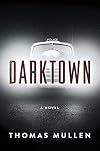
"Responding to orders from on high, the Atlanta Police Department is forced to hire its first black officers, including war veterans Lucius Boggs and Tommy Smith. The newly minted policemen are met with deep hostility by their white peers: they aren't allowed to arrest white suspects, drive squad cars, or set foot in the police headquarters. When a black woman who was last seen in a car driven by a white man turns up dead, Boggs and Smith suspect white cops are behind it. Their investigation show more sets them up against a brutal cop, Dunlow, who has long run the neighborhood as his own, and his partner, Rakestraw, a young progressive who may or may not be willing to make allies across color lines"--Amazon.com. show lessTags
Recommendations
Member Reviews
When I first read a description of Darktown, a novel based on the experiences of the first black officers on the Atlanta Police Department, I assumed that it would be similar to Chester Himes’ Coffin Ed Johnson and Gravedigger Jones series, the only other books I’ve read about black police officers in the mid-twentieth century. I couldn’t have been more wrong. Darktown has neither the randy humor of A Rage in Harlem nor the charming volatility of Mouse in Walter Mosley’s Devil in a Blue Dress. What it does have is the dark realism of Ellroy's L.A. Confidential, the plot twists of Polanski’s Chinatown, and the stark portrayal of racism seen in Twelve Years a Slave.
The story focuses on Lucius Boggs and Tommy Smith, WWII show more veterans and two of the eight men sworn in as the first African American police officers sworn in Atlanta. Author Thomas Mullen did an excellent job of describing the humiliation conditions that these dedicated men had to work under. They could not arrest white people or work in white neighborhoods. They could not have squad cars. The only shift they could be assigned was from 10:00 p.m. to 6:00 a.m.. They were not allowed to enter the police station but were assigned dingy office space in the basement of the colored YMCA. Even the oath that they were administered served to remind them that they were second class citizens. “I, _____, a Negro, do solemnly swear to perform the duties of a Negro policeman…”
What amazes me is that, on top of these humiliations, these men had to endure the lack of support from the majority of the white officers they served with. I can’t imagine what it would feel like to be a police officer who went out every night to fight crime, knowing that if they got into trouble, they would likely not get any backup. The fact that they still persisted, knowing that there was a very real possibility that the bullet that could end their lives might come from another officer’s gun is inconceivable to me. I have tremendous respect for these men.
I also could not avoid making connections between the events described in Darktown and the shooting of black men by police officers that have been reported too frequently in the news of late. I believe that the vast majority of police officers today are dedicated professionals but the behavior of the small minority that have their actions recorded on video makes me wonder if we as a people still have a way to go to put the Jim Crow era behind us. Wasn’t it William Faulkner who said, “The past is never dead. It's not even past.” show less
The story focuses on Lucius Boggs and Tommy Smith, WWII show more veterans and two of the eight men sworn in as the first African American police officers sworn in Atlanta. Author Thomas Mullen did an excellent job of describing the humiliation conditions that these dedicated men had to work under. They could not arrest white people or work in white neighborhoods. They could not have squad cars. The only shift they could be assigned was from 10:00 p.m. to 6:00 a.m.. They were not allowed to enter the police station but were assigned dingy office space in the basement of the colored YMCA. Even the oath that they were administered served to remind them that they were second class citizens. “I, _____, a Negro, do solemnly swear to perform the duties of a Negro policeman…”
What amazes me is that, on top of these humiliations, these men had to endure the lack of support from the majority of the white officers they served with. I can’t imagine what it would feel like to be a police officer who went out every night to fight crime, knowing that if they got into trouble, they would likely not get any backup. The fact that they still persisted, knowing that there was a very real possibility that the bullet that could end their lives might come from another officer’s gun is inconceivable to me. I have tremendous respect for these men.
I also could not avoid making connections between the events described in Darktown and the shooting of black men by police officers that have been reported too frequently in the news of late. I believe that the vast majority of police officers today are dedicated professionals but the behavior of the small minority that have their actions recorded on video makes me wonder if we as a people still have a way to go to put the Jim Crow era behind us. Wasn’t it William Faulkner who said, “The past is never dead. It's not even past.” show less
This unusual crime novel is set in Atlanta in the late 1940's. The city, in response to pressure from returning black war veterans, has just hired its first black police officers. The eight black officers are not given the usual responsibilities and privileges of police officers. They are given their own headquarters in the basement of the YMCA in "Darktown," the black area of Atlanta. They cannot even enter the official police headquarters without a special invitation and an escort. They patrol only in Darktown, and cannot make arrests without calling in a white officer.
The book follows new officers Lucius Boggs, conservative, college-educated son of a minister-colleague of Martin Luther King Sr., and Thomas Smith, more hot-headed and show more impatient than Boggs, and a WW II veteran. When a young black woman last seen by Boggs and Smith in the company of a drunken white man turns up dead, they discover that the white police are not treating the case seriously and appear to be uninterested in pursuing the perpetrator. Boggs and Smith begin investigating on their own, and stir up a hornet's nest of police corruption and racial animosity.
This is an excellent and well-plotted police procedural, but it is so much more, as it explores the historical and cultural issues of race relations in the context of the Jim Crow laws of our oh so recent past.
4 stars show less
The book follows new officers Lucius Boggs, conservative, college-educated son of a minister-colleague of Martin Luther King Sr., and Thomas Smith, more hot-headed and show more impatient than Boggs, and a WW II veteran. When a young black woman last seen by Boggs and Smith in the company of a drunken white man turns up dead, they discover that the white police are not treating the case seriously and appear to be uninterested in pursuing the perpetrator. Boggs and Smith begin investigating on their own, and stir up a hornet's nest of police corruption and racial animosity.
This is an excellent and well-plotted police procedural, but it is so much more, as it explores the historical and cultural issues of race relations in the context of the Jim Crow laws of our oh so recent past.
4 stars show less
I finished Darktown by Thomas Mullen over a week ago and at the time thought it was a well-written, well researched and well-plotted novel. But it's been growing on me since I read it; I keep thinking about one of the characters and how Mullen did a masterful job in writing about him.
Set in 1948, when the first eight African American police officers donned uniforms and began patrolling the black neighborhoods of Atlanta, Darktown is, on its surface, an excellently plotted crime novel that is full of details about Atlanta, Georgia at a specific point in time. Boggs, the son of a prominent minister and Smith, who spent WWII in a tank, are patrolling the African American district of Sweet Auburn on foot when they see a car crash into a show more streetlight. The car is being driven by a belligerent white man who knows that Boggs and Smith have no authority over anyone white and there is a young black woman in the passenger seat. When the car drives off, they see the man punch the woman and see her flee the car. In following the man and finding a call box to summon white officers they lose sight of the woman. When she is later found murdered, the two officers work to solve the crime, despite ample obstruction from their white peers.
Meanwhile, Dunlow and Rakestraw speak with the man in the car. Dunlow is one of the few white officers who will set foot in black neighborhoods, but he does so more to administer beatings and shakedowns than to do any actual police work. One of the reasons the African American community fought for having African American officers was to stop this behavior from the white cops, and Dunlow is not having it. Sweet Auburn, known as Darktown to white officers, is his personal fiefdom. Rakestraw is his rookie partner, a man wary of risking his job or his safety to take any action, but who is deeply uneasy with the actions and attitudes of Dunlow and his fellow officers. Rakestraw also recognizes the dead woman and begins investigating the crime on his own, keeping his activities secret from his partner.
The murder plot and it's dual investigations, is gripping and well-plotted and at the most basic level, this is an excellent historical thriller. But the strength of this book lies in how well researched it is. [Darktown] is full of details of what it was like to live in that time and place, described vividly. And his characterizations are marvelous. Boggs is a member of the elite, a college-educated man whose family is prominent in both the social life of their community and its political life. Smith comes from a much more hard-scrabble background and the two men work well together, both being fully aware of the risks to their lives they are taking. They aren't even allowed into the police headquarters, their own headquarters being the basement of a YMCA, where a janitor's cupboard had to be turned into a bathroom for their white supervisor.
Rakestraw is the character who is the most interesting. While Boggs plays a more prominent role, and is the most understandable character for the reader, Rakestraw's ambivalence and slow conviction that he has to take action or be complicit in the corruption and racism of the police force is wonderfully depicted. Rakestraw isn't someone the reader can admire and while his views are progressive for that time and place, they certainly would not be regarded as progressive today. Rakestraw isn't a modern man sent back in time, but one firmly rooted in his era. My personal pet peeve with many historical novels is that the heroes are all really just modern people dressed up in old timey clothes. Mullen doesn't do this. His characters are firmly of their time.
Thomas Mullen is one of my favorite authors and with Darktown he has cemented his place in my literary heart. show less
Set in 1948, when the first eight African American police officers donned uniforms and began patrolling the black neighborhoods of Atlanta, Darktown is, on its surface, an excellently plotted crime novel that is full of details about Atlanta, Georgia at a specific point in time. Boggs, the son of a prominent minister and Smith, who spent WWII in a tank, are patrolling the African American district of Sweet Auburn on foot when they see a car crash into a show more streetlight. The car is being driven by a belligerent white man who knows that Boggs and Smith have no authority over anyone white and there is a young black woman in the passenger seat. When the car drives off, they see the man punch the woman and see her flee the car. In following the man and finding a call box to summon white officers they lose sight of the woman. When she is later found murdered, the two officers work to solve the crime, despite ample obstruction from their white peers.
Meanwhile, Dunlow and Rakestraw speak with the man in the car. Dunlow is one of the few white officers who will set foot in black neighborhoods, but he does so more to administer beatings and shakedowns than to do any actual police work. One of the reasons the African American community fought for having African American officers was to stop this behavior from the white cops, and Dunlow is not having it. Sweet Auburn, known as Darktown to white officers, is his personal fiefdom. Rakestraw is his rookie partner, a man wary of risking his job or his safety to take any action, but who is deeply uneasy with the actions and attitudes of Dunlow and his fellow officers. Rakestraw also recognizes the dead woman and begins investigating the crime on his own, keeping his activities secret from his partner.
The murder plot and it's dual investigations, is gripping and well-plotted and at the most basic level, this is an excellent historical thriller. But the strength of this book lies in how well researched it is. [Darktown] is full of details of what it was like to live in that time and place, described vividly. And his characterizations are marvelous. Boggs is a member of the elite, a college-educated man whose family is prominent in both the social life of their community and its political life. Smith comes from a much more hard-scrabble background and the two men work well together, both being fully aware of the risks to their lives they are taking. They aren't even allowed into the police headquarters, their own headquarters being the basement of a YMCA, where a janitor's cupboard had to be turned into a bathroom for their white supervisor.
Rakestraw is the character who is the most interesting. While Boggs plays a more prominent role, and is the most understandable character for the reader, Rakestraw's ambivalence and slow conviction that he has to take action or be complicit in the corruption and racism of the police force is wonderfully depicted. Rakestraw isn't someone the reader can admire and while his views are progressive for that time and place, they certainly would not be regarded as progressive today. Rakestraw isn't a modern man sent back in time, but one firmly rooted in his era. My personal pet peeve with many historical novels is that the heroes are all really just modern people dressed up in old timey clothes. Mullen doesn't do this. His characters are firmly of their time.
Thomas Mullen is one of my favorite authors and with Darktown he has cemented his place in my literary heart. show less
A Solid Mystery Set in the Pre-Civil Rights South
Set in 1948 Atlanta, Darktown is the story of two of that city’s first black police officers (Boggs and Smith) who investigate the death of a young black woman when no else seemed to care. In the process, they run afoul of Dunlow, a brutal, racist white officer, while Rakestraw, Dunlow’s young partner, seems caught in the middle in this confrontation.
Darktown’s depiction of the life of blacks at this time and place is, simply put, gut-wrenching. White officers are free to abuse the law, and the excesses that are portrayed are difficult to read. But it is, in my opinion, worth the emotional effort. Layered on top of this taut look at race and the law is a murder mystery. While the show more core of the mystery seemed a bit predictable, Mullen added enough twists in the details to make it a worthy addition to the historical setting.
The overall pacing was good, although I have to admit to some difficulty getting started. Early on, the book seemed to be disconnected anecdotes and loosely related asides. But soon the threads came together and the tension ramped up considerably. The final dozen or so chapters are particularly action-filled and tension-producing, with one exception. Mullen added one scene that seems to mislead the reader, and it felt somewhat cheap in the midst of an excellent finish. But otherwise, it was a fully, white-knuckle finale.
Overall, I’d suggest readers prepare themselves for some emotionally difficult reading and then, by all means, make the effort. It’s an excellent book. show less
Set in 1948 Atlanta, Darktown is the story of two of that city’s first black police officers (Boggs and Smith) who investigate the death of a young black woman when no else seemed to care. In the process, they run afoul of Dunlow, a brutal, racist white officer, while Rakestraw, Dunlow’s young partner, seems caught in the middle in this confrontation.
Darktown’s depiction of the life of blacks at this time and place is, simply put, gut-wrenching. White officers are free to abuse the law, and the excesses that are portrayed are difficult to read. But it is, in my opinion, worth the emotional effort. Layered on top of this taut look at race and the law is a murder mystery. While the show more core of the mystery seemed a bit predictable, Mullen added enough twists in the details to make it a worthy addition to the historical setting.
The overall pacing was good, although I have to admit to some difficulty getting started. Early on, the book seemed to be disconnected anecdotes and loosely related asides. But soon the threads came together and the tension ramped up considerably. The final dozen or so chapters are particularly action-filled and tension-producing, with one exception. Mullen added one scene that seems to mislead the reader, and it felt somewhat cheap in the midst of an excellent finish. But otherwise, it was a fully, white-knuckle finale.
Overall, I’d suggest readers prepare themselves for some emotionally difficult reading and then, by all means, make the effort. It’s an excellent book. show less
Dark, indeed. This is a police procedural quite unlike any others you may have read. The protagonists are Tom Smith and Lucius Boggs, two of the first black cops on Atlanta's municipal police force. It's 1950, and neither their white colleagues nor the black community they are policing are happy about their existence. They wear the uniform and badge, and carry guns, but don't have cars, and must call for white back-up if they arrest anyone. They are forbidden to enter police headquarters, working out of the drippy dim basement of a YMCA in a poor black neighborhood. They are subject to humiliation, harassment, and false charges. They watch white cops taking pay-offs from brothels and forcing confessions from suspects to close cases show more regardless of facts. They witness white-on-black brutality occur routinely without consequence. They are not allowed to investigate anything. But when a black girl from the country ends up shot to death and tossed on a garbage dump shortly after Officers Smith and Boggs saw her running away from a white man's car, these men decide to risk their careers and their lives, breaking the rules to find out how she got there. Often a very uncomfortable read, but impossible to leave alone. show less
In Darktown, Thomas Mullen takes the reader back to a shameful period in America’s long history of racial inequality: the segregated Jim Crow South—specifically, post-WW2 Atlanta, Georgia. It’s 1948 and the Atlanta Police Department has been pressured into hiring their first black officers. Not surprisingly, the move has galvanized anger and resistance, and drawn pledges to “make things right” from the APD’s white contingent. One summer night, two of the new black officers, Lucius Boggs and Tommy Smith, are patrolling on foot in a segregated black community when a car being driven erratically knocks over a light pole. The driver is a middle-aged white man, his young female passenger, who appears in some distress, is black. show more As the driver flees the scene the woman jumps from the slow-moving car and disappears into the night. Boggs and Smith have called for some white officers to come and help with the arrest (black officers are not allowed to arrest white people—just one of many ludicrous and demeaning prohibitions placed on their actions). Lionel Dunlow and Dennis “Rake” Rakestraw arrive, and Boggs and Smith watch in disgust and disbelief as Dunlow, the senior officer, chats briefly with the driver before letting him go. But the situation soon turns grave: a few days later the same young woman turns up dead, shot at close range, the body left in a vacant lot where the black community dumps its garbage. To those who care, it’s obvious the last person she was with was the man driving the car. But since white police don’t care about a murdered black woman, solving the mystery of Lily Ellsworth’s death falls to Boggs and Smith, who are forced by the department’s racist policies to sneak around and lie about what they’re up to because if the wrong people find out, they could lose more than just their jobs. Over the next several weeks, during the sweltering summer of 1948, Boggs and Smith risk their necks in the pursuit of justice for Lily, in the process confronting corrupt cops with secrets to hide, unhelpful bureaucrats and a notorious “madam,” just to name a few. Their investigation is dangerous and labyrinthine, and the solution to the mystery exposes the moral rot of Atlanta society and reaches into the upper echelons of white power. But truth is only part of the answer, and for Boggs and Smith the justice they seek proves to be somewhat more elusive. Thomas Mullen’s narrative comes spiced with the explicit language and repulsive attitudes one would expect to encounter in Jim-Crow era Atlanta. But there is no point writing about that period if you’re not going to strive for authenticity, which Mullen has done with great success. Darktown, a complex novel but a quick read, is gripping from the first page and provides a salient lesson on the racial tensions that continue to afflict North American society. show less
I'm choosing to abandon what is probably a four star book, but I just can't stomach reading this right now.
Thomas Mullen is a great writer. I really enjoyed [book:The Last Town on Earth|76336] and [book:The Revisionists|10789142]. In this one he tackles a little known part of Atlanta's history -- the 1948 instatement of eight black police officers, who were supposed to police black neighborhoods, but weren't allowed to arrest white people, to use a squad car (and so had to use the nearest call box to contact the precinct), to even set foot in the police headquarters (meeting in the basement of a YMCA instead), or to wear their uniform when they were off duty. Mullen didn't make any of this up and I'm sure the endemic racism and terrible show more treatment from other officers and judges is also historically accurate.
In the 88 pages that I was able to read, the n-word and other racial slurs were used hundreds of times. There's a crooked white officer who "owns" the black neighborhoods and routinely beats residents without provocation. His rookie partner has a conscience, but is afraid of tanking his career if he acts upon it. In one of the final scenes I read, two black officers have handcuffed black men who have been fighting. One has been stabbed by the other, but then threw a bottle at the head of one of the officers who tried to help him. The white officers show up, and instead of calling an ambulance, the crooked older cop kicks the handcuffed man in his stab wound. He refuses to let the black officers or his own partner call an ambulance from the squad car, even driving away without his partner (who does walk to a call box and call for an ambulance, while the two black officers -- one injured -- stay with the suspects). I felt physically ill reading this and other equally horrifying scenes.
That was 1948. How far have we really come? Not far enough. And I think this is a Really Important Book and that people need to see this glimpse of the not-distant-enough past, but I just can't right now. I need books that allow me to momentarily escape our current political clusterfuck. show less
Thomas Mullen is a great writer. I really enjoyed [book:The Last Town on Earth|76336] and [book:The Revisionists|10789142]. In this one he tackles a little known part of Atlanta's history -- the 1948 instatement of eight black police officers, who were supposed to police black neighborhoods, but weren't allowed to arrest white people, to use a squad car (and so had to use the nearest call box to contact the precinct), to even set foot in the police headquarters (meeting in the basement of a YMCA instead), or to wear their uniform when they were off duty. Mullen didn't make any of this up and I'm sure the endemic racism and terrible show more treatment from other officers and judges is also historically accurate.
In the 88 pages that I was able to read, the n-word and other racial slurs were used hundreds of times. There's a crooked white officer who "owns" the black neighborhoods and routinely beats residents without provocation. His rookie partner has a conscience, but is afraid of tanking his career if he acts upon it. In one of the final scenes I read, two black officers have handcuffed black men who have been fighting. One has been stabbed by the other, but then threw a bottle at the head of one of the officers who tried to help him. The white officers show up, and instead of calling an ambulance, the crooked older cop kicks the handcuffed man in his stab wound. He refuses to let the black officers or his own partner call an ambulance from the squad car, even driving away without his partner (who does walk to a call box and call for an ambulance, while the two black officers -- one injured -- stay with the suspects). I felt physically ill reading this and other equally horrifying scenes.
That was 1948. How far have we really come? Not far enough. And I think this is a Really Important Book and that people need to see this glimpse of the not-distant-enough past, but I just can't right now. I need books that allow me to momentarily escape our current political clusterfuck. show less
Members
- Recently Added By
Lists

ALA The Reading List
490 works; 28 members

Top Five Books of 2016
795 works; 229 members

To Read
617 works; 7 members

Bitter Southerner Summer Reading Roundup
198 works; 8 members
Ultimate Thriller Guide
52 works; 4 members

Books Read in 2019
4,052 works; 108 members
Talk Discussions
Past Discussions
Chat in Book Discussion : Darktown by Thomas Mullen (March 2018)
Author Information

8+ Works 3,288 Members
Thomas Mullen is an American author, born in Providence, Rhode Island. He is a graduate of Oberlin College. He writes stories and essays which have been published in Grantland, Paste, The Huffington Post, and Atlanta Magazine. His novels include The Last Town on Earth, The Many Deaths of the Firefly Brothers, and The Revisionists. He writes the show more Darktown series, which includes the novels Darktown, and Lightning Men. He won the James Fenimore Cooper Prize for excellence in historical fiction with his book, The Last Town on Earth. (Bowker Author Biography) show less
Some Editions
Awards and Honors
Awards
Distinctions
Series

Common Knowledge
- Original publication date
- 2016
- People/Characters
- Lucius Boggs; Denny Rakestraw; Tommy Smith
- Important places
- Atlanta, Georgia, USA
- Epigraph
- "I must tell you, it was not easy for me to raise my right hand and say, 'I, Willard Strickland, a Negro, do solemnly swear to perform the duties of a Negro policeman.'"
--Officer Willard Strickland, Atlanta Police Dep... (show all)artment, Retired, in a 1977 speech recalling his 1948 induction as one of the city's first eight African American officers. - Dedication
- For Jenny
- First words
- It was nearing midnight when one of the new lampposts on Auburn Avenue achieved the unfortunate fate of being the first to be hit by a car.
- Last words
- (Click to show. Warning: May contain spoilers.)Officer Boggs kept his shoulders straight as he walked past the ladder, looking forward to seeing the lamp aglow when he'd next walk the Auburn Avenue beat.
- Blurbers
- Frazier, Charles; Locke, Attica
- Original language
- English US
Classifications
Statistics
- Members
- 655
- Popularity
- 43,794
- Reviews
- 51
- Rating
- (4.01)
- Languages
- 5 — English, French, German, Italian, Swedish
- Media
- Paper, Audiobook, Ebook
- ISBNs
- 26
- ASINs
- 7