
Grumbles from the Grave
by Robert A. Heinlein, Virginia Heinlein (Editor)
On This Page
Description
"A Del Rey book." A collection of letters to and from the author beginning in 1939 through his many years of fiction writing.Tags
Recommendations























Member Reviews
In 1973 the eminent science fiction writer Robert A. Heinlein wrote to his literary agent contemplating "a memoirs-autobiography job to be published posthumously" (198) as an opportunity to vent some spleen and to benefit his anticipated widow. It was to be entitled Grumbles from the Grave, but Virginia Heinlein's editorial note indicates that the work in question never progressed beyond the notes stage. Instead, she lifted the title for the use of this correspondence memoir, consisting in the main of letters written by Heinlein to his pulp-era publisher John W. Campbell and to his subsequent agent Lurton Blassingame. These are contextualized with bridging memoir text by Virginia Heinlein, who selected and edited the letters for show more publication.
The arrangement is not strictly chronological. After the first five chapters progressing through the early stages of Heinlein's writing career, there are ten chapters divided by topic, and the letters are not all arranged by date even within the topics. There are no letters here from the 1980s -- a decade in which he wrote four major books. During this period he also divested himself of other interactions with his reading public, ceasing to give public appearances, answer fan mail, or otherwise play the role of an author other than simply to write books (249).
Many letters illustrate Heinlein's love of cats, frustration with editors, health troubles, household moves, and world travel. With respect to this last, reference is made to a full MS drafted by Heinlein of a travel book detailing his global circumnavigation in 1953-4. It was unpublished when first written, and declared to be "outdated" by Virginia Heinlein in 1989, but I wonder if it wouldn't read as interesting history today (186-7). (Edited to add: I've found out that it was given a later 1992 posthumous publication, under the title Tramp Royale.) Appendices include material expurgated from the published versions of the juvenile-market novels Red Planet and Podkayne of Mars: a little gun rights discussion and the death of Podkayne, respectively.
I enjoyed this book, but I can't help suspecting that it omitted most of the Heinlein correspondence that would have been of greatest interest to me, by focusing on the author's accomplishments and circumstances rather than his ideas. I appreciated the letters reflecting on his authorial process (43, 107 e.g.), and the best letter by far was one to "a Reader" (Church of All Worlds founder Tim Zell, though not identified as such here) regarding Stranger in a Strange Land (242-7). The biographical elements are as full as a reader of my interests would like. show less
The arrangement is not strictly chronological. After the first five chapters progressing through the early stages of Heinlein's writing career, there are ten chapters divided by topic, and the letters are not all arranged by date even within the topics. There are no letters here from the 1980s -- a decade in which he wrote four major books. During this period he also divested himself of other interactions with his reading public, ceasing to give public appearances, answer fan mail, or otherwise play the role of an author other than simply to write books (249).
Many letters illustrate Heinlein's love of cats, frustration with editors, health troubles, household moves, and world travel. With respect to this last, reference is made to a full MS drafted by Heinlein of a travel book detailing his global circumnavigation in 1953-4. It was unpublished when first written, and declared to be "outdated" by Virginia Heinlein in 1989, but I wonder if it wouldn't read as interesting history today (186-7). (Edited to add: I've found out that it was given a later 1992 posthumous publication, under the title Tramp Royale.) Appendices include material expurgated from the published versions of the juvenile-market novels Red Planet and Podkayne of Mars: a little gun rights discussion and the death of Podkayne, respectively.
I enjoyed this book, but I can't help suspecting that it omitted most of the Heinlein correspondence that would have been of greatest interest to me, by focusing on the author's accomplishments and circumstances rather than his ideas. I appreciated the letters reflecting on his authorial process (43, 107 e.g.), and the best letter by far was one to "a Reader" (Church of All Worlds founder Tim Zell, though not identified as such here) regarding Stranger in a Strange Land (242-7). The biographical elements are as full as a reader of my interests would like. show less
This book was a lot better than I thought it would be. The initial correspondence with John W Campbell provided new insights into Heinlein’s early years as a writer.
The later correspondence to his agent provided a unique background in the development of many of his novels.
Some of the later chapters were less valuable, but worth reading once.
A book I didn’t intend to keep, but now I will.
The later correspondence to his agent provided a unique background in the development of many of his novels.
Some of the later chapters were less valuable, but worth reading once.
A book I didn’t intend to keep, but now I will.
A collection of letters to and from (mostly from) Heinlein over the course of his writing career. The idea for a book with this title, published posthumously, and including such letters and some biographical material was Heinlein's, though he didn't have the chance to put the book together before he died. The letters were selected, edited, and arranged by Heinlein's wife. This is fascinating reading for any Heinlein fan (there's lots and lots on Heinlein's writing process with insights into his drafting, editing, and opinions on editors' suggestions), and would probably be worthwhile to anyone interested in the "birth" of science fiction as a literary genre as well. In addition to letters about writing and his books (most of them to his show more agent), there are letters about some of the extensive traveling the Heinleins did and some insight into Heinlein's day-to-day life and work ethic. Recommended. show less
I don't search out author biographies but happened to pick this one up at a library sale. Heinlein has been my favorite author forever but this book was a big disappointment. It was edited by his wife after he was dead so I must assume that she is the one who messed it up. It is like he left a box of letters (mostly to his agent) that he was saving for his memoirs, his wife tripped and scattered them all over the place and then published them in the order that she picked them up off the floor.
In Heinlein's letters outlining plans for this book he states that he will include various anecdotes in the book but his wife blithely leaves us with notes like "Robert never did tell me what the crisis with Japan was about." Heinlein also says show more that he will name names but acknowledges that his wife will decide after his death if they will stay and names are blanked out in many places for no apparent reason. The book could hardly have been a tell-all in any case since it was edited by his 3rd wife, Virginia, who he met before his 2nd marriage broke up and married immediately after. It doesn't take much reading-between-the-lines to know that something interesting was omitted.
There is a lot of beating around the bush with vague references to his illnesses scattered throughout the book. If they were such a big part of his life, then explain them to us in a page; if they weren't then explain them to us in a paragraph, but explain!
Even though they were tied together so very badly, at least the letters were in Heinlein's own words and were somewhat revealing.
It is sad that Heinlein never came to terms with the fact that he had so many fans. The downside of selling thousands of books to schools and libraries was that thousands of school children wrote him letters that he felt compelled to answer individually and personally. His attempts to hire minions failed because micromanaging minions took even more time than answering the letters himself.
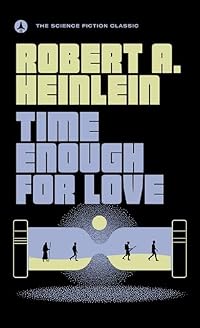
The thing that I do like about the book is the front cover illustration but I have a feeling that something is being concealed from us there, too. show less
In Heinlein's letters outlining plans for this book he states that he will include various anecdotes in the book but his wife blithely leaves us with notes like "Robert never did tell me what the crisis with Japan was about." Heinlein also says show more that he will name names but acknowledges that his wife will decide after his death if they will stay and names are blanked out in many places for no apparent reason. The book could hardly have been a tell-all in any case since it was edited by his 3rd wife, Virginia, who he met before his 2nd marriage broke up and married immediately after. It doesn't take much reading-between-the-lines to know that something interesting was omitted.
There is a lot of beating around the bush with vague references to his illnesses scattered throughout the book. If they were such a big part of his life, then explain them to us in a page; if they weren't then explain them to us in a paragraph, but explain!
Even though they were tied together so very badly, at least the letters were in Heinlein's own words and were somewhat revealing.
It is sad that Heinlein never came to terms with the fact that he had so many fans. The downside of selling thousands of books to schools and libraries was that thousands of school children wrote him letters that he felt compelled to answer individually and personally. His attempts to hire minions failed because micromanaging minions took even more time than answering the letters himself.
The thing that I do like about the book is the front cover illustration but I have a feeling that something is being concealed from us there, too. show less
This is a collection of letters written by this renowned science fiction author. They start with his first one to an editor in 1939 and continue throughout his long career. It was his wish that his letters be published after his death and called by this title. His wife, Virginia Heinlein, took on this monumental task.
liked it a lot! Funny letters and complaints from the grandmaster.
Probably only interesting if you're a Heinlein fan, but quite interesting if you are one.
Members
- Recently Added By
Lists

Science Fiction and Fantasy Autobiographies
38 works; 3 members

Books Read in 2004
199 works; 7 members
Author Information

461+ Works 173,958 Members
Robert Anson Heinlein was born on July 7, 1907 in Butler, Mo. The son of Rex Ivar and Bam Lyle Heinlein, Robert Heinlein had two older brothers, one younger brother, and three younger sisters. Moving to Kansas City, Mo., at a young age, Heinlein graduated from Central High School in 1924 and attended one year of college at Kansas City Community show more College. Following in his older brother's footsteps, Heinlein entered the Navel Academy in 1925. After contracting pulmonary tuberculosis, of which he was later cured, Heinlein retired from the Navy and married Leslyn MacDonald. Heinlein was said to have held jobs in real estate and photography, before he began working as a staff writer for Upton Sinclair's EPIC News in 1938. Still needing money desperately, Heinlein entered a writing contest sponsored by the science fiction magazine Thrilling Wonder Stories. Heinlein wrote and submitted the story "Life-Line," which went on to win the contest. This guaranteed Heinlein a future in writing. Using his real name and the pen names Caleb Saunders, Anson MacDonald, Lyle Monroe, John Riverside, and Simon York, Heinlein wrote numerous novels including For Us the Living, Methuselah's Children, and Starship Troopers, which was adapted into a big-budget film for Tri-Star Pictures in 1997. The Science Fiction Writers of America named Heinlein its first Grand Master in 1974, presented 1975. Officers and past presidents of the Association select a living writer for lifetime achievement. Also, the Science Fiction and Fantasy Hall of Fame inducted Heinlein in 1998. Heinlein died in 1988 from emphysema and other related health problems. Heinlein's remains were scattered from the stern of a Navy warship off the coast of California. (Bowker Author Biography) show less
Some Editions
Awards and Honors
Awards
Common Knowledge
- Original title
- Grumbles from the Grave
- Original publication date
- 1989
- Dedication
- For Heinlein's Children
- Original language
- English
Classifications
Statistics
- Members
- 1,243
- Popularity
- 19,706
- Reviews
- 12
- Rating
- (3.54)
- Languages
- English
- Media
- Paper
- ISBNs
- 4
- ASINs
- 9
