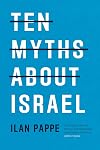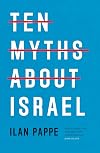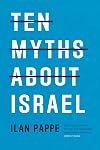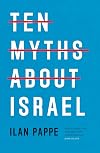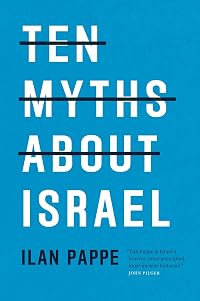
Ten Myths About Israel
by Ilan Pappé
On This Page
Description
The myths and reality behind the state of Israel and the Israeli-Palestinian conflict-from "the most eloquent writer on Palestinian history" (New Statesman) The outspoken and radical Israeli historian Ilan Pappe examines the most contested ideas concerning the origins and identity of the contemporary state of Israel. The "ten myths"-repeated endlessly in the media, enforced by the military, and accepted without question by the world's governments-reinforce the regional status quo and show more include: Palestine was an empty land at the time of the Balfour Declaration; the Jews were a people without a land; there is no difference between Zionism and Judaism; Zionism is not a colonial project of occupation; the Palestinians left their Homeland voluntarily in 1948; the June 1967 War was a war of 'No Choice'; Israel is the only Democracy in the Middle East; the Oslo Mythologies; the Gaza Mythologies; and the Two-State Solution. For students, activists, and anyone interested in better understanding the news, Ten Myths About Israel is another groundbreaking study of the Israel-Palestine conflict from the author of The Ethnic Cleansing of Palestine. show lessTags
Recommendations









Member Reviews
My mother is the only member of my maternal family, besides myself, who isn't a zionist. I've been anti-zionist since the first time I read anything about what's happening in Palestine, in the late '90s or early 2000s. It struck me as one of the most obvious cases settler colonialism imaginable, before I even knew what those words meant. In 2024 it feels like you have to be intentionally blind not to see it, but still, I figured I'd read a book so I could learn more about the history of the area.
This book was published in 2017, six years before the most blatant genocide since the holocaust. Zionists have weird memories these days: they remember biblical times (which may or may not have even happened), the holocaust, and October 7th; but show more seemingly nothing in between. The reality is a lot different though, and Pappe does a good job of explaining history while dismantling a few commonly believed myths. He admits in the introduction that it isn't a balanced book, but instead it's “yet another attempt to redress the balance of power on behalf of the colonized, occupied, and oppressed Palestinians,” and I appreciate that.
I'd love to write a long review, complete with a breakdown of each of the chapters, but who has time for that? I'll tell you my favorite myth-busting chapters though: “Palestine was an empty land,” “Zionism is Judaism,” and “the Oslo mythologies.” Of all the books I've read about that area of the world, this one has perhaps given me the most things to hold on to.
I would recommend this book for everyone, but I'm afraid the zionists have completely lost their minds. So many liberal zionists have been ruthless to Trump supporters over the past eight years for their inability to comprehend facts that go against their belief system, for their racism and xenophobia, and for their hate-backed anger. Now they are becoming the same people. If facts in their faces every day don't do anything to get them to be against genocide, then reading a book won't either. show less
This book was published in 2017, six years before the most blatant genocide since the holocaust. Zionists have weird memories these days: they remember biblical times (which may or may not have even happened), the holocaust, and October 7th; but show more seemingly nothing in between. The reality is a lot different though, and Pappe does a good job of explaining history while dismantling a few commonly believed myths. He admits in the introduction that it isn't a balanced book, but instead it's “yet another attempt to redress the balance of power on behalf of the colonized, occupied, and oppressed Palestinians,” and I appreciate that.
I'd love to write a long review, complete with a breakdown of each of the chapters, but who has time for that? I'll tell you my favorite myth-busting chapters though: “Palestine was an empty land,” “Zionism is Judaism,” and “the Oslo mythologies.” Of all the books I've read about that area of the world, this one has perhaps given me the most things to hold on to.
I would recommend this book for everyone, but I'm afraid the zionists have completely lost their minds. So many liberal zionists have been ruthless to Trump supporters over the past eight years for their inability to comprehend facts that go against their belief system, for their racism and xenophobia, and for their hate-backed anger. Now they are becoming the same people. If facts in their faces every day don't do anything to get them to be against genocide, then reading a book won't either. show less
I've been holding off on reviewing this book for over a week now, because it frightens me to review this book, and it makes me feel ashamed not to review this book. Or rather, I feel shame at my own reluctance to review this book. I have already lost friends over the years even as I endeavored not to discuss these issues, and was pressed, forced finally, into telling my reluctant opinion. And then I was ostrascized for it.
What he says is in very great measure true. The modern State of Israel is not a democratically run state by the rules of Good Governance (especially given the uneven treatment of varying groups within the state, and the control of all life-cycle events and the Kotel by the Chief Rabbinate, which excludes most Jewish show more officials). Many things being done by the government are unethical and inexcusable, and the state of Israel does not speak for the Jewish people. And no one, these days to my knowledge, still claims that the land was empty at the time of the start of the Zionist movement. I may be wrong there, but I seem to think that it has been clear for years that British authorities were playing both sides against the middle during the Mandate period. Nor does anyone universally equate Zionism with Judaism, even if the majority of Jews declare as Zionists out of fear of where to go in the event of another Holocaust. Many, and that number is growing, Jews are speaking out as non-Zionists and advocating changes in the liturgy to reflect more universalist trends within Judaism (see J Street, [b:The First Jewish Catalog: A Do-It-Yourself Kit|1744496|The First Jewish Catalog A Do-It-Yourself Kit|Richard Siegel|https://images.gr-assets.com/books/1441289745s/1744496.jpg|1742164] , and siddur [b:Siddur Birkat Shalom|22672889|Siddur Birkat Shalom|Havurat Shalom Siddur Project|https://s.gr-assets.com/assets/nophoto/book/50x75-a91bf249278a81aabab721ef782c4a74.png|42177290] by Havurat Shalom in Somerville, MA).
Yet, also, the idea he puts out that the Jews had multiple homelands is simply not so. And his chapter does not address this, but rather chronicles how the British pushed for a Jewish state in the Palestinian Mandate area even before the Ottoman empire lost it. This may be true, but negates the rejection of Jews all around the world during WWII.
I admit to being shocked by what he said about the 1967 war, and also about the Oslo accords. That left me disheartened and depressed, particularly as he also negates the possibility of a 2-state solution. What then is left? show less
What he says is in very great measure true. The modern State of Israel is not a democratically run state by the rules of Good Governance (especially given the uneven treatment of varying groups within the state, and the control of all life-cycle events and the Kotel by the Chief Rabbinate, which excludes most Jewish show more officials). Many things being done by the government are unethical and inexcusable, and the state of Israel does not speak for the Jewish people. And no one, these days to my knowledge, still claims that the land was empty at the time of the start of the Zionist movement. I may be wrong there, but I seem to think that it has been clear for years that British authorities were playing both sides against the middle during the Mandate period. Nor does anyone universally equate Zionism with Judaism, even if the majority of Jews declare as Zionists out of fear of where to go in the event of another Holocaust. Many, and that number is growing, Jews are speaking out as non-Zionists and advocating changes in the liturgy to reflect more universalist trends within Judaism (see J Street, [b:The First Jewish Catalog: A Do-It-Yourself Kit|1744496|The First Jewish Catalog A Do-It-Yourself Kit|Richard Siegel|https://images.gr-assets.com/books/1441289745s/1744496.jpg|1742164] , and siddur [b:Siddur Birkat Shalom|22672889|Siddur Birkat Shalom|Havurat Shalom Siddur Project|https://s.gr-assets.com/assets/nophoto/book/50x75-a91bf249278a81aabab721ef782c4a74.png|42177290] by Havurat Shalom in Somerville, MA).
Yet, also, the idea he puts out that the Jews had multiple homelands is simply not so. And his chapter does not address this, but rather chronicles how the British pushed for a Jewish state in the Palestinian Mandate area even before the Ottoman empire lost it. This may be true, but negates the rejection of Jews all around the world during WWII.
I admit to being shocked by what he said about the 1967 war, and also about the Oslo accords. That left me disheartened and depressed, particularly as he also negates the possibility of a 2-state solution. What then is left? show less
I've been holding off on reviewing this book for over a week now, because it frightens me to review this book, and it makes me feel ashamed not to review this book. Or rather, I feel shame at my own reluctance to review this book. I have already lost friends over the years even as I endeavored not to discuss these issues, and was pressed, forced finally, into telling my reluctant opinion. And then I was ostrascized for it.
What he says is in very great measure true. The modern State of Israel is not a democratically run state by the rules of Good Governance (especially given the uneven treatment of varying groups within the state, and the control of all life-cycle events and the Kotel by the Chief Rabbinate, which excludes most Jewish show more officials). Many things being done by the government are unethical and inexcusable, and the state of Israel does not speak for the Jewish people. And no one, these days to my knowledge, still claims that the land was empty at the time of the start of the Zionist movement. I may be wrong there, but I seem to think that it has been clear for years that British authorities were playing both sides against the middle during the Mandate period. Nor does anyone universally equate Zionism with Judaism, even if the majority of Jews declare as Zionists out of fear of where to go in the event of another Holocaust. Many, and that number is growing, Jews are speaking out as non-Zionists and advocating changes in the liturgy to reflect more universalist trends within Judaism (see J Street, [b:The First Jewish Catalog: A Do-It-Yourself Kit|1744496|The First Jewish Catalog A Do-It-Yourself Kit|Richard Siegel|https://images.gr-assets.com/books/1441289745s/1744496.jpg|1742164] , and siddur [b:Siddur Birkat Shalom|22672889|Siddur Birkat Shalom|Havurat Shalom Siddur Project|https://s.gr-assets.com/assets/nophoto/book/50x75-a91bf249278a81aabab721ef782c4a74.png|42177290] by Havurat Shalom in Somerville, MA).
Yet, also, the idea he puts out that the Jews had multiple homelands is simply not so. And his chapter does not address this, but rather chronicles how the British pushed for a Jewish state in the Palestinian Mandate area even before the Ottoman empire lost it. This may be true, but negates the rejection of Jews all around the world during WWII.
I admit to being shocked by what he said about the 1967 war, and also about the Oslo accords. That left me disheartened and depressed, particularly as he also negates the possibility of a 2-state solution. What then is left? show less
What he says is in very great measure true. The modern State of Israel is not a democratically run state by the rules of Good Governance (especially given the uneven treatment of varying groups within the state, and the control of all life-cycle events and the Kotel by the Chief Rabbinate, which excludes most Jewish show more officials). Many things being done by the government are unethical and inexcusable, and the state of Israel does not speak for the Jewish people. And no one, these days to my knowledge, still claims that the land was empty at the time of the start of the Zionist movement. I may be wrong there, but I seem to think that it has been clear for years that British authorities were playing both sides against the middle during the Mandate period. Nor does anyone universally equate Zionism with Judaism, even if the majority of Jews declare as Zionists out of fear of where to go in the event of another Holocaust. Many, and that number is growing, Jews are speaking out as non-Zionists and advocating changes in the liturgy to reflect more universalist trends within Judaism (see J Street, [b:The First Jewish Catalog: A Do-It-Yourself Kit|1744496|The First Jewish Catalog A Do-It-Yourself Kit|Richard Siegel|https://images.gr-assets.com/books/1441289745s/1744496.jpg|1742164] , and siddur [b:Siddur Birkat Shalom|22672889|Siddur Birkat Shalom|Havurat Shalom Siddur Project|https://s.gr-assets.com/assets/nophoto/book/50x75-a91bf249278a81aabab721ef782c4a74.png|42177290] by Havurat Shalom in Somerville, MA).
Yet, also, the idea he puts out that the Jews had multiple homelands is simply not so. And his chapter does not address this, but rather chronicles how the British pushed for a Jewish state in the Palestinian Mandate area even before the Ottoman empire lost it. This may be true, but negates the rejection of Jews all around the world during WWII.
I admit to being shocked by what he said about the 1967 war, and also about the Oslo accords. That left me disheartened and depressed, particularly as he also negates the possibility of a 2-state solution. What then is left? show less
This book contains great information and I learned a lot. However, this reads like a college textbook and probably is used as one. I wasn't exactly prepared to read a textbook, so that affected my experience. I'll recommend it though.
Libro escrito con anterioridad a los sucesos de 2024, por tanto el autor no los analiza. Tras la lectura de este libro y otros anteriores, es que Israel desde 1948 su objetivo final es quedarse con toda Palestina y para ello no obviará realizar las acciones que en cada momento se la permita. En mi opinión creo que desde 1948 hasta hoy se ha estado cometiendo un genocidio con el pueblo palestino.
Nov 11, 2024Spanish
Sehr viele alternative facts in Sachen Israel.
Jun 4, 2017German
Ratings
Members
- Recently Added By
Lists

Decolonize Palestine's Reading List
126 works; 3 members

Hakim's Marxist Book List
46 works; 3 members
Author Information

30+ Works 3,679 Members
All Editions
Common Knowledge
- Original publication date
- 2017-05-02
Classifications
- Genres
- Nonfiction, General Nonfiction, History
- DDC/MDS
- 956.94 — History & geography History of Asia Middle East Asia: Turkey, Iraq, Syria, Lebanon, Israel, Jordan The Levant Israel and Palestine
- LCC
- DS125 .P2985 — History of Europe, Asia, Africa and Oceania Asia History of Asia Israel (Palestine). The Jews History
- BISAC
Statistics
- Members
- 406
- Popularity
- 76,535
- Reviews
- 6
- Rating
- (4.07)
- Languages
- 5 — English, Italian, Portuguese, Spanish, Swedish
- Media
- Paper, Audiobook, Ebook
- ISBNs
- 14
- ASINs
- 7