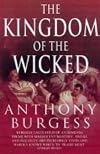
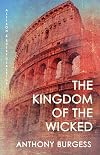
The Kingdom of the Wicked
by Anthony Burgess 
On This Page
Description
Beginning with the crucifixion of Jesus and ending, seventy years later, with the destruction of Pompeii, the wminent novelist and critic limns a dazzling, intellectually provocative recreation of the beginnings of Christianity.Tags
Recommendations
















Member Reviews
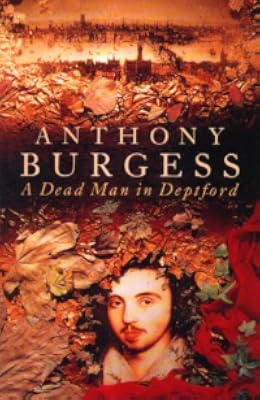
When I reviewed Anthony Burgess's [A Dead Man in Deptford] which was an historical novel about the Elizabethan playwright Christofer Marlowe I said:
“The virtue of a historical novel is its vice - the flat footed affirmation of possibility as fact.” There are few facts known about the late sixteenth century playwright and poet Christopher Marlowe and so Burgess has great fun making up a story that fits with the facts that we do know. It is a rumbustious, roisterous, sacrilegious look at the life of a writer making his living around the playhouses of Elizabethan England and one asks oneself “was it ever thus” - well it just may have been.
The Kingdom of the Wicked published some eight years earlier (1985), shows a similar approach show more to historical novel writing. Burgess has fun with the early Christian movement, from the death of Jesus to the volcanic eruption in Pompeii in AD 79. He has three main strands to his story the rise of the Christian Movement led by the disciples and Saint Paul, the chaos at the heart of the Roman Empire as he follows the career of the Roman emperors and the Jewish nations own internal dissent following the teachings of christianity. Burgess is faithful to the historical outline, but like all good fiction writers he fleshes out the characters adding inventions and characters of his own to ensure nothing gets in the way of good story telling. Unsurprisingly he revels in the murder, mayhem and sexual perversions of the Roman world, which contrasts with the dedication and bravery of the early christian leaders; he provides intriguing characterisations of Saint Paul and Saint Peter.
Burgess starts his story with Sadoc, who is writing this early history. He is suffering from a chronic disease and nearing the end of his life wishes to finish this story before his death. He starts his tale controversially
"Concerning the resurrection of Jesus, everybody must believe what he can. For my part, I will not accept miracles if the rational lies to hand, and have no proof that Jesus died on the cross."
Sadoc's theory is that by all accounts Jesus was a man of immense stature, with enough breath in his lungs and body to survive the crucifixion. He was undoubtedly unconscious when taken down from the cross and his legs were not broken and after three days in the tomb he had recovered enough to roll away the stone. Sadoc then goes on to tell his story of the documented re-appearances of Jesus after the "resurrection". Nearly 400 pages later we come to the end of the story with the deaths of the last of the diciples and Saint Paul. Meanwhile we have taken in the corrupt roman emperors particularly Nero and the infighting of the Jews and their last stand at Masada. It is an enjoyable entertaining account based around the historical facts and paints a lively picture of the struggles of the early christian church. It is of course irreverent and may be offensive to some people, but for me it was both interesting, informative and for the most part entertaining. Sadoc's story is told as though he was writing it today (today being the 1980's) and so there is no attempt to place himself inside the mindset of the people living 2000 years ago.
This was my last unread Anthony Burgess novel and I have come to the conclusion that his irreverent style is suited to some subjects better than others. He had a story to tell with this book and launched himself wholeheartedly in his project to bring this to life for the modern reader. I rate this as 4 stars. show less
“The virtue of a historical novel is its vice - the flat footed affirmation of possibility as fact.” There are few facts known about the late sixteenth century playwright and poet Christopher Marlowe and so Burgess has great fun making up a story that fits with the facts that we do know. It is a rumbustious, roisterous, sacrilegious look at the life of a writer making his living around the playhouses of Elizabethan England and one asks oneself “was it ever thus” - well it just may have been.
The Kingdom of the Wicked published some eight years earlier (1985), shows a similar approach show more to historical novel writing. Burgess has fun with the early Christian movement, from the death of Jesus to the volcanic eruption in Pompeii in AD 79. He has three main strands to his story the rise of the Christian Movement led by the disciples and Saint Paul, the chaos at the heart of the Roman Empire as he follows the career of the Roman emperors and the Jewish nations own internal dissent following the teachings of christianity. Burgess is faithful to the historical outline, but like all good fiction writers he fleshes out the characters adding inventions and characters of his own to ensure nothing gets in the way of good story telling. Unsurprisingly he revels in the murder, mayhem and sexual perversions of the Roman world, which contrasts with the dedication and bravery of the early christian leaders; he provides intriguing characterisations of Saint Paul and Saint Peter.
Burgess starts his story with Sadoc, who is writing this early history. He is suffering from a chronic disease and nearing the end of his life wishes to finish this story before his death. He starts his tale controversially
"Concerning the resurrection of Jesus, everybody must believe what he can. For my part, I will not accept miracles if the rational lies to hand, and have no proof that Jesus died on the cross."
Sadoc's theory is that by all accounts Jesus was a man of immense stature, with enough breath in his lungs and body to survive the crucifixion. He was undoubtedly unconscious when taken down from the cross and his legs were not broken and after three days in the tomb he had recovered enough to roll away the stone. Sadoc then goes on to tell his story of the documented re-appearances of Jesus after the "resurrection". Nearly 400 pages later we come to the end of the story with the deaths of the last of the diciples and Saint Paul. Meanwhile we have taken in the corrupt roman emperors particularly Nero and the infighting of the Jews and their last stand at Masada. It is an enjoyable entertaining account based around the historical facts and paints a lively picture of the struggles of the early christian church. It is of course irreverent and may be offensive to some people, but for me it was both interesting, informative and for the most part entertaining. Sadoc's story is told as though he was writing it today (today being the 1980's) and so there is no attempt to place himself inside the mindset of the people living 2000 years ago.
This was my last unread Anthony Burgess novel and I have come to the conclusion that his irreverent style is suited to some subjects better than others. He had a story to tell with this book and launched himself wholeheartedly in his project to bring this to life for the modern reader. I rate this as 4 stars. show less
Maybe my expectations were too high, after A Clockwork Orange. Now, don't get me wrong, everything was great, just what I was hoping, except for the plot. The plot was little more than the history of the rise of Christianity. He gave details no historian could possibly know, making up characters and conversations all over the place. But he didn't take it anywhere interesting. If you don't know this story, and would like to, this might be a good place to start. (If you don't mind graphically described gore and sexual perversion, when he talks about the Roman side of the story.) As a classicist who has studied this period pretty well, I found it rather dull.
This is fiction but Burgess has used a variety of original sources - Tacitus, Suetonius, Josephus and the Acts of the Apostles to tell the story of the early years of Christianity and a series of Roman emperors from Tiberius to Vespasian. This is a not a pleasant story to read and Burgess doesn't sugar coat any of the history. That said it is a fascinating look at the first years of Christianity, its trials and tribulations, the persecution and differences in opinion between its earliest adherents. Mixing this with Roman history doesn't make for the easiest of reads as he switches from character to character, though Burgess does follow a chronological sequence.
I'm not sorry to have read this and I can appreciate what Burgess has done show more but I can't strongly recommend this book to anybody. If you know anything about the period there isn't anything particularly new here and I didn't find his style the most readable. Definitely well researched and it was interesting but not enough to make me search out the other books he has written about this period of history. show less
I'm not sorry to have read this and I can appreciate what Burgess has done show more but I can't strongly recommend this book to anybody. If you know anything about the period there isn't anything particularly new here and I didn't find his style the most readable. Definitely well researched and it was interesting but not enough to make me search out the other books he has written about this period of history. show less
A disappointment after Earthly Powers. Individual scenes, though often vivid, do not cohere. There's a bit too much point making, the primary one being that the birth of Christianity was not attended by angels and happy faces but by gore-spattered midwives with their eyes on the main chance.
EDHASA
Anthony Burgess ha pretendido recrear en esta novela los primeros años del cristianismo, cuando los seguidores de Cristo se empeñaron en instaurar una nueva religión basada en sus recuerdos de las palabras y obras del Señor. Pablo es la figura centra de esta extraordinaria historia, en que las tribulaciones, martirologios y primeros triunfos de los cristianos sirven de contrapunto, a la depravación y la refinada crueldad de la Roma imperial, el Reino de los Réprobos, gobernada por monstruos como Calígula y Nerón.
"Una maravillosa, recreación de la Roma antigua... Probablemente ningún otro novelista, a excepción de Robert Graves, ha sabido evocar este mundo tan bien como Burges."
San Francisco Chronicle
"El impresionante show more talento de Burges se manifiesta con toda su fuerza en esta historia de la Cristiandad, desde la Crucifixión hasta la destrucción de Pompeya. Probablemente la mejor novela histórica de este período que se haya escrito nunca... Burges se ha superado a sí mismo."
Publisbers Weekly show less
Anthony Burgess ha pretendido recrear en esta novela los primeros años del cristianismo, cuando los seguidores de Cristo se empeñaron en instaurar una nueva religión basada en sus recuerdos de las palabras y obras del Señor. Pablo es la figura centra de esta extraordinaria historia, en que las tribulaciones, martirologios y primeros triunfos de los cristianos sirven de contrapunto, a la depravación y la refinada crueldad de la Roma imperial, el Reino de los Réprobos, gobernada por monstruos como Calígula y Nerón.
"Una maravillosa, recreación de la Roma antigua... Probablemente ningún otro novelista, a excepción de Robert Graves, ha sabido evocar este mundo tan bien como Burges."
San Francisco Chronicle
"El impresionante show more talento de Burges se manifiesta con toda su fuerza en esta historia de la Cristiandad, desde la Crucifixión hasta la destrucción de Pompeya. Probablemente la mejor novela histórica de este período que se haya escrito nunca... Burges se ha superado a sí mismo."
Publisbers Weekly show less
Set in the time after the Cricifiction, the Apostles set out to spread the Gospel. The argue about what is permissible in their activities while facing opposition of the rabbinical court in Jerusalem, a number of mad emperors in Rome and the pagan beliefs throughout the empire.
Holperigere Übersetzung
Members
- Recently Added By
Lists

Top Romantasy Books
9 works; 1 member
Author Information

120+ Works 48,185 Members
Anthony Burgess was born in 1917 in Manchester, England. He studied language at Xaverian College and Manchester University. He had originally applied for a degree in music, but was unable to pass the entrance exams. Burgess considered himself a composer first, one who later turned to literature. Burgess' first novel, A Vision of Battlements show more (1964), was based on his experiences serving in the British Army. He is perhaps best known for his novel A Clockwork Orange, which was later made into a movie by Stanley Kubrick. In addition to publishing several works of fiction, Burgess also published literary criticism and a linguistics primer. Some of his other titles include The Pianoplayers, This Man and Music, Enderby, The Kingdom of the Wicked, and Little Wilson and Big God. Burgess was living in Monaco when he died in 1993. (Bowker Author Biography) show less
Anthony Burgess has a Legacy Library. Legacy libraries are the personal libraries of famous readers, entered by LibraryThing members from the Legacy Libraries group.
Common Knowledge
- Canonical title
- The Kingdom of the Wicked
- Original title
- The Kingdom of the Wicked
- Original publication date
- 1985
- People/Characters*
- Cristo, San Pablo, Calígula, Robert Graves.
- Important places*
- Roma, Pompeya
- Dedication
- Per Paolo Andrea, non martire.
- First words
- I take my title from the name the Jews have always given to the Roman Empire.
- Publisher's editor*
- Liana Burges
- Original language*
- Inglés
*Some information comes from Common Knowledge in other languages. Click "Edit" for more information.
Classifications
Statistics
- Members
- 552
- Popularity
- 53,773
- Reviews
- 12
- Rating
- (3.77)
- Languages
- 6 — Dutch, English, French, German, Spanish, Swedish
- Media
- Paper, Ebook
- ISBNs
- 18
- ASINs
- 12