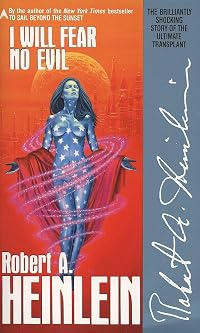
I Will Fear No Evil
by Robert A. Heinlein
On This Page
Description
As startling and provocative as his famous Stranger in a Strange Land, here is Heinlein's grand masterpiece about a man supremely talented, immensely old, and obscenely wealthy who discovers that money can buy everything. Johann Sebastian Bach Smith was immensely rich--and very old. Though his mind was still keen, his body was worn out. His solution was to have surgeons transplant his brain into a new body. The operation was a great success--but the patient was no longer Johann Sebastian show more Bach Smith. He was now fused with the very vocal personality of his gorgeous, recently deceased secretary, Eunice--with mind-blowing results Together they must learn to share control of her body. Once again, master storyteller Robert A. Heinlein delivers a wild and intriguing classic of science fiction. Written at the dawn of the 1970s, this novel is the brilliantly shocking story of the ultimate transplant. show lessTags
Recommendations


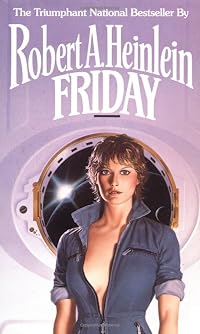

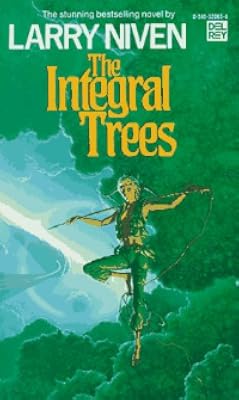

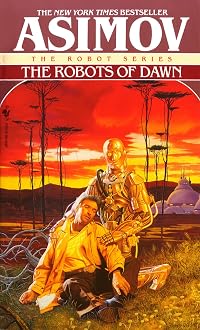
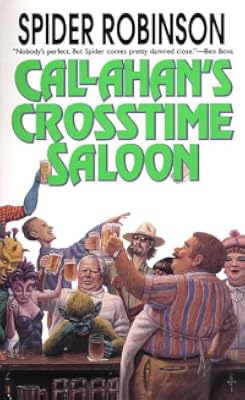




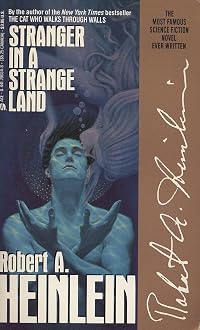


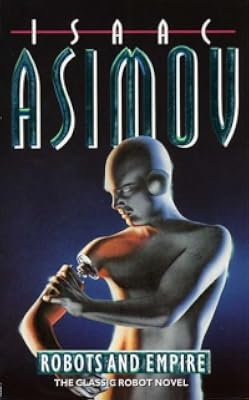


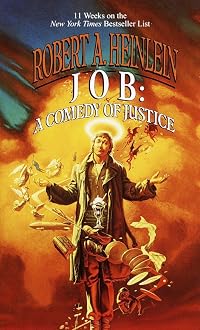
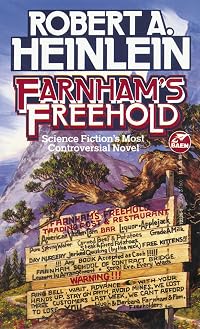






Member Recommendations

Member Reviews
As a teen, Heinlein's "Stranger in a Strange Land" was one of my all-time favorite high school reads. As an adult, I have to agree with some acerbic critics that "I Will Fear No Evil" is borderline dreadful. I say "borderline" because the premise is certainly intriguing. But I read one ancient review where the author himself is quoted as saying that the "novel is about 30,000 words too long." Sadly, Heinlein was under-estimating. I would place the number somewhere around 50,000 words. The dialogue goes on forever in so many spots. Character development is one thing, but Heinlein is simply undisciplined in this tome. I'm not sure I would go quite as far as the creative reviewer who suggested that this book would be available to "damned show more souls in Hell's lending library," because I do think the plot provided a few intriguing twists and some "food for thought." But I had to force myself to finish it -- and "force" is not an understatement. show less
Okay, before I start, know that I was in high school when this book was written in 1970 and have read a lot of SF, and Heinlein. This is one of his I hadn't read so decided to give it a shot. Whew, I wish that I hadn't!
The plot: a 90 year old male (head of a large corporation), is dying and has his brain implanted into the body of his dead female secretary (it takes place in about 2015). So you think that maybe the plot has the female run this large corporation in an era where it was (and is) almost unheard of? A nice feminist view? Nope! The main character, who before was this strong and tyrannical male, turns into this sex-starved super-fem! Just because his brain is now in a female body! It is probably what a misogynist truly show more believes would happen. It is sensitive in the way that Hugh Hefner was sensitive about women. The character (once named Johann, now is Joan) also becomes sex-obsessed with his old friend and lawyer, his bodyguards, judges, doctors, nurses, etc., all who know about the transplant. Weird, just weird.
And, to make it stranger, the secretary's personality is still in the body as well (huh?!). Much of the book are these back and forth conversations between the two people in the body, mostly about sex, that just gets very annoying and distracting.
It is very creepy at times, including obsession with a 13 year old female child by the old lawyer/friend (now husband) of Joan. And it gets even more far-fetched and weirder...
I would avoid this one. I only gave it two stars because it was Heinlein, one of the "big three" in science fiction.
I read and liked "Stranger in a Strange Land" back in the 70s, but I don't think I will re-read it, I may be disillusioned... show less
The plot: a 90 year old male (head of a large corporation), is dying and has his brain implanted into the body of his dead female secretary (it takes place in about 2015). So you think that maybe the plot has the female run this large corporation in an era where it was (and is) almost unheard of? A nice feminist view? Nope! The main character, who before was this strong and tyrannical male, turns into this sex-starved super-fem! Just because his brain is now in a female body! It is probably what a misogynist truly show more believes would happen. It is sensitive in the way that Hugh Hefner was sensitive about women. The character (once named Johann, now is Joan) also becomes sex-obsessed with his old friend and lawyer, his bodyguards, judges, doctors, nurses, etc., all who know about the transplant. Weird, just weird.
And, to make it stranger, the secretary's personality is still in the body as well (huh?!). Much of the book are these back and forth conversations between the two people in the body, mostly about sex, that just gets very annoying and distracting.
It is very creepy at times, including obsession with a 13 year old female child by the old lawyer/friend (now husband) of Joan. And it gets even more far-fetched and weirder...
I would avoid this one. I only gave it two stars because it was Heinlein, one of the "big three" in science fiction.
I read and liked "Stranger in a Strange Land" back in the 70s, but I don't think I will re-read it, I may be disillusioned... show less
The last of the huge stack of Heinlein books lent to me by my friend Wayne ages and ages ago. Now I can send them back and clear some space on my borrowed books shelf for the stacks of books my sister sent in her last package. (But more are sure to arrive any day now, which means I will be behind again.)
What can I say about Heinlein that I haven't already said? Other than that I'm starting to max out on him. There's only so much immortal life/free-sex commune/space colonization sci fi you can read before it all starts to sound a little bit repetitive.
This book starts out with an interesting premise, which is what would happen if you could transplant a male brain into a female body? Which of course, ends up being a 512 page tome on the show more difference between men and women, specifically men and women who prefer to have sex six times a day. For which sex is sex better? Which sex is more rational? Some of his answers are interesting, some provoked a lot of eye-rolling on my part. But what else would I expect from Heinlein? show less
What can I say about Heinlein that I haven't already said? Other than that I'm starting to max out on him. There's only so much immortal life/free-sex commune/space colonization sci fi you can read before it all starts to sound a little bit repetitive.
This book starts out with an interesting premise, which is what would happen if you could transplant a male brain into a female body? Which of course, ends up being a 512 page tome on the show more difference between men and women, specifically men and women who prefer to have sex six times a day. For which sex is sex better? Which sex is more rational? Some of his answers are interesting, some provoked a lot of eye-rolling on my part. But what else would I expect from Heinlein? show less
Re-read this after a gap of many many years. It's really interesting how different the book is to me from the last time around.
This time I was very struck by Heinlein's politics and economics, rather than the very front and centre gender and sexuality plot. The perceived ethics, morals and responsibility of all the characters in an almost anarchic society were quite different than those you might expect.
I do think the authour tried pretty blatantly to provoke strong reactions in his readers, and it still does today, even though times have changed around it. What you think of this book might reflect more on yourself than you realize.
Not my favourite Heinlein, but still worth reading, and re-reading.
This time I was very struck by Heinlein's politics and economics, rather than the very front and centre gender and sexuality plot. The perceived ethics, morals and responsibility of all the characters in an almost anarchic society were quite different than those you might expect.
I do think the authour tried pretty blatantly to provoke strong reactions in his readers, and it still does today, even though times have changed around it. What you think of this book might reflect more on yourself than you realize.
Not my favourite Heinlein, but still worth reading, and re-reading.
I read this as a kid. What the hell was I thinking.
Faux-ideological drivel which boils down to "I shall have ultimate freedom and the script will save society from any consequences".
Also, this guy seems to have perfected the "hot young lass falls for a mature old fart that obviously resembles me" message.
He's so in love with himself that in this book he finally found the perfect girlfriend. Guess whom.
Faux-ideological drivel which boils down to "I shall have ultimate freedom and the script will save society from any consequences".
Also, this guy seems to have perfected the "hot young lass falls for a mature old fart that obviously resembles me" message.
He's so in love with himself that in this book he finally found the perfect girlfriend. Guess whom.
Before we get into things, let’s deal with the most common complaint regarding the book. Yes, it is sexist, anachronistic, and often patently offensive in it’s portrayal of BOTH genders. It’s also a book that was first published in 1970, and is the work of a man who began writing science fiction as early as 1939. Critiquing Heinlein for not being properly progressive regarding gender equality 40 years ago is like lambasting Mark Twain for not being politically correct regarding race 135 years ago. Anyway, the book introduces us to Johann, an elderly, crippled, bitter old man who also happens to be exceedingly rich. He knows his body is dying, but his brain is just fine. So, he comes up with the idea of transferring his brain to a show more new body upon his death. He doesn’t actually expect it to work, but figures it’s better to waste his money on a sliver of hope than to let his children squabble over it.Not only does he not expect it to work, but he certainly does not expect to wake up in the body of a woman – specifically, that of Eunice, his beautiful young secretary. Fortunately for Johann, something of Eunice has survived to share her body with him. It’s never made clear whether this is her spirit, her memory, or just his imagination, but it serves to jumpstart the plot past the awkwardness you’d expect of a man who is suddenly a woman.Once the legal/ethical/philosophical issues are dispensed with, much of the book deals with Johann’s (now Joan Eunice’s) sexual exploits. Again, yes, they’re sexist and sometimes crude, but also thoroughly entertaining. Ultimately, what I took away from the book was an appreciation for the dilemma of sex vs gender vs sexual orientation - what does it means for a man’s mind to desire other women (while in a woman’s body), or for a woman’s body to continue desiring men (while guided by a man’s mind).As I said, it’s an interesting book, and one that makes you think. It’s not the greatest story every written, but certainly a great concept. show less
This book has a great premise. A rich old man decides to take a chance on a risky whole body transplant. When he wakes up, he finds he's been transferred into the body of his young beautiful, and female secretary. And this is the sort of thing you have to love science fiction for, the kind of premise where you can explore issues of sexuality and gender. Unfortunately, I'm not convinced Heinlein was the writer to tackle it--that he was able to get into the mind of a woman. And as other reviewers have pointed out, this book badly needed a good editor. It's bloated and slow-paced. But... but... I don't hate it. I don't hate any Heinlein book, so maybe that's why I'm so forgiving. It certainly wouldn't be anywhere near the top of my show more favorites. This is more in the vein of Stranger in a Strange Land Heinlein than The Moon is a Harsh Mistress Heinlein and I can't say I'm among those who enjoy or find plausible how he handled women characters or sexuality. But he could be funny, and even here is eminently readable. show less
Members
- Recently Added By
Lists

Best Science Fiction Novels
816 works; 430 members

Books You Couldn't Finish
202 works; 32 members

Speculative Fiction to Read
706 works; 32 members

Books Read in 2021
5,361 works; 114 members
Author Information

457+ Works 174,460 Members
Robert Anson Heinlein was born on July 7, 1907 in Butler, Mo. The son of Rex Ivar and Bam Lyle Heinlein, Robert Heinlein had two older brothers, one younger brother, and three younger sisters. Moving to Kansas City, Mo., at a young age, Heinlein graduated from Central High School in 1924 and attended one year of college at Kansas City Community show more College. Following in his older brother's footsteps, Heinlein entered the Navel Academy in 1925. After contracting pulmonary tuberculosis, of which he was later cured, Heinlein retired from the Navy and married Leslyn MacDonald. Heinlein was said to have held jobs in real estate and photography, before he began working as a staff writer for Upton Sinclair's EPIC News in 1938. Still needing money desperately, Heinlein entered a writing contest sponsored by the science fiction magazine Thrilling Wonder Stories. Heinlein wrote and submitted the story "Life-Line," which went on to win the contest. This guaranteed Heinlein a future in writing. Using his real name and the pen names Caleb Saunders, Anson MacDonald, Lyle Monroe, John Riverside, and Simon York, Heinlein wrote numerous novels including For Us the Living, Methuselah's Children, and Starship Troopers, which was adapted into a big-budget film for Tri-Star Pictures in 1997. The Science Fiction Writers of America named Heinlein its first Grand Master in 1974, presented 1975. Officers and past presidents of the Association select a living writer for lifetime achievement. Also, the Science Fiction and Fantasy Hall of Fame inducted Heinlein in 1998. Heinlein died in 1988 from emphysema and other related health problems. Heinlein's remains were scattered from the stern of a Navy warship off the coast of California. (Bowker Author Biography) show less
Some Editions
Awards and Honors
Awards
Series
Belongs to Publisher Series
Common Knowledge
- Canonical title*
- Das geschenkte Leben
- Original title
- I Will Fear No Evil
- Original publication date
- 1970
- People/Characters
- Bach, Johann Sebastian, 1685-1750; Eunice Evans Branca; Jose "Joe" Branca; Lindsay Boyle; Tom Finchley; Dr. Roberto Garcia y Ibañez (show all 11); Winifred "Winnie" Gerston; Gigi; Jacob Moshe "Jake" Salomon; Hugo "Shorty" White; "Joan Eunice" Smith
- Dedication
- to Rex and Kathleen
- First words
- The room was old-fashioned, 1980 baroque, but it was wide, long, high, and luxurious.
- Quotations*
- Wenn die Frauen nicht als Ware angesehen werden wollen, sagte er immer, dann sollen sie sich auch nicht als Ware herausstellen.
- Last words
- (Click to show. Warning: May contain spoilers.)An old world vanished and then there were none.
- Publisher's editor*
- Jeschke, Wolfgang
- Original language
- English
*Some information comes from Common Knowledge in other languages. Click "Edit" for more information.
Classifications
Statistics
- Members
- 3,663
- Popularity
- 4,420
- Reviews
- 43
- Rating
- (3.38)
- Languages
- 8 — Czech, English, French, German, Italian, Japanese, Portuguese, Russian
- Media
- Paper, Audiobook, Ebook
- ISBNs
- 47
- UPCs
- 1
- ASINs
- 31