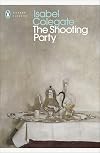
The Shooting Party
by Isabel Colegate
On This Page
Description
A leisurely weekend among the British gentry reveals the cracks in their upper-class society in this “beautifully crafted” historical fiction novel set in pre-WWI England (Washington Post).“A lovely piece of writing, in which subtlety, irony, and close observation abound.” —Larry McMurtry
It is the autumn of 1913. Sir Randolph Nettleby has assembled a brilliant array of guests at his Oxfordshire estate for the biggest hunt of the season. An army of gamekeepers, beaters, and show more servants has rehearsed the intricate age–old ritual, the gentlemen are falling into the prescribed mode of fellowship and sporting rivalry, the ladies intrigued by the latest gossip and fashion. Everything about this splendid weekend would seem a perfect consummation of the pleasures afforded the privileged in Edwardian England.
And yet it is not: the moral and social code of this group is not so secure as it appears. Competition beyond the bounds of sportsmanship, revulsion at the slaughter of the animals, anger at the inequities of class—these forces are about to rise up and engulf the assured social peace, a peace that can last only a brief while longer. In imagining Sir Randolph's shooting party, wrote The Spectator, Miss Colegate has found a perfect metaphor for the passing of a way of life. show less
Tags
Recommendations






















Member Recommendations
Member Reviews
As he does every October, in 1913, Sir Randolph Nettleby, Bart., invites some of the best shots in England to his Oxfordshire estate to shoot pheasant. The activity has a particular meaning here, for we don’t expect tweed-coated gentlemen to trample through the underbrush in their wellingtons, bagging a few birds for supper.
Rather, we have the spectacle of “beaters,” local men and boys recruited to flush the pheasant so that the frightened birds take brief flight — the only type they are capable of — toward the tweed-coated gentlemen, waiting with their loaders and dogs. Not that the participants would agree, but this is more mechanized killing than sport. The shooters take hundreds of birds, and the loaders are there to make show more sure the gentlemen never even have to turn their heads to receive a ready weapon, restocked with cartridges.
The novel’s opening paragraph notes that an infamous incident will take place, “an error of judgment which resulted in a death.” And since the timing is the autumn before the Great War, Colegate intends The Shooting Party as a metaphor for England on the eve of that tragic struggle.
What a metaphor it is, slaughter for its own sake, by the so-called best people in the country, no less. That the death referred to is a mistake, and that the author reveals it up front, properly removes any sense of whodunit, though the narrative does build suspense as to who will be the victim, how, and why. Instead, Colegate focuses on the characters, who represent various social classes and attitudes.
In lesser hands, this premise and approach could have devolved into a talky, theme-driven tract, populated by two-dimensional ideas rather than characters. But Colegate writes well-drawn people whose private concerns merge beautifully in a single, cohesive picture, and whose opinions often seem contradictory, which makes them more human.
For example, Sir Randolph, courteous to all despite his oft-injured sensibilities, worries that the stewards of the land, as he views himself, are a vanishing breed. Outwardly almost diffident, he nevertheless carries himself as the aristocrat born to rule, and his confusion as to how the world has changed lends him depth.
Stolid Bob Lilburn, who believes in form above all, astonishes his gorgeous wife, Olivia, by doubting that there could exist in England any people worth knowing whom he doesn’t already know. Lionel Stephens, a lawyer who seems perfect to everyone, believes he’s passionately in love with Olivia and would be willing to die for her if the fraught international situation brought war. A footman repeats this sentiment to the young parlor maid he fancies, who has the sense to think it’s twaddle.
Throughout, Colegate’s description of the shoot evokes the future conflict, often involving the manner in which the birds, fed and catered to before their destruction, are driven toward the guns. Again, a lesser author might have overplayed the symbolism, but Colegate’s hand remains deft. That’s because she’s careful to keep her descriptions active as well as physically and visually precise.
Though published forty years ago, The Shooting Party still keeps its edge. It’s one of those elegant novels I admire, in which the central action is itself an arresting metaphor. I must warn you that other than from a library (or sources in the UK), the book may be hard to find. But it is well worth your time and effort, a classic tale. show less
Rather, we have the spectacle of “beaters,” local men and boys recruited to flush the pheasant so that the frightened birds take brief flight — the only type they are capable of — toward the tweed-coated gentlemen, waiting with their loaders and dogs. Not that the participants would agree, but this is more mechanized killing than sport. The shooters take hundreds of birds, and the loaders are there to make show more sure the gentlemen never even have to turn their heads to receive a ready weapon, restocked with cartridges.
The novel’s opening paragraph notes that an infamous incident will take place, “an error of judgment which resulted in a death.” And since the timing is the autumn before the Great War, Colegate intends The Shooting Party as a metaphor for England on the eve of that tragic struggle.
What a metaphor it is, slaughter for its own sake, by the so-called best people in the country, no less. That the death referred to is a mistake, and that the author reveals it up front, properly removes any sense of whodunit, though the narrative does build suspense as to who will be the victim, how, and why. Instead, Colegate focuses on the characters, who represent various social classes and attitudes.
In lesser hands, this premise and approach could have devolved into a talky, theme-driven tract, populated by two-dimensional ideas rather than characters. But Colegate writes well-drawn people whose private concerns merge beautifully in a single, cohesive picture, and whose opinions often seem contradictory, which makes them more human.
For example, Sir Randolph, courteous to all despite his oft-injured sensibilities, worries that the stewards of the land, as he views himself, are a vanishing breed. Outwardly almost diffident, he nevertheless carries himself as the aristocrat born to rule, and his confusion as to how the world has changed lends him depth.
Stolid Bob Lilburn, who believes in form above all, astonishes his gorgeous wife, Olivia, by doubting that there could exist in England any people worth knowing whom he doesn’t already know. Lionel Stephens, a lawyer who seems perfect to everyone, believes he’s passionately in love with Olivia and would be willing to die for her if the fraught international situation brought war. A footman repeats this sentiment to the young parlor maid he fancies, who has the sense to think it’s twaddle.
Throughout, Colegate’s description of the shoot evokes the future conflict, often involving the manner in which the birds, fed and catered to before their destruction, are driven toward the guns. Again, a lesser author might have overplayed the symbolism, but Colegate’s hand remains deft. That’s because she’s careful to keep her descriptions active as well as physically and visually precise.
Though published forty years ago, The Shooting Party still keeps its edge. It’s one of those elegant novels I admire, in which the central action is itself an arresting metaphor. I must warn you that other than from a library (or sources in the UK), the book may be hard to find. But it is well worth your time and effort, a classic tale. show less
Like a voice out of the past, this sad, beautiful novel so evocatively recreates the texture, language, and mores of Edwardian England. Colegate pulls off the magic trick of making this novel feel so utterly of the period, something that only the best historical fiction can achieve. The number of characters feels a little overwhelming for such a short book, but I think for the most part Colegate succeeds in making them all distinct. The book takes place during a pheasant shoot on a large country estate the fall before the outbreak of World War I. The specter of the war and of a looming death (announced in the first sentence of the book) gives the novel an airless, foreboding feeling despite the luminous writing and gorgeous setting.
I show more did not know anything about this author until now; her style reminded me of some other British/Commonwealth female novelists of about the same age, Jane Gardam and Shirley Hazzard, whom I also read for the first time this year. All three are superb at showing, obliquely through action and dialogue, the motivations and feelings of their characters.
This book comes out of a long tradition of similar works in British fiction; as the reviewer below noted, The Shooting Party adds to that tradition, inspiring in its turn the screenwriting work of Julian Fellowes. Colegate's wistful but guarded love letter to the Edwardians has clear echoes in Fellowes's own interpretation of the era, Downton Abbey. I will certainly have to investigate other of her novels! show less
I show more did not know anything about this author until now; her style reminded me of some other British/Commonwealth female novelists of about the same age, Jane Gardam and Shirley Hazzard, whom I also read for the first time this year. All three are superb at showing, obliquely through action and dialogue, the motivations and feelings of their characters.
This book comes out of a long tradition of similar works in British fiction; as the reviewer below noted, The Shooting Party adds to that tradition, inspiring in its turn the screenwriting work of Julian Fellowes. Colegate's wistful but guarded love letter to the Edwardians has clear echoes in Fellowes's own interpretation of the era, Downton Abbey. I will certainly have to investigate other of her novels! show less
"The element of ritual lent it a kind of solemnity; like so many rituals it required a sacrifice"
By sally tarbox on 21 June 2018
Format: Kindle Edition
It's 1913 and in an aristocratic household, a group come together for a shooting party. In the first paragraph the author tells us that it culminated in "an error of judgement that resulted in a death...a mild scandal at the time."
So the reader is trying to guess throughout the narrative of the preceding twenty-four hours who will be the victim...the highly strung grandson who fears for his pet duck as the shooters blast the wildfowl? The gamekeeper's studious son who's been roped in as a beater? One of the participants in extra marital liaisons? The two menservants in competition over show more whose master is the best shot? The socialist eccentric who's turned up preaching animal rights and equality for the poor?
The novel (inspiration for the later Gosford Park and Downton Abbey) focuses on both above and below stairs, and gives a flavour of the world on the cusp of war, the endless loss of bird life an image of what is to follow...
Enjoyable read. show less
By sally tarbox on 21 June 2018
Format: Kindle Edition
It's 1913 and in an aristocratic household, a group come together for a shooting party. In the first paragraph the author tells us that it culminated in "an error of judgement that resulted in a death...a mild scandal at the time."
So the reader is trying to guess throughout the narrative of the preceding twenty-four hours who will be the victim...the highly strung grandson who fears for his pet duck as the shooters blast the wildfowl? The gamekeeper's studious son who's been roped in as a beater? One of the participants in extra marital liaisons? The two menservants in competition over show more whose master is the best shot? The socialist eccentric who's turned up preaching animal rights and equality for the poor?
The novel (inspiration for the later Gosford Park and Downton Abbey) focuses on both above and below stairs, and gives a flavour of the world on the cusp of war, the endless loss of bird life an image of what is to follow...
Enjoyable read. show less
This short novel takes place in 24 hours in October 1913 before and during a shooting party at the Oxfordshire country house of Sir Randolph Nettlby. From the opening paragraph, you know that something bad is going to happen, but a something that will be forgotten a year later when their world is shattered by the Great War. The reader experiences the events of the day by following many characters, both aristocratic and service class.
Colgate is a fabulous writer--subtle, observant, witty, stylish. And she's writing about my favourite historical period--Edwardian England. Do I have to tell you I loved this book? I held back from giving it a full five stars because for my tastes there was a little too much detail about the actual shooting show more (or shall I say, needless slaughter of hundreds of pheasants, and yes, that's a metaphor for the war).
Recommended for: readers who love the Edwardian era, fans of Gosford Park and Downton Abbey, although fans of the later should take note that this is only one day in the life, and there is no Maggie Smith character making hilarious comments. It also has a less fluffy tone than Downton Abbey.
Note: The 2007 Penguin Modern Classics edition has an excellent 24 page introduction by Julian Fellowes. He was inspired by the 1980s film version of [The Shooting Party] to create Gosford Park, which further inspired him to create Downton Abbey. show less
Colgate is a fabulous writer--subtle, observant, witty, stylish. And she's writing about my favourite historical period--Edwardian England. Do I have to tell you I loved this book? I held back from giving it a full five stars because for my tastes there was a little too much detail about the actual shooting show more (or shall I say, needless slaughter of hundreds of pheasants, and yes, that's a metaphor for the war).
Recommended for: readers who love the Edwardian era, fans of Gosford Park and Downton Abbey, although fans of the later should take note that this is only one day in the life, and there is no Maggie Smith character making hilarious comments. It also has a less fluffy tone than Downton Abbey.
Note: The 2007 Penguin Modern Classics edition has an excellent 24 page introduction by Julian Fellowes. He was inspired by the 1980s film version of [The Shooting Party] to create Gosford Park, which further inspired him to create Downton Abbey. show less
Short but brilliant portrait of English society on the eve of the 1st world war.
This film takes place in 24 hours in October 1913 before and during a shooting party at the Oxfordshire country house of Sir Randolph Nettlby (James Mason). From the opening scene, you know that something bad is going to happen, but something that will be forgotten a year later when their world is shattered by the Great War. The viewer experiences the events of the day by following many characters, both aristocratic and service class. It is a fabulous plot -- subtle, observant, witty, stylish. Recommended for spectators who love the Edwardian era, fans of Gosford Park and Downton Abbey. But it has a less fluffy tone than Downton Abbey. The shooting-pheasant activity has a particular meaning here, for we don’t expect tweed-coated show more gentlemen to trample through the underbrush in their wellingtons, bagging a few birds for supper. Rather, we have the spectacle of “beaters,” local men and boys recruited to flush the pheasant so that the frightened birds take brief flight — the only type they are capable of — toward the tweed-coated gentlemen, waiting with their loaders and dogs. Not that the participants would agree, but this is more mechanized killing than sport. The shooters take hundreds of birds, and the loaders are there to make sure the gentlemen never even have to turn their heads to receive a ready weapon, restocked with cartridges.
An infamous incident will take place, specifically “an error of judgment resulting in a death.” And since the timing is the autumn before the Great War, The Shooting Party is an intended metaphor for England on the eve of that tragic struggle.
What a metaphor it is! slaughter for its own sake, by the so-called best people in the country, no less. The narrative builds suspense as to who will be the victim, how, and why.
The story (inspiration for both Gosford Park and Downton Abbey) focuses on both above and below stairs, and gives a flavour of the world on the cusp of war, an image of what is to follow... show less
An infamous incident will take place, specifically “an error of judgment resulting in a death.” And since the timing is the autumn before the Great War, The Shooting Party is an intended metaphor for England on the eve of that tragic struggle.
What a metaphor it is! slaughter for its own sake, by the so-called best people in the country, no less. The narrative builds suspense as to who will be the victim, how, and why.
The story (inspiration for both Gosford Park and Downton Abbey) focuses on both above and below stairs, and gives a flavour of the world on the cusp of war, an image of what is to follow... show less
Apr 1, 2025Portuguese (Brazil)
Ce livre est enthousiasment dès le départ. Il y a une préface très intéressante qui renseigne sur l’auteur, le contexte d’écriture et en quoi ce livre est important. L’avertissement nous dit cependant que cette préface révèle des éléments essentiels de l’intrigue et clairement, ce n’est pas faux. On sait ce qui se passe dans la toute dernière partie. C’est toujours un peu mon dilemme : est-ce que je dois lire la préface, au risque de me faire aiguiller sur la manière dont je vais lire le livre, cherchant les éléments dont à parler le préfacier et à savoir si je suis d’accord avec ses idées ou impressions, ou ne pas lire la préface, et manquer alors de contextualisation, penser que l’histoire est show more banale alors qu’elle ne l’est pas forcément, et que sa richesse se situe peut être dans les petits détails. Ici, clairement, je n’ai pas regretté d’avoir lu la préface. Certes, je connaissais le dénouement avant d’avoir commencer le livre mais l’intérêt du livre ne se situe pas dans son dénouement.
L’action se situe à l’automne 1913. C’est donc le dernier automne avant la Première Guerre mondiale, avant la fin d’un monde. Le thème principal du livre est le déclin de l’aristocratie rurale anglaise. Isabel Colegate a publié son livre en 1980, ne juge pas (malgré qu’elle décrive son milieu) et en plus, réhabilite ce type de personnages dans les romans anglais (c’est ce que précise la préface). Le roman se concentre sur trois jour, trois jours de partie de chasse sur les terres d’un sir anglais, un sir de la vieille époque.
Le roman a une grande galerie de personnage se divisant en plusieurs groupes : les aristocrates, les domestiques, les extérieurs du village, les extérieurs ne venant pas du village.
Les aristocrates se connaissent tous (d’un autre côté, ils sont invités à la chasse). Il y a trois générations. L’hôte est très vieille école. Par exemple, à la chasse, il n’y a pas de compétition, c’est le tableau global qui compte. Si on ne pense pas de la même manière, on ne se conduit pas à gentleman. Lui, par contre, voit la fin d’une époque, de son époque, veut continuer à défendre son domaine rural, quitte à avoir des idées novatrices, voire révolutionnaires. Sa femme, elle, n’est que futilité, tout en ayant pourtant à cœur le respect des convenances. Leur belle-fille et leurs trois petits-enfants habitent le domaine, et marquent un peu les générations de transition vers ce déclin proche, avec des qualités modernes, tout en gardant un certain respect pour leur position dans l’empire. On n’a invité deux couples dont un car le mari est un excellent chasseur. Pour occuper sa femme un peu casse-pied, on a invité le jeune amant pour l’occuper. La femme du deuxième couple trouve son mari ridicule, pour le respect qu’il accorde aux petits détails et qui font pour lui son rang. Elle préfère discuter avec un jeune invité célibataire de grandes idées. Je pense que vous pensez un peu la même chose que moi. Tout n’est que faux semblant : les amants se retrouvent sous les yeux des partenaires officiels. Tout le monde est d’accord du moment que cela reste discret. Il y a très peu de « grandes préoccupations ». C’est à penser que l’aristocratie ne situe bien que dans les petits détails.
Dans les domestiques, il y a Dan et son père, le premier garde-chasse et les domestiques de maison. Le garde-chasse veille au bon déroulement de la chasse, pas forcément parce que celui lui plait mais plutôt par ce qu’il veut perpétuer une tradition ancestrale, un empire. Il souhaite aussi faire honneur à son maître. Après le décès de sa femme, il lui reste deux choses : son métier et Dan. Il refuse d’ailleurs de voir partir son fils, pour faire des études, principalement car il ne voit pas d’un bon œil ce changement car il ne peut qu’être heureux dans un endroit, dans une position où toutes les générations précédentes l’ont été. Dan lui hésite. C’est un peu le pendant des petits-enfants des hôtes de la partie de chasse. C’est l’incarnation du changement (ici pas du déclin en cours). Les domestiques sont plus drôles et plus vivants, essaient de vivre leur histoire d’amour. Ils n’ont pas les mêmes préoccupations. Par contre, les aides de chasse vivent la compétition de leurs maîtres comme la leur. Cela m’a mit mal à l’aise au début car pour moi, c’est un peu le syndrome d’une aliénation. En réfléchissant, je juge un petit peu avec les idées de mon époque. Ce n’est sûrement pas comme cela que c’était ressenti à l’époque.
Les extérieurs représentent un peu le changement, l’apport des nouvelles idées, sur le sort des animaux, sur la place de la femme, la signification et le droit à la chasse. Pour l’instant, ces nouvelles idées sont clairement ignorées, même pas écoutées mais plutôt considérées comme des choses négligeables. Cela va avec une remarque qui m’a un petit peu choquée. Un femme, du groupe des aristocrates, demande comment savoir s’il n’existe pas des gens d’une aussi bonne société ailleurs en Angleterre et la réponse d’un des hommes ne se fait pas entendre. Ce n’est pas possible. Tout simplement par ce qu’ils ne peuvent qu’être moins distingués qu’eux. En toute modestie, bien évidemment !
Ce n’est clairement pas un roman d’actions ou d’aventures, ce sont les personnages qui priment. L’histoire est plus ou moins racontée par petites anecdotes. On se déplace de personnage en personnage, de petit groupe en petit groupe, assistant à un dialogue, à une pensée, à une action, en tout cas à quelque chose de léger, de futile, montrant les préoccupations de chacun, hors du temps mondial. Toutes ces petites scènes contribuent, cependant, à nous faire tendre vers quelque chose. On ne sait pas quoi, mais on sait qu’il va se passer quelque chose, on sait que cela ne peut pas continuer comme cela. On sent la tension montée au cours de la lecture.
Au final, c’est un très bon roman qui décrit très bien des faits dont on se doute, sans être pour autant aristocrate. J’ai été marquée par la légèreté, la simplicité du snobisme de l’aristocratie rurale de l’époque, cette surdité face aux changements, cette incapacité à l’entrevoir et encore plus à l’anticiper mais surtout à cette certitude d’être le haut du panier, d’être ceux qui dirigent. J’ai trouvé que la démonstration qu’Isabel Colegate en faisait était magistrale. J’ai regretté par contre le fait de ne pas pouvoir m’attacher aux personnages, du fait du mode de narration choisi. show less
L’action se situe à l’automne 1913. C’est donc le dernier automne avant la Première Guerre mondiale, avant la fin d’un monde. Le thème principal du livre est le déclin de l’aristocratie rurale anglaise. Isabel Colegate a publié son livre en 1980, ne juge pas (malgré qu’elle décrive son milieu) et en plus, réhabilite ce type de personnages dans les romans anglais (c’est ce que précise la préface). Le roman se concentre sur trois jour, trois jours de partie de chasse sur les terres d’un sir anglais, un sir de la vieille époque.
Le roman a une grande galerie de personnage se divisant en plusieurs groupes : les aristocrates, les domestiques, les extérieurs du village, les extérieurs ne venant pas du village.
Les aristocrates se connaissent tous (d’un autre côté, ils sont invités à la chasse). Il y a trois générations. L’hôte est très vieille école. Par exemple, à la chasse, il n’y a pas de compétition, c’est le tableau global qui compte. Si on ne pense pas de la même manière, on ne se conduit pas à gentleman. Lui, par contre, voit la fin d’une époque, de son époque, veut continuer à défendre son domaine rural, quitte à avoir des idées novatrices, voire révolutionnaires. Sa femme, elle, n’est que futilité, tout en ayant pourtant à cœur le respect des convenances. Leur belle-fille et leurs trois petits-enfants habitent le domaine, et marquent un peu les générations de transition vers ce déclin proche, avec des qualités modernes, tout en gardant un certain respect pour leur position dans l’empire. On n’a invité deux couples dont un car le mari est un excellent chasseur. Pour occuper sa femme un peu casse-pied, on a invité le jeune amant pour l’occuper. La femme du deuxième couple trouve son mari ridicule, pour le respect qu’il accorde aux petits détails et qui font pour lui son rang. Elle préfère discuter avec un jeune invité célibataire de grandes idées. Je pense que vous pensez un peu la même chose que moi. Tout n’est que faux semblant : les amants se retrouvent sous les yeux des partenaires officiels. Tout le monde est d’accord du moment que cela reste discret. Il y a très peu de « grandes préoccupations ». C’est à penser que l’aristocratie ne situe bien que dans les petits détails.
Dans les domestiques, il y a Dan et son père, le premier garde-chasse et les domestiques de maison. Le garde-chasse veille au bon déroulement de la chasse, pas forcément parce que celui lui plait mais plutôt par ce qu’il veut perpétuer une tradition ancestrale, un empire. Il souhaite aussi faire honneur à son maître. Après le décès de sa femme, il lui reste deux choses : son métier et Dan. Il refuse d’ailleurs de voir partir son fils, pour faire des études, principalement car il ne voit pas d’un bon œil ce changement car il ne peut qu’être heureux dans un endroit, dans une position où toutes les générations précédentes l’ont été. Dan lui hésite. C’est un peu le pendant des petits-enfants des hôtes de la partie de chasse. C’est l’incarnation du changement (ici pas du déclin en cours). Les domestiques sont plus drôles et plus vivants, essaient de vivre leur histoire d’amour. Ils n’ont pas les mêmes préoccupations. Par contre, les aides de chasse vivent la compétition de leurs maîtres comme la leur. Cela m’a mit mal à l’aise au début car pour moi, c’est un peu le syndrome d’une aliénation. En réfléchissant, je juge un petit peu avec les idées de mon époque. Ce n’est sûrement pas comme cela que c’était ressenti à l’époque.
Les extérieurs représentent un peu le changement, l’apport des nouvelles idées, sur le sort des animaux, sur la place de la femme, la signification et le droit à la chasse. Pour l’instant, ces nouvelles idées sont clairement ignorées, même pas écoutées mais plutôt considérées comme des choses négligeables. Cela va avec une remarque qui m’a un petit peu choquée. Un femme, du groupe des aristocrates, demande comment savoir s’il n’existe pas des gens d’une aussi bonne société ailleurs en Angleterre et la réponse d’un des hommes ne se fait pas entendre. Ce n’est pas possible. Tout simplement par ce qu’ils ne peuvent qu’être moins distingués qu’eux. En toute modestie, bien évidemment !
Ce n’est clairement pas un roman d’actions ou d’aventures, ce sont les personnages qui priment. L’histoire est plus ou moins racontée par petites anecdotes. On se déplace de personnage en personnage, de petit groupe en petit groupe, assistant à un dialogue, à une pensée, à une action, en tout cas à quelque chose de léger, de futile, montrant les préoccupations de chacun, hors du temps mondial. Toutes ces petites scènes contribuent, cependant, à nous faire tendre vers quelque chose. On ne sait pas quoi, mais on sait qu’il va se passer quelque chose, on sait que cela ne peut pas continuer comme cela. On sent la tension montée au cours de la lecture.
Au final, c’est un très bon roman qui décrit très bien des faits dont on se doute, sans être pour autant aristocrate. J’ai été marquée par la légèreté, la simplicité du snobisme de l’aristocratie rurale de l’époque, cette surdité face aux changements, cette incapacité à l’entrevoir et encore plus à l’anticiper mais surtout à cette certitude d’être le haut du panier, d’être ceux qui dirigent. J’ai trouvé que la démonstration qu’Isabel Colegate en faisait était magistrale. J’ai regretté par contre le fait de ne pas pouvoir m’attacher aux personnages, du fait du mode de narration choisi. show less
Dec 21, 2015French
Members
- Recently Added By
Lists

Spirit of Place
46 works; 1 member

Reading LIst
648 works; 1 member
Author Information

16+ Works 1,312 Members
Isabel Colegate is the author of thirteen previous books, including the novels The Shooting Party, The Summer of the Royal Visit and, most recently, Winter Journey. She is married with three children and lives near Bath
Some Editions
Awards and Honors
Awards
Series
Belongs to Publisher Series
Common Knowledge
- Original publication date
- 1980
- People/Characters
- Sir Randolph Nettleby ; Tom Harker; Dan Glass; Minnie Nettleby; Cicely Nettleby; Ida Nettleby (show all 16); Sir Reuben Hergesheimer; Gilbert Hartlip; Aline Hartlip; Bob Lilburn; Olivia Lilburn; Osbert Nettleby; Marcus Nettleby; Count Rakassyi; Charles Farquhar; Lionel Stephens
- Important places
- Oxfordshire, England, UK
- Related movies
- The Shooting Party (1985 | IMDb)
- First words
- It caused a mild scandal at the time, but in most people's memories it was quite outshone by what succeeded it.
- Last words
- (Click to show. Warning: May contain spoilers.)More than once at such moments it was Osbert, who dispelled such thoughts with his own extraordinary gaiety; but the story of Osbert (who took to Art) belongs to the story of the Twenties, a period of which Sir Randolph, despite his deep affection for his grandson, entirely disapproved.
Classifications
Statistics
- Members
- 540
- Popularity
- 55,254
- Reviews
- 7
- Rating
- (3.99)
- Languages
- 5 — Dutch, English, French, Italian, Spanish
- Media
- Paper, Audiobook, Ebook
- ISBNs
- 23
- ASINs
- 12