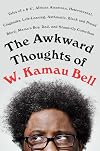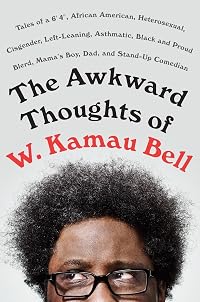
The Awkward Thoughts of W. Kamau Bell
by W. Kamau Bell
On This Page
Description
"You may know W. Kamau Bell from his new, Emmy-nominated hit show on CNN, United Shades of America. Or maybe you've read about him in the New York Times, which called him "the most promising new talent in political comedy in many years." Or maybe from The New Yorker, fawning over his brand of humor writing: "Bell's gimmick is intersectional progressivism: he treats racial, gay, and women's issues as inseparable." After all this love and praise, it's time for the next step: a book. The show more Awkward Thoughts of W. Kamau Bell is a humorous, well-informed take on the world today, tackling a wide range of issues, such as race relations; fatherhood; the state of law enforcement today; comedians and superheroes; right-wing politics; left-wing politics; failure; his interracial marriage; white men; his up-bringing by very strong-willed, race-conscious, yet ideologically opposite parents; his early days struggling to find his comedic voice, then his later days struggling to find his comedic voice; why he never seemed to fit in with the Black comedy scene. or the white comedy scene; how he was a Black nerd way before that became a thing; how it took his wife and an East Bay lesbian to teach him that racism and sexism often walk hand in hand; and much, much more"-- show lessTags
Recommendations




Member Reviews
A collection of experiences, thoughts, and lessons from the author's life and career. I love reading about how actors, comedians, and other pop culture figures got their start and I think Mr. Bell has a very unique story and journey. It's always encouraging to read the memoir of famous/successful people and realize that it didn't come easily to them and many times they didn't know what they were doing.
Although the stories about racism and sexism, especially in the vaulted circles of Hollywood, fill me with a sense of helplessness, I was also encouraged by the author's own upbeat take on things. The stories he tells about the people who are out their making TV, the people responsible for essentially building our culture, it is totally show more unsurprising that racism is such a problem in this country. This book gave me lots of food for thought and had me questioning my own unconsciously racist behavior.
It all seems so impossible to fix, but the important thing is to not give up and not abnegate my own personal responsibility for it. This was a funny book full of funny stories, but in many ways, it is one of the most serious books I've read in awhile. show less
Although the stories about racism and sexism, especially in the vaulted circles of Hollywood, fill me with a sense of helplessness, I was also encouraged by the author's own upbeat take on things. The stories he tells about the people who are out their making TV, the people responsible for essentially building our culture, it is totally show more unsurprising that racism is such a problem in this country. This book gave me lots of food for thought and had me questioning my own unconsciously racist behavior.
It all seems so impossible to fix, but the important thing is to not give up and not abnegate my own personal responsibility for it. This was a funny book full of funny stories, but in many ways, it is one of the most serious books I've read in awhile. show less
This book has a lot going for it. It was also literal nightmare fuel for me. So I'm kind of on the fence about how I feel about it.
Most of this book is Bell talking about his life -- his childhood, his family and friends, how he got into comedy, what he did there. And he's also talking about race all through this, because, well, that's how race works: it's all through everything we do. His insights on race are great. And he's honest about the places where he doesn't know stuff, where he had to learn things through study rather than through, you know, living it every moment of his life.
And Bell does something really important in this book. He talks about trying, and trying, and failing, and failing. He found his niche and his work show more through a prolonged process of successive approximation, inching forward when things felt right, trying something new (sometimes) when they felt wrong. And for a long time, he wasn't successful, or good at it, or having a good time. I love that he spells that out, that finding your place can take tons of effort and time and there are no guarantees. I love that he talks about the hundreds of failures that came before his current success, and how he succeeded, in the end, in part because he was willing to try hard and fail a lot.
That's also where the nightmare fuel came in for me, and I'm writing this down specifically to remind myself not to re-read this book ever ever. See, some of those failures were bombing on stage in front of live audiences. And he describes it really well -- what happened, how it felt. I read those descriptions and started sweating. I felt dizzy and sick. And I started to have anxiety dreams about it at night.
So, like. Did I enjoy reading this book? Uh. In some places! And in some places, super not! Did I read this book quickly? No. I could not, because of the dread and anxiety. Is it well-written? Obviously; you can't induce that kind of emotional reaction in a reader without amazing writing. Should I ever read it again? Nope. But I would recommend it to anyone who is interested in race and/or careers in comedy. And who does not have whatever weird thing in my head was KO'd by the bombing on stage descriptions. show less
Most of this book is Bell talking about his life -- his childhood, his family and friends, how he got into comedy, what he did there. And he's also talking about race all through this, because, well, that's how race works: it's all through everything we do. His insights on race are great. And he's honest about the places where he doesn't know stuff, where he had to learn things through study rather than through, you know, living it every moment of his life.
And Bell does something really important in this book. He talks about trying, and trying, and failing, and failing. He found his niche and his work show more through a prolonged process of successive approximation, inching forward when things felt right, trying something new (sometimes) when they felt wrong. And for a long time, he wasn't successful, or good at it, or having a good time. I love that he spells that out, that finding your place can take tons of effort and time and there are no guarantees. I love that he talks about the hundreds of failures that came before his current success, and how he succeeded, in the end, in part because he was willing to try hard and fail a lot.
That's also where the nightmare fuel came in for me, and I'm writing this down specifically to remind myself not to re-read this book ever ever. See, some of those failures were bombing on stage in front of live audiences. And he describes it really well -- what happened, how it felt. I read those descriptions and started sweating. I felt dizzy and sick. And I started to have anxiety dreams about it at night.
So, like. Did I enjoy reading this book? Uh. In some places! And in some places, super not! Did I read this book quickly? No. I could not, because of the dread and anxiety. Is it well-written? Obviously; you can't induce that kind of emotional reaction in a reader without amazing writing. Should I ever read it again? Nope. But I would recommend it to anyone who is interested in race and/or careers in comedy. And who does not have whatever weird thing in my head was KO'd by the bombing on stage descriptions. show less
The title of this book is appropriate as it is indeed filled with awkward thoughts especially if you are a straight white male since it tackles such topics as race, sex, and homosexuality. He also focuses on his career and family and his blerd (black nerd) status as well as what it is like to be a towering Black man in the United States. By the way, he capitalizes the word Black because other words of identity such as Chinese, Christianity, and Klansmen are capitalized so he feels as do other Black scholars that it should be capitalized. So I too will capitalize it for this review.
He has an interesting take on superheroes. His favorites are the Hulk and Spiderman because the Hulk is green and Spiderman is red and blue. Under Spidey's show more mask, he could be any color and the Hulk was green so both were appealing to a young Black man growing up in the 1970s and 1980s were those and Batman and Superman were the most popular superheroes. Yes, there were Black superheroes such as Black Panther, Black Vulcan, and Black Lightning, but these superheroes all had the word Black put in front of their name. It gives out a clue to their secret identity. Of course, there is Falcon, Cyborg, and Power Man. Cyborg could never hide his identity and Falcon was pretty lame. His power was talking to falcons. In the movie, they gave him cool wings and left out the talking bit. Power Man looked like a pirate in a ridiculous costume. Now he goes by the name of Luke Cage and is much cooler. He's also not big on the new trend of having people of color playing the iconic superheroes. Why not just have new superheroes of color? It's a valid question and one the major comic industries should be asking themselves.
After many years of doing stand-up and not doing as well as he would have liked, Bell finally found his niche when he created the show The W. Kamau Bell Curve: Ending Racism in About an Hour. It would be topical and informative while also being funny. After the first night of running it, he asked for feedback from a select group of friends and he got it. One of them, a woman, took him to task about his sexism in the show. And he learned a valuable lesson that it isn't enough to just be the better male comedian on sexism he must think about who he is hurting in his joke. If he is hurting someone else that doesn't need to be hurt. He would deal with others on this issue later in his life who didn't see things his way and he would have to fight them on it because sexism still exists inside writers' rooms on shows and in movies. He wonders why more women don't quit once they get inside these rooms for all the crap they have to put up with. The answer is simple: they want to change things and this is the only way.
Bell also talks about the making of his two TV shows Unbiased and The United Shades of America. Unbiased came about due to Chris Rock taking an interest in him and aired on FX and then FXX. It started out as a weekly show then in its second season it went to a daily format, Monday through Thursday. He came to curse Chris Rock to some degree for that show. It very nearly ended his marriage. He was completely miserable doing it as he didn't have the control over the show he should have had. On Untied Shades of America, the first season was rough as the people he worked with didn't get what he was having to do like the KKK episode where they had gotten the footage they needed but didn't tell him and let him keep talking to the Klan which was dangerous for him.
I somehow missed Unbiased but I've seen every episode of United Shades of America which is what prompted me to pick up this book and read it. While at times it's uncomfortable to read as a white person, I don't have a problem with that as I believe I should feel uncomfortable about the issue of race in America. It is a problem and one that won't be fixed overnight. But the other things he talks about in this book also make it worth reading, such as confronting and conquering his homophobia, his awkwardness over sports, his love of Denzil Washington, the Democratic Party, the Trump presidency, and the trials of being married with children to a white woman. This is a great book that explores a man's life in its many facets in a very fascinating way. I highly recommend it.
Quotes
In San Francisco, “beach” means a cold, bleak place to take a walk and wonder what went wrong in your life.
-W. Kamau Bell (The Awkward Thoughts of W. Kamau Bell: Tales of a 6’4”, African-American, Heterosexual, Cisgender, Left-Leaning, Asthmatic, Black and Proud Blerd, Mama’s Boy, Dad, and Stand-Up Comedian p 240) show less
He has an interesting take on superheroes. His favorites are the Hulk and Spiderman because the Hulk is green and Spiderman is red and blue. Under Spidey's show more mask, he could be any color and the Hulk was green so both were appealing to a young Black man growing up in the 1970s and 1980s were those and Batman and Superman were the most popular superheroes. Yes, there were Black superheroes such as Black Panther, Black Vulcan, and Black Lightning, but these superheroes all had the word Black put in front of their name. It gives out a clue to their secret identity. Of course, there is Falcon, Cyborg, and Power Man. Cyborg could never hide his identity and Falcon was pretty lame. His power was talking to falcons. In the movie, they gave him cool wings and left out the talking bit. Power Man looked like a pirate in a ridiculous costume. Now he goes by the name of Luke Cage and is much cooler. He's also not big on the new trend of having people of color playing the iconic superheroes. Why not just have new superheroes of color? It's a valid question and one the major comic industries should be asking themselves.
After many years of doing stand-up and not doing as well as he would have liked, Bell finally found his niche when he created the show The W. Kamau Bell Curve: Ending Racism in About an Hour. It would be topical and informative while also being funny. After the first night of running it, he asked for feedback from a select group of friends and he got it. One of them, a woman, took him to task about his sexism in the show. And he learned a valuable lesson that it isn't enough to just be the better male comedian on sexism he must think about who he is hurting in his joke. If he is hurting someone else that doesn't need to be hurt. He would deal with others on this issue later in his life who didn't see things his way and he would have to fight them on it because sexism still exists inside writers' rooms on shows and in movies. He wonders why more women don't quit once they get inside these rooms for all the crap they have to put up with. The answer is simple: they want to change things and this is the only way.
Bell also talks about the making of his two TV shows Unbiased and The United Shades of America. Unbiased came about due to Chris Rock taking an interest in him and aired on FX and then FXX. It started out as a weekly show then in its second season it went to a daily format, Monday through Thursday. He came to curse Chris Rock to some degree for that show. It very nearly ended his marriage. He was completely miserable doing it as he didn't have the control over the show he should have had. On Untied Shades of America, the first season was rough as the people he worked with didn't get what he was having to do like the KKK episode where they had gotten the footage they needed but didn't tell him and let him keep talking to the Klan which was dangerous for him.
I somehow missed Unbiased but I've seen every episode of United Shades of America which is what prompted me to pick up this book and read it. While at times it's uncomfortable to read as a white person, I don't have a problem with that as I believe I should feel uncomfortable about the issue of race in America. It is a problem and one that won't be fixed overnight. But the other things he talks about in this book also make it worth reading, such as confronting and conquering his homophobia, his awkwardness over sports, his love of Denzil Washington, the Democratic Party, the Trump presidency, and the trials of being married with children to a white woman. This is a great book that explores a man's life in its many facets in a very fascinating way. I highly recommend it.
Quotes
In San Francisco, “beach” means a cold, bleak place to take a walk and wonder what went wrong in your life.
-W. Kamau Bell (The Awkward Thoughts of W. Kamau Bell: Tales of a 6’4”, African-American, Heterosexual, Cisgender, Left-Leaning, Asthmatic, Black and Proud Blerd, Mama’s Boy, Dad, and Stand-Up Comedian p 240) show less
I have grown to love The United Shades of America, and it is because of that that I picked up this book. I didn't know if W. Kamau Bell could write, because not every comedian can, but I love this book. Its a lot like United Shades, in that it can be funny, but it's also brutally honest and probing. It doesn't let anyone off the hook for doing or saying the wrong thing, i.e. something that belittles another person or makes someone feel less than. And Bell is brave enough to not let himself off the hook either.
I like Bell. He is smart, and funny, and takes an approach to political and social humor I like a great deal. His style feels to me similar to John Oliver's in its attempt to educate while embracing the absurdity and pathos (and sometimes true tragedy) inherent in this sort of subject matter. In other words, it doesn't stop with making you feel things and laugh, but wants you to learn things and laugh. I didn't learn a whole lot from Bell's book, far less than I learn on an average episode of his excellent CNN show, but I still appreciated the approach, and the vulnerability he brings to his work. I don't agree with much of his politics and I especially don't agree with his vision for the Democratic party (and if he really voted for show more Jill Stein I might have overestimated how smart he is) but his points are wise and well-considered and he seems like a pretty amazing guy. I loved the little bits we learned about his mother, whom I absolutely want to hang out with, and the rest of his family. Honestly this is probably more of a 3.5 for me, but I would heartily recommend it to my friends who struggle to understand the reality and costs of inherent bias and especially to my freinds who have a sense of humor and do not have the great gift of a diverse set of freinds and colleagues willing to have uncomfortable and honest conversations about race. Let that serve as a thank you to the people in my life who challenge me to listen to their truth. You know who you are. show less
If you don't already love Kamau, you probably won't enjoy this book. It's rambling and generally all over the place--like an oral history of how Kamau got progressively more woke. But honestly, that's why the book makes sense. The essays interspersed throughout are just so fabulously on point such as this wonderful take on the importance of Apollo Creed:
I wonder honestly if this is the sort of book that probably doesn't make sense to someone who hasn't had the same experiences as Kamau--a bit like how white and racialized people are watching two different movies in respect to the film "Get Out" for example. show more Nonetheless, it's a very entertaining read and you get the sense that Kamau is trying to convey the feeling of being both stigmatized and even doing the stigmatizing as genuinely as one could ask for. show less
In the 1970s, he was the rare Black character in the movie who was clearly way smarter than the lead white character in the movie.
I wonder honestly if this is the sort of book that probably doesn't make sense to someone who hasn't had the same experiences as Kamau--a bit like how white and racialized people are watching two different movies in respect to the film "Get Out" for example. show more Nonetheless, it's a very entertaining read and you get the sense that Kamau is trying to convey the feeling of being both stigmatized and even doing the stigmatizing as genuinely as one could ask for. show less
W. Kamau Bell is a stand-up comedian, podcaster, and television host. I'm aware of him through his terrific Politically Re-Active podcast with Hari Kondabolu (currently on hiatus). I liked him enough from that to want to read his book. Much of The Awkward Thoughts is straight memoir. Bell's parents divorced when he was young and he grew up in Boston attending predominately white private schools. He describes himself as a "blerd" or Black nerd and distanced from the identifiers of Black culture. Since Bell and I were born in the same year, I found I could relate to a lot of the pop culture events he recounts.
As a teenager he moved to Chicago at a time when Harold Washington was mayor and Michael Jordan and Oprah Winfrey were beginning show more their reign as world changing Black super-celebrities. Bell attended University of Pennsylvania, but dropped out, and then moved to San Francisco in the 1990s to attempt to break into the stand-up comedy scene right as the big stand-up boom of the 70s and 80s went bust. He finds his niche in a one-man show in which he made comedic observations on the state of racism in America. This lead to work on television, hosting Totally Biased with W. Kamau Bell on FX and then United Shades of America on CNN, as well as many, many podcasts.
Among the memoir bits, Bell reflects on many topics including sports (and why he doesn't enjoy them), Denzel Washington as the greatest actor of all time, the significance of Doc McStuffins, and the Rocky movies. He also worries about racism in America and the very real threat of a Black man like himself being killed by police or a vigilante. He details a significant incident when he was harassed by the staff of a coffee shop in his hometown of Berkeley, CA when he stopped to talk to his wife (who is white) and her friends at the sidewalk cafe. As a white reader, I was grateful that Bell takes the time to address what white people can do to confront racism (and give us a pep talk in the process) while relating his own experiences of what definitely does not help with racism.
This is a funny and insightful book, and the audiobook is extra special in that Bell reads it in his warm voice. show less
As a teenager he moved to Chicago at a time when Harold Washington was mayor and Michael Jordan and Oprah Winfrey were beginning show more their reign as world changing Black super-celebrities. Bell attended University of Pennsylvania, but dropped out, and then moved to San Francisco in the 1990s to attempt to break into the stand-up comedy scene right as the big stand-up boom of the 70s and 80s went bust. He finds his niche in a one-man show in which he made comedic observations on the state of racism in America. This lead to work on television, hosting Totally Biased with W. Kamau Bell on FX and then United Shades of America on CNN, as well as many, many podcasts.
Among the memoir bits, Bell reflects on many topics including sports (and why he doesn't enjoy them), Denzel Washington as the greatest actor of all time, the significance of Doc McStuffins, and the Rocky movies. He also worries about racism in America and the very real threat of a Black man like himself being killed by police or a vigilante. He details a significant incident when he was harassed by the staff of a coffee shop in his hometown of Berkeley, CA when he stopped to talk to his wife (who is white) and her friends at the sidewalk cafe. As a white reader, I was grateful that Bell takes the time to address what white people can do to confront racism (and give us a pep talk in the process) while relating his own experiences of what definitely does not help with racism.
This is a funny and insightful book, and the audiobook is extra special in that Bell reads it in his warm voice. show less
Members
- Recently Added By
Lists

Top Five Books of 2018
802 works; 264 members

The Joe Rogan Experience Library
254 works; 3 members

NPR Readers Poll: 100 Favorite Funny Books
100 works; 5 members
Author Information
7+ Works 484 Members
W. Kamau Bell is a sociopolitical comedian who is the host of the Emmy-winning hit CNN docuseries United Shades of America. Before United Shades, Kamau was best known for his FX comedy series, Totally Biased with W. Kamau Bell. He lives in Berkeley, California, with his wife and family.
Awards and Honors
Common Knowledge
- Canonical title
- The Awkward Thoughts of W. Kamau Bell
- Alternate titles
- The Awkward Thoughts of W. Kamau Bell: Tales of a 6' 4" African American, Heterosexual, Cisgender, Left-Leaning, Asthmatic, Black and Proud Blerd, Mama's Boy, Dad, and Stand-Up Comedian
- Original publication date
- 2017-05-02
- People/Characters
- W. Kamau Bell; Walter Bell; Janet Cheatham Bell; Melissa Hudson Bell; Juno Bell; Sami Bell
- Important places
- San Francisco, California, USA; Berkeley, California, USA
- Dedication
- This book is for Sami and Juno . . . because pretty much everything I do is for Sami and Juno
- First words
- Hello, reader. Before you start reading, I have a question: Why are you reading this particular book? (Introduction)
My mom is Janet Cheatham Bell, and she is awesome. - Quotations
- People don't realize that without the Bay Area and Los Angeles, the state of California is Texas.
- Last words
- (Click to show. Warning: May contain spoilers.)If this book was the end of the movie The Matrix, I would fly away at this point, but it's not so I'll just say, "See you later."
- Publisher's editor
- Jill Schwartzman
- Original language
- English
Classifications
- Genres
- Nonfiction, Biography & Memoir, General Nonfiction
- DDC/MDS
- 792.7 — Arts & recreation Recreation, sports, and performing arts Stage presentations Variety shows and theatrical dancing; burlesque, cabaret, vaudeville, music hall, nightclubs
- LCC
- PN2287 .B414 .A3 — Language and Literature Literature (General) Literature (General) Drama Dramatic representation. The theater Special regions or countries
- BISAC
Statistics
- Members
- 350
- Popularity
- 90,233
- Reviews
- 22
- Rating
- (3.78)
- Languages
- English, Korean
- Media
- Paper, Audiobook, Ebook
- ISBNs
- 9
- ASINs
- 2