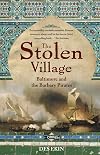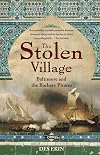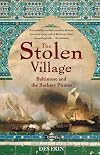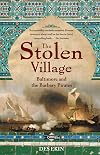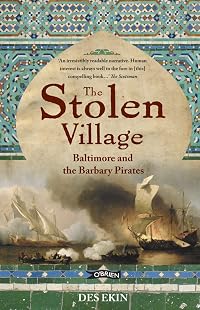
The Stolen Village: Baltimore and the Barbary Pirates
by Des Ekin
On This Page
Description
In June 1631 pirates from Algiers and armed troops of the Turkish Ottoman Empire, led by the notorious pirate captain Morat Rais, stormed ashore at the little harbour village of Baltimore in West Cork. They captured almost all the villagers and bore them away to a life of slavery in North Africa. The prisoners were destined for a variety of fates -- some would live out their days chained to the oars as galley slaves, while others would spend long years in the scented seclusion of the harem show more or within the walls of the Sultan's palace. The old city of Algiers, with its narrow streets, intense heat and lively trade, was a melting pot where the villagers would join slaves and freemen of many nationalities. Only two of them ever saw Ireland again. The Sack of Baltimore was the most devastating invasion ever mounted by Islamist forces on Ireland or England. Des Ekin's exhaustive research illuminates the political intrigues that ensured the captives were left to their fate, and provides a vivid insight into the kind of life that would have awaited the slaves amid the souks and seraglios of old Algiers. The Stolen Village is a fascinating tale of international piracy and culture clash nearly 400 years ago and is the first book to cover this relatively unknown and under-researched incident in Irish history. Shortlisted for the Argosy Irish Nonfiction Book of the Year Award show lessTags
Recommendations




















Member Reviews
Almost the entire Irish village of Baltimore was taken captive by pirates in the early 1600s and sold as slaves in Algeria. With little records about their lives as slaves, the author relies on a number of accounts by other slaves to try to describe what their lives could have been like. The author also posits a hypothesis that the taking was an elaborate plan of an evil mastermind who wanted to rid the coastal town of its inhabitants for his own reasons—and the hypothesis seems to make sense! I had heard about this historical event but I’d never realized how many “northerners” from England, Iceland, etc were captured as slaves by Barbary pirates and not just sailors from captured boats, but hundreds of women and children. I show more also learned how the women may have had a better life as slaves than in the cold northern climes. Islam treated women more equally! A very interesting read. show less
Many people these days have the idea that pirates are rakish, fun-loving scamps, thanks to the popularity of the Pirates of the Caribbean movies and similar Hollywood fare. Nothing could be farther from the truth, a fact that is brilliantly revealed in Des Ekin's masterful work "The Stolen Village." Focusing on the sack of Baltimore, Ireland in the 17th-century, the author takes readers on a harrowing journey into the world and minds of pirates who stop at nothing to get what they want. A thorough book, but still a page-turner, readers will walk in the footsteps of Irish captives who were abducted to north Africa and found themselves subjected to a life of slavery. A fascinating read, and one which also includes some sleuthing and show more mystery-solving. If you love high adventure (yes, even swash-buckling!), and would like to take a look into a world that is often misunderstood and glossed over, then give this historical account a try. show less
Des Ekin’s The Stolen Village is a good popular history based upon archival material and thoughtful analysis.
Ekin’s writing style is readable and straightforward—he’s a trained journalist.
Arguably, in the genre of corsair pirates of North Africa, this book is one of the better studies on the market.
I did enjoy reading it.
I felt that Ekin is trying to make an honest and fair attempt to understand why the raid took place and who was behind it. And more importantly, how it impacted on the lives of the innocent English captives.
Ekin’s work is balanced and extensive – the story moves from southern Ireland to Morocco and Algiers, and Holland to Istanbul –, and his arguments are reasonable and considered (including the conspiracy show more theory view noted in the final chapter).
The author covers the motivations of the (ethnically diverse) pirates, renegade seamen, the Irish Catholic elites, the Protestant settlers in Baltimore, Ireland, the English elites, and the slave dynamics of the 17th century.
He emphasises the multicultural and multilingual nature of Algiers and seeks to capture the spirit and politics of Muslim society in North Africa (and to a lesser extent in the Ottoman metropolis of Istanbul).
His conclusions are established upon plausible arguments and he highlights the complexity of the ‘stolen village’ story.
His research is more than adequate for the task at hand. We can only feel empathy for the English settlers torn way from their homes and families.
The main characters from all sides are discussed and their personal and political histories considered. Irish and English national and local histories of the period are reviewed too. There are some very engaging accounts of individuals in this book; the author displays an ability to recreate events and to provide a human element to the narrative. The explanations of the pirate legacy in North America, and particularly New York, are fascinating to read.
I have some critical points to note concerning Ekin’s work.
While he makes a good attempt at linking the events of June 1631 CE with contemporary politics and criminal actions, I am not totally convinced that some of the language used was suitable, its rather speculative and emotive, and might be deployed in the wrong context; furthermore, the author fails to define his terminology. This leaves the book, in places, open to an ambiguous interpretation. For instance: “Islamist jihad” (p. 9); “endless jihad” (p. 10); “Islamist empire” (p. 10); “invasion” (p. 10); “ethnic cleansing” (p.10); “Islamist invasion” (p. 118).
Also, some of the language used is arguably orientalist: “curved slippers”; “the plumes” (p. 19); “crescent moon” (p. 23).
Nonetheless, I repeat myself here, I did enjoy reading this book; Ekin explores ideas and concepts freely and does not stifle debate. show less
Ekin’s writing style is readable and straightforward—he’s a trained journalist.
Arguably, in the genre of corsair pirates of North Africa, this book is one of the better studies on the market.
I did enjoy reading it.
I felt that Ekin is trying to make an honest and fair attempt to understand why the raid took place and who was behind it. And more importantly, how it impacted on the lives of the innocent English captives.
Ekin’s work is balanced and extensive – the story moves from southern Ireland to Morocco and Algiers, and Holland to Istanbul –, and his arguments are reasonable and considered (including the conspiracy show more theory view noted in the final chapter).
The author covers the motivations of the (ethnically diverse) pirates, renegade seamen, the Irish Catholic elites, the Protestant settlers in Baltimore, Ireland, the English elites, and the slave dynamics of the 17th century.
He emphasises the multicultural and multilingual nature of Algiers and seeks to capture the spirit and politics of Muslim society in North Africa (and to a lesser extent in the Ottoman metropolis of Istanbul).
His conclusions are established upon plausible arguments and he highlights the complexity of the ‘stolen village’ story.
His research is more than adequate for the task at hand. We can only feel empathy for the English settlers torn way from their homes and families.
The main characters from all sides are discussed and their personal and political histories considered. Irish and English national and local histories of the period are reviewed too. There are some very engaging accounts of individuals in this book; the author displays an ability to recreate events and to provide a human element to the narrative. The explanations of the pirate legacy in North America, and particularly New York, are fascinating to read.
I have some critical points to note concerning Ekin’s work.
While he makes a good attempt at linking the events of June 1631 CE with contemporary politics and criminal actions, I am not totally convinced that some of the language used was suitable, its rather speculative and emotive, and might be deployed in the wrong context; furthermore, the author fails to define his terminology. This leaves the book, in places, open to an ambiguous interpretation. For instance: “Islamist jihad” (p. 9); “endless jihad” (p. 10); “Islamist empire” (p. 10); “invasion” (p. 10); “ethnic cleansing” (p.10); “Islamist invasion” (p. 118).
Also, some of the language used is arguably orientalist: “curved slippers”; “the plumes” (p. 19); “crescent moon” (p. 23).
Nonetheless, I repeat myself here, I did enjoy reading this book; Ekin explores ideas and concepts freely and does not stifle debate. show less
http://nhw.livejournal.com/1147446.html
On 20 June 1631, pirates from Algiers descended on Baltimore in County Cork and kidnapped over a hundred of its inhabitants, most of the population, bringing them back to Africa and selling them into slavery. Ekin describes this as 'the most devastating invasion ever carried out by the forces of the Islamist jihad on Britain or Ireland', and while I regret that he asserts the jihadism of the pirates, who were clearly less interested in religion than, say, Sir Francis Drake or Oliver Cromwell, you can see what he means.
Yet in fact very little of this is quite as it seems. The leader of the pirates was a Dutch renegade whose sons settled in New Amsterdam (or as we now call it, New York), and whose show more descendants include, for instance, Caroline Kennedy. The kidnapped villagers were a small Calvinist colony in a hostile territory; Ekin makes a good case against a local Irish Catholic dignitary for having organised the pirates' raid in the first place, and makes it quite comprehensible that when the opportunity of ransom came aroud fifteen years later, only two of the hundred-plus former villagers of Baltimore chose to go home. Algiers had a decent health service, running water in the houses and a decent climate; Baltimore is still lacking in some of these respects and certainly lacked all of them in the seventeenth century. (I was there when I was nine, but did not check the water or the health service; the weather, however, was poor.)
Ekin is a journalist rather than a historian, and has got perhaps a bit carried away by his research into what life was like for the slaves of Algiers, his description of which occupies most of the book. (Having said that, his attitude is properly sceptical and his documentation scrupulous; my criticism is of his structure, not his methods.) He also doesn't appear to have visited Algiers personally, which is not a criticism, it's just a shame that he doesn't give us the benefit of today's perspective.
Even so, the story is a fascinating insight into the world of seventeenth-century maritime commerce linked by the Atlantic Ocean: New Amsterdam at one end, Don Quixote and Zoraida at the other. The fact that Algiers and New Amsterdam were such cosmopolitan places, with people moving pretty freely between them and Western Europe, makes it rather difficult to justify describing one city as 'Islamic' or indeed the other as 'Christian'. (And makes his choice of words to describe the raid even more regrettable.)
Anyway, fascinating stuff. show less
On 20 June 1631, pirates from Algiers descended on Baltimore in County Cork and kidnapped over a hundred of its inhabitants, most of the population, bringing them back to Africa and selling them into slavery. Ekin describes this as 'the most devastating invasion ever carried out by the forces of the Islamist jihad on Britain or Ireland', and while I regret that he asserts the jihadism of the pirates, who were clearly less interested in religion than, say, Sir Francis Drake or Oliver Cromwell, you can see what he means.
Yet in fact very little of this is quite as it seems. The leader of the pirates was a Dutch renegade whose sons settled in New Amsterdam (or as we now call it, New York), and whose show more descendants include, for instance, Caroline Kennedy. The kidnapped villagers were a small Calvinist colony in a hostile territory; Ekin makes a good case against a local Irish Catholic dignitary for having organised the pirates' raid in the first place, and makes it quite comprehensible that when the opportunity of ransom came aroud fifteen years later, only two of the hundred-plus former villagers of Baltimore chose to go home. Algiers had a decent health service, running water in the houses and a decent climate; Baltimore is still lacking in some of these respects and certainly lacked all of them in the seventeenth century. (I was there when I was nine, but did not check the water or the health service; the weather, however, was poor.)
Ekin is a journalist rather than a historian, and has got perhaps a bit carried away by his research into what life was like for the slaves of Algiers, his description of which occupies most of the book. (Having said that, his attitude is properly sceptical and his documentation scrupulous; my criticism is of his structure, not his methods.) He also doesn't appear to have visited Algiers personally, which is not a criticism, it's just a shame that he doesn't give us the benefit of today's perspective.
Even so, the story is a fascinating insight into the world of seventeenth-century maritime commerce linked by the Atlantic Ocean: New Amsterdam at one end, Don Quixote and Zoraida at the other. The fact that Algiers and New Amsterdam were such cosmopolitan places, with people moving pretty freely between them and Western Europe, makes it rather difficult to justify describing one city as 'Islamic' or indeed the other as 'Christian'. (And makes his choice of words to describe the raid even more regrettable.)
Anyway, fascinating stuff. show less
An interesting account, opening in 1631 with Barbary pirates (led by one Morat Rais - a Dutchborn sailor who had 'turned Turk') descending on the small fishing village in County Cork and carrying off almost all the villagers to the slave markets of Algiers.
This was an era of piracy, and the author goes on to look at the numerous Europeans taken as slaves, including Icelanders and the author Cervantes. He considers the various fates that might await them: galley slaves, concubines...or the chance of 'making it' in businesss, marrying well... The adventures of the few who escaped; the punishments inflicted... Lacking much detail on the humble folk of this particular raid, a lot of extra information is brought in.
But what could have been show more the motivation for the raid? Ekin goes on to examine the political situation in Baltimore, a stronghold of the impoverished (but violent) Catholic O'Driscolls, now fallen into the hands of wealthy, totally corrupt Walter Coppinger....who found himself with some unwanted tenants, namely a settlement of English Protestants who had leased the land and weren't going to leave.
English v Irish; Catholic v Protestant; unscrupulous lords... and certainly a deal seems to have been done, since the raid took place on the very day that the Protestants' original twenty-one year lease expired.
Learned a lot! show less
This was an era of piracy, and the author goes on to look at the numerous Europeans taken as slaves, including Icelanders and the author Cervantes. He considers the various fates that might await them: galley slaves, concubines...or the chance of 'making it' in businesss, marrying well... The adventures of the few who escaped; the punishments inflicted... Lacking much detail on the humble folk of this particular raid, a lot of extra information is brought in.
But what could have been show more the motivation for the raid? Ekin goes on to examine the political situation in Baltimore, a stronghold of the impoverished (but violent) Catholic O'Driscolls, now fallen into the hands of wealthy, totally corrupt Walter Coppinger....who found himself with some unwanted tenants, namely a settlement of English Protestants who had leased the land and weren't going to leave.
English v Irish; Catholic v Protestant; unscrupulous lords... and certainly a deal seems to have been done, since the raid took place on the very day that the Protestants' original twenty-one year lease expired.
Learned a lot! show less
June 1631 and pirates from Algiers along with the elite Janissaries raid a small fishing village in Cork, taking with them the inhabitants as slaves. It took over a decade to try to return them and then only 2 returned. This is a look at this little-known story.
Interesting and frustrating this is an interesting look at both Baltimore of the time and Algiers of the time. How slaves were treated, the lives they lived and how they sometimes died in interesting and painful ways. Using accounts from other people who experienced some of the same thing this paints quite a vivid picture of what happened. Whats frustrating is the lack of knowledge of what happened to the hundreds of people who were captured and made into slaves, but their voices show more have been silenced by time this is as close as it will get.
Des evidentally enjoyed his topic, was facinated by it and wanted to explore it as well as he could, and he does. He writes history in a very accessible but also quite informative way. The bibliography is expansive. I have to admit I was pleasantly surprised by the scholarship seeing as how he's an editor for the Sunday World in Ireland, a tabloid. show less
Interesting and frustrating this is an interesting look at both Baltimore of the time and Algiers of the time. How slaves were treated, the lives they lived and how they sometimes died in interesting and painful ways. Using accounts from other people who experienced some of the same thing this paints quite a vivid picture of what happened. Whats frustrating is the lack of knowledge of what happened to the hundreds of people who were captured and made into slaves, but their voices show more have been silenced by time this is as close as it will get.
Des evidentally enjoyed his topic, was facinated by it and wanted to explore it as well as he could, and he does. He writes history in a very accessible but also quite informative way. The bibliography is expansive. I have to admit I was pleasantly surprised by the scholarship seeing as how he's an editor for the Sunday World in Ireland, a tabloid. show less
Though the subject of considerable attention at the time, the raid on the Irish coastal village of Baltimore on June 20, 1631 is an event that has been long overlooked by most histories of the era. Yet as Des Ekin demonstrates in this absorbing book, it is an event that offers an interesting window into life in the early 17th century. While such raids were uncommon they were not unheard of, as Barbary pirates started ranging out into the Atlantic and raiding settlements along the coast. It was one of these raids which fell upon Baltimore, sacking the village and capturing over a hundred men, women, and children. These captives were then taken to Algiers and sold into slavery, a fate from which few of them would ever escape.
Ekin’s book show more is an entertaining account of this traditionally obscure event. A journalist and author of two novels, Ekin conducted considerable research to underneath the lives and experiences of the Baltimore captives. Where the directly relevant sources ended Ekin turned to the accounts of others who dealt with the Barbary pirates or underwent similar experiences in an effort to understand better what life was like for the villagers of Baltimore. Though this occasionally comes across as padding, it results in a more generally informative portrait of the early 17th century, the economics of slavery, and life during those times.
Yet these strengths are offset by several problems. While his research into the village of Baltimore, the captives, and their lives is thorough, his coverage of the broader context is weaker, with descriptions of such groups as the Janissaries often dependent on a couple of sources, often dated and bearing errors as a consequence. Moreover, while Eakin claims in his preface that he has made nothing up, the text is peppered with assumptions and suppositions that strain such an assertion. Stitching all of this together is an overwrought prose style that gets in the way of a naturally exciting tale. These flaws detract from what is otherwise an interesting account of the sack of Baltimore and the fate of its survivors. show less
Ekin’s book show more is an entertaining account of this traditionally obscure event. A journalist and author of two novels, Ekin conducted considerable research to underneath the lives and experiences of the Baltimore captives. Where the directly relevant sources ended Ekin turned to the accounts of others who dealt with the Barbary pirates or underwent similar experiences in an effort to understand better what life was like for the villagers of Baltimore. Though this occasionally comes across as padding, it results in a more generally informative portrait of the early 17th century, the economics of slavery, and life during those times.
Yet these strengths are offset by several problems. While his research into the village of Baltimore, the captives, and their lives is thorough, his coverage of the broader context is weaker, with descriptions of such groups as the Janissaries often dependent on a couple of sources, often dated and bearing errors as a consequence. Moreover, while Eakin claims in his preface that he has made nothing up, the text is peppered with assumptions and suppositions that strain such an assertion. Stitching all of this together is an overwrought prose style that gets in the way of a naturally exciting tale. These flaws detract from what is otherwise an interesting account of the sack of Baltimore and the fate of its survivors. show less
Members
- Recently Added By
Author Information

9 Works 303 Members
Des Ekin is a historian and journalist. His book The Stolen Village was short listed for the Argosy Irish Nonfiction Book of the Year and for Book of the Decade in the Bord Gais Energy Irish Book Awards. He lives in Dublin.
Awards and Honors
Awards
Common Knowledge
- Original title
- The Stolen Village: Baltimore and the Barbary Pirates
- Original publication date
- 2006
- People/Characters
- Murat Rais; Thomas Crooke; Walter Coppinger; Finnan O'Driscoll
- Important places
- Baltimore, County Cork, Ireland; Algiers, Algeria
- Dedication
- For James and Molly Ekin- with gratitude
- First words
- Like black sharks scything through the sea towards their prey, the boats of the Barbary corsairs moved soundlessly across the moonlit surface of Roaring Water Bay.
- Last words
- (Click to show. Warning: May contain spoilers.)Morar Rais' corsairs arrived to remove the English settlers from Baltimore on June 20, 1631- twenty-one years, TO THE VERY DAY, from the date that agreement was signed.
Classifications
Statistics
- Members
- 187
- Popularity
- 175,524
- Reviews
- 12
- Rating
- (3.27)
- Languages
- English
- Media
- Paper, Audiobook, Ebook
- ISBNs
- 5
- ASINs
- 1