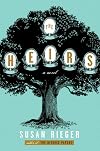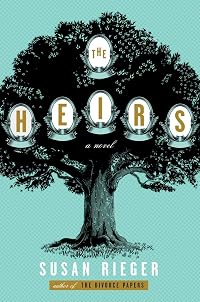
The Heirs
by Susan Rieger
On This Page
Description
Six months after Rupert Falkes dies, leaving a grieving widow and five adult sons, an unknown woman sues his estate, claiming she had two sons by him. The Falkes brothers are pitched into turmoil, at once missing their father and feeling betrayed by him. In disconcerting contrast, their mother, Eleanor, is cool and calm, showing preternatural composure.Tags
Recommendations
Member Reviews
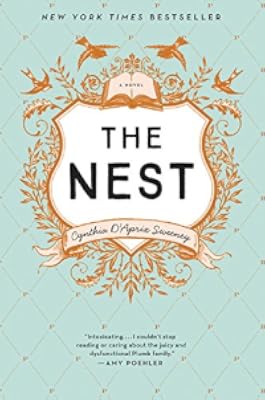
This is compared to The Nest quite a bit, but other than there are people who inherit money in both stories, I don’t think they’re similar. This novel is deeper, sheds more light on relationships and has much more nuanced characters. The structure is a bit deceptive on its surface; each chapter is named for a person and you wouldn’t be alone in expecting a first person narrative, but that’s not what you get. The book is highly expository. Much is told, but not much is shown. Normally I hate that, but with a book this slim it’s the way things have to be. Rieger packs a lot of emotion and subterfuge into each section of the story, netting things together cleverly and in a satisfying way.
Ostensibly this book is about the heirs; show more five brothers and their mom who are left to cope with a surprise or two after dad dies. As in life, you won’t like everyone (I personally thought Eleanor was a moron), but Rieger confines herself to telling about the interesting only. Each section confirms ideas and events from other sections, but introduces new ones that will be enlarged upon later. After a while you can’t help wonder who will do the enlarging. I will admit that some of the brothers (Tom and Jack mostly) are so lightly included that I couldn't really keep an image of either in my head.
Another subject I thought well drawn was the difference between knowing who your family is/was and not knowing. How not knowing leaves you free to pursue your own goals and dreams. Eleanor is from a prominent New York family and has her entire personality shaped by her repugnant and ignorant mother. She is subject to her will and demands, even breaking an engagement (also at the behest of the man’s mother, bound by the same insufferable ideas about what is proper). Her marriage to Rupert, while much more acceptable, is interesting considering he’s an orphan of even more dubious origin than the unacceptable ex. But because of that, he’s grown up exactly how he wants, throwing off the chains of expectations. Their marriage isn’t founded upon the modern idea of love and romance, but on esteem and practicality and sex. It works. No one but the reader sees into the heart of it and while it may be clinical, it is a little bit enviable. The surety of feelings that seem more solid and lasting than just love alone.
I also liked the sexual slavery foisted on Rupert and Eleanor’s father. One escaped his and had a fulfilling and enjoyable life, even though he wasn’t entirely free of Vera. The other succumbed and was shackled to a harridan for life. Well almost. Never was a death more welcomed I don’t think.
Spoilery -
There is a conflict about money, but it isn’t intrinsic to the family and frankly, these people are so well-off that it wouldn’t have been a hardship for them to share. But any early sympathy the reader might have for Vera gets dashed and a new conflict is set up in wondering why Eleanor caved and set up a trust fund for her. Out of all the sons, only Sam is really curious about Rupert’s alleged other family. It seems to be tied up in the lust for a baby which is a tough thing to deal with if you’re a gay man. I liked the solution with Susanna though. Why should all families be exactly the same?
I also liked the side-story with Jim, Eleanor’s ex-fiance. So much of that relationship was made of by Jim and wife Anna, but in Eleanor’s mind it barely existed. She moved on so thoroughly that it was hard for the other two to understand that at all. Both tried inserting themselves into Eleanor’s life, but for different reasons. Her rudeness was refreshing at times, just like Rupert’s Grandma slap downs.
Overall this was an elegantly constructed novel that doesn’t suffer the meaningless bloat of many these days. It’s tight and has good humor throughout and use of irony and juxtaposition. The end is a little neat; everyone seems to get what they want and live happily ever after. Well almost. show less
Ostensibly this book is about the heirs; show more five brothers and their mom who are left to cope with a surprise or two after dad dies. As in life, you won’t like everyone (I personally thought Eleanor was a moron), but Rieger confines herself to telling about the interesting only. Each section confirms ideas and events from other sections, but introduces new ones that will be enlarged upon later. After a while you can’t help wonder who will do the enlarging. I will admit that some of the brothers (Tom and Jack mostly) are so lightly included that I couldn't really keep an image of either in my head.
Another subject I thought well drawn was the difference between knowing who your family is/was and not knowing. How not knowing leaves you free to pursue your own goals and dreams. Eleanor is from a prominent New York family and has her entire personality shaped by her repugnant and ignorant mother. She is subject to her will and demands, even breaking an engagement (also at the behest of the man’s mother, bound by the same insufferable ideas about what is proper). Her marriage to Rupert, while much more acceptable, is interesting considering he’s an orphan of even more dubious origin than the unacceptable ex. But because of that, he’s grown up exactly how he wants, throwing off the chains of expectations. Their marriage isn’t founded upon the modern idea of love and romance, but on esteem and practicality and sex. It works. No one but the reader sees into the heart of it and while it may be clinical, it is a little bit enviable. The surety of feelings that seem more solid and lasting than just love alone.
I also liked the sexual slavery foisted on Rupert and Eleanor’s father. One escaped his and had a fulfilling and enjoyable life, even though he wasn’t entirely free of Vera. The other succumbed and was shackled to a harridan for life. Well almost. Never was a death more welcomed I don’t think.
Spoilery -
There is a conflict about money, but it isn’t intrinsic to the family and frankly, these people are so well-off that it wouldn’t have been a hardship for them to share. But any early sympathy the reader might have for Vera gets dashed and a new conflict is set up in wondering why Eleanor caved and set up a trust fund for her. Out of all the sons, only Sam is really curious about Rupert’s alleged other family. It seems to be tied up in the lust for a baby which is a tough thing to deal with if you’re a gay man. I liked the solution with Susanna though. Why should all families be exactly the same?
I also liked the side-story with Jim, Eleanor’s ex-fiance. So much of that relationship was made of by Jim and wife Anna, but in Eleanor’s mind it barely existed. She moved on so thoroughly that it was hard for the other two to understand that at all. Both tried inserting themselves into Eleanor’s life, but for different reasons. Her rudeness was refreshing at times, just like Rupert’s Grandma slap downs.
Overall this was an elegantly constructed novel that doesn’t suffer the meaningless bloat of many these days. It’s tight and has good humor throughout and use of irony and juxtaposition. The end is a little neat; everyone seems to get what they want and live happily ever after. Well almost. show less
 This review was written for LibraryThing Early Reviewers.
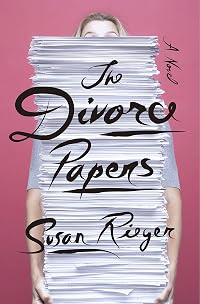
The Heirs by Susan Rieger is a short novel that packs a lot of family angst and uncomfortable feelings into a small package. The focal point of the book is Rupert Falkes, an English orphan who defies the odds to become a classic American success story. Rieger flashes back and forth and all around Rupert from his birth to a few years past his death, moving swiftly through many time periods and points of view to encompass his wife, children, and others. I confess that I am a sucker for non-lineal stories and unconventional formats, and I really enjoyed Rieger’s first book—The Divorce Papers—so this book slid easily into my wheelhouse.
For me, one of the most interesting aspects of The Heirs was that although each chapter was titled show more for a different character, that person was not necessarily the focus of that chapter’s action. So many recent books fall into the structure of every chapter narrated by a different character, it was nice that Rieger didn’t choose that route. I enjoyed thinking about how the title individual played into that portion of the story. There is a lot of jumping around chronologically and narratively within every chapter—so if that makes you crazy this may not be for you.
I also realize that many readers do not enjoy books where the characters are not particularly “likeable”. Rupert, his family and their upper crust New York lifestyle create a lot of thought-provoking and sometimes funny moments, but for me there was hardly a likeable one in the bunch. Sarcasm, meanness, infidelity, snobbery, rudeness, etc. are rampant within the collection of people introduced, and although they left me feeling sad—I don’t mind that. In fact, Rieger’s smart, unusual writing prevails for me, and I highly recommend this book. show less
For me, one of the most interesting aspects of The Heirs was that although each chapter was titled show more for a different character, that person was not necessarily the focus of that chapter’s action. So many recent books fall into the structure of every chapter narrated by a different character, it was nice that Rieger didn’t choose that route. I enjoyed thinking about how the title individual played into that portion of the story. There is a lot of jumping around chronologically and narratively within every chapter—so if that makes you crazy this may not be for you.
I also realize that many readers do not enjoy books where the characters are not particularly “likeable”. Rupert, his family and their upper crust New York lifestyle create a lot of thought-provoking and sometimes funny moments, but for me there was hardly a likeable one in the bunch. Sarcasm, meanness, infidelity, snobbery, rudeness, etc. are rampant within the collection of people introduced, and although they left me feeling sad—I don’t mind that. In fact, Rieger’s smart, unusual writing prevails for me, and I highly recommend this book. show less
This review was written for LibraryThing Early Reviewers.Here's a truly outstanding novel, filled with the dry humor of a third person narrator, and replete with interconnected white New York privilege and misery. The Five Falkes sons are Harry the Blurter (lawyer); Will the Hollywood agent; Sam, the gay MD; Jack, the jazz trumpeter; and Tom the perpetually youngest. Mother Eleanor, a queen scion of upper class New York WASPery, decides not to marry the son of an equally prominent Jewish family (due to the objections of all the parents) and marries a Brit orphan, Rupert. The novel opens with his death and the family's discovery of the possible addition of two more sons from their father and a different mother.
The villains, the most savagely rendered being an upper-class WASP Tony Soprano's show more horror of a mother, present a necessary counterpoint to the saintliness and beauty of Eleanor. And although most of the characters are too cardboardly perfectly perfect and flawed to be "real", the relationships between sons, spouses, parents, lovers are all so vividly drawn and narrated, the writing is so splendid, that the novel is the most masterful and memorable tale of 2018 so far.
Quotes: "Eleanor belonged to that class of New Yorker whose bloodlines were traced in the manner of racehorses: she was Phipps (sire) out of Deering (dam), by Livingston (sire's dam) and Porter (dam's dam)."
"In truth, she wasn't so much raised as subjugated, yoked to a set of rules and rituals that rivaled Leviticus for their specificity, rigor, piety, and triviality."
"Job offers came his way often; he was good at lunch."
"In England, his very articulateness would be held against him, the telltale sign of upstart origins. Upper-class Englishmen stammered like Hugh Grant. It fell to parvenus like him to speak like Olivier. In American, his accent was a kind of get-out-of-jail free card for every occasion."
"He had always felt that Harry, like most lawyers, had at best an arm's-length relationship with the truth."
"Men at forty are often disappointed with their lives and themselves, not because they haven't achieved what they wanted, but because they have it and it tastes like ashes."
"I've always thought curiosity was jealously in sheep's clothing. The will to possess or control or annihilate."
"Men have died and worms have eaten them, but not for love" - Shakespeare
"When did I become the last generation before death? she wondered. She envied the lucky dead, those who lived to eighty-eight, the perfect age to die after a brief, chemo-free illness, leaving just enough time to say goodbye and good luck. Those who lived longer she pitied; they were too likely to have outlived their friends, their money, their arteries, and their wits."
"The Schmuck Theory of Matrimony, like the sign in the antique store: 'You Break It, You Own It'.
"What did you expect in your marriage, happiness? One person might be happy, but never both. The whole point of adultery is to be unhappy - excited, guilty, and unhappy. Sex, new sex, is the point."
"Jack used to do that as a small boy. He would never do anything he didn't want to do if there was any way of not doing it." show less
The villains, the most savagely rendered being an upper-class WASP Tony Soprano's show more horror of a mother, present a necessary counterpoint to the saintliness and beauty of Eleanor. And although most of the characters are too cardboardly perfectly perfect and flawed to be "real", the relationships between sons, spouses, parents, lovers are all so vividly drawn and narrated, the writing is so splendid, that the novel is the most masterful and memorable tale of 2018 so far.
Quotes: "Eleanor belonged to that class of New Yorker whose bloodlines were traced in the manner of racehorses: she was Phipps (sire) out of Deering (dam), by Livingston (sire's dam) and Porter (dam's dam)."
"In truth, she wasn't so much raised as subjugated, yoked to a set of rules and rituals that rivaled Leviticus for their specificity, rigor, piety, and triviality."
"Job offers came his way often; he was good at lunch."
"In England, his very articulateness would be held against him, the telltale sign of upstart origins. Upper-class Englishmen stammered like Hugh Grant. It fell to parvenus like him to speak like Olivier. In American, his accent was a kind of get-out-of-jail free card for every occasion."
"He had always felt that Harry, like most lawyers, had at best an arm's-length relationship with the truth."
"Men at forty are often disappointed with their lives and themselves, not because they haven't achieved what they wanted, but because they have it and it tastes like ashes."
"I've always thought curiosity was jealously in sheep's clothing. The will to possess or control or annihilate."
"Men have died and worms have eaten them, but not for love" - Shakespeare
"When did I become the last generation before death? she wondered. She envied the lucky dead, those who lived to eighty-eight, the perfect age to die after a brief, chemo-free illness, leaving just enough time to say goodbye and good luck. Those who lived longer she pitied; they were too likely to have outlived their friends, their money, their arteries, and their wits."
"The Schmuck Theory of Matrimony, like the sign in the antique store: 'You Break It, You Own It'.
"What did you expect in your marriage, happiness? One person might be happy, but never both. The whole point of adultery is to be unhappy - excited, guilty, and unhappy. Sex, new sex, is the point."
"Jack used to do that as a small boy. He would never do anything he didn't want to do if there was any way of not doing it." show less
This entertaining novel has been compared to The Nest in that it deals with the ramifications of a death in the family. While it did remind me in some ways of The Nest it also strongly reminded me of Laurie Colwin's novels, particularly Happy All the Time. The Heirs is a quick read, and probably because I read it so quickly, I began to tire of the moneyed atmosphere inhabited by the characters. Even though the reader is reminded that having money doesn't solve every problem, it sure seems to help. My other quibble is that much is made of the five sons that comprise 'The Heirs' but as other reviewers have pointed out, we hardly get a glimpse of two of them. Why not leave them out? Quibbles aside, The Heirs was enjoyable and well written show more and I would recommend it. show less
This review was written for LibraryThing Early Reviewers.Very well-written and wonderfully oblique. Despite addressing adultery in many different forms, it is told in a way to absolve those involved of any blame and manages to make them seem likeable. The story centers on Eleanor and Rupert Falkes just after his death. By all accounts, their marriage was a happy one that produced 5 sons (and 'not a "duffer" among them'). Eleanor (nee Phipps) came from New York society ("that class of New Yorker whose bloodlines were traced in the manner of racehorses" 2) and though it was the 1960s, she was forbidden from marrying a Jew (Jim Cordoza), so she married Rupert, an English orphan, who had made his wealth and respectability in the US and was as rebellious as Eleanor could get. After Rupert's show more untimely death to cancer, a woman (Vera Wolinski) surfaces and claims to have 2 sons with him who have rights to his inheritance. The family is thrown into turmoil, though maintains their upper class decorum and each son plays his prescribed role in the face of the threat. The sons (grown men) are charming and the family dynamic is really endearing, anchored by Eleanor, though Rupert was an involved father. Eleanor's father is also a likeable character and her relationships with men (husband, father, sons, former lover) show her strength and poise. The reality of the supposed affair is shared with the reader, but is never clearly resolved to the family. There are other instances of cheating and while the concept is abhorrent to me, the way it is deftly handled here makes it more of a case study in ethics than a heavy-handed morality tale. show less
Rupert Falkes dies of cancer and his widow, Eleanor, and their 5 adult sons cope with the aftermath. Rupert was a foundling, raised by an Anglican priest at an orphanage in England. He comes to America, becomes a wealthy lawyer and marries exceptionally well. Eleanor is Manhattan upper crust, educated at the best schools. This is the story of a marriage and its secrets and its truths. Eleanor is tested by the appearance of two sons whose mother claims they are owed part of the large estate. The novel explores the theme of how much parents and children, husbands and wives, really know about each other, and how much knowing your family of origin shapes you. Or, in Rupert's case, not. I especially liked the depiction of life in the show more rarified world of upper class New Yorkers. An engaging story with a happy-ish ending. show less
This review was written for LibraryThing Early Reviewers.The Heirs by Susan Reiger
Source: Netgalley
My Rating: 5/5 stars
My Review:
For the Falkes family, loyalty is a part of their very fabric. From the day each of the five Falkes boys came into the world, his family has had his back, guided his choices, and been there through both the successes and the failures. With their parents’ unconditional love and support and a picture-perfect marriage as their role model, each of the boys is supremely confident and successful. In fact, down to a man, each credits his success to his tight-knit family. When Rupert, the Faulkes’ family patriarch dies, the family does as they always have, they come together, support one another, and help each other through the grief. Just as their lives were getting show more back to normal, the lawsuit which will damn-near tear their family apart, is filed.
According to the lawsuit, there are actually seven Falkes boys and the mother of those two extra boys is looking for a payout, or what she believes her sons are due. When the original five Falkes boys are made aware of the lawsuit, each is justifiably shaken. They learned their sense of loyalty, of faithfulness, from their father so to be confronted by living, breathing proof of his betrayal is more than most of them can reasonably cope with. The only one of the remaining family seemingly unaffected by the lawsuit is Eleanor, their mother. In fact, Eleanor is surprisingly calm about the whole affair and is the one who helps set her boys (and their respective partners) back to rights.
The response to their father’s apparent betrayal is different for each of the Falkes boys and sets into motion events which have life altering consequences. There are affairs (ironically!), the separation of long-time couples, and trips down memory lane that are both happy and bittersweet. The boys turn to and turn on one another as they attempt to make sense of their parent’s life together. What they all thought they knew turns out to be patently incorrect and absolutely accurate as we see when Eleanor takes her own trips down memory lane.
The Bottom Line: I’m not sure anything I type here will adequately convey the breadth and the depth of this book. This isn’t a simple read, but a saga, a retelling of a family’s history following the death of their patriarch. Though each of the boys are grown, the secrets that come to light following their beloved father’s death rock them all to their very core. Each Falkes son must make sense of a lifetime of new information, process it, and make it a part of his new reality. In doing so, each son stumbles, makes stupid mistakes, says very hurtful things, and must ultimately make amends once acceptance and understanding have set in. The Heirs isn’t at all about the inheritance of money, but the inheritance of lies and betrayal, of a once close-knit family dealing with the fallout of that betrayal and finding their way back to one another. This book captivated me and though I had to make a list of the boys in order to keep them all straight, I found the read to be engrossing. Eleanor is perhaps the best of the bunch and it is her recollections and musings that help her boys through the worst of the pain and anger. It is her strong will, strength of character, and love that carries everyone through the darkest moments and helps them to see, though everything has changed, nothing has really changed. show less
Source: Netgalley
My Rating: 5/5 stars
My Review:
For the Falkes family, loyalty is a part of their very fabric. From the day each of the five Falkes boys came into the world, his family has had his back, guided his choices, and been there through both the successes and the failures. With their parents’ unconditional love and support and a picture-perfect marriage as their role model, each of the boys is supremely confident and successful. In fact, down to a man, each credits his success to his tight-knit family. When Rupert, the Faulkes’ family patriarch dies, the family does as they always have, they come together, support one another, and help each other through the grief. Just as their lives were getting show more back to normal, the lawsuit which will damn-near tear their family apart, is filed.
According to the lawsuit, there are actually seven Falkes boys and the mother of those two extra boys is looking for a payout, or what she believes her sons are due. When the original five Falkes boys are made aware of the lawsuit, each is justifiably shaken. They learned their sense of loyalty, of faithfulness, from their father so to be confronted by living, breathing proof of his betrayal is more than most of them can reasonably cope with. The only one of the remaining family seemingly unaffected by the lawsuit is Eleanor, their mother. In fact, Eleanor is surprisingly calm about the whole affair and is the one who helps set her boys (and their respective partners) back to rights.
The response to their father’s apparent betrayal is different for each of the Falkes boys and sets into motion events which have life altering consequences. There are affairs (ironically!), the separation of long-time couples, and trips down memory lane that are both happy and bittersweet. The boys turn to and turn on one another as they attempt to make sense of their parent’s life together. What they all thought they knew turns out to be patently incorrect and absolutely accurate as we see when Eleanor takes her own trips down memory lane.
The Bottom Line: I’m not sure anything I type here will adequately convey the breadth and the depth of this book. This isn’t a simple read, but a saga, a retelling of a family’s history following the death of their patriarch. Though each of the boys are grown, the secrets that come to light following their beloved father’s death rock them all to their very core. Each Falkes son must make sense of a lifetime of new information, process it, and make it a part of his new reality. In doing so, each son stumbles, makes stupid mistakes, says very hurtful things, and must ultimately make amends once acceptance and understanding have set in. The Heirs isn’t at all about the inheritance of money, but the inheritance of lies and betrayal, of a once close-knit family dealing with the fallout of that betrayal and finding their way back to one another. This book captivated me and though I had to make a list of the boys in order to keep them all straight, I found the read to be engrossing. Eleanor is perhaps the best of the bunch and it is her recollections and musings that help her boys through the worst of the pain and anger. It is her strong will, strength of character, and love that carries everyone through the darkest moments and helps them to see, though everything has changed, nothing has really changed. show less
Members
- Recently Added By
Lists

Kirkus Starred Fiction Reviews of Books Published in 2017
412 works; 7 members

Books Read in 2017
4,249 works; 129 members
Author Information

3 Works 1,014 Members
Some Editions
Awards and Honors
Distinctions
Common Knowledge
- Canonical title
- The Heirs
- Original publication date
- 2017
- People/Characters
- Eleanor Falkes; Rupert Falkes; Harry Falkes; Will Falkes; Sam Falkes; Jack Falkes (show all 7); Tom Falkes
- Epigraph
- The real represents to my perception the things we cannot possibly not know, sooner or later, in one way or another. Henry James, Preface, The American
- Dedication
- To Lydia P.S. Katzenbach
- First words
- When he was dying, Rupert Falkes had the best care money could buy. His wife, Eleanor, saw to that.
- Last words
- (Click to show. Warning: May contain spoilers.)After a minute, a woman in her early seventies opened the door. She was tall, straight, and lean, with graying blond hair and ice-blue wolf's eyes.
Classifications
Statistics
- Members
- 333
- Popularity
- 95,577
- Reviews
- 74
- Rating
- (3.72)
- Languages
- English
- Media
- Paper, Audiobook, Ebook
- ISBNs
- 8
- ASINs
- 2