On This Page
Description
"In London and Germany, strange beings are reanimating themselves. They are the Erstwhile, the angels that failed to protect the Tree of Knowledge, and their reawakening will have major consequences. In Africa, the colonial town of Essenwald has fallen into disarray because the timber workforce has disappeared into the Vorrh. Now a team of specialists are dispatched to find them. Led by Ishmael, the former cyclops, they enter the forest, but the Vorrh will not give them back so easily. To show more make matters worse, an ancient guardian of the forest has plans for Ishmael and his crew. Meanwhile a child of mixed race has been found abandoned in a remote cottage. Her origins are unknown, but she has powers beyond her own understanding. Conflict is coming, as the old and new, human and inhuman are set on a collision course. Once again blending the real and the imagined, The Erstwhile brings historical figures such as William Blake and places such as the Bedlam Asylum, as well as ingenious creations such as The Kin (a family of robots) together to create unforgettable novel of births and burials, excavations and disappearances"-- show lessTags
Recommendations







Member Reviews
The Erstwhile is the sequel to Catling's Vorrh, and it continues various plot threads begun in the earlier book. I was most interested by the one that was added, concerning the retired German Jewish academic Hector Schumann, healed by his interactions with the Erstwhile, who are angels demoted after their failure to guard the Tree of Life in the primordial garden. Schumann ends up in London, investigating another Erstwhile in Bedlam Hospital, and pursued by Nazis for whom he was supposed to have been the agent.
Naturally, most of the component stories are still situated in Africa. The transformed warden Sidrus serves as the chief villain in the events in the forest of the Vorrh and its neighboring colonial town of Essenwald. He is show more motivated by vengeance, but he is also the vehicle of an entity identified with the Englishman Williams whose strange destiny was the focus of the first book of the series. Events concerning the friends Cyrena and Ghertrude develop strangely, while the former cyclops Ishmael briefly becomes a hero by virtue of participating in an expedition into the Vorrh to recover a formerly subjugated tribe of workers.
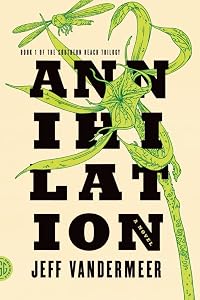
Despite blurbers and reviewers insisting on the sui generis quality of Catling's fantasy, I found it comparable to several in the "new weird" field. Stylistically, I felt it was closest to The Divinity Student of Michael Cisco. It also had a kinship to Jeff Vandermeer's Ambergris books, although it was less structurally inventive. And I think it suffers ever so slightly from comparison to the superior Well-Built City Trilogy of Jeffrey Ford. It is distinctive among these for its connection to real historical persons and places alongside its extreme fantastic elements. And there's not much literature that falls into its larger class, so Catling's books are worth the attention they demand from those who enjoy those. show less
Naturally, most of the component stories are still situated in Africa. The transformed warden Sidrus serves as the chief villain in the events in the forest of the Vorrh and its neighboring colonial town of Essenwald. He is show more motivated by vengeance, but he is also the vehicle of an entity identified with the Englishman Williams whose strange destiny was the focus of the first book of the series. Events concerning the friends Cyrena and Ghertrude develop strangely, while the former cyclops Ishmael briefly becomes a hero by virtue of participating in an expedition into the Vorrh to recover a formerly subjugated tribe of workers.
Despite blurbers and reviewers insisting on the sui generis quality of Catling's fantasy, I found it comparable to several in the "new weird" field. Stylistically, I felt it was closest to The Divinity Student of Michael Cisco. It also had a kinship to Jeff Vandermeer's Ambergris books, although it was less structurally inventive. And I think it suffers ever so slightly from comparison to the superior Well-Built City Trilogy of Jeffrey Ford. It is distinctive among these for its connection to real historical persons and places alongside its extreme fantastic elements. And there's not much literature that falls into its larger class, so Catling's books are worth the attention they demand from those who enjoy those. show less
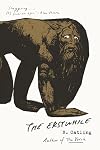
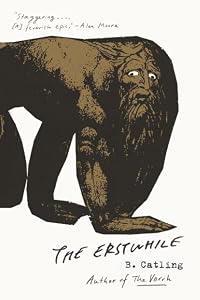
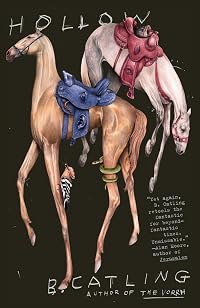
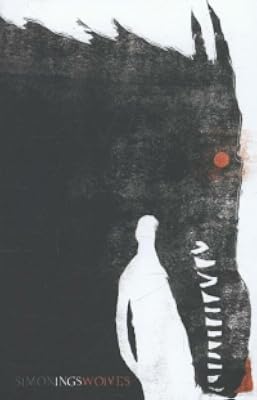
I was rather underwhelmed by [b:The Vorrh|16071377|The Vorrh (The Vorrh Trilogy, #1)|Brian Catling|https://images.gr-assets.com/books/1349600836s/16071377.jpg|42459978], which didn’t quite evoke the haunting forest of doom I’d hoped for. My subsequent decision to read 'The Erstwhile' nonetheless was due to three factors: a recent fondness for fantasy series, the discovery that [a:Ada Palmer|8132662|Ada Palmer|https://images.gr-assets.com/authors/1442973045p2/8132662.jpg]’s demanding Terra Ignota series suddenly became very enjoyable about 200 pages into the second book suggesting the possibility of a similar phenomenon with the Vorrh trilogy, and a superficial liking for the cover with its morose monster. In some ways I enjoyed show more ‘The Erstwhile’ more than [b:The Vorrh|16071377|The Vorrh (The Vorrh Trilogy, #1)|Brian Catling|https://images.gr-assets.com/books/1349600836s/16071377.jpg|42459978], however I also felt more conscious of its flaws. Catling has a distinctive, febrile writing style that can easily befuddle the reader and conceal his highly erratic plotting. Like too many other middle books in trilogies, ‘The Erstwhile’ ends at an entirely arbitrary point leaving at least seven plot threads dangling. The themes also slosh about vaguely like bathwater. There is undoubtedly some interesting material about colonialism and the First World War. In fact, my favourite plot thread takes place in Germany and England and focuses on the Erstwhile who’ve left the Vorrh. The most vivid, strange, and powerful scenes in the book happen in the mental institutions where these inhuman, incomprehensible creatures ended up. Hector’s oblique quest to meet the European Erstwhile and their cryptic plan that saves him from the approaching threat of the Holocaust are a great deal more involving than events in and around Essenwald.
As in [b:The Vorrh|16071377|The Vorrh (The Vorrh Trilogy, #1)|Brian Catling|https://images.gr-assets.com/books/1349600836s/16071377.jpg|42459978], there is plenty of body horror and weird sex. Ishmael returns as a main character, yet spends much of the book sulking and being generally objectionable.His brief quest into the Vorrh to find the Limboia is certainly vivid and exciting, although his role in it isn’t very heroic. Just as I’d got completely fed up with his petulance and the book was drawing to a close, he was suddenly framed for murder and executed by the absurdly elaborate Essenwald variation upon a guillotine. Presumably Catling got tired of him too? Sidrus is also back with a tiresome tendency to maim or kill anybody he encounters. I had more time for Ghertrude and Cyrena. The fate of Ghertrude’s baby, the identity of the father, who Gertrude’s birth parents are, and why Meta the maid has become invisible to her all remained unexplained, frustratingly. ‘The Erstwhile’ is no more inclined to answer the reader’s questions than [b:The Vorrh|16071377|The Vorrh (The Vorrh Trilogy, #1)|Brian Catling|https://images.gr-assets.com/books/1349600836s/16071377.jpg|42459978]. Perhaps part of the appeal of the European plot thread was that it had some resolution? Especially as this resolution involved Nazis getting swastikas carved into their faces. Meanwhile, who knows what the heck is going on with Modesta or the smoke-and-cogs being in the walled garden?
More fundamentally, I could identify no clear idea of what the Erstwhile were up to. It evidently involved getting people to write mysterious words in the soil with their hands, which then filled with ants, but to what end? If this was a mythological reference, it passed me by. I was amused by the references to Just A Minute, though. Despite not knowing what they were doing, I was fascinated by the Erstwhile. They worked very well as strange creatures, with a range of distinctively unsettling characteristics. I liked their peculiar healing powers and the connection that one of them had with William Blake very much. The concept of the Tree of Knowledge being for the benefit of trees was also pretty great, although it didn’t seem to explain the plot at all. The sheer mysteriousness of events almost enthralled me, but I didn't like most of the main characters enough to watch them bumble about not knowing about the obscure mystical forces operating in the background.
In short, my experience of [b:The Vorrh|16071377|The Vorrh (The Vorrh Trilogy, #1)|Brian Catling|https://images.gr-assets.com/books/1349600836s/16071377.jpg|42459978] was repeated: I wondered throughout if I was missing something and just didn’t get it. I also had a rather mixed response to Catling’s writing. At times I found it entertainingly witty:
At others, it got on my nerves:
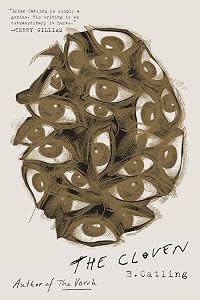
If [b:The Cloven|36164557|The Cloven (The Vorrh Trilogy #3)|Brian Catling|https://images.gr-assets.com/books/1530960760s/36164557.jpg|57774840] is more of the same, I doubt I’ll read it. I vaguely want to know what happens to certain characters, but have no confidence that the final book actually ties anything up. Although the Vorrh trilogy is impressively odd, its particular weirdness is of a loose and unfocused character that annoys me as much as it intrigues me. If there’s an underlying structure or logic to where the story is going, I really can’t discern it. show less
As in [b:The Vorrh|16071377|The Vorrh (The Vorrh Trilogy, #1)|Brian Catling|https://images.gr-assets.com/books/1349600836s/16071377.jpg|42459978], there is plenty of body horror and weird sex. Ishmael returns as a main character, yet spends much of the book sulking and being generally objectionable.
More fundamentally, I could identify no clear idea of what the Erstwhile were up to. It evidently involved getting people to write mysterious words in the soil with their hands, which then filled with ants, but to what end? If this was a mythological reference, it passed me by. I was amused by the references to Just A Minute, though. Despite not knowing what they were doing, I was fascinated by the Erstwhile. They worked very well as strange creatures, with a range of distinctively unsettling characteristics. I liked their peculiar healing powers and the connection that one of them had with William Blake very much. The concept of the Tree of Knowledge being for the benefit of trees was also pretty great, although it didn’t seem to explain the plot at all.
In short, my experience of [b:The Vorrh|16071377|The Vorrh (The Vorrh Trilogy, #1)|Brian Catling|https://images.gr-assets.com/books/1349600836s/16071377.jpg|42459978] was repeated: I wondered throughout if I was missing something and just didn’t get it. I also had a rather mixed response to Catling’s writing. At times I found it entertainingly witty:
Gotfrid’s hobby was an obsessive determination to crossbreed different species and thus produce a unique new pelt. He had no scientific skills and a very shabby understanding of natural history, still less of basic genetics. But he did have persistence, no moral code, and an abnormal interest in sexual organs. His little workshop was well worth avoiding. The odours and sounds that emanated from it were spectacular.
That is why the small set of rooms above it was so very cheap.
At others, it got on my nerves:
The smoke rose in the still khaki air and he saw her scars arabesque with her fine long hair and wondered why he was in this forsaken forest rather than her bed. Outside, the reptiles and amphibians began to call to the stars as the shadows squeezed out from the trees and the overpowering darkness pulled the infinite through the intimate with ease.
If [b:The Cloven|36164557|The Cloven (The Vorrh Trilogy #3)|Brian Catling|https://images.gr-assets.com/books/1530960760s/36164557.jpg|57774840] is more of the same, I doubt I’ll read it. I vaguely want to know what happens to certain characters, but have no confidence that the final book actually ties anything up. Although the Vorrh trilogy is impressively odd, its particular weirdness is of a loose and unfocused character that annoys me as much as it intrigues me. If there’s an underlying structure or logic to where the story is going, I really can’t discern it. show less
Always tricky to rate or review the second part of a trilogy - so many threads wrap up, evolve, and get established. The first book, The Vorrh, was such a strong start too that expectations are high for the follow on.
Overall, this one felt a little fragmented at times, but the way threads drew together towards the end, while setting up further mysteries to come, was beautiful. The first chapter or two felt like a recap, which was helpful but a bit raw. And there were some absolutely amazing passages that served to open the story up to a much bigger picture outside of literature, and into humankind itself. The image of snow falling made me stop in my tracks.
Rating this 4, as so much of it depends on the previous and follow-on books, but show more hugely enjoyed reading this. show less
Overall, this one felt a little fragmented at times, but the way threads drew together towards the end, while setting up further mysteries to come, was beautiful. The first chapter or two felt like a recap, which was helpful but a bit raw. And there were some absolutely amazing passages that served to open the story up to a much bigger picture outside of literature, and into humankind itself. The image of snow falling made me stop in my tracks.
Rating this 4, as so much of it depends on the previous and follow-on books, but show more hugely enjoyed reading this. show less
Ratings
Members
- Recently Added By
Author Information

33+ Works 1,924 Members
Some Editions
Series

Common Knowledge
- Canonical title
- The Erstwhile
- People/Characters
- Louis Wain; Sidrus; Ghertrude Eloise Tulp; Hector Ruben Schumann; William Blake
- Important places
- Essenwald
- Epigraph
- The tree of knowledge has been fossilized into an island of coal ready to consume our earliest historical trace (a biological fact or a mythological belief). One is old, the other is new. But both exist side by side in the pr... (show all)esent.
--unknown
Woe to Europeans if they do not remain conscious of their unity of culture and race in the African bush. Woe to them.
--Leo Frobenius, Paideuma, Umrisse einer Kultur-und Seelenlehre - Dedication
- For Alan Moore, who lit the fuse.
And for Ray Cooper and Terry Gilliam, who fanned the flames. - Quotations
- Go to the great oceans, because water is the memory of the world and all the forests are its blind ambition.
- Blurbers
- Alan Moore
Classifications
Statistics
- Members
- 260
- Popularity
- 124,705
- Reviews
- 3
- Rating
- (3.72)
- Languages
- English
- Media
- Paper, Audiobook, Ebook
- ISBNs
- 7
- ASINs
- 4