
On This Page
Description
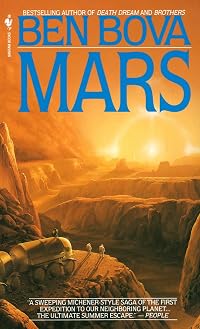
Jamie Waterman is a young Navaho geologist who is picked for the ground team of the first manned expedition to Mars. He will be joining an international team of astronauts and scientists. But once the crew land on the red planet, they soon discover they must battle not only the alien land on which they have invaded but earthbound bureaucrats as well. When they come face to face with a chasm ten times as deep and large as the Grand Canyon, all twenty-five astronauts must face the most show more shocking discovery of all… show lessTags
Recommendations














Member Recommendations

Member Reviews
So I'm going to start out by saying that this is not typically my genera of choice, but I thoroughly enjoyed it. For being 500 pages long it flies by. I think the best part is that it's not one of those science fiction novels that relies completely on future tech and a bunch of crazy science. It's pretty realistic, all things considered.
Jamie Waterman, a half-Navajo, American geologist and several other scientists from different disciplines and different countries, as well as several Russian cosmonauts and American astronauts are chosen to be the first humans to set foot on Mars. This novel covers some of the trials and tribulations leading up to the launch as well as the challenges and frustrations of the landing crew.
Without going show more into too much detail, Jamie falls for Joanna Brumado a Brazilian biologist who's father is the heart and soul of this entire project. There's an undercurrent of this relationship through out the entire novel and, in some ways, it affects how and what gets done without being the center of attention. Ultimately, it even gives Jamie strength to continue in spite of a crazy emergency out in the Grand Canyon of Mars.
There's SO much more to this novel than a love story though, including some crazy relationship dynamics between the Russian cosmonaut, Mikhail Vosnesensky, and several characters. Additionally Alberto Brumado and how he kept the project going while the crew were in space. Tony Reed, the physician and his personal demons and schemes. The list goes on and on, which truly explains the length of this novel. It'd be a disservice to try to summarize everything here, honestly, because there's just a lot going on.
This is a great novel for those who want to like science fiction, but don't think it needs to be all about lasers, aliens, crazy tech, etc. This is very realistic science fiction novel, and I could not have possibly enjoyed it more. show less
Jamie Waterman, a half-Navajo, American geologist and several other scientists from different disciplines and different countries, as well as several Russian cosmonauts and American astronauts are chosen to be the first humans to set foot on Mars. This novel covers some of the trials and tribulations leading up to the launch as well as the challenges and frustrations of the landing crew.
Without going show more into too much detail, Jamie falls for Joanna Brumado a Brazilian biologist who's father is the heart and soul of this entire project. There's an undercurrent of this relationship through out the entire novel and, in some ways, it affects how and what gets done without being the center of attention. Ultimately, it even gives Jamie strength to continue in spite of a crazy emergency out in the Grand Canyon of Mars.
There's SO much more to this novel than a love story though, including some crazy relationship dynamics between the Russian cosmonaut, Mikhail Vosnesensky, and several characters. Additionally Alberto Brumado and how he kept the project going while the crew were in space. Tony Reed, the physician and his personal demons and schemes. The list goes on and on, which truly explains the length of this novel. It'd be a disservice to try to summarize everything here, honestly, because there's just a lot going on.
This is a great novel for those who want to like science fiction, but don't think it needs to be all about lasers, aliens, crazy tech, etc. This is very realistic science fiction novel, and I could not have possibly enjoyed it more. show less
Ye gods, where do I begin with this one...
Mars is a hard sci-fi piece about the first exploration/trip to, well, Mars with humans. To be honest, I thought this thing was written in the 80s, it felt so utterly dated (attitudes, more than science itself), and I was surprised to see that it was written in 1992. Even more, I don't understand how it's not a "typical sci fi" because it doesn't have robots and other "stereotypical" sci fi elements. It's Sci Fi to the core, but I guess that's a discussion for a different day.
It takes place about now (or rather, about 2020 which isn't so far away), and the technology is both behind and ahead of where we are. We're still using floppy disks and smoking up a storm, but we've, apparently made great show more advances with some of our space tech. Also, (quibble) the space suits in the future suck (seriously, they are inferior to today's if our fearless leader/hero can feel the Martian cold, when there are people space walking now in colder temps without issue .
Most of the science seems pretty strong, though, and I'll give it to Bova for clearly doing his research and getting a lot of things pretty right (as far as this biologist could tell) with the planetary and physics stuff. Good job there.
But his characterizations go from weak to downright awful. Everyone is a cardboard cut out, and the women are treated worst of all. Most of the non-mission women (politicians, media) are career driven "do whatever it takes" harpies depicted as "dragon lady[ies]" with "claws" and are "fierce." Mission women are sex-kittens or maternal gardeners, except for the one near-virginal good girl. The men are a little more diversified, but are still very caricature-like most of the time. There is a mustache twirling (ok, he doesn't have a mustache, but he does havea British accent ! Our hero is... spiritual and heroic. It's all a little ludicrous and incredibly clunky.
I had some serious issues with the "scientists." I'm not saying that scientists are unfeeling, don't play pranks, or are asexual, so I expect normal to extreme interactions when a group of 25 people are trapped together for nearly 2 years, but some of the stuff they do is absolutely ludicrous. No scientist I know would act in some of the ways they do in the novel, and they certainly wouldn't take some of the lines of reasoning that are given. It just doesn't make sense at all, and I refuse to believe that the "best of the best" of this multinational conglomeration of scientists include so many boobs. At best, you could make me agree with driven, maybe less sociable stereotypes, but not downright ignorance and stupidity.
The novel promises that the team finds something at the bottom of the "Grand Canyon" of Mars. And I can't decide if the author gave it to us, and then just downplayed it with the "Martian Virus" mystery or if it was hinted at and left. Either way, there was a lot of build up, a lot of expectation and no pay off at the end.
And I still can't figure out where Bova was going with the race relations stuff. Whatever he was going for either didn't make sense to me, or just wasn't written well enough, because I tried to figure it out, and instead just kept sighing at the "red man" comments (yes, the lead geologist was Navajo, sure there could have been interesting race relations/prejudice studies going on, but it didn't work if that was a goal). It was probably just a case of finding a way to manufacture drama for the political parts of the book, but if so, it was weak and cheap.
Bad pacing.
Clunky writing.
No pay off.
Terrible characters.
At least the actual science was good(ish). But I don't feel the need to go any further with the series (Grand Tour).
I should mention that I give this book 2 bonus cookies.
1. Mentioning vinho verde wine.
2. The use of the Russians' patronymics. I'm still coming down from my [b:Anna Karenina|15823480|Anna Karenina|Leo Tolstoy|http://d.gr-assets.com/books/1352422904s/15823480.jpg|2507928] high so it made me happy. show less
Mars is a hard sci-fi piece about the first exploration/trip to, well, Mars with humans. To be honest, I thought this thing was written in the 80s, it felt so utterly dated (attitudes, more than science itself), and I was surprised to see that it was written in 1992. Even more, I don't understand how it's not a "typical sci fi" because it doesn't have robots and other "stereotypical" sci fi elements. It's Sci Fi to the core, but I guess that's a discussion for a different day.
It takes place about now (or rather, about 2020 which isn't so far away), and the technology is both behind and ahead of where we are. We're still using floppy disks and smoking up a storm, but we've, apparently made great show more advances with some of our space tech. Also, (quibble) the space suits in the future suck (seriously, they are inferior to today's if our fearless leader/hero
Most of the science seems pretty strong, though, and I'll give it to Bova for clearly doing his research and getting a lot of things pretty right (as far as this biologist could tell) with the planetary and physics stuff. Good job there.
But his characterizations go from weak to downright awful. Everyone is a cardboard cut out, and the women are treated worst of all. Most of the non-mission women (politicians, media) are career driven "do whatever it takes" harpies depicted as "dragon lady[ies]" with "claws" and are "fierce." Mission women are sex-kittens or maternal gardeners, except for the one near-virginal good girl. The men are a little more diversified, but are still very caricature-like most of the time. There is a mustache twirling (ok, he doesn't have a mustache, but he does have
I had some serious issues with the "scientists." I'm not saying that scientists are unfeeling, don't play pranks, or are asexual, so I expect normal to extreme interactions when a group of 25 people are trapped together for nearly 2 years, but some of the stuff they do is absolutely ludicrous. No scientist I know would act in some of the ways they do in the novel, and they certainly wouldn't take some of the lines of reasoning that are given. It just doesn't make sense at all, and I refuse to believe that the "best of the best" of this multinational conglomeration of scientists include so many boobs. At best, you could make me agree with driven, maybe less sociable stereotypes, but not downright ignorance and stupidity.
The novel promises that the team finds something at the bottom of the "Grand Canyon" of Mars. And I can't decide if the author gave it to us, and then just downplayed it with the "Martian Virus" mystery or if it was hinted at and left. Either way, there was a lot of build up, a lot of expectation and no pay off at the end.
And I still can't figure out where Bova was going with the race relations stuff. Whatever he was going for either didn't make sense to me, or just wasn't written well enough, because I tried to figure it out, and instead just kept sighing at the "red man" comments (yes, the lead geologist was Navajo, sure there could have been interesting race relations/prejudice studies going on, but it didn't work if that was a goal). It was probably just a case of finding a way to manufacture drama for the political parts of the book, but if so, it was weak and cheap.
Bad pacing.
Clunky writing.
No pay off.
Terrible characters.
At least the actual science was good(ish). But I don't feel the need to go any further with the series (Grand Tour).
I should mention that I give this book 2 bonus cookies.
1. Mentioning vinho verde wine.
2. The use of the Russians' patronymics. I'm still coming down from my [b:Anna Karenina|15823480|Anna Karenina|Leo Tolstoy|http://d.gr-assets.com/books/1352422904s/15823480.jpg|2507928] high so it made me happy. show less
Ye gods, where do I begin with this one...
Mars is a hard sci-fi piece about the first exploration/trip to, well, Mars with humans. To be honest, I thought this thing was written in the 80s, it felt so utterly dated (attitudes, more than science itself), and I was surprised to see that it was written in 1992. Even more, I don't understand how it's not a "typical sci fi" because it doesn't have robots and other "stereotypical" sci fi elements. It's Sci Fi to the core, but I guess that's a discussion for a different day.
It takes place about now (or rather, about 2020 which isn't so far away), and the technology is both behind and ahead of where we are. We're still using floppy disks and smoking up a storm, but we've, apparently made great show more advances with some of our space tech. Also, (quibble) the space suits in the future suck (seriously, they are inferior to today's if our fearless leader/hero can feel the Martian cold, when there are people space walking now in colder temps without issue .
Most of the science seems pretty strong, though, and I'll give it to Bova for clearly doing his research and getting a lot of things pretty right (as far as this biologist could tell) with the planetary and physics stuff. Good job there.
But his characterizations go from weak to downright awful. Everyone is a cardboard cut out, and the women are treated worst of all. Most of the non-mission women (politicians, media) are career driven "do whatever it takes" harpies depicted as "dragon lady[ies]" with "claws" and are "fierce." Mission women are sex-kittens or maternal gardeners, except for the one near-virginal good girl. The men are a little more diversified, but are still very caricature-like most of the time. There is a mustache twirling (ok, he doesn't have a mustache, but he does havea British accent ! Our hero is... spiritual and heroic. It's all a little ludicrous and incredibly clunky.
I had some serious issues with the "scientists." I'm not saying that scientists are unfeeling, don't play pranks, or are asexual, so I expect normal to extreme interactions when a group of 25 people are trapped together for nearly 2 years, but some of the stuff they do is absolutely ludicrous. No scientist I know would act in some of the ways they do in the novel, and they certainly wouldn't take some of the lines of reasoning that are given. It just doesn't make sense at all, and I refuse to believe that the "best of the best" of this multinational conglomeration of scientists include so many boobs. At best, you could make me agree with driven, maybe less sociable stereotypes, but not downright ignorance and stupidity.
The novel promises that the team finds something at the bottom of the "Grand Canyon" of Mars. And I can't decide if the author gave it to us, and then just downplayed it with the "Martian Virus" mystery or if it was hinted at and left. Either way, there was a lot of build up, a lot of expectation and no pay off at the end.
And I still can't figure out where Bova was going with the race relations stuff. Whatever he was going for either didn't make sense to me, or just wasn't written well enough, because I tried to figure it out, and instead just kept sighing at the "red man" comments (yes, the lead geologist was Navajo, sure there could have been interesting race relations/prejudice studies going on, but it didn't work if that was a goal). It was probably just a case of finding a way to manufacture drama for the political parts of the book, but if so, it was weak and cheap.
Bad pacing.
Clunky writing.
No pay off.
Terrible characters.
At least the actual science was good(ish). But I don't feel the need to go any further with the series (Grand Tour).
I should mention that I give this book 2 bonus cookies.
1. Mentioning vinho verde wine.
2. The use of the Russians' patronymics. I'm still coming down from my [b:Anna Karenina|15823480|Anna Karenina|Leo Tolstoy|http://d.gr-assets.com/books/1352422904s/15823480.jpg|2507928] high so it made me happy. show less
Mars is a hard sci-fi piece about the first exploration/trip to, well, Mars with humans. To be honest, I thought this thing was written in the 80s, it felt so utterly dated (attitudes, more than science itself), and I was surprised to see that it was written in 1992. Even more, I don't understand how it's not a "typical sci fi" because it doesn't have robots and other "stereotypical" sci fi elements. It's Sci Fi to the core, but I guess that's a discussion for a different day.
It takes place about now (or rather, about 2020 which isn't so far away), and the technology is both behind and ahead of where we are. We're still using floppy disks and smoking up a storm, but we've, apparently made great show more advances with some of our space tech. Also, (quibble) the space suits in the future suck (seriously, they are inferior to today's if our fearless leader/hero
Most of the science seems pretty strong, though, and I'll give it to Bova for clearly doing his research and getting a lot of things pretty right (as far as this biologist could tell) with the planetary and physics stuff. Good job there.
But his characterizations go from weak to downright awful. Everyone is a cardboard cut out, and the women are treated worst of all. Most of the non-mission women (politicians, media) are career driven "do whatever it takes" harpies depicted as "dragon lady[ies]" with "claws" and are "fierce." Mission women are sex-kittens or maternal gardeners, except for the one near-virginal good girl. The men are a little more diversified, but are still very caricature-like most of the time. There is a mustache twirling (ok, he doesn't have a mustache, but he does have
I had some serious issues with the "scientists." I'm not saying that scientists are unfeeling, don't play pranks, or are asexual, so I expect normal to extreme interactions when a group of 25 people are trapped together for nearly 2 years, but some of the stuff they do is absolutely ludicrous. No scientist I know would act in some of the ways they do in the novel, and they certainly wouldn't take some of the lines of reasoning that are given. It just doesn't make sense at all, and I refuse to believe that the "best of the best" of this multinational conglomeration of scientists include so many boobs. At best, you could make me agree with driven, maybe less sociable stereotypes, but not downright ignorance and stupidity.
The novel promises that the team finds something at the bottom of the "Grand Canyon" of Mars. And I can't decide if the author gave it to us, and then just downplayed it with the "Martian Virus" mystery or if it was hinted at and left. Either way, there was a lot of build up, a lot of expectation and no pay off at the end.
And I still can't figure out where Bova was going with the race relations stuff. Whatever he was going for either didn't make sense to me, or just wasn't written well enough, because I tried to figure it out, and instead just kept sighing at the "red man" comments (yes, the lead geologist was Navajo, sure there could have been interesting race relations/prejudice studies going on, but it didn't work if that was a goal). It was probably just a case of finding a way to manufacture drama for the political parts of the book, but if so, it was weak and cheap.
Bad pacing.
Clunky writing.
No pay off.
Terrible characters.
At least the actual science was good(ish). But I don't feel the need to go any further with the series (Grand Tour).
I should mention that I give this book 2 bonus cookies.
1. Mentioning vinho verde wine.
2. The use of the Russians' patronymics. I'm still coming down from my [b:Anna Karenina|15823480|Anna Karenina|Leo Tolstoy|http://d.gr-assets.com/books/1352422904s/15823480.jpg|2507928] high so it made me happy. show less
Jamie Waterman, part Navajo, geologist, Mars explorer and hero. The latter two almost did not happen but for a few serendipitous events that promoted Waterman from backup geologist to primary team member. He is eventually chosen to be among an international crew of 25 scientists, astronauts, and cosmonauts who embark on an eighteen month round trip to Mars and spend 60 days on its surface gathering rock samples, recording climate changes, searching for water...and life.
In doing so, the scientists, astronauts, and cosmonauts find themselves battling more than the planet's harsh conditions and treacherous terrain. Waterman finds himself in hot water with the bureaucrats on Earth when he fails to recite his rehearsed speech upon arrival on show more Mars, lapsing into a brief Navajo greeting instead.
Days after their arrival, a micro meteor storm damages their inflatable domicile, and causes another issue that comes back to haunt them later in the story. A few weeks later, when one of the Japanese scientists working on Deimos has a stroke, the media goes into a feeding frenzy, swarming Alberto Brumado, the public face of the mission and it's most ardent supporter. Is Mars too dangerous for us to explore? Is it worth risking human lives? Brumado's daughter Joanna is among the scientists on the planet, working closely with Waterman. At times, a bit too closely perhaps.
When he is convinced that a formation in a cliff wall of Tithonium Chasma might be the remains of an ancient civilization, Waterman pushes against authority to have the mission planned changed to allow a return to the area. However, a mysterious illness and a crash of their Mars rover prevent Waterman from reaching his target. Against orders from mission control to evacuate the base, two of the Russian cosmonauts and the base's British chief medical officer set out to rescue Waterman's team in another rover only to find themselves unable to cross a massive sand filled crater. It's up to a sick and weakened Waterman to take charge by leaving his stranded rover and walking miles around the crater with a steel cable to connect the two vehicles.
Bova does an exemplary job of chronicling an expedition to Mars in a scientifically sound story. This is a solid "hard SF" tale that does a fair job of exploring the human element in each of the main characters but only Waterman truly has any depth. In his usual style, Bova will pull the readers out of the storyline every so often to spend a brief chapter describing the background of a particular character. These days, some people call that "info dumping" and would prefer to see characters develop and reveal their backgrounds as the story progresses. I'm not particularly bothered by it, however, as these flashbacks are only about a page and a half long.
Bova tends to gloss over some of the hardships and temptations that might exist when two dozen people are cramped in a small living space in rough conditions for two months. There are the occasional arguments, lustful desires, plotting and scheming, fears, and backstabbing, but they are superficial and often dwindle away as the story progresses. Exploration and science are at the forefront of Bova's MARS.
Bova returns Jamie Waterman to Mars with his sequels Return to Mars and Mars Life. I think he did a better job on the human elements in those stories. show less
In doing so, the scientists, astronauts, and cosmonauts find themselves battling more than the planet's harsh conditions and treacherous terrain. Waterman finds himself in hot water with the bureaucrats on Earth when he fails to recite his rehearsed speech upon arrival on show more Mars, lapsing into a brief Navajo greeting instead.
Days after their arrival, a micro meteor storm damages their inflatable domicile, and causes another issue that comes back to haunt them later in the story. A few weeks later, when one of the Japanese scientists working on Deimos has a stroke, the media goes into a feeding frenzy, swarming Alberto Brumado, the public face of the mission and it's most ardent supporter. Is Mars too dangerous for us to explore? Is it worth risking human lives? Brumado's daughter Joanna is among the scientists on the planet, working closely with Waterman. At times, a bit too closely perhaps.
When he is convinced that a formation in a cliff wall of Tithonium Chasma might be the remains of an ancient civilization, Waterman pushes against authority to have the mission planned changed to allow a return to the area. However, a mysterious illness and a crash of their Mars rover prevent Waterman from reaching his target. Against orders from mission control to evacuate the base, two of the Russian cosmonauts and the base's British chief medical officer set out to rescue Waterman's team in another rover only to find themselves unable to cross a massive sand filled crater. It's up to a sick and weakened Waterman to take charge by leaving his stranded rover and walking miles around the crater with a steel cable to connect the two vehicles.
Bova does an exemplary job of chronicling an expedition to Mars in a scientifically sound story. This is a solid "hard SF" tale that does a fair job of exploring the human element in each of the main characters but only Waterman truly has any depth. In his usual style, Bova will pull the readers out of the storyline every so often to spend a brief chapter describing the background of a particular character. These days, some people call that "info dumping" and would prefer to see characters develop and reveal their backgrounds as the story progresses. I'm not particularly bothered by it, however, as these flashbacks are only about a page and a half long.
Bova tends to gloss over some of the hardships and temptations that might exist when two dozen people are cramped in a small living space in rough conditions for two months. There are the occasional arguments, lustful desires, plotting and scheming, fears, and backstabbing, but they are superficial and often dwindle away as the story progresses. Exploration and science are at the forefront of Bova's MARS.
Bova returns Jamie Waterman to Mars with his sequels Return to Mars and Mars Life. I think he did a better job on the human elements in those stories. show less
I imagine that the dusty ball of rock that we call Mars will remain the subject of stories until we have actually explored the planet in reality. Ben Bova takes this scientific urge and moulds a realistic approach to our potential first manned mission. The mission is fraught with potential dangers, not only from the hostile planet itself, but from the stretched emotional states of the scientists and astronauts that will make the journey and ultimately set foot on the dusty Red Planet. Bova weaves a clever mix of science, politics and human psychology around a setting which is both mysterious and exciting. With the books grounding in a realistic approach the action is not required to be non-stop and Bova's approach is to use the show more unexpected to draw the reader in, creating tension, rather than a more gung-ho approach to fiction. A very good sci-fi read indeed. show less
Lukewarm near-future tale of a Mars expedition. The science in this book was great but the human interaction portion really fell apart. Those parts felt like it was written by a Junior High School student, just not very realistic or believable. Also, I understand it was a multi-racial, multi-gender crew, but the author felt like he had to make that point painfully clear all the time...... If I hear the expression "red man" one more time..... Conversely, the scientific portions of the book were well handled, very believable and were certainly the best part. Overall I'm glad I read it, I just wish it was better.....
My favorite of The Grand Tour books so far, by a decent margin.
It's closer to 'pure' science fiction than the previous three, with the exploration of Mars and the science of getting there and exploring taking the front seat, with a lesser focus on politics and character than the previous books (although there still a decent amount of both).
I think one reason I liked Mars far more than the other books was that I just really don't care much for Dan Randolph. Jamie Waterman is far more likeable, even if the novel paints him as hero-to-a-fault, with the story bending to make things happen for him (granted, it would be a strange story if it didn't). I find it hard to believe that even with all the mad political and other situations going show more on that they would have rewritten the entire mission plan they'd spent years and billions on for little more than a hunch.
Otherwise, the characters are Bova's fairly standard mix of borderline (if not crossing over) stereotypes, dashing men, and women described by their looks first (and jobs second). I have some doubts that real scientists would be so petty and ridiculous, but it makes for a better read, so I'll take it.
Plotwise, the 'big bad' sickness doesn't make terribly much sense timelinewise, but it's a neat enough twist. It's a bummer that after everythingwe don't actually get to go see if Jamie was write about the structures . At least they find life! It makes me wish that in the quarter century since Mars was published, we'd actually have made it to Mars in real life...
As an aside, I think the reading order on Goodreads I was using is questionable. Mars appears to take place before Privateers at least (if you ignore the Soviet Union). Doesn't really impact that story overly much (especially since there's a bit of history rewriting going on between books anyways), just something to keep in mind.
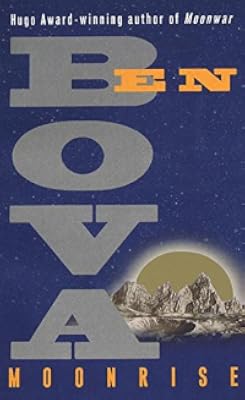
Looks like I'm off to the Moon next in [b:Moonrise|267287|Moonrise (The Grand Tour, #5; Moonbase Saga, #1)|Ben Bova|https://images.gr-assets.com/books/1388458689s/267287.jpg|1932646] before I ever get to [b:Return to Mars|267310|Return to Mars (The Grand Tour, #7)|Ben Bova|https://images.gr-assets.com/books/1388211421s/267310.jpg|1932634]. Onwards! show less
It's closer to 'pure' science fiction than the previous three, with the exploration of Mars and the science of getting there and exploring taking the front seat, with a lesser focus on politics and character than the previous books (although there still a decent amount of both).
I think one reason I liked Mars far more than the other books was that I just really don't care much for Dan Randolph. Jamie Waterman is far more likeable, even if the novel paints him as hero-to-a-fault, with the story bending to make things happen for him (granted, it would be a strange story if it didn't). I find it hard to believe that even with all the mad political and other situations going show more on that they would have rewritten the entire mission plan they'd spent years and billions on for little more than a hunch.
Otherwise, the characters are Bova's fairly standard mix of borderline (if not crossing over) stereotypes, dashing men, and women described by their looks first (and jobs second). I have some doubts that real scientists would be so petty and ridiculous, but it makes for a better read, so I'll take it.
Plotwise, the 'big bad' sickness doesn't make terribly much sense timelinewise, but it's a neat enough twist. It's a bummer that after everything
As an aside, I think the reading order on Goodreads I was using is questionable. Mars appears to take place before Privateers at least (if you ignore the Soviet Union). Doesn't really impact that story overly much (especially since there's a bit of history rewriting going on between books anyways), just something to keep in mind.
Looks like I'm off to the Moon next in [b:Moonrise|267287|Moonrise (The Grand Tour, #5; Moonbase Saga, #1)|Ben Bova|https://images.gr-assets.com/books/1388458689s/267287.jpg|1932646] before I ever get to [b:Return to Mars|267310|Return to Mars (The Grand Tour, #7)|Ben Bova|https://images.gr-assets.com/books/1388211421s/267310.jpg|1932634]. Onwards! show less
Members
- Recently Added By
Lists

Favorite Science Fiction
454 works; 217 members
Author Information

468+ Works 34,221 Members
Ben Bova, Ben Bova was born in Philadelphia, Pennsylvania. He began writing fiction in the late 1940's and continued to pursue his careers in journalism, aerospace, education and publishing. Bova received a bachelor's degree in journalism from Temple University, 1954, a master of arts degree in communications from the State University of New York, show more 1987, and a doctorate in education from California Coast University, 1996. Dr. Bova worked as a newspaper reporter for several years and then joined Project Vanguard, the first American satellite program, as a technical editor. He was manager of marketing for Avco Everett Research Laboratory and worked with scientists in the fields of high-power lasers, artificial hearts and advanced electrical power generators. Dr. Bova has taught science fiction at Harvard University and at the Hayden Planetarium in New York City, where he also directed film courses. He has written scripts for teaching films with the Physical Sciences Study Committee in association with Nobel Laureates from many universities. Dr. Bova has served on the advisory board of Post College and the Editorial Boards of the World Future Society. He is President Emeritus of the National Space Society and a Fellow of the British Interplanetary Society. He is also a charter member of the Planetary Society and a member of the American Association for the Advancement of Science, the Nature Conservancy, the New York Academy of Sciences and the National Space Club. He is a former President and a charter member of Science Fiction and Fantasy Writers of America. He was honored by Temple University as a Distinguished Alumnus in 1981 and in 1982 was made an Alumni Fellow. In 1994, his short story "Inspiration" was nominated for the Nebula Award. "The Beauty of Light" was voted one of the best science books of the year in 1988 by the American Librarians' Association and they hailed "Moonrise" as best science fiction novel in 1996. Other titles include "Moonwar," "Mars," and "Brothers," which all combine romance and adventure with the scientific aspect of exploring the future of technology and its effect on individuals and society. "Immortality" and "Assured Survival" deal with technology being used to solve economic, social and political problems. "Immortality" goes further in examining biomedical breakthroughs that could extend a person's life by hundreds of years while being able to always remain physically young. His works include The Aftermath, Mars Life, and Leviathans of Jupiter. Ben Bova was a prolific science fiction author. He wrote over a hundred books and short stories. He also was an editor who worked on some of science fiction's best-known publications. He died on November 29, 2020 at the age of 88. (Bowker Author Biography) show less
Some Editions
Awards and Honors
Awards
Series


Belongs to Publisher Series
Common Knowledge
- Canonical title
- Mars
- Original title
- Mars
- Original publication date
- 1992-07
- People/Characters
- Jamie Waterman; Joanna Brumado; Ilona Malater; Tony Reed; Pete Connors; Mikhail Andreivitch Vosnesensky (show all 7); Al Waterman
- Important places
- Mars; Antarctica; Berkeley, California, USA; Houston, Texas, USA; Kaliningrad, Russia; Kazakhstan (show all 11); New York, New York, USA; Rio de Janeiro, Rio de Janeiro, Brasil; Santa Fe, New Mexico, USA; Star City; Washington, D.C., USA
- Dedication
- To Florence and Jerry Nelson
- First words
- Listen to the wisdom of the Old Ones:
The red world and the blue are brothers.They were born together in the seething maelstrom of dust and gas spinning out from the heart of the vast cloud that was to become Father Sun. - Quotations
- White man speaks with forked tongue.
Ya'aa'tey - Last words
- (Click to show. Warning: May contain spoilers.)Mars waits for us.
- Blurbers
- Michener, James; Bradbury, Ray; Collins, Michael; Boyne, Walter J.; Grey, Jerry; Brooks, Terry (show all 8); Card, Orson Scott; Clarke, Arthur C.
- Original language
- English
Classifications
Statistics
- Members
- 1,788
- Popularity
- 12,211
- Reviews
- 26
- Rating
- (3.67)
- Languages
- Czech, English, French, German
- Media
- Paper, Audiobook, Ebook
- ISBNs
- 33
- ASINs
- 9