On This Page
Description
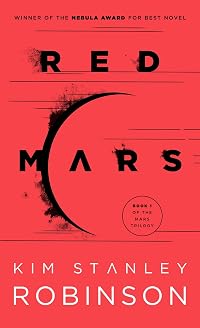
Chronicles the colonization of Mars in the year 2026. For eons, sandstorms have swept the barren desolate landscape of the red planet. For centuries, Mars has beckoned to mankind to come and conquer its hostile climate. Now, in the year 2026, a group of one hundred colonists is about to fulfill that destiny. John Boone, Maya Toitovna, Frank Chalmers, and Arkady Bogdanov lead a mission whose ultimate goal is the terraforming of Mars. For some, Mars will become a passion driving them to daring show more acts of courage and madness; for others it offers an opportunity to strip the planet of its riches. And for the genetic "alchemists, " Mars presents a chance to create a biomedical miracle, a breakthrough that could change all we know about life, and death. The colonists place giant satellite mirrors in Martian orbit to reflect light to the planet's surface. Black dust sprinkled on the polar caps will capture warmth and melt the ice. And massive tunnels, kilometers in depth, will be drilled into the Martian mantle to create stupendous vents of hot gases. Against this backdrop of epic upheaval, rivalries, loves, and friendships will form and fall to pieces, for there are those who will fight to the death to prevent Mars from ever being changed. Brilliantly imagined, breathtaking in scope and ingenuity, show lessTags
Recommendations
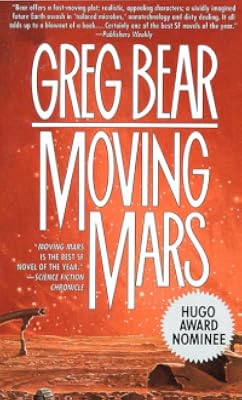
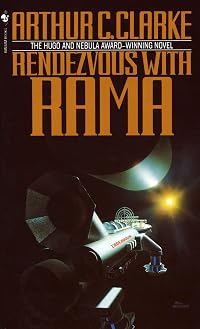

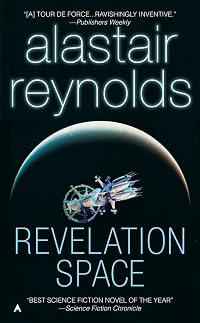
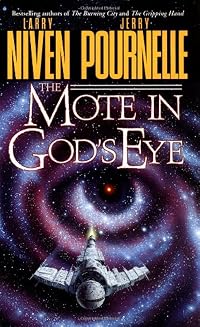

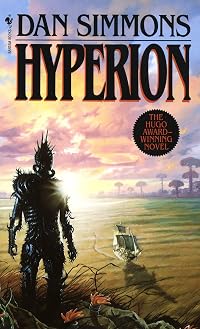
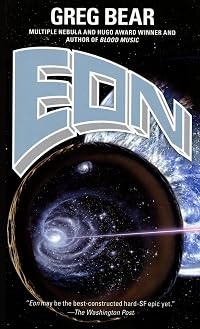



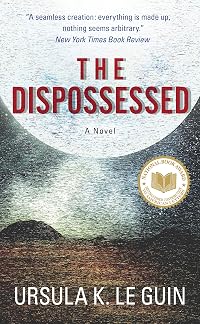
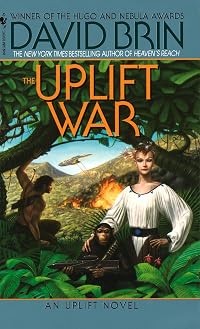
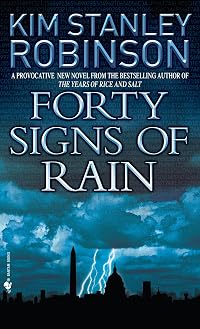
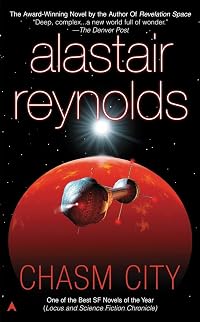



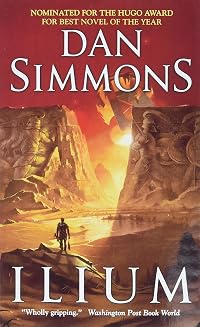
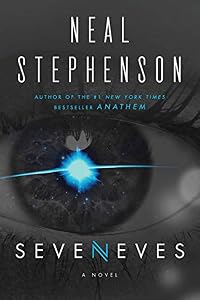




Member Recommendations



Member Reviews
My reaction to reading this book in 1994. Spoilers follow.
I’ve liked some of Robinson’s work (“The Blind Geometer”, his alternate histories “Remaking History” and the strange history/hoax story “Vinland the Dream”) but found others (particularly “Down and Out in the Year 2000” and “A Pictorial History of the 20th Century”) pointless. Still, Robinson has always struck me as a very intelligent writer who is fascinated by historical processes (which certainly links up to his avowed Marxism). With Red Mars, Robinson proves not only that he can write a very hard sf novel but also plot a very compelling story. Robinson’s research notebook must be huge. Not only does he cover theories of life – or its lack thereof show more – on Mars, but Mars geology – past and terraformed future – topography, the physics of a sky elevator into Martian orbit, metallurgy, ecology, automated factories, the materials and techniques for developing Martian cities – and destroying them, space travel, air mining (taking elements out of the thin Martian air), and, for good measure, medieval humor psychology.
When the story opens with John Boone’s murder being plotted by Frank Chalmers (both members of the legendary “first hundred” of Martian colonists) at the festive opening of another Martian city, we realize that things have progressed far since the international expedition of cross-trained scientists first landed on Mars. This progress of Mars not only being terraformed but becoming a battleground – literally in a compelling section on warfare against Martian cities and Phobos – between different political visions of what Mars should be. There are those who want Mars left a pure wilderness and those who want it terraformed just enough to help create a new social/political order on Mars, and there are those who want it fully exploited for mineral resources and living space for Earth’s masses.
Robinson has written the nearly perfect sf novel.
There are splendid travelogue sections of Mars in its native and terraformed forms.
There is future warfare sf in the war on Mars.
There is sociological sf in the distantly seen effects of longevity vaccines on Earth’s culture.
There is industrial sf (to use critic John J. Pierce’s term) in the terraforming of Mars, building of Martian cities, and construction of a sky elevator.
There is exploration of Mars.
There is a sort of Gothic Romanticism in the love of geologist Ann Clayborne for desolate Mars and ecologist Hiroko's mystical rites of “aerophagny”.
All that’s missing is aliens.
This is also a very political novel as evidenced by the manipulative administrator and American Frank Chalmers (though he was, at times, murderous, I was sorry to see him killed in an accident) being contemptuous of naïve scientists who think they can ignore politics as if a fish can ignore the sea they swim in. Other scientists – namely Arkady Bogdanov and some ecologists/biologists -- speak of a new political order to go with a new world. While Bogdanov denies his vision is socialism/communism, it is communal and egalitarian – a plan for a new order based on rationalism a lá the French Revolution. Yet, to his credit, Robinson clearly does not buy in to the notion that scientists are uniquely qualified to create a new, rational, enlightened order. He shows us scientists that are as petty and irrational as anyone else. They splinter into violent factions.
I liked the character of John Boone – a man with a great deal of power despite having no official position. His power stems from personal charisma and the aura from being the first man on Mars.
The one flaw in the book comes from what I took (given Robinson’s Marxism) to be propagandizing for what I suspect is Marxism new face in the real world: Robinson’s notion of “eco-economics”. The model, the underlying paradigm and analogy, for this notion is ecology. The efficiency of a person is measured by the ratio of calories consumed versus calories “created” (Thus a strange sort of equality lies at the base of the system where humans are seen as being “six or seven kilocalories per gram”.) Of course, as the proponents of this idea acknowledge, this rating of people’s economic contribution favors people who build power plants and other types of infrastructure. To grant that other people -- like artists – are contributing members of the economy, they are also assigned a value. (Thereby the basic caloric efficiency measure of economics is contradicted.) The proponents acknowledge assigning values to certain kinds of work is arbitrary and subjective (which it is of course) and that certain kinds of “parasitical jobs … add nothing” so would not be given a rating (jobs like “advertising, stock brokerage”, “some politics”, lawyers) since they are unnecessary (given smart administration via expert software programs – it’s a plausible argument) or remnants of capitalistic inefficiency. However, this model is severely flawed in its fundamental premise, reasoning, and contradicted by empirical experience.
First, using an ecology model assumes a small, closed system. Obviously capitalism does face the prospects of a closed system – ultimately the universe – but can draw on more resources than just what’s on a planet as often assumed by ecologists – though not, necessarily, the ecologist characters here. Second, this model assumes economics is based on a predator-prey relationship where only one side benefits in a transactions. The ecologists don’t mention mutualism or symbiosis. Real economics is a voluntary transaction by both parties where each benefits. (Trade is based on buying where cheap, selling where dear. Obviously there are caveats where we’re not talking about open markets – for instance, a tyrannical government forcing citizens to only buy food, a necessity, from one source.). Presumably, prey does not volunteer to be eaten. This is essentially another riff on the idea of central planning. Here, the value of labor is defined by a central agency rather than the fluid, chaotic, self-organizing forces of market. Central planning hasn’t worked well in the real world. Also, in Western, capitalistic civilization the advent of “parasitical” jobs like stock brokering (I’m thinking in particular of Dutch merchant companies inventing the notion of shared risk via stocks) fostered more wealth. Advertising, for instance, increases market efficiency. In strictly caloric terms, the energy spent in generating and broadcasting a radio ad is probably more than offset by consumers quickly finding a cheaper product. Of course, there are also totalitarian implications in letting a group of people judge your professional worth without market feedback. Robinson also forgets that capitalism creates wealth and helps resources to be efficiently managed.
Still, I’ll forgive the propagandizing for an already failed idea. It’s just over two pages in an otherwise great novel. Also, Robinson, like every good political propagandist, knows how to encase his propaganda in an exciting story. Lastly, in terms of character, it makes sense that scientists would come up with such a notion – they often have a totalitarian streak coupled with too much faith in rationality, a faith untempered by consideration of man’s historical record of political and economic experience. show less
I’ve liked some of Robinson’s work (“The Blind Geometer”, his alternate histories “Remaking History” and the strange history/hoax story “Vinland the Dream”) but found others (particularly “Down and Out in the Year 2000” and “A Pictorial History of the 20th Century”) pointless. Still, Robinson has always struck me as a very intelligent writer who is fascinated by historical processes (which certainly links up to his avowed Marxism). With Red Mars, Robinson proves not only that he can write a very hard sf novel but also plot a very compelling story. Robinson’s research notebook must be huge. Not only does he cover theories of life – or its lack thereof show more – on Mars, but Mars geology – past and terraformed future – topography, the physics of a sky elevator into Martian orbit, metallurgy, ecology, automated factories, the materials and techniques for developing Martian cities – and destroying them, space travel, air mining (taking elements out of the thin Martian air), and, for good measure, medieval humor psychology.
When the story opens with John Boone’s murder being plotted by Frank Chalmers (both members of the legendary “first hundred” of Martian colonists) at the festive opening of another Martian city, we realize that things have progressed far since the international expedition of cross-trained scientists first landed on Mars. This progress of Mars not only being terraformed but becoming a battleground – literally in a compelling section on warfare against Martian cities and Phobos – between different political visions of what Mars should be. There are those who want Mars left a pure wilderness and those who want it terraformed just enough to help create a new social/political order on Mars, and there are those who want it fully exploited for mineral resources and living space for Earth’s masses.
Robinson has written the nearly perfect sf novel.
There are splendid travelogue sections of Mars in its native and terraformed forms.
There is future warfare sf in the war on Mars.
There is sociological sf in the distantly seen effects of longevity vaccines on Earth’s culture.
There is industrial sf (to use critic John J. Pierce’s term) in the terraforming of Mars, building of Martian cities, and construction of a sky elevator.
There is exploration of Mars.
There is a sort of Gothic Romanticism in the love of geologist Ann Clayborne for desolate Mars and ecologist Hiroko's mystical rites of “aerophagny”.
All that’s missing is aliens.
This is also a very political novel as evidenced by the manipulative administrator and American Frank Chalmers (though he was, at times, murderous, I was sorry to see him killed in an accident) being contemptuous of naïve scientists who think they can ignore politics as if a fish can ignore the sea they swim in. Other scientists – namely Arkady Bogdanov and some ecologists/biologists -- speak of a new political order to go with a new world. While Bogdanov denies his vision is socialism/communism, it is communal and egalitarian – a plan for a new order based on rationalism a lá the French Revolution. Yet, to his credit, Robinson clearly does not buy in to the notion that scientists are uniquely qualified to create a new, rational, enlightened order. He shows us scientists that are as petty and irrational as anyone else. They splinter into violent factions.
I liked the character of John Boone – a man with a great deal of power despite having no official position. His power stems from personal charisma and the aura from being the first man on Mars.
The one flaw in the book comes from what I took (given Robinson’s Marxism) to be propagandizing for what I suspect is Marxism new face in the real world: Robinson’s notion of “eco-economics”. The model, the underlying paradigm and analogy, for this notion is ecology. The efficiency of a person is measured by the ratio of calories consumed versus calories “created” (Thus a strange sort of equality lies at the base of the system where humans are seen as being “six or seven kilocalories per gram”.) Of course, as the proponents of this idea acknowledge, this rating of people’s economic contribution favors people who build power plants and other types of infrastructure. To grant that other people -- like artists – are contributing members of the economy, they are also assigned a value. (Thereby the basic caloric efficiency measure of economics is contradicted.) The proponents acknowledge assigning values to certain kinds of work is arbitrary and subjective (which it is of course) and that certain kinds of “parasitical jobs … add nothing” so would not be given a rating (jobs like “advertising, stock brokerage”, “some politics”, lawyers) since they are unnecessary (given smart administration via expert software programs – it’s a plausible argument) or remnants of capitalistic inefficiency. However, this model is severely flawed in its fundamental premise, reasoning, and contradicted by empirical experience.
First, using an ecology model assumes a small, closed system. Obviously capitalism does face the prospects of a closed system – ultimately the universe – but can draw on more resources than just what’s on a planet as often assumed by ecologists – though not, necessarily, the ecologist characters here. Second, this model assumes economics is based on a predator-prey relationship where only one side benefits in a transactions. The ecologists don’t mention mutualism or symbiosis. Real economics is a voluntary transaction by both parties where each benefits. (Trade is based on buying where cheap, selling where dear. Obviously there are caveats where we’re not talking about open markets – for instance, a tyrannical government forcing citizens to only buy food, a necessity, from one source.). Presumably, prey does not volunteer to be eaten. This is essentially another riff on the idea of central planning. Here, the value of labor is defined by a central agency rather than the fluid, chaotic, self-organizing forces of market. Central planning hasn’t worked well in the real world. Also, in Western, capitalistic civilization the advent of “parasitical” jobs like stock brokering (I’m thinking in particular of Dutch merchant companies inventing the notion of shared risk via stocks) fostered more wealth. Advertising, for instance, increases market efficiency. In strictly caloric terms, the energy spent in generating and broadcasting a radio ad is probably more than offset by consumers quickly finding a cheaper product. Of course, there are also totalitarian implications in letting a group of people judge your professional worth without market feedback. Robinson also forgets that capitalism creates wealth and helps resources to be efficiently managed.
Still, I’ll forgive the propagandizing for an already failed idea. It’s just over two pages in an otherwise great novel. Also, Robinson, like every good political propagandist, knows how to encase his propaganda in an exciting story. Lastly, in terms of character, it makes sense that scientists would come up with such a notion – they often have a totalitarian streak coupled with too much faith in rationality, a faith untempered by consideration of man’s historical record of political and economic experience. show less
The two best writers that I've discovered in the past two years, Francis Spufford and Tim Kreider, both praise Robinson's Mars trilogy with great enthusiasm, but I found the atmosphere a little thin. To be sure, not only is the science convincing and detailed, the scenery is vivid, and the characters have a depth and versimilitude not often seen in hard-core SF novels. The trouble is that while Robinson has the imagination to create a convincing array of disparate characters, he doesn't have the power to inhabit them. All of the characters, whether manic, depressive, bluff, cold, or impulsive, are described as from a distance, in the same dispassionate authorial voice — even in the sections told from their points of view. This makes show more the story less thrilling than it has every right to be. It's particularly troublesome in the chapter given over to the perpetually aggrieved Frank Chalmers, Every story benefits from a great villain, but Chalmers' fury seems petty and dyspeptic, impossible to respect.
An epic of Martian terraforming and colonization is a grand prospect, especially when even at the close of the first book it's becoming clear that nobody here is going to build another Earth, but that an entirely new kind of human society—and a new race of people—is being born. But it would be so much better to be among these people, as a reader, than it is to be merely observing them with a dry, emotionless perspective, however godlike the vision. show less
An epic of Martian terraforming and colonization is a grand prospect, especially when even at the close of the first book it's becoming clear that nobody here is going to build another Earth, but that an entirely new kind of human society—and a new race of people—is being born. But it would be so much better to be among these people, as a reader, than it is to be merely observing them with a dry, emotionless perspective, however godlike the vision. show less
Vulgarians on Mars
Red Mars is a re-read for me, I think I originally read it back in 1996 when it first came out in paperback. Those were the days before LibraryThing and the writing of reviews and so I have only an impression of what I thought of it at the time. I must have enjoyed it because I started to read the sequel Green Mars, but gave up halfway through getting bored with all the hard science and I may well have been disappointed because there was no discovery of life on Mars, but that is really the point of the novel. Kim Stanley Robinson make the colonisation of Mars as realistic as possible, without sacrificing that sense of wonder which is pretty much essential for most science fiction.
The novel starts with the murder of show more John Boone shortly after he gave a speech to an assembly of over 5000 people at one of the new towns on Mars. Boone was an American and credited with being the first person to land on Mars, he is a figurehead and envisages for many on the new planet the hopes and aspirations of the first settlers. Time has moved on since the initial landing of the 100 people selected to be the first colonists back in 2027. A thriving network of towns and institutions have been established but they are riddled with tensions: now the original treaty agreed on Earth is up for renewal and various factions on Mars and Earth are competing for a new treaty that will be most beneficial to the faction that they represent.
Part 2 takes the story back in time and describes the original landing of the first 100 and the preparations that were made for the success of their mission. Robinson tells the story of the intervening years, the exploration of much of the planet, the search for water an epic journey to the North Pole. The building of the new towns, a transport system, the initial steps towards terraforming the planet. It is a dead planet in view of the fact no life forms are discovered and the scientists, the engineers, the food experts must quickly make adaptions for life on a cold planet without a breathable atmosphere. The battle to survive in the hostile Martian environment dominates the story, but Robinson's description of the planets natural wonders and amazing physical features provide all that is necessary to capture the imagination.
The colonists have been selected because of their skills in various professions, but these are mainly scientific and engineering, there is one psychologist who rapidly becomes overburdened and few linguists or social engineers to cope with issues relating to different nationalities and cultures. They are relatively unprepared then for factions that coalesce around the most charismatic members of each group many of whom have different aims and ambitions. People openly admit that they lied and falsified answers to get selected to be amongst the first 100. The infighting and political intrigue becomes a microcosm of life on Earth. It all makes for a good story especially when love and sexual attraction (strictly heterosexual) are added to the mix, it surprised me that the first murder involving the first 100 didn't take place until some 15 years after the first landing.
Robinson's microcosm involves issues around, nationalism and cultural differences, religion and naturalism, with the big question on how much Mars should be made to mirror life on earth. Should it be a fresh start to create a new kind of civilisation or should it be a space for the existing cultures on earth to expand over the new land mass. The problem here is that immigrants soon start arriving from an overcrowded Earth, some of whom are employees of powerful trans-national corporations who are looking for profit and power. Different sections of the novel take the point of view from some of the more influential people from the first 100, however the idealists and dreamers among them soon realise that Mars is big enough for them to strike out on their own.
As an exercise in practical world building in an alien environment it hits all the right notes. The science and engineering principles are expanded and adapted to meet a new environment. Robinson convinces that he knows what he is talking about. He is also good on politics and society. When he tackles religion, psychology, culture and the arts he is perhaps not on such safe ground, but the fact that he brings these issues to the fore makes his novel seem all encompassing. Human relations are seen from a male orientated standpoint, but love, sex and the whole damned thing are well above the level that is frequently found in pulp fiction. Heterosexuality and the American way rule, but other cultures are not excluded.
The story telling builds towards a climax with the supporters of the big Corporations on earth steadily infiltrating and taking control of the colony. A confrontation of sorts is inevitable and Robinson's book finally lets the adventure side of his novel have its head.
This is an impressive piece of science fiction writing, but it is in danger of losing half a star, because out of the 100 chosen colonists there is only one native french speaker and he has a mere walk on part. Some of the most important aspects of life are reduced to mere vulgarism. As we know "you are what you eat" and these colonists are content to live on pre-prepared TV diners, even when they succeed in growing their own crops they hurriedly eat the same old rubbish, no vineyards appear to be planted and this lack of appreciation for the finer things in life is regrettable. It is no wonder then that it should all end in tears.
This time round I enjoyed the novel tremendously it became a page turner with so many issues of the human condition laid bare by Robinson. Would the colonists have been more successful if the leading players were European rather than American and Russian, I would like to think so, but I would not bet on it. A five star read. show less
Red Mars is a re-read for me, I think I originally read it back in 1996 when it first came out in paperback. Those were the days before LibraryThing and the writing of reviews and so I have only an impression of what I thought of it at the time. I must have enjoyed it because I started to read the sequel Green Mars, but gave up halfway through getting bored with all the hard science and I may well have been disappointed because there was no discovery of life on Mars, but that is really the point of the novel. Kim Stanley Robinson make the colonisation of Mars as realistic as possible, without sacrificing that sense of wonder which is pretty much essential for most science fiction.
The novel starts with the murder of show more John Boone shortly after he gave a speech to an assembly of over 5000 people at one of the new towns on Mars. Boone was an American and credited with being the first person to land on Mars, he is a figurehead and envisages for many on the new planet the hopes and aspirations of the first settlers. Time has moved on since the initial landing of the 100 people selected to be the first colonists back in 2027. A thriving network of towns and institutions have been established but they are riddled with tensions: now the original treaty agreed on Earth is up for renewal and various factions on Mars and Earth are competing for a new treaty that will be most beneficial to the faction that they represent.
Part 2 takes the story back in time and describes the original landing of the first 100 and the preparations that were made for the success of their mission. Robinson tells the story of the intervening years, the exploration of much of the planet, the search for water an epic journey to the North Pole. The building of the new towns, a transport system, the initial steps towards terraforming the planet. It is a dead planet in view of the fact no life forms are discovered and the scientists, the engineers, the food experts must quickly make adaptions for life on a cold planet without a breathable atmosphere. The battle to survive in the hostile Martian environment dominates the story, but Robinson's description of the planets natural wonders and amazing physical features provide all that is necessary to capture the imagination.
The colonists have been selected because of their skills in various professions, but these are mainly scientific and engineering, there is one psychologist who rapidly becomes overburdened and few linguists or social engineers to cope with issues relating to different nationalities and cultures. They are relatively unprepared then for factions that coalesce around the most charismatic members of each group many of whom have different aims and ambitions. People openly admit that they lied and falsified answers to get selected to be amongst the first 100. The infighting and political intrigue becomes a microcosm of life on Earth. It all makes for a good story especially when love and sexual attraction (strictly heterosexual) are added to the mix, it surprised me that the first murder involving the first 100 didn't take place until some 15 years after the first landing.
Robinson's microcosm involves issues around, nationalism and cultural differences, religion and naturalism, with the big question on how much Mars should be made to mirror life on earth. Should it be a fresh start to create a new kind of civilisation or should it be a space for the existing cultures on earth to expand over the new land mass. The problem here is that immigrants soon start arriving from an overcrowded Earth, some of whom are employees of powerful trans-national corporations who are looking for profit and power. Different sections of the novel take the point of view from some of the more influential people from the first 100, however the idealists and dreamers among them soon realise that Mars is big enough for them to strike out on their own.
As an exercise in practical world building in an alien environment it hits all the right notes. The science and engineering principles are expanded and adapted to meet a new environment. Robinson convinces that he knows what he is talking about. He is also good on politics and society. When he tackles religion, psychology, culture and the arts he is perhaps not on such safe ground, but the fact that he brings these issues to the fore makes his novel seem all encompassing. Human relations are seen from a male orientated standpoint, but love, sex and the whole damned thing are well above the level that is frequently found in pulp fiction. Heterosexuality and the American way rule, but other cultures are not excluded.
The story telling builds towards a climax with the supporters of the big Corporations on earth steadily infiltrating and taking control of the colony. A confrontation of sorts is inevitable and Robinson's book finally lets the adventure side of his novel have its head.
This is an impressive piece of science fiction writing, but it is in danger of losing half a star, because out of the 100 chosen colonists there is only one native french speaker and he has a mere walk on part. Some of the most important aspects of life are reduced to mere vulgarism. As we know "you are what you eat" and these colonists are content to live on pre-prepared TV diners, even when they succeed in growing their own crops they hurriedly eat the same old rubbish, no vineyards appear to be planted and this lack of appreciation for the finer things in life is regrettable. It is no wonder then that it should all end in tears.
This time round I enjoyed the novel tremendously it became a page turner with so many issues of the human condition laid bare by Robinson. Would the colonists have been more successful if the leading players were European rather than American and Russian, I would like to think so, but I would not bet on it. A five star read. show less
I first read Kim Stanley Robinson's (KSR) Red Mars not long after it first came out in 1992. Although I went on to acquire copies of the following books in the trilogy, Green Mars and Blue Mars, I have never gotten around to reading them. So when I determined to actually do that thing, I felt that first I had to re-read Red Mars, and this review is the result.
My first surprise was finding that Red Mars is set in that distant year of futurity, 2026. Reading an iconic piece of science fiction in the year that the book is set in was a bit dislocating for me, but I soon got over it. Such is the strength of KSR's vision that I soon found myself absorbed in his narrative. In any case, there are very few signs that we are not in the same show more future; there is no Internet, and the geopolitics are quaintly old-fashioned, but these are background details anyway and I only realised how things were back on the Earth of Red Mars slowly. In any case, Earth isn’t what the book is about.
We are travelling with, not the first expedition to Mars, but the first group of colonists – the “First Hundred”. We are introduced to them whilst they are in training in Antarctica; then we accompany them on the voyage out, and it is here we begin to meet some of the characters. (We have already been introduced to some of them in a flash-forward at the outset of the novel, though.) After landing, the colonists start work to make Mars habitable, and we quickly see divisions and differing opinions developing. Whilst most colonists are just concerned to do the things necessary to establish their bases and habitats, some amongst them take longer-term views. One group wants to start work immediately on terraforming Mars – transforming it through applied technology so that future generations can live on the surface without breathing masks or pressure garments. Another group, the “reds”, want to preserve Mars as they found it, as a stark, hostile yet beautiful wilderness. (“Red” here does not map directly onto our present-day political models.)
Other political disagreements arise, followed by divisions. Time passes. After five years, though, other colonists start to arrive. Whilst the First Hundred were government-sponsored, the new arrivals are backed by Earth's corporations; and they keep coming, bringing with them more and newer equipment, and starting infrastructure projects that go further into making Mars a habitable world, as well as commencing mining operations. Slowly, we realise that Mars is changing, and not necessarily for the better.
This is not an action-adventure story. Although it isn’t necessary to understand the science, the reader has to accept that the characters we are presented with are either scientists or engineers, and their sole reason for being in the story is to bring their expertise to Mars. Two of the principal characters – one of whom was the first man to set foot on Mars – spend much of the time doing politics, in the sense that they travel around talking to people and trying to influence decisions about the development of the colony, both on the ground and in remote communication with the UN oversight agency back on Earth; but all the time, the story revolves around sciencey people doing science. This is how it would be. And although KSR makes the process fairly painless for the reader, he assumes that someone picking up this book is going to be sufficiently interested in Mars and planetary exploration generally to bring a certain amount of their own knowledge to the table; but it is not necessary to have a Ph.D in biochemistry to follow and enjoy the story.
Ultimately, the reader will begin to see Mars as another character in the story. The landforms are described with love, and given that this was written before we had access to the wealth of photographs of the surface sent back by more recent robot probes, the descriptions are vivid and all the more remarkable.
Some minor packaging criticisms: my UK first edition hardback has some attractive cover art by Mel Grant, which depicts a sort of Chesley Bonestell Mars, with steep, jagged mountains and chasms, conical volcanos and a moon that is a discernable globe. The real Mars has none of these things; in particular, Mars' two moons, Phobos and Deimos, are (we think) captured asteroids with irregular shapes; only roughly round, but distinctly knobbly and in competitively low orbits. And there is a map provided which, like so many others in both fiction and non-fiction, does not include a lot of places named in the text (you would be surprised how often this happens!), and does not show many of the major landforms clearly. On the plus side, at the end of the book is a short chronology which helps the reader keep track of where we are, and how much time has passed.
Time is important in this book. KSR has said that he shortened the terraforming process by a factor of two to move the story along; and even then, he had to introduce a slightly hand-wavy piece of longevity treatment to extend the lifespans of his characters so that we have some degree of continuity in the story. But he treats some of the issues that this creates in a realistic way, and his characters amongst the First Hundred who make it through to the end of the book aren’t just the same people with silver hair; they know that they are older, that that age puts them at odds with many of the newer colonists, and that their experience may not fully compensate for the changing events they are faced with.
Kim Stanley Robinson became heavily involved with the "Mars Underground" as a result of this book. It can certainly be looked at as a realistic picture of what would be necessary to settle and live on Mars. Some entrepreneurs claim to have read this as an inspiration for their own ambitions; I suspect that they are relying on vague memories of the book, because the scale of economic involvement shown in Red Mars would be beyond any one individual or company to finance and reliably keep supplied. The First Hundred arrive to find multiple equipment caches sent over preceding years with heavy plant, power sources and atmospheric processing plants all ready to unpack and roll into action. We quickly see from the account of the spread of the First Hundred into multiple habitats across the surface of the planet that sending only one ship and limited equipment just would not cut it in reality. (And this was before the prospects offered by 3-D printing were ever thought of.)
As a piece of world-building, Red Mars is breath-taking. It stands up as a piece of descriptive literature and deserves to be held up as an example of the best that science fiction can be. show less
My first surprise was finding that Red Mars is set in that distant year of futurity, 2026. Reading an iconic piece of science fiction in the year that the book is set in was a bit dislocating for me, but I soon got over it. Such is the strength of KSR's vision that I soon found myself absorbed in his narrative. In any case, there are very few signs that we are not in the same show more future; there is no Internet, and the geopolitics are quaintly old-fashioned, but these are background details anyway and I only realised how things were back on the Earth of Red Mars slowly. In any case, Earth isn’t what the book is about.
We are travelling with, not the first expedition to Mars, but the first group of colonists – the “First Hundred”. We are introduced to them whilst they are in training in Antarctica; then we accompany them on the voyage out, and it is here we begin to meet some of the characters. (We have already been introduced to some of them in a flash-forward at the outset of the novel, though.) After landing, the colonists start work to make Mars habitable, and we quickly see divisions and differing opinions developing. Whilst most colonists are just concerned to do the things necessary to establish their bases and habitats, some amongst them take longer-term views. One group wants to start work immediately on terraforming Mars – transforming it through applied technology so that future generations can live on the surface without breathing masks or pressure garments. Another group, the “reds”, want to preserve Mars as they found it, as a stark, hostile yet beautiful wilderness. (“Red” here does not map directly onto our present-day political models.)
Other political disagreements arise, followed by divisions. Time passes. After five years, though, other colonists start to arrive. Whilst the First Hundred were government-sponsored, the new arrivals are backed by Earth's corporations; and they keep coming, bringing with them more and newer equipment, and starting infrastructure projects that go further into making Mars a habitable world, as well as commencing mining operations. Slowly, we realise that Mars is changing, and not necessarily for the better.
This is not an action-adventure story. Although it isn’t necessary to understand the science, the reader has to accept that the characters we are presented with are either scientists or engineers, and their sole reason for being in the story is to bring their expertise to Mars. Two of the principal characters – one of whom was the first man to set foot on Mars – spend much of the time doing politics, in the sense that they travel around talking to people and trying to influence decisions about the development of the colony, both on the ground and in remote communication with the UN oversight agency back on Earth; but all the time, the story revolves around sciencey people doing science. This is how it would be. And although KSR makes the process fairly painless for the reader, he assumes that someone picking up this book is going to be sufficiently interested in Mars and planetary exploration generally to bring a certain amount of their own knowledge to the table; but it is not necessary to have a Ph.D in biochemistry to follow and enjoy the story.
Ultimately, the reader will begin to see Mars as another character in the story. The landforms are described with love, and given that this was written before we had access to the wealth of photographs of the surface sent back by more recent robot probes, the descriptions are vivid and all the more remarkable.
Some minor packaging criticisms: my UK first edition hardback has some attractive cover art by Mel Grant, which depicts a sort of Chesley Bonestell Mars, with steep, jagged mountains and chasms, conical volcanos and a moon that is a discernable globe. The real Mars has none of these things; in particular, Mars' two moons, Phobos and Deimos, are (we think) captured asteroids with irregular shapes; only roughly round, but distinctly knobbly and in competitively low orbits. And there is a map provided which, like so many others in both fiction and non-fiction, does not include a lot of places named in the text (you would be surprised how often this happens!), and does not show many of the major landforms clearly. On the plus side, at the end of the book is a short chronology which helps the reader keep track of where we are, and how much time has passed.
Time is important in this book. KSR has said that he shortened the terraforming process by a factor of two to move the story along; and even then, he had to introduce a slightly hand-wavy piece of longevity treatment to extend the lifespans of his characters so that we have some degree of continuity in the story. But he treats some of the issues that this creates in a realistic way, and his characters amongst the First Hundred who make it through to the end of the book aren’t just the same people with silver hair; they know that they are older, that that age puts them at odds with many of the newer colonists, and that their experience may not fully compensate for the changing events they are faced with.
Kim Stanley Robinson became heavily involved with the "Mars Underground" as a result of this book. It can certainly be looked at as a realistic picture of what would be necessary to settle and live on Mars. Some entrepreneurs claim to have read this as an inspiration for their own ambitions; I suspect that they are relying on vague memories of the book, because the scale of economic involvement shown in Red Mars would be beyond any one individual or company to finance and reliably keep supplied. The First Hundred arrive to find multiple equipment caches sent over preceding years with heavy plant, power sources and atmospheric processing plants all ready to unpack and roll into action. We quickly see from the account of the spread of the First Hundred into multiple habitats across the surface of the planet that sending only one ship and limited equipment just would not cut it in reality. (And this was before the prospects offered by 3-D printing were ever thought of.)
As a piece of world-building, Red Mars is breath-taking. It stands up as a piece of descriptive literature and deserves to be held up as an example of the best that science fiction can be. show less
Top notch science fiction. I wouldn't say that it transcends science fiction. There is all kinds of technological wizardry that is integral to the progression of the story. Kinda funny to read this in 2022, because the action of the novel starts around then. Nope, we are not living the future we were promised. Well, this novel makes the political situation on Earth look mighty miserable. So that part is looking good. But the whole idea of Mars as an escape... well, this novel is largely a debunking of that notion, though from a political aspect than a technological aspect. Well, the technology is not so easy, either!
This is the first book in Kim Stanley Robinson’s epic Mars Trilogy. It imagines the initial human colonization of Mars, starting with a significant incident, then flashing back to relate the sequence of events that led up to that point. The narrative focuses on a handful of characters, primarily the pioneering men and women of the scientific community who are among the “first one hundred,” a mix of Americans, Russians, Arabs, and other international representatives. Eventually more people arrive from many different cultures, bringing with them different religions, beliefs, and customs.
The world-building is vivid, easy to picture. The technology is explained in detail. Beyond the scientific principles and world-building, I am show more impressed by the emphasis on the importance of human interactions and group dynamics. Each chapter is told from a different character’s point of view. The characters have their own personalities, agendas, jealousies, and ideas of how the new civilization should be organized. Differences in opinion will inevitably arise, requiring debates and decision-making. For example, imagine the different opinions on whether to terraform or not, and if so, to what extent. Should future arrivals, sponsored by corporations, be able to extract minerals and send them back to earth? What type of economics, politics, laws, and processes should be established? They split into factions based on opinions held in common.
I appreciate both the science and the emphasis on human foibles. It is almost overwhelming to imagine all the elements involved in starting from scratch to build a society, and the author does a masterful job. This book is almost sure to please fans of hard science fiction. I loved it! show less
The world-building is vivid, easy to picture. The technology is explained in detail. Beyond the scientific principles and world-building, I am show more impressed by the emphasis on the importance of human interactions and group dynamics. Each chapter is told from a different character’s point of view. The characters have their own personalities, agendas, jealousies, and ideas of how the new civilization should be organized. Differences in opinion will inevitably arise, requiring debates and decision-making. For example, imagine the different opinions on whether to terraform or not, and if so, to what extent. Should future arrivals, sponsored by corporations, be able to extract minerals and send them back to earth? What type of economics, politics, laws, and processes should be established? They split into factions based on opinions held in common.
I appreciate both the science and the emphasis on human foibles. It is almost overwhelming to imagine all the elements involved in starting from scratch to build a society, and the author does a masterful job. This book is almost sure to please fans of hard science fiction. I loved it! show less
It's been almost 15 years since I read Larry Niven's "Ringworld," but for some reason I kept thinking of it as I read "Red Mars." Maybe it's the construction element, or maybe it's just that I don't usually read genuinely hard SF, but I found myself remembering that book from my reading past.
That's not to say that _Red Mars_ isn't original. _Red Mars_ is what SF can do best: it illuminates the here-and-now by creating what-ifs about the future. Robinson has created fascinating characters who operate in a world where today's flaws have become entrenched, and he shows how this is a dangerous situation. His exploration of the ethics and dilemmas of Mars exploration (and, ultimately, settlement) is thought-provoking, with no expense to the show more sheer pleasure of reading the book.
And one more observation: I found myself deeply interested in the structure of the book. This was a book that I wanted to pull apart to see why and how it was put together the way it was. Robinson opens each section with a kind of prelude, and each section focuses on a different character. This construction worked, and it found it as interesting, in its own way, as the way a space elevator just might be able to build itself. show less
That's not to say that _Red Mars_ isn't original. _Red Mars_ is what SF can do best: it illuminates the here-and-now by creating what-ifs about the future. Robinson has created fascinating characters who operate in a world where today's flaws have become entrenched, and he shows how this is a dangerous situation. His exploration of the ethics and dilemmas of Mars exploration (and, ultimately, settlement) is thought-provoking, with no expense to the show more sheer pleasure of reading the book.
And one more observation: I found myself deeply interested in the structure of the book. This was a book that I wanted to pull apart to see why and how it was put together the way it was. Robinson opens each section with a kind of prelude, and each section focuses on a different character. This construction worked, and it found it as interesting, in its own way, as the way a space elevator just might be able to build itself. show less
Members
- Recently Added By
Lists

Best Science Fiction Novels
816 works; 430 members
Survey of Classic Science Fiction
171 works; 48 members

NPRs your picks: top 100 Sci-Fi/Fantasy books
297 works; 80 members

Amazon's 100 Science Fiction & Fantasy Books to Read in a Lifetime
87 works; 23 members

Space Colonization
100 works; 26 members

Broderick and Di Filippo's Science Fiction: The 101 Best Novels 1985-2010
103 works; 7 members

Favorite Series
238 works; 94 members

Arthur C. Clarke Award Winners and Shortlisted Books
219 works; 14 members

Top Five Books of 2022
736 works; 272 members

Nebula Award
111 works; 14 members

Exploration of alternative economical systems
40 works; 3 members
Epic Science Fiction
15 works; 4 members

One Book, Many Authors
441 works; 40 members

Isaac Arthur’s Book Recommendations
98 works; 3 members

I Can't Finish This Book
189 works; 22 members

Books Read in 2012
816 works; 34 members
Favorite Science Fiction
457 works; 220 members

Books Read in 2026
2,119 works; 70 members

Female Protagonist
1,056 works; 57 members

Academia in Fiction
158 works; 23 members

AbeBooks: 50 essential science fiction books
50 works; 6 members

Vlogbrothers Book Recommendations
307 works; 4 members

Classic Sci-Fi
27 works; 1 member

Books Read in 2023
5,638 works; 145 members

Good (mostly) modern science fiction
40 works; 4 members

A Rainbow of Books: Colors in the Title
570 works; 24 members

Unread books
1,063 works; 87 members

Books Read in 2022
5,226 works; 115 members

LIBROS DE CIENCIA FICCIÓN Y FANTASIA
60 works; 1 member

al.vick-series
381 works; 2 members

Books Set on Mars
22 works; 7 members

Books Read in 2008
336 works; 8 members

Books with Colourful Titles
171 works; 8 members
An evolving science fiction novel canon
50 works; 2 members
Talk Discussions
Past Discussions
Red Mars in Science Fiction Fans (August 2013)
Author Information

140+ Works 49,567 Members
Kim Stanley Robinson was born in Orange County, California on March 23, 1952. He received a B. A. and Ph. D. from the University of California at San Diego and an M. A. from Boston University. His first trilogy of books, Orange County, collectively won a Nebula Award and two Hugo Awards. His other works include the Mars trilogy, 2312, and Aurora. show more He has won an Asimov Award, a World Fantasy Award, a Locus Reader's Poll Award, and a John W. Campbell Award. (Bowker Author Biography) show less
Some Editions
Awards and Honors
Awards
Notable Lists
Series

Belongs to Publisher Series
Work Relationships
Is contained in
Is replied to in
Has as a supplement
Common Knowledge
- Canonical title
- Red Mars
- Original publication date
- 1992-09
- People/Characters
- John Boone; Frank Chalmers; Maya Toitovna; Nadia Chernyshevski; Arkady Bogdanov; Saxifrage "Sax" Russell (show all 13); Ann Clayborne; Desmond "Coyote" Hawkins; Hiroko Ai; Michel Duval; Vlad Taneev; Phyllis Boyle; Nirgl (Hawkins/Ai)
- Important places
- Mars; Valles Marineris, Mars; Underhill; Phobos
- Dedication
- for Lisa
- First words
- Mars was empty before we came.
- Quotations
- "We became friends first," Arkady said once, "that's what makes this different, don't you think?" He prodded her with a finger. "I love you."
When you expect to live another two hundred years, you behave differently from when you expect to live only twenty.
Possess nothing and be possessed by nothing. Put away what you have in your head, give what you have in your heart. - Last words
- (Click to show. Warning: May contain spoilers.)"This is home," Hiroko said. "This is where we start again."
- Blurbers
- Clarke, Arthur C.; Bishop, Michael; Brin, David; Lee, Gentry; Benford, Gregory; Anderson, Poul (show all 7); Jameson, Frederic
- Original language
- English
Classifications
Statistics
- Members
- 9,419
- Popularity
- 1,117
- Reviews
- 209
- Rating
- (3.82)
- Languages
- 12 — Czech, Dutch, English, French, German, Hebrew, Hungarian, Italian, Polish, Romanian, Spanish, Turkish
- Media
- Paper, Audiobook, Ebook
- ISBNs
- 56
- ASINs
- 24