On This Page
Description
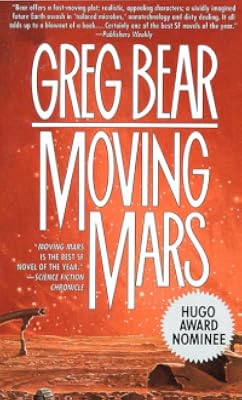
Sacrifice, revolution, the promise of freedom. These flood into the life of Casseia Majumdar, daughter of the Binding Multiples. Rebelling against her conservative family, the colonists who occupy Mars, Casseia takes part in the brewing revolution sparked by student protests in the year 2171. Meanwhile, her love life is in a very precarious situation, with her beloved Charles Franklin''s seeking to merge his mind with the most advanced artificial mind. MOVING MARS is a science-fiction look
show more at love and war, family and conviction, heart and mind . . . Tags
Recommendations

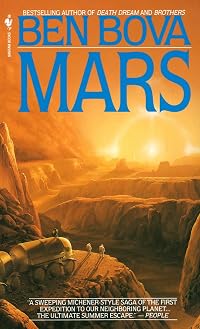
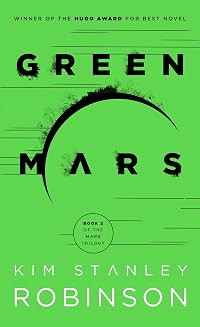
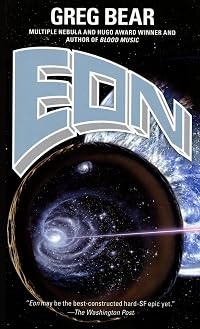
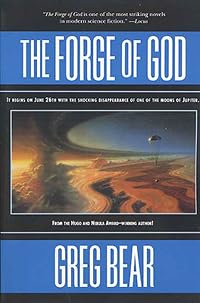
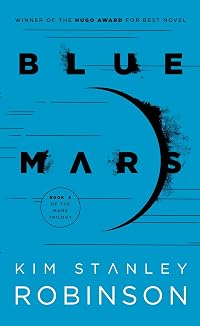
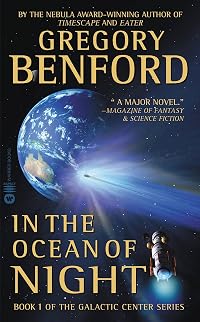







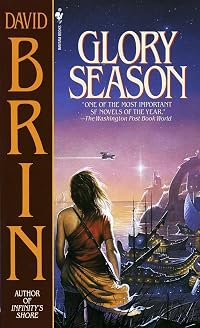
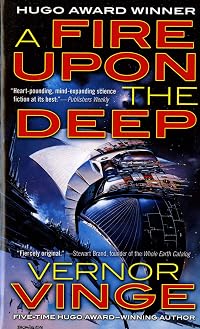
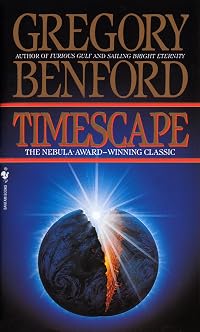
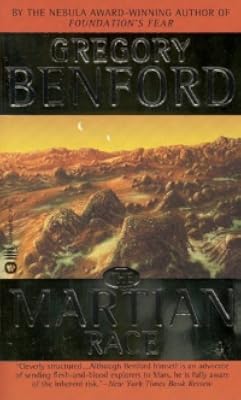









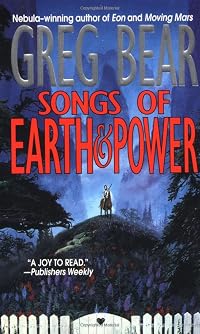
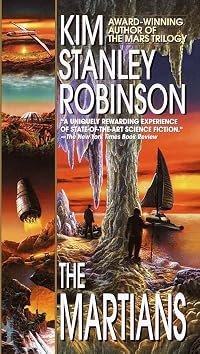
Member Recommendations
Member Reviews
As a huge fan of Greg Bear, I was surprised and dismayed by how much I really did not dig this book. There's no shortage of interesting ideas about Mars and physics and human society in the next couple of centuries, and Bear hangs them on a plot and a character that stand a chance of being involving, but the effect for me nearly all the way through is dry, airless— it's framed as a memoir by someone late in life, but it reads like the kind of memoir that's ghostwritten by someone without much interest in the subject. It's not as if Bear can't write a good female character, or make super-high-tech cultures feel lived-in; he's done both before. And there was a similarly distanced first-person narration that worked much better at shorter show more length in Bear's related novella Heads (which I loved), where the passivity of the narrator was well suited to what was in effect an "I alone am left to tell thee" horror story. Actually, maybe that's my problem with Moving Mars: there's almost no horror, nor any happier flavor of the sublime. Bear's writing really comes alive to me when he's writing in one way or another about the sublime— inconceivably amazing changes, fates worse than death, personal epiphanies— and it's not just that I like those things in general; I think they bring out his best. But this book seems as if he made an effort to avoid any such thing and to just write about more-or-less-plausible life on Mars and small-scale politics and interesting technology and troubled relationships, until all at once he finally dropped in the Big Crazy Idea (which is derived from the crazy idea in Heads, whose hand-waviness again worked better in a briefer, creepier setting), dropped it in so plot-wrenchingly that it made all those other things the book had been about seem irrelevant, and yet didn't really make the characters face the sublime/horrible qualities of it until near the end. show less
The sub-title for this book, if it were non-fiction, would be The Memoirs of Casseia Majumdar. And like most memoirs, I found it dull. Sure, Casseia took some nice trips, did some cool things, and they would've been fine for ordinary people, but as a work of fiction, it wasn't all that entertaining. At least for the first 290 pages.
Don't get me wrong. I thought Casseia was a fantastic character, probably worthy of being included on the list of Top 100 characters of science fiction (if such a list exists). Bear imbued her with an incredible amount of warmth and personality. She's a fine human being.
But Bear does her a disservice by making the reader wade through 290 pages of aimless wandering through field trips and really neat science show more and technology pondering before the story kicks into gear. I guess if I'd known this was going to be a fictional memoir I could've prepared myself and been more patient. I dropped this book for a few months and read others. I'd pick it up between books to see if the story was moving along at all; I almost quit altogether, not something I do.
The last 200+ pages were really good. Once the story picked up, I finished it rather quickly (for me). Combining these last pages with Casseia, I can see why it was nominated for a Hugo.
One thing I really need to bring up is something that happened on page 121. Bear is explaining Earth's history (from Casseia's perspective). The 21st century reads like Kevin Kelly's "Long Boom" wet dream from 1999. I realize that this book was written pre-9/11, but this idealistic vision of humanity's progress is utter nonsense. And it's not a case of hindsight on my part. I think anyone in the State Dept would've told you back then that the likelihood of the Middle East, the most volatile region in the world then and now, sitting down and agreeing to corrective psychological therapy was as likely as snowballs in hell.
Three stars is a compromise. Up to page 290, I was struggling to find a way to give the book two stars. After page 290, it was easily 4.5 stars. So if you're patient and don't mind a novel's worth of character building before the real story begins, go for it. show less
Don't get me wrong. I thought Casseia was a fantastic character, probably worthy of being included on the list of Top 100 characters of science fiction (if such a list exists). Bear imbued her with an incredible amount of warmth and personality. She's a fine human being.
But Bear does her a disservice by making the reader wade through 290 pages of aimless wandering through field trips and really neat science show more and technology pondering before the story kicks into gear. I guess if I'd known this was going to be a fictional memoir I could've prepared myself and been more patient. I dropped this book for a few months and read others. I'd pick it up between books to see if the story was moving along at all; I almost quit altogether, not something I do.
The last 200+ pages were really good. Once the story picked up, I finished it rather quickly (for me). Combining these last pages with Casseia, I can see why it was nominated for a Hugo.
One thing I really need to bring up is something that happened on page 121. Bear is explaining Earth's history (from Casseia's perspective). The 21st century reads like Kevin Kelly's "Long Boom" wet dream from 1999. I realize that this book was written pre-9/11, but this idealistic vision of humanity's progress is utter nonsense. And it's not a case of hindsight on my part. I think anyone in the State Dept would've told you back then that the likelihood of the Middle East, the most volatile region in the world then and now, sitting down and agreeing to corrective psychological therapy was as likely as snowballs in hell.
Three stars is a compromise. Up to page 290, I was struggling to find a way to give the book two stars. After page 290, it was easily 4.5 stars. So if you're patient and don't mind a novel's worth of character building before the real story begins, go for it. show less
So it was thanks to the book Darwin’s Radio that first enamored me of Greg Bear. And as Radio was one of the best sci-fi books I’d read in a while, the last time I had credit at the used bookstore, I checked out the sci-fi section for more Greg Bear novels.
I have to say, this one didn’t quite live up to the promise of Radio. It took me at least a month to fin-
ish this book – it just didn’t grab me the way that Radio did. Until yesterday, that is. Somewhere about 100 pages from the end, I became totally sucked in and couldn’t put the book down, much to the consternation of my husband, who was left to fold more than his share of the laundry at the laundromat. Anyway, the book starts with a student revolt when a university on show more Mars suddenly expels all students who could be viewed as a possible threat to a controversial government. While this revolt doesn’t end up having the political effect the students were aiming for, four of the students involved end up as crucial players in a much larger political upheaval farther down the road. The book follows Cassiea, a last minute tagger-on in the initial revolt, who ends up being one of the most prominent figures in shaping the destiny of Mars.
As is typical of Greg Bear, about 2/3 of the way through, some new scientific breakthrough or discovery becomes the turning point in the plot, and a lot of speculation about theoretical future science ensues. In Radio, this consisted of a lot of rather fascinating theory about genetics. In Moving Mars, it’s a new paradigm for physics. Thankfully, while present, Bear’s pet theory of "ecoi" does not dominate this novel. The physics is much more interesting. To me, anyway. show less
I have to say, this one didn’t quite live up to the promise of Radio. It took me at least a month to fin-
ish this book – it just didn’t grab me the way that Radio did. Until yesterday, that is. Somewhere about 100 pages from the end, I became totally sucked in and couldn’t put the book down, much to the consternation of my husband, who was left to fold more than his share of the laundry at the laundromat. Anyway, the book starts with a student revolt when a university on show more Mars suddenly expels all students who could be viewed as a possible threat to a controversial government. While this revolt doesn’t end up having the political effect the students were aiming for, four of the students involved end up as crucial players in a much larger political upheaval farther down the road. The book follows Cassiea, a last minute tagger-on in the initial revolt, who ends up being one of the most prominent figures in shaping the destiny of Mars.
As is typical of Greg Bear, about 2/3 of the way through, some new scientific breakthrough or discovery becomes the turning point in the plot, and a lot of speculation about theoretical future science ensues. In Radio, this consisted of a lot of rather fascinating theory about genetics. In Moving Mars, it’s a new paradigm for physics. Thankfully, while present, Bear’s pet theory of "ecoi" does not dominate this novel. The physics is much more interesting. To me, anyway. show less
Loses one star because there's a narrative slowdown in the middle - but right when it picks back up, it's a page-turner. I really appreciate Greg Bear's strong women characters and good dialog, while keeping the SF very thinky. It's a great ride, told in retrospect, and extremely entertaining.
I read it when it first came out in the '90's, and read it again this year, feeling quite validated that I'd hung onto my now-battered copy. Is there anything better than reading a battered old paperback that contains a rip-roaring tale? Why, no. No, there is not.
I read it when it first came out in the '90's, and read it again this year, feeling quite validated that I'd hung onto my now-battered copy. Is there anything better than reading a battered old paperback that contains a rip-roaring tale? Why, no. No, there is not.
http://nhw.livejournal.com/520887.html
This Nebula winner is the autobiography of Casseia Majumdar, Martian stateswoman, who is at the heart of an independence struggle that ends up with the entire planet escaping not just politically but physically from the rest of the solar system. All kinds of resonances in here from sf's history - the three that came immediately to mind were Heinlein's The Moon is a Harsh Mistress, also his Red Planet and Asimov's very early short story, "The Weapon Too Deadly To Use". Plus the deadly nano-bots coming to life and devastating the human settlements, though a classic and almost cliched image of sf, were done very well here.
I really enjoyed this book and I'm rather surprised I hadn't heard more about it show more from others. In particular, the main hard sf element of the plot, the acquisition by a relatively weak political player (the Martian government) of what is effectively a weapon of mass destruction, seemed to me awfully relevant to contemporary politics, if anything rather more so than when the book was first published in 1993. I guess that Bear's vision of a revolutionary human society on Mars is less grandiose (though I think no less ambitious) than Kim Stanley Robinson's massive trilogy which was coming out at around the same time, and perhaps his portrayal of how the political process appears to insiders - which I felt was realistic and well-informed - was insufficiently romanticised to leave a lasting impression in people's memories.
I raised my eyebrows at first when Casseia was appointed to senior government office before the age of thirty (in earth years); but, of course, great stories are often told about unusual events.
Moving Mars scores very well on the sensawunda scale, better indeed than most Nebula winners. I felt it also worked well on the human level, with Casseia's decisions and mistakes, both political and personal, convincingly portrayed. I have had my complaints about some past Nebula winners, but this one was a good call. show less
This Nebula winner is the autobiography of Casseia Majumdar, Martian stateswoman, who is at the heart of an independence struggle that ends up with the entire planet escaping not just politically but physically from the rest of the solar system. All kinds of resonances in here from sf's history - the three that came immediately to mind were Heinlein's The Moon is a Harsh Mistress, also his Red Planet and Asimov's very early short story, "The Weapon Too Deadly To Use". Plus the deadly nano-bots coming to life and devastating the human settlements, though a classic and almost cliched image of sf, were done very well here.
I really enjoyed this book and I'm rather surprised I hadn't heard more about it show more from others. In particular, the main hard sf element of the plot, the acquisition by a relatively weak political player (the Martian government) of what is effectively a weapon of mass destruction, seemed to me awfully relevant to contemporary politics, if anything rather more so than when the book was first published in 1993. I guess that Bear's vision of a revolutionary human society on Mars is less grandiose (though I think no less ambitious) than Kim Stanley Robinson's massive trilogy which was coming out at around the same time, and perhaps his portrayal of how the political process appears to insiders - which I felt was realistic and well-informed - was insufficiently romanticised to leave a lasting impression in people's memories.
I raised my eyebrows at first when Casseia was appointed to senior government office before the age of thirty (in earth years); but, of course, great stories are often told about unusual events.
Moving Mars scores very well on the sensawunda scale, better indeed than most Nebula winners. I felt it also worked well on the human level, with Casseia's decisions and mistakes, both political and personal, convincingly portrayed. I have had my complaints about some past Nebula winners, but this one was a good call. show less
(Alistair) And next in my book-reading, this science fiction work from Greg Bear, set in the same universe downtime from Queen of Angels and Slant, or / (as the cover of my copy would have it).
An enjoyable story, all told; Moving Mars is the first-person autobiography of Casseia Majumdar, the scion of one of Mars's oldest extended families-slash-business syndicates, who gets caught up in Martian politics - both internal and interplanetary - through the frontier society of Mars's first attempts to form a state, up through their final unification and breakaway from an Earth increasingly determined to control both the planet, and the uses of the new theory of physics (rather like some of the ideas explored in his Anvil of Stars, I note) show more discovered there... and when I say breakaway, I mean breakaway.
Starts slowly, for the first, oh, two-thirds of the book, and I still haven't decided whether that's a bad thing or a good thing. I'm inclined to think it's mostly the latter, since it accelerates to a jolly good climax at the end, and that itself wouldn't have been nearly as good had we not spent the first two-thirds getting to know the characters well, but it does make it slow to start, which may be offputting.
Good politics, with a nice balance between idealism and realism. Lots of plausible future world-depth and developments. Interesting characters. I don't think it's one of Mr. Bear's best books - compared to Eon or Queen of Angels, for example - but it's certainly worth reading, I think.
( http://weblog.siliconcerebrate.com/cerebrate/2008/04/moving-mars-greg-bear.html ) show less
An enjoyable story, all told; Moving Mars is the first-person autobiography of Casseia Majumdar, the scion of one of Mars's oldest extended families-slash-business syndicates, who gets caught up in Martian politics - both internal and interplanetary - through the frontier society of Mars's first attempts to form a state, up through their final unification and breakaway from an Earth increasingly determined to control both the planet, and the uses of the new theory of physics (rather like some of the ideas explored in his Anvil of Stars, I note) show more discovered there... and when I say breakaway, I mean breakaway.
Starts slowly, for the first, oh, two-thirds of the book, and I still haven't decided whether that's a bad thing or a good thing. I'm inclined to think it's mostly the latter, since it accelerates to a jolly good climax at the end, and that itself wouldn't have been nearly as good had we not spent the first two-thirds getting to know the characters well, but it does make it slow to start, which may be offputting.
Good politics, with a nice balance between idealism and realism. Lots of plausible future world-depth and developments. Interesting characters. I don't think it's one of Mr. Bear's best books - compared to Eon or Queen of Angels, for example - but it's certainly worth reading, I think.
( http://weblog.siliconcerebrate.com/cerebrate/2008/04/moving-mars-greg-bear.html ) show less
6.5/10
Some parts of this book are wonderful and others, not so wonderful. The narrator, Casseia, can be incredibly immature and socially awkward, as well as politically naive, yet her path ultimately leads to both political and scientific power. While some of the science was a bit dense, most of the story was enjoyable. I did think there were too many tangents or side stories that really didn’t go anywhere or add much to the plot — almost as if Bear wanted to take the story in a different direction and then changed his mind. I was reminded how enduring and frustrating political conflict can be.
Some parts of this book are wonderful and others, not so wonderful. The narrator, Casseia, can be incredibly immature and socially awkward, as well as politically naive, yet her path ultimately leads to both political and scientific power. While some of the science was a bit dense, most of the story was enjoyable. I did think there were too many tangents or side stories that really didn’t go anywhere or add much to the plot — almost as if Bear wanted to take the story in a different direction and then changed his mind. I was reminded how enduring and frustrating political conflict can be.
Members
- Recently Added By
Published Reviews
ThingScore 100
Greg Bear goes from strength to strength. This new addition to his distinguished body of work is sure to be considered one of the major SF novels of 1993 and a sure award nominee. The very model of a modern SF novel, it excels in a number of dimensions. ...
... it gives us that without which no Greg Bear novel would be complete, a really Big IDEA. ...
... it gives us that without which no Greg Bear novel would be complete, a really Big IDEA. ...
added by RBeffa
Lists

Best Science Fiction Novels
816 works; 430 members

Books Set on Mars
22 works; 7 members

Nebula Award
111 works; 14 members
Author Information

141+ Works 47,289 Members
Greg Bear was born in San Diego, California, on August 20, 1951. He received a Bachelor of Arts degree from San Diego State University in 1973. At age 14, he began submitting pieces to magazines and at 15 he sold his first story to Robert Lowndes' Famous Science Fiction. It would be five years before he sold another piece, but by 23 he was selling show more stories regularly. He has written more than 30 science fiction and fantasy books and has won numerous awards for his work. In 1984, Hardfought and Blood Music won the Nebula Awards for best novella and novelette; Blood Music went on to win the Hugo Award. The novel version of that story, also called Blood Music, won the Prix Apollo in France. In 1987, Tangents won the Hugo and Nebula awards for best short story. He also won a Nebula in 1994 for Moving Mars and in 2001 for Darwin's Radio. Both Dinosaur Summer and Darwin's Radio have been awarded the Endeavour for best novel published by a Northwest science fiction author. He is also an illustrator and his work has appeared in Galaxy, Fantasy and Science Fiction, and Vertex, and in both hardcover and paperback books. He was a founding member of ASFA, the Association of Science Fiction Artists. His works include City at the End of Time, Hull Zero Three, The Mongoliad, Mariposa, Halo: Cryptum, Halo: Primordium and Halo: Silentium. (Bowker Author Biography) show less
Some Editions
Awards and Honors
Awards
Notable Lists
Series

Belongs to Publisher Series
Common Knowledge
- Canonical title
- Moving Mars
- Original title
- Moving Mars
- Original publication date
- 1993
- People/Characters
- Casseia Mujumdar; Charles Franklin
- Important places
- University of Mars; Washington, D.C., USA; Mars; Richmond, Virginia, USA; Virginia, USA
- Dedication
- For Ray Bradbury
- First words
- The young may not remember Mars of old, under the Yellow sun, its cloud-streaked skies dusted pink, its soil rusty and fine, its inhabitants living in pressurized burrows and venturing up only as a rite of passage or to do ma... (show all)intenance or tend the ropy crops spread like nests of intensely green snakes over the wind-scoured farms.
- Last words
- (Click to show. Warning: May contain spoilers.)And the sky was bluer still.
- Blurbers
- Brin, David; Vinge, Vernor
- Original language
- English
Classifications
Statistics
- Members
- 2,028
- Popularity
- 10,368
- Reviews
- 25
- Rating
- (3.57)
- Languages
- 7 — Czech, Dutch, English, French, German, Italian, Spanish
- Media
- Paper, Audiobook, Ebook
- ISBNs
- 32
- UPCs
- 1
- ASINs
- 15