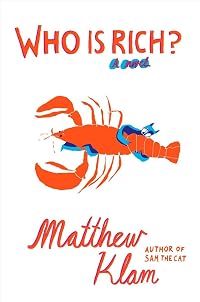
Who is Rich?
by Matthew Klam
On This Page
Description
"The long-awaited first novel from the acclaimed author of Sam the Cat is a provocative and hilarious satire of love, sex, money, and politics in our new gilded age--for readers of The Nix and This Is Where I Leave You"-- "Two people, who are married to other people, meet at a conference for artists and writers in a charming seaside village much like Provincetown. Rich, a formerly sort-of-famous cartoonist, and Amy, a student of narrative painting, shared a moment of passion the summer show more before, and have returned to see what happens next. In the wicked events that follow, both of their lives completely unravel"-- show lessTags
Recommendations



Member Reviews
Típica historia de un adulterio estival entre un humorista gráfico venido a menos y una superrica con ínfulas de salvadora y con problemas psicológicos que acude a un cursillo sobre cómics impartido por él en una universidad de la costa este de la que nunca habremos oído hablar, que no creo que sea la historia de una crisis sobre la mediana edad, de ninguno de los dos.
Él, que no deja de meter la pata de formas realmente alucinantes y peligrosas para su vida como el descerebrado que es, lo deja claro cuando cuenta parte de su vida durante la adolescencia, no acaba de desagradarnos, no sé si por la sinceridad con la que se examina o por las tesis que nos plantea y que no dejan, muchas de ellas de ser verdad.
En cuanto al show more argumento, las cosas acaban por irse resituando, todo sin grandes alharacas, y se vuelve al primer camino por el que se transitaba al principio, y que no deja de ser una forma de poner los pies en el suelo pero no como resignación sino como un reconocimiento e identificación de lo que necesita ser renovado.
Hasta aquí lo que vemos en la superficie. Pero tras esto llega el fondo y verdadero contexto de un mundo en el que un hombre con un trabajo, digamos digno, con una esposa en las mismas condiciones, y dos niños pequeños, tienen serios problemas para vivir con comodidad. Mientras otra pareja con una situación económica como para vivir por lo menos 100 vidas y con total desprecio por la de los demás, ha llegado ahí tras la suerte, escondida no solo en este sistema económico del capitalismo más salvaje sino por ser capaces de comportarse con total impunidad, al menos el marido.
“Vivíamos en un sistema económico y planetario en guerra, víctimas de una farsa política. Durante el invierno había habido momentos en los que quise interrumpir nuestra aventura amorosa epistolar para desatar una virulenta diatriba de impecable erudición sobre la historia del capitalismo desestructurado, el imperialismo estadounidense durante el siglo XX, los obreros de EEUU obligados a competir con trabajadores esclavos de Asia, las superpobladas y rentables cárceles privadas, Donald Rumsfeld, los hermanos Koch, la organización Ciudadanos Unidos y la próxima extinción del mundo, pero nunca llegué a hacerlo.”
Ella, otro espécimen propio del neoliberalismo, una mujer que, reconociéndose de origen humilde, cree que su esfuerzo y sus propias agallas, la han situado en una situación de privilegio, gracias al sueño americano. Sin embargo no deja de ser una favorita del mundo de la venta de bonos de empresas carroñeras, y después del capital de riesgo, ayudando a arruinar a empresas solventes mediante técnicas de bloqueo de capitales para llevarlas a la ruina. Mientras tanto, “apoyaba al Consejo para la Defensa de los Recursos Naturales, Personas por el Trato Ético a los Animales, la Organización Nacional de Mujeres y la planificación familiar, pero también creía en la teoría del goteo y despreciaba a los ociosos que se reúnen en círculos a tocar el tambor y quejarse de la codicia empresarial en propiedades privadas.” Es decir, progresista en lo social, conservadora en lo fiscal, aunque lo segundo anulara a lo primero”.
Gente que produce cosas, pero es pobre, y gente que no produce nada más que pobreza y subdesarrollo, pero que es multimillonaria. Y por el medio, otra gente, creativos de publicidad, documentalistas, etc., que se dedican a realizar películas sobre “alcaldes negros corruptos de las principales ciudades del país” o “documentales sobre pandillas de prostitutas adolescentes de los barrios pobres de Filadelfia”.
No sé si el autor se da cuenta del contexto, pero es lo que más miedo da de toda la historia. Un capitalismo neoliberal que atrae a aquell@s que tienen agallas para pasar de todo y por encima de tod@s y que aplastará el mundo.
Así que, quién es Rich o, mejor, quién es rico? No lo sabemos.
Por eso el final de la novela no es tan desasosegante como podría haber sido si el autor quisiera hacerlo derrapar completamente. Pero quizás defraude un poco. show less
Él, que no deja de meter la pata de formas realmente alucinantes y peligrosas para su vida como el descerebrado que es, lo deja claro cuando cuenta parte de su vida durante la adolescencia, no acaba de desagradarnos, no sé si por la sinceridad con la que se examina o por las tesis que nos plantea y que no dejan, muchas de ellas de ser verdad.
En cuanto al show more argumento, las cosas acaban por irse resituando, todo sin grandes alharacas, y se vuelve al primer camino por el que se transitaba al principio, y que no deja de ser una forma de poner los pies en el suelo pero no como resignación sino como un reconocimiento e identificación de lo que necesita ser renovado.
Hasta aquí lo que vemos en la superficie. Pero tras esto llega el fondo y verdadero contexto de un mundo en el que un hombre con un trabajo, digamos digno, con una esposa en las mismas condiciones, y dos niños pequeños, tienen serios problemas para vivir con comodidad. Mientras otra pareja con una situación económica como para vivir por lo menos 100 vidas y con total desprecio por la de los demás, ha llegado ahí tras la suerte, escondida no solo en este sistema económico del capitalismo más salvaje sino por ser capaces de comportarse con total impunidad, al menos el marido.
“Vivíamos en un sistema económico y planetario en guerra, víctimas de una farsa política. Durante el invierno había habido momentos en los que quise interrumpir nuestra aventura amorosa epistolar para desatar una virulenta diatriba de impecable erudición sobre la historia del capitalismo desestructurado, el imperialismo estadounidense durante el siglo XX, los obreros de EEUU obligados a competir con trabajadores esclavos de Asia, las superpobladas y rentables cárceles privadas, Donald Rumsfeld, los hermanos Koch, la organización Ciudadanos Unidos y la próxima extinción del mundo, pero nunca llegué a hacerlo.”
Ella, otro espécimen propio del neoliberalismo, una mujer que, reconociéndose de origen humilde, cree que su esfuerzo y sus propias agallas, la han situado en una situación de privilegio, gracias al sueño americano. Sin embargo no deja de ser una favorita del mundo de la venta de bonos de empresas carroñeras, y después del capital de riesgo, ayudando a arruinar a empresas solventes mediante técnicas de bloqueo de capitales para llevarlas a la ruina. Mientras tanto, “apoyaba al Consejo para la Defensa de los Recursos Naturales, Personas por el Trato Ético a los Animales, la Organización Nacional de Mujeres y la planificación familiar, pero también creía en la teoría del goteo y despreciaba a los ociosos que se reúnen en círculos a tocar el tambor y quejarse de la codicia empresarial en propiedades privadas.” Es decir, progresista en lo social, conservadora en lo fiscal, aunque lo segundo anulara a lo primero”.
Gente que produce cosas, pero es pobre, y gente que no produce nada más que pobreza y subdesarrollo, pero que es multimillonaria. Y por el medio, otra gente, creativos de publicidad, documentalistas, etc., que se dedican a realizar películas sobre “alcaldes negros corruptos de las principales ciudades del país” o “documentales sobre pandillas de prostitutas adolescentes de los barrios pobres de Filadelfia”.
No sé si el autor se da cuenta del contexto, pero es lo que más miedo da de toda la historia. Un capitalismo neoliberal que atrae a aquell@s que tienen agallas para pasar de todo y por encima de tod@s y que aplastará el mundo.
Así que, quién es Rich o, mejor, quién es rico? No lo sabemos.
Por eso el final de la novela no es tan desasosegante como podría haber sido si el autor quisiera hacerlo derrapar completamente. Pero quizás defraude un poco. show less
In this incredible novel, all are rich and everyone is impoverished. Rich in children, poor in spouses. Rich in self-destructive behaviors, poor in good decisions. The protagonist is a cartoonist/illustrator (and the book is chock full of the author's drawings) whose wild success has faded, leaving him to scrounge out a living at a writer's conference in P'Town and to carry on a mostly-online affair with a miserable bond saleswoman married to a neglectful hedge funder. The lust shared by Rich and Amy is repellent on almost every level, as is Rich himself. But the writing - it's remarkable. Firstly, there's the clever listicles permeating the entire effort (example below). They are dark, hilarious, accurate - everything that a really show more smart friend would say in most circumstances in a bar. You'd go home and think, "What a jerk! But he's so damned right about everything." I think the acclaim for the book is universal and it must be read and appreciated - maybe twice.
Quotes:
"On the faculty were many friends I'd come to know over the years as intellects, historians, wordsmiths, talented performers, storytellers with big fake teeth, addicts, drunkards, perverts, world-famous womanizers, sufferers of gout, maniacs, liars - embittered, delusional, accomplished, scared of spiders, unable to swim, loveless, and cruel."
"Everyone knows a spot like this, a fishing village turned tourist trap, with pornographic sunsets and the Sea Breeze Motel."
"I figured I'd do a few more [years], get a job as a creative director, drill holes in my head and use it as a bowling ball." show less
Quotes:
"On the faculty were many friends I'd come to know over the years as intellects, historians, wordsmiths, talented performers, storytellers with big fake teeth, addicts, drunkards, perverts, world-famous womanizers, sufferers of gout, maniacs, liars - embittered, delusional, accomplished, scared of spiders, unable to swim, loveless, and cruel."
"Everyone knows a spot like this, a fishing village turned tourist trap, with pornographic sunsets and the Sea Breeze Motel."
"I figured I'd do a few more [years], get a job as a creative director, drill holes in my head and use it as a bowling ball." show less
Who Is Rich? Is Rich merely the main character of Matthew Klam's novel? Is the question about him? It must be. But what about its other facets? Is it a financial question? Is it a creative and spiritual question? In fact it is all of these and yet the complexity of this seemingly simple question and its answers cannot save this novel and this main character from themselves.
First, Rich Fischer is a whiny jerk as he examines his life. He is now (merely) an illustrator who once created a critically acclaimed graphic memoir that has netted him a consistent job teaching cartooning at a New England arts conference summer camp. This gives him the chance to escape his deteriorating marriage, his two small but needy children, and the drudgery of show more everyday life, and to indulge in an affair for the second year running with Amy, a wealthy bored housewife at the conference. After a winter of sexting and pent up lust, Rich is anxious to see what happens when they see each other in the flesh again. But this second summer is destined to be a disappointment, as is immediately evident not only from Amy's accident on the first day but also from the tenor of Rich's musings.
A novel about a week at an arts conference, infidelity, marriage, parenting, and angst has the potential to really be something. And this novel is in fact something. Unfortunately, that something is dull. It is meandering and plotless and suffers from stream of consciousness narration originating inside the head of a character the reader doesn't much like, giving us a front row seat to the petulant and unpleasant Rich. His reflections on the life he is so dissatisfied with inspire annoyance rather than sympathy for a man who found early fame but now wonders if settling down to a conventional and dull, domestic life has snuffed his creative spark. His observations about Amy, the woman he is so obsessed with are primarily centered around her money and her horrible husband so that it's hard to believe he truly feels much of anything for her, much less passion. He is snarky, snottily superior, and scornful about her life even while eating himself up with jealousy over her money and acting like an ass in his own personal life. His reflections on his wife Robin and the state of their marriage are no less unkind and callous. There is no indication of anything appealing about Rich that would justify anyone, even a bored housewife, being interested in him and certainly this reader feels the same way. Rich's mid-life crisis is boring and the novel as a whole wallows rather than being driven by passion, choice, and a creative, interesting life. If you want to spend time with a deeply unhappy, sulky, overly introspective character who is clearly disappointed with his life and choices, more power to you; you should pick up this book. Unfortunately, I personally was happiest when I turned the last page and closed the cover on Rich's bumbling existential struggles. show less
First, Rich Fischer is a whiny jerk as he examines his life. He is now (merely) an illustrator who once created a critically acclaimed graphic memoir that has netted him a consistent job teaching cartooning at a New England arts conference summer camp. This gives him the chance to escape his deteriorating marriage, his two small but needy children, and the drudgery of show more everyday life, and to indulge in an affair for the second year running with Amy, a wealthy bored housewife at the conference. After a winter of sexting and pent up lust, Rich is anxious to see what happens when they see each other in the flesh again. But this second summer is destined to be a disappointment, as is immediately evident not only from Amy's accident on the first day but also from the tenor of Rich's musings.
A novel about a week at an arts conference, infidelity, marriage, parenting, and angst has the potential to really be something. And this novel is in fact something. Unfortunately, that something is dull. It is meandering and plotless and suffers from stream of consciousness narration originating inside the head of a character the reader doesn't much like, giving us a front row seat to the petulant and unpleasant Rich. His reflections on the life he is so dissatisfied with inspire annoyance rather than sympathy for a man who found early fame but now wonders if settling down to a conventional and dull, domestic life has snuffed his creative spark. His observations about Amy, the woman he is so obsessed with are primarily centered around her money and her horrible husband so that it's hard to believe he truly feels much of anything for her, much less passion. He is snarky, snottily superior, and scornful about her life even while eating himself up with jealousy over her money and acting like an ass in his own personal life. His reflections on his wife Robin and the state of their marriage are no less unkind and callous. There is no indication of anything appealing about Rich that would justify anyone, even a bored housewife, being interested in him and certainly this reader feels the same way. Rich's mid-life crisis is boring and the novel as a whole wallows rather than being driven by passion, choice, and a creative, interesting life. If you want to spend time with a deeply unhappy, sulky, overly introspective character who is clearly disappointed with his life and choices, more power to you; you should pick up this book. Unfortunately, I personally was happiest when I turned the last page and closed the cover on Rich's bumbling existential struggles. show less
 This review was written for LibraryThing Early Reviewers.
This is not a book to read when you’re already having a bad day because the tone is a bit of a mood killer. It’s a slow pace with few light moments, a bit of humor and a whole lot of drama.
In some ways it’s a commentary on modern American life. People trapped in relationships they no longer seem to want but won’t leave due to finances, kids, societal pressures, etc. Affairs that occur because people can’t just leave. Too much money, not enough. No sex, rare sex or just not great sex. Is monogamy doomed? Why do people get married or have kids when it seems to come with so many problems? When do we grow out of our dreams or do we ever? It’s rare these days I dive into a piece of fiction that has me asking existential show more questions as I flip pages. This book definitely made me view my own life through a different lens and examine my own opinions and biases.
Klam digs deep in the character development area refusing to settle for stereotypes even as he creates mirrors of the human condition. It’s as if he hopes we’ll see something of ourselves in these broken and flawed people in order to force us to ask the uncomfortable questions.
It’s not exactly something you’d pick up to read on the beach or when you’re just trying to kill time but that doesn’t mean you shouldn’t delve into it; even your brain is a muscle that needs flexing to stay active. show less
In some ways it’s a commentary on modern American life. People trapped in relationships they no longer seem to want but won’t leave due to finances, kids, societal pressures, etc. Affairs that occur because people can’t just leave. Too much money, not enough. No sex, rare sex or just not great sex. Is monogamy doomed? Why do people get married or have kids when it seems to come with so many problems? When do we grow out of our dreams or do we ever? It’s rare these days I dive into a piece of fiction that has me asking existential show more questions as I flip pages. This book definitely made me view my own life through a different lens and examine my own opinions and biases.
Klam digs deep in the character development area refusing to settle for stereotypes even as he creates mirrors of the human condition. It’s as if he hopes we’ll see something of ourselves in these broken and flawed people in order to force us to ask the uncomfortable questions.
It’s not exactly something you’d pick up to read on the beach or when you’re just trying to kill time but that doesn’t mean you shouldn’t delve into it; even your brain is a muscle that needs flexing to stay active. show less
Lunacy in Midlife
Rich Fischer is a cartoonist and author of comics. These aren’t funny comics, or action comics, but serious comics otherwise known as graphic novels. So with his life, which is sort of cartoonish in its exaggeration, kind of funny at times, but mostly tortured by creative angst, by a marriage that feels hollow and stifling, and by a love affair that intensifies his feelings of inadequacy and failure. In other words, Rich Fischer spends all but the last few pages of Who Is Rich? in high dudgeon over his life, his wife, his two small children, his super rich lover, and his students, one of whom is embarking on a potentially spectacular career, one Rich believed he might have had, if only. You might duplicate the show more experience of reading the novel by planting yourself in front of a mirror, dredging your life, and raging at yourself. Hopefully, you’ll come away from the introspection with as least the foundation of optimism as does Rich.
At the opening of the novel, Rich returns for another stint as an instructor at a workshop for writers, artists, sculptors, and cartoonists, located in New England, on the ocean, at a college in its last throes. You only have to flip the opening page to see what Rich, also our narrator, and you are in for: “On the faculty were many friends I’d come to know over the years as intellects, historians, wordsmiths, talented performers, storytellers with big fake teeth, addicts, drunkards, perverts, world-famous womanizers, sufferers of gout, maniacs, liars—embittered, delusional, accomplished, scared of spiders, unable to swim loveless, and cruel.” Notice how the thought descends. So, if it sounds as if you are entering a madhouse, well, maybe; or maybe it’s just what plumbing your being for inspiration does to you. In Rich’s case, it’s partly this, for in fact he has done just this in writing his successful first graphic, long out of print, and partly him smacking into the wall of midlife crisis. He loves his wife; he hates his wife. He loves his kids; they drive him nuts. He, maybe, likes domestic life; it impedes him from writing and drawing. He loves his rich lover; he resents her for his own feelings of inadequacy.
This is something of an emotional riot of a novel that can, if you let it, jangle your nerves. Matthew Klam writes with verve, lots and lots of it, enough to give you a headache. It’s an intense experience, and that might be understating it a bit. For those with creative ambitions, you might like to see how failing at that ambition can consume you. For people who suspect creative types are noninstitutionalized oddballs, you may find confirmation here. And for folks who once thought they might have had it in them, well perhaps you’ll discover renewed solace in your life, something Rich Fischer appears to be scrambling to find for himself.
Oh, yes, the title: it draws a contrast between super rich lover Amy and near bankrupt Rich. If only Klam were right about who is really the rich one outside the pages of a novel. show less
Rich Fischer is a cartoonist and author of comics. These aren’t funny comics, or action comics, but serious comics otherwise known as graphic novels. So with his life, which is sort of cartoonish in its exaggeration, kind of funny at times, but mostly tortured by creative angst, by a marriage that feels hollow and stifling, and by a love affair that intensifies his feelings of inadequacy and failure. In other words, Rich Fischer spends all but the last few pages of Who Is Rich? in high dudgeon over his life, his wife, his two small children, his super rich lover, and his students, one of whom is embarking on a potentially spectacular career, one Rich believed he might have had, if only. You might duplicate the show more experience of reading the novel by planting yourself in front of a mirror, dredging your life, and raging at yourself. Hopefully, you’ll come away from the introspection with as least the foundation of optimism as does Rich.
At the opening of the novel, Rich returns for another stint as an instructor at a workshop for writers, artists, sculptors, and cartoonists, located in New England, on the ocean, at a college in its last throes. You only have to flip the opening page to see what Rich, also our narrator, and you are in for: “On the faculty were many friends I’d come to know over the years as intellects, historians, wordsmiths, talented performers, storytellers with big fake teeth, addicts, drunkards, perverts, world-famous womanizers, sufferers of gout, maniacs, liars—embittered, delusional, accomplished, scared of spiders, unable to swim loveless, and cruel.” Notice how the thought descends. So, if it sounds as if you are entering a madhouse, well, maybe; or maybe it’s just what plumbing your being for inspiration does to you. In Rich’s case, it’s partly this, for in fact he has done just this in writing his successful first graphic, long out of print, and partly him smacking into the wall of midlife crisis. He loves his wife; he hates his wife. He loves his kids; they drive him nuts. He, maybe, likes domestic life; it impedes him from writing and drawing. He loves his rich lover; he resents her for his own feelings of inadequacy.
This is something of an emotional riot of a novel that can, if you let it, jangle your nerves. Matthew Klam writes with verve, lots and lots of it, enough to give you a headache. It’s an intense experience, and that might be understating it a bit. For those with creative ambitions, you might like to see how failing at that ambition can consume you. For people who suspect creative types are noninstitutionalized oddballs, you may find confirmation here. And for folks who once thought they might have had it in them, well perhaps you’ll discover renewed solace in your life, something Rich Fischer appears to be scrambling to find for himself.
Oh, yes, the title: it draws a contrast between super rich lover Amy and near bankrupt Rich. If only Klam were right about who is really the rich one outside the pages of a novel. show less
Lunacy in Midlife
Rich Fischer is a cartoonist and author of comics. These aren’t funny comics, or action comics, but serious comics otherwise known as graphic novels. So with his life, which is sort of cartoonish in its exaggeration, kind of funny at times, but mostly tortured by creative angst, by a marriage that feels hollow and stifling, and by a love affair that intensifies his feelings of inadequacy and failure. In other words, Rich Fischer spends all but the last few pages of Who Is Rich? in high dudgeon over his life, his wife, his two small children, his super rich lover, and his students, one of whom is embarking on a potentially spectacular career, one Rich believed he might have had, if only. You might duplicate the show more experience of reading the novel by planting yourself in front of a mirror, dredging your life, and raging at yourself. Hopefully, you’ll come away from the introspection with as least the foundation of optimism as does Rich.
At the opening of the novel, Rich returns for another stint as an instructor at a workshop for writers, artists, sculptors, and cartoonists, located in New England, on the ocean, at a college in its last throes. You only have to flip the opening page to see what Rich, also our narrator, and you are in for: “On the faculty were many friends I’d come to know over the years as intellects, historians, wordsmiths, talented performers, storytellers with big fake teeth, addicts, drunkards, perverts, world-famous womanizers, sufferers of gout, maniacs, liars—embittered, delusional, accomplished, scared of spiders, unable to swim loveless, and cruel.” Notice how the thought descends. So, if it sounds as if you are entering a madhouse, well, maybe; or maybe it’s just what plumbing your being for inspiration does to you. In Rich’s case, it’s partly this, for in fact he has done just this in writing his successful first graphic, long out of print, and partly him smacking into the wall of midlife crisis. He loves his wife; he hates his wife. He loves his kids; they drive him nuts. He, maybe, likes domestic life; it impedes him from writing and drawing. He loves his rich lover; he resents her for his own feelings of inadequacy.
This is something of an emotional riot of a novel that can, if you let it, jangle your nerves. Matthew Klam writes with verve, lots and lots of it, enough to give you a headache. It’s an intense experience, and that might be understating it a bit. For those with creative ambitions, you might like to see how failing at that ambition can consume you. For people who suspect creative types are noninstitutionalized oddballs, you may find confirmation here. And for folks who once thought they might have had it in them, well perhaps you’ll discover renewed solace in your life, something Rich Fischer appears to be scrambling to find for himself.
Oh, yes, the title: it draws a contrast between super rich lover Amy and near bankrupt Rich. If only Klam were right about who is really the rich one outside the pages of a novel. show less
Rich Fischer is a cartoonist and author of comics. These aren’t funny comics, or action comics, but serious comics otherwise known as graphic novels. So with his life, which is sort of cartoonish in its exaggeration, kind of funny at times, but mostly tortured by creative angst, by a marriage that feels hollow and stifling, and by a love affair that intensifies his feelings of inadequacy and failure. In other words, Rich Fischer spends all but the last few pages of Who Is Rich? in high dudgeon over his life, his wife, his two small children, his super rich lover, and his students, one of whom is embarking on a potentially spectacular career, one Rich believed he might have had, if only. You might duplicate the show more experience of reading the novel by planting yourself in front of a mirror, dredging your life, and raging at yourself. Hopefully, you’ll come away from the introspection with as least the foundation of optimism as does Rich.
At the opening of the novel, Rich returns for another stint as an instructor at a workshop for writers, artists, sculptors, and cartoonists, located in New England, on the ocean, at a college in its last throes. You only have to flip the opening page to see what Rich, also our narrator, and you are in for: “On the faculty were many friends I’d come to know over the years as intellects, historians, wordsmiths, talented performers, storytellers with big fake teeth, addicts, drunkards, perverts, world-famous womanizers, sufferers of gout, maniacs, liars—embittered, delusional, accomplished, scared of spiders, unable to swim loveless, and cruel.” Notice how the thought descends. So, if it sounds as if you are entering a madhouse, well, maybe; or maybe it’s just what plumbing your being for inspiration does to you. In Rich’s case, it’s partly this, for in fact he has done just this in writing his successful first graphic, long out of print, and partly him smacking into the wall of midlife crisis. He loves his wife; he hates his wife. He loves his kids; they drive him nuts. He, maybe, likes domestic life; it impedes him from writing and drawing. He loves his rich lover; he resents her for his own feelings of inadequacy.
This is something of an emotional riot of a novel that can, if you let it, jangle your nerves. Matthew Klam writes with verve, lots and lots of it, enough to give you a headache. It’s an intense experience, and that might be understating it a bit. For those with creative ambitions, you might like to see how failing at that ambition can consume you. For people who suspect creative types are noninstitutionalized oddballs, you may find confirmation here. And for folks who once thought they might have had it in them, well perhaps you’ll discover renewed solace in your life, something Rich Fischer appears to be scrambling to find for himself.
Oh, yes, the title: it draws a contrast between super rich lover Amy and near bankrupt Rich. If only Klam were right about who is really the rich one outside the pages of a novel. show less
Who Is Rich? has a deeply authentic misery at its core. Matthew Klam’s first novel tells the story of Rich Fischer, a graphic novelist whose best days are in his past, his books out of print, and the only remnant of past glories is an annual invitation to teach autobiographical cartooning at the Matticook College Summer Arts Conference. His marriage is unsatisfying, passion buried under parenting. The glimmering bits of excitement come from a more off-again-than-on affair with Amy, a woman he met at the conference a year ago, an affair of texts, e-mails, and guilt.
The entire story happens during this short five-day conference. The affair stutters off and on and off again while the on is filled with sublime sex and the off with guilt show more and dislike. Amy is the wife of a billionaire. She gives away millions of dollars to charities to deflect from the guilt of their parasitic source of wealth and the hatred and alienation she feels in her marriage. Rich loves, desires, and hates her in equal measure.
His wife Robin is a television producer whose gone from traveling to dangerous places around the world to exploitive and soporific true crime series. Rich has gone from graphic novelist success to writer’s block and magazine illustration. Their saving grace is their children whom they love and struggle to parent.
This is not a novel full of action. It’s one man’s running commentary on life, politics, the economy, love, marriage, parenthood, and the stultifying boredom of being an adult. Rich is not particularly nice, he is cheating on his wife after all. But he is funny, wry, and a wicked observer of life’s absurdities. He is not a bad man, he wants to be kind and supportive and his children melt his heart into a puddle.
Frankly, the story itself is not that interesting. Sad and disillusioned middle-aged man dithering about feeling sorry for themselves are a dime a dozen. What makes Who Is Rich? special is the prose, the brilliant arrangements of words, the way modern American absurdity is captured so vividly and succinctly. I found myself frequently marking whole paragraphs to recall later. The illustrations by John Cuneo also were a fabulous addition.
To give a brief example, Rich wanders about the house waiting for his son who woke in the night to start crying again after being soothed and fed, waiting and wandering until he “split the worry into so many pieces it started to glitter.” He wonders whether he still has stories to tell, though also thinks that he will be relevant as long as people “want to cram their spouses into a dumpster.”
The title asks us Who Is Rich? but it’s asking two questions, really. Who is Rich Fischer? and who is rich in the things that matter. Amy has billions, but she is miserable. It’s a title, so the words are capitalized, but maybe the question is not “Who is Rich?” but “Who is rich?” It’s hard to tell, particular when Rich is telling the story…is he honest about his life? Who can tell, after all, as he tells us there is no such thing as a reliable narrator.
Who Is Rich? will be released July 4th. i received an advanced e-galley from the publisher through NetGalley.
https://tonstantweaderreviews.wordpress.com/2017/06/17/9780812997989/ show less
The entire story happens during this short five-day conference. The affair stutters off and on and off again while the on is filled with sublime sex and the off with guilt show more and dislike. Amy is the wife of a billionaire. She gives away millions of dollars to charities to deflect from the guilt of their parasitic source of wealth and the hatred and alienation she feels in her marriage. Rich loves, desires, and hates her in equal measure.
His wife Robin is a television producer whose gone from traveling to dangerous places around the world to exploitive and soporific true crime series. Rich has gone from graphic novelist success to writer’s block and magazine illustration. Their saving grace is their children whom they love and struggle to parent.
This is not a novel full of action. It’s one man’s running commentary on life, politics, the economy, love, marriage, parenthood, and the stultifying boredom of being an adult. Rich is not particularly nice, he is cheating on his wife after all. But he is funny, wry, and a wicked observer of life’s absurdities. He is not a bad man, he wants to be kind and supportive and his children melt his heart into a puddle.
Frankly, the story itself is not that interesting. Sad and disillusioned middle-aged man dithering about feeling sorry for themselves are a dime a dozen. What makes Who Is Rich? special is the prose, the brilliant arrangements of words, the way modern American absurdity is captured so vividly and succinctly. I found myself frequently marking whole paragraphs to recall later. The illustrations by John Cuneo also were a fabulous addition.
To give a brief example, Rich wanders about the house waiting for his son who woke in the night to start crying again after being soothed and fed, waiting and wandering until he “split the worry into so many pieces it started to glitter.” He wonders whether he still has stories to tell, though also thinks that he will be relevant as long as people “want to cram their spouses into a dumpster.”
The title asks us Who Is Rich? but it’s asking two questions, really. Who is Rich Fischer? and who is rich in the things that matter. Amy has billions, but she is miserable. It’s a title, so the words are capitalized, but maybe the question is not “Who is Rich?” but “Who is rich?” It’s hard to tell, particular when Rich is telling the story…is he honest about his life? Who can tell, after all, as he tells us there is no such thing as a reliable narrator.
Who Is Rich? will be released July 4th. i received an advanced e-galley from the publisher through NetGalley.
https://tonstantweaderreviews.wordpress.com/2017/06/17/9780812997989/ show less
Members
- Recently Added By
Lists

TLS 6009
39 works; 1 member
Author Information

Awards and Honors
Awards
Distinctions
Series
Belongs to Publisher Series
Contemporánea [Alba] (36)
Common Knowledge
- Canonical title
- Who is Rich?
- Alternate titles
- Who is Rich?: A Novel
- Original publication date
- 2017-07-04
- People/Characters
- Rich Fisher; Amy O'Donnell
- Important places
- New England, USA
- Blurbers
- Sittenfeld, Curtis; Egan, Jennifer; Wolitzer, Meg; Tropper, Jonathan; Cunningham, Michael; Ford, Richard
Classifications
Statistics
- Members
- 183
- Popularity
- 178,784
- Reviews
- 33
- Rating
- (2.59)
- Languages
- English, Spanish
- Media
- Paper, Audiobook, Ebook
- ISBNs
- 10
- ASINs
- 3