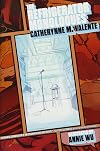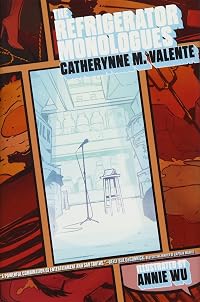
The Refrigerator Monologues
by Catherynne M. Valente
On This Page
Description
"From the New York Times bestselling author Catherynne Valente comes a series of linked stories from the points of view of the wives and girlfriends of superheroes, female heroes, and anyone who's ever been "refrigerated": comic book women who are killed, raped, brainwashed, driven mad, disabled, or had their powers taken so that a male superhero's storyline will progress. In an entirely new and original superhero universe, Valente explores these ideas and themes in the superhero genre, show more treating them with the same love, gravity, and humor as her fairy tales. After all, superheroes are our new fairy tales and these six women have their own stories to share"-- show lessTags
Recommendations





Member Recommendations

brianjungwi Different, but in the superhero genre
Member Reviews
This was amazing. I fell hard into this collection of interconnected stories, featuring women from a comic book world who have all been killed to further the plotline of another (male) character. In the afterlife, they've formed a support group. This hit so many chords with me, who has always cheered when I saw better female representation in comics, while also inwardly cringing in fear that these women will end up fridged.
If you know comics, many of these stories will seem familiar. It's a fun little nod to fellow geeks from Valente. But even if you aren't familiar with comics, these are truly enjoyable stories. They're inventive and made me feel for all the protagonists. And the framing story of Deadtown was also incredibly show more fascinating worldbuilding.
LOVED this. I immediately rec'ed it to a friend. show less
If you know comics, many of these stories will seem familiar. It's a fun little nod to fellow geeks from Valente. But even if you aren't familiar with comics, these are truly enjoyable stories. They're inventive and made me feel for all the protagonists. And the framing story of Deadtown was also incredibly show more fascinating worldbuilding.
LOVED this. I immediately rec'ed it to a friend. show less
A fairly scathing look at the "Women in Refrigerators" concept of misogyny in comic books disappoints slightly by pulling its punches instead of really ripping into the subject. A series of interconnected short stories reimagine the deaths and degradations of Gwen Stacy, Jean Grey, Harleen Quinzel, Mera, Karen Page, and Alexandra DeWitt (the girlfriend of Kyle Rayner who turned up dead in a refrigerator in Green Lantern #54 in 1994).
I only wish the book weren't so passive. The women are reduced to retelling their stories from a boring and detached afterlife with a sort of "what are you gonna do?" tone that captures the tragedy and injustice but does nothing to rage against or overturn the narrative. Indeed, in the acknowledgements the show more author undercuts the message by thanking the comic book creators who created these shared superhero universes and writes, "I have nothing but but respect and honor for the monumental feat of deliberate mythology they have, and continue to, accomplish. Where I have thrown my BANG!s and POW!s, I have done it with love, and where I have dissected, I have, I hope, made as little mess in the lab as one could hope."
I'm sorry, but I would rather have walked in the door of the lab and seen every damn beaker, flask, and piece of equipment lying shattered on the floor. show less
I only wish the book weren't so passive. The women are reduced to retelling their stories from a boring and detached afterlife with a sort of "what are you gonna do?" tone that captures the tragedy and injustice but does nothing to rage against or overturn the narrative. Indeed, in the acknowledgements the show more author undercuts the message by thanking the comic book creators who created these shared superhero universes and writes, "I have nothing but but respect and honor for the monumental feat of deliberate mythology they have, and continue to, accomplish. Where I have thrown my BANG!s and POW!s, I have done it with love, and where I have dissected, I have, I hope, made as little mess in the lab as one could hope."
I'm sorry, but I would rather have walked in the door of the lab and seen every damn beaker, flask, and piece of equipment lying shattered on the floor. show less
My only complaint about this book is that I WANT MORE MONOLOGUES. I had high hopes for this volume, and it absolutely did not disappoint. A collection of stories from the Hell Hath Club, women in Deadtown who died to further some superhero arc. The women are heroes, villains, and mad scientists, but all would be a part of what Gail Simone named "Women in Refrigerators" -- the trope of female characters dying as a plot device.
I loved each of these women fiercely, and if this book doesn't make you want to wail on those who put them in Deadtown with some righteous violence, well, I'm not sure we should be friends.
But thank you, Valente, for giving these ladies an afterlife. Where they can tell their own stories, find sisterhood, and show more discover new joys. show less
I loved each of these women fiercely, and if this book doesn't make you want to wail on those who put them in Deadtown with some righteous violence, well, I'm not sure we should be friends.
But thank you, Valente, for giving these ladies an afterlife. Where they can tell their own stories, find sisterhood, and show more discover new joys. show less
Spring 2109 (Netgalley, Audible, & Kindle);
Where do I even begin with this novel?
I have been meaning to read this novel since long before it was released. I received this book as an ARC from Netgalley, and picked up the Audible and Kindle versions as soon as they were available but even with all three I had not sat down and devoured it, even as I'd plowed through so much else that Valente had written from Labyrinth forward. I think because I knew how long this would sit with me, and how true it would bleach itself into my bones.
(As a cute beginning aside-
This novella begins "I'm dead. The deadest girl in deadtown," and continues to pluck and interview with the words of Holly Black short story-then-novel 'The Coldest Girl in show more Coldtown,' the alliterative mimicry of both likely fusing them forever into my mind. )
This novella is a love letter style fuck you to the Patriarchal White Male Superhero of decades, told in the style of the The Vagina Monologues about by the 'Women in Fridergators' as Gail Simone termed them. These are the stories of girlfriends and wives, who always bare the brunt, the abuse, and often the role of the murdered on the path of Responsibility and Greatness for The White Patriarchal Male Superhero.
This work is comprised of six stories of such women, in the "Hell Hath Club" with meets in Dead Town, told from each of their point of views. Each character is very clearly based on a specific, identifiable female from six different comics (Marvel and DC both), whom have been fridged in any (and often many) numbers of way by the universe they were in. They all tell a harrowing story of the life they had before and then after superpowers/superheroes came into their lives, with a sharp close look at the razor wire gender and genre tropes that cut them off at the knees at every turn after.
The writing in these pieces if fierce and fearless, coming for your blood and the love of anything that touched that world, to strip it bare from your hands. Cat pulls out all the stops for these pieces, eviscerating the roles when have been shoved into from good girl to whore, from sane to insane. The requirements of each role and the unsettled feelings the men around them get if they try to step outside of any of these roles, to claim fame, to grow larger, to be uncontrolled, or require respect, or even to want to walk away.
I won't give you any spoilers, but my favorite story was the one for Julia Ash (which I am sure none of you are truly surprised about since I've been in love with her comics counterpart since I was five years old, and I have torn the world asunder on number of these issues for decades of her comics arcs).
A deep and favorite love. Advised reading to all. show less
Where do I even begin with this novel?
I have been meaning to read this novel since long before it was released. I received this book as an ARC from Netgalley, and picked up the Audible and Kindle versions as soon as they were available but even with all three I had not sat down and devoured it, even as I'd plowed through so much else that Valente had written from Labyrinth forward. I think because I knew how long this would sit with me, and how true it would bleach itself into my bones.
(As a cute beginning aside-
This novella begins "I'm dead. The deadest girl in deadtown," and continues to pluck and interview with the words of Holly Black short story-then-novel 'The Coldest Girl in show more Coldtown,' the alliterative mimicry of both likely fusing them forever into my mind. )
This novella is a love letter style fuck you to the Patriarchal White Male Superhero of decades, told in the style of the The Vagina Monologues about by the 'Women in Fridergators' as Gail Simone termed them. These are the stories of girlfriends and wives, who always bare the brunt, the abuse, and often the role of the murdered on the path of Responsibility and Greatness for The White Patriarchal Male Superhero.
This work is comprised of six stories of such women, in the "Hell Hath Club" with meets in Dead Town, told from each of their point of views. Each character is very clearly based on a specific, identifiable female from six different comics (Marvel and DC both), whom have been fridged in any (and often many) numbers of way by the universe they were in. They all tell a harrowing story of the life they had before and then after superpowers/superheroes came into their lives, with a sharp close look at the razor wire gender and genre tropes that cut them off at the knees at every turn after.
The writing in these pieces if fierce and fearless, coming for your blood and the love of anything that touched that world, to strip it bare from your hands. Cat pulls out all the stops for these pieces, eviscerating the roles when have been shoved into from good girl to whore, from sane to insane. The requirements of each role and the unsettled feelings the men around them get if they try to step outside of any of these roles, to claim fame, to grow larger, to be uncontrolled, or require respect, or even to want to walk away.
I won't give you any spoilers, but my favorite story was the one for Julia Ash (which I am sure none of you are truly surprised about since I've been in love with her comics counterpart since I was five years old, and I have torn the world asunder on number of these issues for decades of her comics arcs).
A deep and favorite love. Advised reading to all. show less
If you know the name Paige Embry, you know that Paige Embry died...the last things she probably saw was the astonishing lights in the sky, the lights of Doctor Nocturne's infernal machine igniting every piece of metal in the city, turning skyscrapers into liquid purple fire while Kid Mercury punched the bad guy...Paige Embry died watching her boyfried save New York City. When the fires went out in Manhattan, they went out in her eyes, too.
Valente's novel is a reply to the women-in-refrigerators trope in comics and popular culture. Gail Simone in 1999 pointed out that, in too many stories, the purpose of women characters is to provide motivation for the men - by being attacked, injured, raped, killed, or stripped of their own show more superpowers.
There's an entire universe of male superheroes and supervillains in this short book, but we see them only as background for the women. The good and studious scientist, the superwoman, the bad girl, the punk-rock princess of Atlantis, the pretty actress, the artist; despite their unique and varied talents and characters, the script says they all end up in the same place, condemned by their gender. Dead now, they hang out in the afterlife, calling themselves the Hell Hath Club, telling their stories and consoling new arrivals.
The author has great fun fleshing (ectoplasming?) out her concept. The only food in the underworld is extinct species - triceratops pies, thylacine steaks; there's no wine, because no one lets good grapes go extinct. Atlanteans live in their downscale city because "...Brooklyn is full." The dead are stuck wearing, for eternity, whatever clothing they were buried in. Superhero/villain names include Bruce Force, The Clock of Ages, Hal Cyon, and the Arachnochancellor. The Hell Hath Club mourn their losses, but tell their tales with plenty of attitude. Dying well is their best revenge. Annie Wu's illustrations (one per chapter) seem fine to this mostly non-comics fan. An Acknowledgments section at the end calls out Eve Ensler as another inspiration.
There's no solution offered here for the ladies of the Club, but many writers have taken Gail Simone's point. In numerous contemporary stories, a universe of women characters survive and thrive, and both women and men readers are better for it. show less
Valente's novel is a reply to the women-in-refrigerators trope in comics and popular culture. Gail Simone in 1999 pointed out that, in too many stories, the purpose of women characters is to provide motivation for the men - by being attacked, injured, raped, killed, or stripped of their own show more superpowers.
There's an entire universe of male superheroes and supervillains in this short book, but we see them only as background for the women. The good and studious scientist, the superwoman, the bad girl, the punk-rock princess of Atlantis, the pretty actress, the artist; despite their unique and varied talents and characters, the script says they all end up in the same place, condemned by their gender. Dead now, they hang out in the afterlife, calling themselves the Hell Hath Club, telling their stories and consoling new arrivals.
The author has great fun fleshing (ectoplasming?) out her concept. The only food in the underworld is extinct species - triceratops pies, thylacine steaks; there's no wine, because no one lets good grapes go extinct. Atlanteans live in their downscale city because "...Brooklyn is full." The dead are stuck wearing, for eternity, whatever clothing they were buried in. Superhero/villain names include Bruce Force, The Clock of Ages, Hal Cyon, and the Arachnochancellor. The Hell Hath Club mourn their losses, but tell their tales with plenty of attitude. Dying well is their best revenge. Annie Wu's illustrations (one per chapter) seem fine to this mostly non-comics fan. An Acknowledgments section at the end calls out Eve Ensler as another inspiration.
There's no solution offered here for the ladies of the Club, but many writers have taken Gail Simone's point. In numerous contemporary stories, a universe of women characters survive and thrive, and both women and men readers are better for it. show less
"Fridging" a character specifically refers to an incident in the Green Lantern comic book in which the hero Kyle Rayner's girlfriend Alexandra DeWitt was killed by the villain Major Force and stuffed into a refrigerator for Rayner to find later. This kind of plot device then sends the hero into a righteous wrath whereupon he then goes upon a rage-driven quest for revenge to avenge his lost love. The use of the term in a more general sense, to mean a character (who is almost always a woman) who is killed off in order to provide motivation and character development for the hero (who is almost always a man), was originally coined by Gail Simone, and has since become a widely used term to refer to this sort of lazy and misogynistic show more trope.
The framing of "fridging" is to subordinate the fridged character to the protagonist's story - the now-dead character only exists in the story to help tell the story of the "more important" central character. Because this trope is almost always presented as a female character being sacrificed to give depth and meaning to the story of a male character, this has the effect of erasing the women's stories. In many of these cases, the female character to be killed off is presented in as shallow a way as possible - since she exists only to further someone else's story, to the extent her story is told, it is usually only told to the extent that her story intersects with the protagonist's. The end result is that there is a rogue's gallery consisting of dozens (or, more likely hundreds) of female characters whose stories were never told, because they were killed off so that Bob Squarejaw could experience a little angst and dedicate himself to vengeance. Marvel's Punisher is a character entirely built upon this premise, and his wife and children pretty much only exist within flashbacks in his story. I suspect that the fact that the villain's killed Wick's dog in John Wick was intended as a kind of joke - replacing the usual girlfriend, wife, sister, or daughter of the hero with a dog, and part of the commentary provided was that the dog got as much character development as the usual victim would have.
Cat Valente's Refrigerator Monologues takes this trope and flips it on its head. The characters given voices in this book are all women who are residents of Deadtown - the place where the discarded comic book characters go when they die. Some characters die and then come back to life, but others, the ones who were "fridged", are all eternally confined to the never-ending autumn of Deadtown. They call themselves the Hell Hath Club, aren't happy about their deaths, and they are going to tell anyone who shows up at the Lethe Café on open mic night. They are Paige Embry, Julia Ash, Pauline Ketch, Blue Bayou, Daisy Green, and Samantha Dane, they all have their own stories to tell, and in this book Cat Valente tells them all.
To provide a setting for her heroines to exist in, Valente has crafted a complete world around them, populated with super-heroes, super-villains, love interests, mentors, children, and everyone else. Although the world is very clearly inspired by the fictional worlds of some of the major comic book publishers, and several of the characters and storylines are reminiscent of characters and storylines that have appeared in those worlds, Valente's world is a distinct entity unto its own. To a certain extent, such similarities are unavoidable, and some are possibly even unintentional, but it is clear that many of the elements that run parallel to well-known comic book stories were included quite deliberately. These parallels are, after all, part of the point of the book: To highlight how these stories in previously published stories sideline and marginalize women's stories, one has to emulate them to some extent, and Valente manages to come close enough for the references to be recognizable, but not so close that the stories she is telling are diminished.
Each of the six stories told in this book end tragically, which is an inevitable outcome given that this is a book about women who died to further the story of another person. Even within this limitation, Valente refuses to allow the stories of these character to be erased - even if the story they were supposed to have originally appeared in cast them as a secondary character, in this book they take center stage and give full voice to their own lives and experiences. The characters in this book might be a girlfriend who was in the wrong place at the wrong time, or a superheroine whose powers were "too dangerous" for her teammates to allow her to live, or a disaffected punk teen who finds love and has an ill-fated child, but that is not all they are, and in each of their stories that is made painfully clear. This is a book full of rage, rage at being dead, but also rage at having their story erased. But there is so much more than rage in these stories, because as Valente presents them, these are fully realized characters with complete lives: The anger that runs through each woman's story is engendered by the joy she had in her life - the hopes, the dreams, and the ambitions she had for herself that were all snatched away by the necessities of formulaic storytelling.
There are some books that need to be written to make a point. The Refrigerator Monologues is one of those books. But like the women depicted in its pages, it isn't only that kind of book. While some books intended to make a point can become didactic polemics, in Valente's hands, the premise results in a collection of fully realized women living in what feels like a completely distinct and yet entirely familiar fictional comic book world. This is, quite simply, a brilliant book. These are stories that needed to be told, and it turns out that Valente was the perfect person to tell them.
This review has also been posted to my blog Dreaming About Other Worlds. show less
The framing of "fridging" is to subordinate the fridged character to the protagonist's story - the now-dead character only exists in the story to help tell the story of the "more important" central character. Because this trope is almost always presented as a female character being sacrificed to give depth and meaning to the story of a male character, this has the effect of erasing the women's stories. In many of these cases, the female character to be killed off is presented in as shallow a way as possible - since she exists only to further someone else's story, to the extent her story is told, it is usually only told to the extent that her story intersects with the protagonist's. The end result is that there is a rogue's gallery consisting of dozens (or, more likely hundreds) of female characters whose stories were never told, because they were killed off so that Bob Squarejaw could experience a little angst and dedicate himself to vengeance. Marvel's Punisher is a character entirely built upon this premise, and his wife and children pretty much only exist within flashbacks in his story. I suspect that the fact that the villain's killed Wick's dog in John Wick was intended as a kind of joke - replacing the usual girlfriend, wife, sister, or daughter of the hero with a dog, and part of the commentary provided was that the dog got as much character development as the usual victim would have.
Cat Valente's Refrigerator Monologues takes this trope and flips it on its head. The characters given voices in this book are all women who are residents of Deadtown - the place where the discarded comic book characters go when they die. Some characters die and then come back to life, but others, the ones who were "fridged", are all eternally confined to the never-ending autumn of Deadtown. They call themselves the Hell Hath Club, aren't happy about their deaths, and they are going to tell anyone who shows up at the Lethe Café on open mic night. They are Paige Embry, Julia Ash, Pauline Ketch, Blue Bayou, Daisy Green, and Samantha Dane, they all have their own stories to tell, and in this book Cat Valente tells them all.
To provide a setting for her heroines to exist in, Valente has crafted a complete world around them, populated with super-heroes, super-villains, love interests, mentors, children, and everyone else. Although the world is very clearly inspired by the fictional worlds of some of the major comic book publishers, and several of the characters and storylines are reminiscent of characters and storylines that have appeared in those worlds, Valente's world is a distinct entity unto its own. To a certain extent, such similarities are unavoidable, and some are possibly even unintentional, but it is clear that many of the elements that run parallel to well-known comic book stories were included quite deliberately. These parallels are, after all, part of the point of the book: To highlight how these stories in previously published stories sideline and marginalize women's stories, one has to emulate them to some extent, and Valente manages to come close enough for the references to be recognizable, but not so close that the stories she is telling are diminished.
Each of the six stories told in this book end tragically, which is an inevitable outcome given that this is a book about women who died to further the story of another person. Even within this limitation, Valente refuses to allow the stories of these character to be erased - even if the story they were supposed to have originally appeared in cast them as a secondary character, in this book they take center stage and give full voice to their own lives and experiences. The characters in this book might be a girlfriend who was in the wrong place at the wrong time, or a superheroine whose powers were "too dangerous" for her teammates to allow her to live, or a disaffected punk teen who finds love and has an ill-fated child, but that is not all they are, and in each of their stories that is made painfully clear. This is a book full of rage, rage at being dead, but also rage at having their story erased. But there is so much more than rage in these stories, because as Valente presents them, these are fully realized characters with complete lives: The anger that runs through each woman's story is engendered by the joy she had in her life - the hopes, the dreams, and the ambitions she had for herself that were all snatched away by the necessities of formulaic storytelling.
There are some books that need to be written to make a point. The Refrigerator Monologues is one of those books. But like the women depicted in its pages, it isn't only that kind of book. While some books intended to make a point can become didactic polemics, in Valente's hands, the premise results in a collection of fully realized women living in what feels like a completely distinct and yet entirely familiar fictional comic book world. This is, quite simply, a brilliant book. These are stories that needed to be told, and it turns out that Valente was the perfect person to tell them.
This review has also been posted to my blog Dreaming About Other Worlds. show less
Really enjoyable. While you can obviously tell what Marvel/DC characters are being referenced, Valente does a great job of creating her own universe/worlds for them to play in. The short stories, told in a style reminiscent of the round table backstory sharing of Haunted (except much better written), have a mix of poignancy, humor, insight, and critique that struck a chord with me. I found myself nodding along in irritation as much as I laughed at loud.
I didn't get a Vagina Monologues feel from this, and that's okay. One feminist work doesn't need to be derived from another feminist work to be good or feminist. (Oh dear, I said the F-word....) This book was a great read that provided some validation to what I've show more felt/experienced/witnessed as a lady videogame/comic/sci-fi/fantasy fan, and gives plenty of food for thought.
For those of you wondering which comic-book women were featured:
-Gwen Stacey: Exists as plot device, not person. Used to give hero powers and then killed to show the story was serious.
-Jean Grey: One of few women whose power was greater than the men's (and is the object of desire for multiple men). So naturally she can't control it and is used/killed off. The frequent retcons, resurrections, and de-power/re-power are illustrated as dismissive and manipulative, something I hadn't thought of before, but makes sense.
-Harley Quinn: I mean, shit, what is there to say about this one? An intelligent, powerful woman infantilized and trapped into an abusive relationship. A lethally violent relationship. Why this is still being romanticized is beyond me.
-Mera: Wife of Aquaman. All the powers of Aquaman and then some, arguably more powerful and influential...and yet relegated to sidekick and damsel in distress. Her grief at the loss of her child is ignored completely and she's treated as a monster and psychopath for being upset about it.
-Karen Page: Girlfriend of Daredevil, whose contributions are undervalued when she is with Daredevil, and who becomes a pornstar/drug addict when Daredevil isn't in her life. Eventually killed as plot device.
-Alexandra DeWitt: Girlfriend of Kyle Rayner/Green Lantern. Helps train him in his powers initially, and then is killed and stuffed in the eponymous refrigerator.
I didn't get a Vagina Monologues feel from this, and that's okay. One feminist work doesn't need to be derived from another feminist work to be good or feminist. (Oh dear, I said the F-word....) This book was a great read that provided some validation to what I've show more felt/experienced/witnessed as a lady videogame/comic/sci-fi/fantasy fan, and gives plenty of food for thought.
For those of you wondering which comic-book women were featured:
-Gwen Stacey: Exists as plot device, not person. Used to give hero powers and then killed to show the story was serious.
-Jean Grey: One of few women whose power was greater than the men's (and is the object of desire for multiple men). So naturally she can't control it and is used/killed off. The frequent retcons, resurrections, and de-power/re-power are illustrated as dismissive and manipulative, something I hadn't thought of before, but makes sense.
-Harley Quinn: I mean, shit, what is there to say about this one? An intelligent, powerful woman infantilized and trapped into an abusive relationship. A lethally violent relationship. Why this is still being romanticized is beyond me.
-Mera: Wife of Aquaman. All the powers of Aquaman and then some, arguably more powerful and influential...and yet relegated to sidekick and damsel in distress. Her grief at the loss of her child is ignored completely and she's treated as a monster and psychopath for being upset about it.
-Karen Page: Girlfriend of Daredevil, whose contributions are undervalued when she is with Daredevil, and who becomes a pornstar/drug addict when Daredevil isn't in her life. Eventually killed as plot device.
-Alexandra DeWitt: Girlfriend of Kyle Rayner/Green Lantern. Helps train him in his powers initially, and then is killed and stuffed in the eponymous refrigerator.
Members
- Recently Added By
Lists

Best books about books
209 works; 106 members

2018 Hugo Eligible Novels
170 works; 16 members

Simon & Schuster
136 works; 4 members

2010s
241 works; 3 members

Five star books
1,767 works; 110 members

Books Read in 2018
4,360 works; 110 members

Superhero Fantasy
81 works; 7 members

Books Read in 2022
5,226 works; 115 members

SFF standalone novellas with female protagonists
101 works; 4 members

Reading Glasses Podcast
410 works; 3 members
Author Information

173+ Works 22,632 Members
All Editions
Some Editions
Awards and Honors
Awards
Work Relationships
Common Knowledge
- Original publication date
- 2017
- People/Characters
- Paige Embry (pastiche of Gwen Stacy); Julia Ash (Charbydis ∙ pastiche of Jean Grey/Phoenix); Pauline Ketch (Pretty Polly ∙ pastiche of Harley Quinn); Daisy Green (a/k/a Delilah Daredevil, pastiche of Karen Page); Bayou (pastiche of Mera); Samantha Dane (pastiche of Alexandra DeWitt) (show all 87); Kid Mercury (Tom Thatcher); Tom Thatcher (Kid Mercury); Doctor Nocturne (Alastair Augustus); Alastair Augustus (Doctor Nocturne); Nora Embry (mother of Paige Embry); Mr. Embry (father of Paige Embry); Arachnochancellor; Glenn W. Falk III (Grimdark); Grimdark (Glenn W. Falk III); Charbydis (Julia Ash); Professor Yes (Clara Y. Xenophile); Clara Y. Xenophile (Professor Yes); Crucible (Henry Hart); Henry Hart (Crucible of the Millennial Men); Silver Siren (Millennial Men); Zigzag (Millennial Men); Pell-Mell (Millennial Men); Maroon Marauder (Millennial Men); Snow Queen (Millennial Men); Whitewater (Millennial Men); Paravox (Millennial Men); Ha'Penny (Millennial Men); Hal Cyon (Millennial Men); Bruce Force (Millennial Men); Millennial Men (X-Men pastiche); X-Men (pastiche as Millennial Men); Jean Grey (pastiche as Julie Ash); Gwen Stacy (pastiche as Paige Embry); Lodestone (pastiche of Magneto); Victor Volatile; Sergeant Pluto; Retcon (Lucas Fawn); Lucas Fawn (Retcon); Pretty Polly (Pauline Ketch ∙ pastiche of Harley Quinn); Harley Quinn (pastiche as Pauline Ketch/Pretty Polly); Mr. Punch (pastiche of the Joker); Joker (pastiche as Mr. Punch); Wilhemina Happi (nurse); Fearwig; Neil the gargoyle (bartender); Delphine Tankerbane IV (queen of Atlantis ∙ mother of Bayou); Platypunk; Platypunk Sr. (father of Platypunk); Crowjack (Megalodon); Megalodon (Crowjack); Avast (John Heron ∙ pastiche of Aquaman); John Heron (Avast); Aquaman (pastiche as Avast/John Heron); August Heron (father of John Heron); August "Azure" Heron (son of Bayou and John Heron); Chiaroscuro (Jason Remarque, pastiche of Kyle Rayner/Green Lantern); Insomniac; The Union (superhero group); Unstoppable Id; Batman (pastiche as Grimdark/Glenn W. Falk III); Spider-Man (pastiche as Kid Mercury/Tom Thatcher); Mera (pastiche as Bayou); Karen Page (pastiche as Daisy Green); Insomniac (Mikey Miller, f/k/a Mikhail Dmitrivich "Misha" Malinov, pastiche of Matt Murdock/Daredevil); Mikey Miller (Insomniac, f/k/a Mikhail Dmitrivich "Misha" Malinov, pastiche of Matt Murdock/Daredevil); Mikhail Dmitrivich "Misha" Malinov (Insomniac, a/k/a Mikey Miller, pastiche of Matt Murdock/Daredevil); Daredevil (Matt Murdock, pastiche as Mikey Miller/Mikhail Dmitrivich "Misha" Malinov/Insomniac); Matt Murdock (Daredevil, pastiche as Mikey Miller/Mikhail Dmitrivich "Misha" Malinov/Insomniac); Miasma; Odysseus; Quarter Inch Bleed (musical group of gargoyles - Stan, Jack, Alan, and Gail); Alexandra DeWitt (pastiche as Samantha Dane); Green Lantern: Kyle Rayner; Green Lantern (Kyle Rayner, pastiche as Chiaroscuro/Jason Remarque); Jason Remarque (Chiaroscuro, pastiche of Kyle Rayner/Green Lantern); Avant Garde (superhero group); Greyscale (Simon Stewart); Simon Stewart (Greyscale); Still Life (Nina Batista); Nina Batista (Still Life); Pointillist (member of Avant Garde superhero group); Bauhaus (member of Avant Garde superhero group); Turpentine (member of Avant Garde superhero group); Zeitgeist (member of Avant Garde superhero group); Isaac Amendolara (Six Figure); Six Figure (Isaac Amendolara)
- Important places
- New York, New York, USA; Deadtown; St. Ovidius's School for Wayward Children; Mars; Antarctica; Guignol City (show all 9); Sarkomand Sanitarium, Guignol City; Atlantis; Pripyat, Ukraine
- Dedication
- For Heath Miller and Gail Simone
- First words
- I'm dead. The deadest girl in Deadtown.
- Last words
- (Click to show. Warning: May contain spoilers.)The Deadtown moon turns all our faces into four-color saints, and for a moment, this moment, every night, we all feel almost alive again, dancing together at the end of the story, where nothing in heaven or earth can hurt us anymore forever.
- Blurbers
- Kelly Sue DeConnick
- Original language
- English
Classifications
Statistics
- Members
- 484
- Popularity
- 62,944
- Reviews
- 21
- Rating
- (4.08)
- Languages
- English
- Media
- Paper, Audiobook, Ebook
- ISBNs
- 8
- ASINs
- 3