On This Page
Description
Against the backdrop of the Gaean Reach, the widely populated region of space where the full diversity of human development is revealed, the story of Jaro Fath unfolds: from wildling orphan to spaceship captain, his is a tale of adventure and discovery.Tags
Recommendations

















Member Reviews
Somewhere on a straggling road between Swift's Laputa and Iain M. Banks's Culture is a ruinous palace in which a mad author cobbles together patchwork quilts and calls them books: not so much world-building as world-jerry-building, or world-throwing-together-and-seeing-what-sticks. Imaginative, yes, and also baroque, absurd, irritating, facetious, and sometimes deliberately disgusting. I have a number of unread Vance titles on my shelves, but finishing this one was a bit of an effort, and does not inspire me to reach for another any time soon. MB 3-vi-2025
Night Lamp is one of Jack Vance's last novels, first published when he was eighty years old in 1996. It is a standalone space opera in his Gaean Reach setting, and it is mostly a story of personal vengeance. A lot of effort has been invested in sketching the civilizations and mentalities of a couple of worlds: the club-addicted hierarchical Thanet and the insular decadent Fader. The latter is a planet orbiting the star Night Lamp which gives the book its title.
There is very little attention given to technological constraints in this tale, and it is basically a space fantasy, where the only real speculative elements concern the peculiar cultures and societies of the principal planets and a few others that play key roles in the story. show more Ansible communication is implied, and interstellar ship travel clearly has no regard for relativistic limits, but no bother is made over how that is possible or what might be its other consequences.
Despite some tragic elements of the plot, Vance maintains a distanced, sardonic tone, and for a variety of reasons I think the book is best classed as a comedy. Some of the quasi-flirtatious dialogues between male protagonist Jaro Fath and his love interest Skirlet Hutsenreiter are droll as can be, and the adolescent plot arc on Thanet plays like a teen exploitation movie. I was especially amused by the courting customs of Fader proposed by Roblay of Immir (310-11). show less
There is very little attention given to technological constraints in this tale, and it is basically a space fantasy, where the only real speculative elements concern the peculiar cultures and societies of the principal planets and a few others that play key roles in the story. show more Ansible communication is implied, and interstellar ship travel clearly has no regard for relativistic limits, but no bother is made over how that is possible or what might be its other consequences.
Despite some tragic elements of the plot, Vance maintains a distanced, sardonic tone, and for a variety of reasons I think the book is best classed as a comedy. Some of the quasi-flirtatious dialogues between male protagonist Jaro Fath and his love interest Skirlet Hutsenreiter are droll as can be, and the adolescent plot arc on Thanet plays like a teen exploitation movie. I was especially amused by the courting customs of Fader proposed by Roblay of Immir (310-11). show less
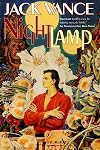
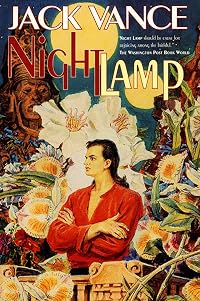
I put off reading this late-life Vance novel for decades because of the ugly cover and un-engaging title. It's a perfectly solid example of Vance's strengths and weaknesses. Those strengths are his love of language, his delight in developing a variety of societies, all of whom can't understand how any other system could work, and his humor. The weaknesses are in the characterizations and lack of emotional resonance. Characters face some extremely traumatic events (and a few good ones) and do little more than expostulate wryly. The first half of Lyonesse remains my favorite Vance because it's the one time he actually makes you care about a character.
Recommended for all fans of Vance.
Recommended for all fans of Vance.
Why does one read Vance? Not for the impressive plots, the never-to-forget-characters, or the empire-building heroes: just the contrary. Vance is impressive by the amount of details and original ideas he is able to put into one book: the view on science of Jaro's parents, the creatures and animals on every planet he visits, the sociological organisation of societies on different planets... I wouldn't consider it a 'must read', but Vance stays Vance: interesting, fun and great to read.
Classic Vance - in a sense for the last time (after this two somewhat mediocre novels were published). Some great anecdotes in here, and a plot that goes all over the place.
Evocative, imaginative, and creative: vintage Vance: Jack Vance is now in his nineties, yet his creativity seems to be unbounded. This book will appeal to both newcomers and those who are already accustomed to Vance's unique style. The (great) story is littered with hundreds of ideas, persons, even whole worlds. Cruelty is always balanced with dry humor, and Vance manages to create believable and likeable (although sometimes quite peculiar) characters. A definite must-read.
Vancian weirdness at it's finest ~
Members
- Recently Added By
Lists

S.F. Masterworks (Complete)
229 works; 15 members

Broderick and Di Filippo's Science Fiction: The 101 Best Novels 1985-2010
103 works; 7 members

SF Masterworks
193 works; 8 members
Author Information

375+ Works 34,905 Members
John Holbrook Vance (August 28, 1916 - May 26, 2013) was an American mystery, fantasy and science fiction writer. Most of his work was published under the name Jack Vance. He also wrote 11 mystery novels as John Holbrook Vance and three as Ellery Queen, and once each used pseudonyms Alan Wade, Peter Held, John van See, and Jay Kavanse. Vance won show more the World Fantasy Award for Life Achievement in 1984. The Science Fiction Hall of Fame inducted him in 2001. Among his awards for particular works were: Hugo Awards, in 1963 for The Dragon Masters, in 1967 for The Last Castle, and in 2010 for his memoir This is Me, Jack Vance!; a Nebula Award in 1966, also for The Last Castle; the Jupiter Award in 1975; the World Fantasy Award in 1990 for Lyonesse: Madouc. He also won an Edgar (the mystery equivalent of the Nebula) for the best first mystery novel in 1961 for The Man in the Cage. He died at his home in Oakland, California, on May 26, 2013, aged 96. (Bowker Author Biography) show less
Some Editions
Series

Belongs to Publisher Series
SF Masterworks (New design)
Common Knowledge
- Original publication date
- 1996-04
Classifications
Statistics
- Members
- 511
- Popularity
- 58,749
- Reviews
- 14
- Rating
- (3.60)
- Languages
- 7 — Dutch, English, French, German, Italian, Russian, Spanish
- Media
- Paper, Ebook
- ISBNs
- 23
- ASINs
- 8