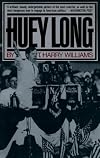
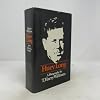
Huey Long
by T. Harry Williams
On This Page
Description
A detailed biography of the red-neck politician who became a national demagogue in the twenties and thirties and almost reached the White House.Tags
Recommendations














Member Recommendations
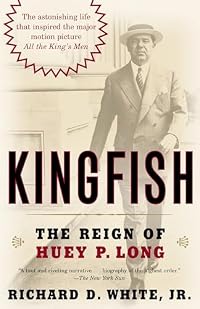
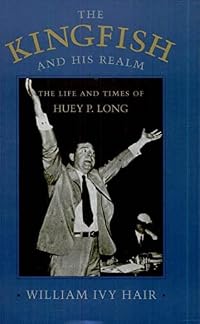
wildbill A loosely fictionalized account of the life of the Kingfish.
30
Member Reviews
The only historian to look past Long's flamboyance and see the unparalleled genius who singlehandedly destroyed the best-entrenched political establishment in America and built a machine that outlasted his death by decades. Unafraid to grapple with the tough questions a figure like Long raises. Is the corruption of an alleged demagogue different in kind or degree from the corruption he seeks to uproot? Is there such a thing as a demagogue at all in American politics, or is its utterance the last refuge of a beaten incumbent? Does an earnest, heartfelt desire to help people justify cutthroat political praxis? Can a sufficiently strong political will overcome all barriers before it?
Harris not only has the guts to proffer his own answers show more to these questions but he boldly refuses to accept as a mystery the notion embraced by other historians that Long must remain forever an ideological and methodological enigma. He does not defy categorization, classification, and analysis. He was an American politician, only moreso. He had his own notions of things like the constitution, limits on government (which led him to oppose the NRA), and states' rights (which led him to oppose the manner in which the New Deal was being administered), although historians and contemporaries refused to take his ideas on these things seriously. Was a government run by Huey Long closer to or further from the intent of the founders than the modern two-party system? I wouldn't venture to guess. I think Harris would.
Harris backs down in his defenses of Long only once, in the matter which Harris must know best - university operations and academic freedom, when he seems to side with the Reveille staffers who resigned in protest over censorship more stridently than he ever did the Old Regulars or any other political operators who moved in arenas with which he was less familiar. That isn't the best indicator of his own consistency in applying judgment, but that doesn't mean he was wrong in the majority of his assessments either.
Worth re-reading. show less
Harris not only has the guts to proffer his own answers show more to these questions but he boldly refuses to accept as a mystery the notion embraced by other historians that Long must remain forever an ideological and methodological enigma. He does not defy categorization, classification, and analysis. He was an American politician, only moreso. He had his own notions of things like the constitution, limits on government (which led him to oppose the NRA), and states' rights (which led him to oppose the manner in which the New Deal was being administered), although historians and contemporaries refused to take his ideas on these things seriously. Was a government run by Huey Long closer to or further from the intent of the founders than the modern two-party system? I wouldn't venture to guess. I think Harris would.
Harris backs down in his defenses of Long only once, in the matter which Harris must know best - university operations and academic freedom, when he seems to side with the Reveille staffers who resigned in protest over censorship more stridently than he ever did the Old Regulars or any other political operators who moved in arenas with which he was less familiar. That isn't the best indicator of his own consistency in applying judgment, but that doesn't mean he was wrong in the majority of his assessments either.
Worth re-reading. show less
I grew up in Louisiana in the 50's and 60's. Long was still a legend then, but I never delved into his life. As you read Williams' Pulitzer Prize winning biography, it is hard to believe that a man such as this actually existed. I rarely take on a book of this length any more (800+ pages), but I raced through this one, laughing in amazement nearly all the way, saddened in the end that the nation and the world did not see how he would have turned out had a bullet not ended his life at the age of 42. I was inspired by Williams' research as much as by Long himself.
Huey Long was one of the most fascinating characters in American history and T. Harry Williams tells his story better than anyone else. Long rose from absolutely abject poverty to become perhaps the most powerful political leader in Louisiana history and for a time, one of the most influential leaders in the US. This hick from the sticks went to the big city and made good.
The Kingfish was, of course, corrupt, but was genuinely populist. He fought for better education for the poor, the right to organize labor unions, and he pushed adult literacy, which mainly benefited African-Americans. His public works projects employed thousands and built hundreds of roads and bridges. He fought the entrenched and powerful interests in favor of the show more common man.
T. Harry Williams' work is simply the best on the man and the politician. show less
The Kingfish was, of course, corrupt, but was genuinely populist. He fought for better education for the poor, the right to organize labor unions, and he pushed adult literacy, which mainly benefited African-Americans. His public works projects employed thousands and built hundreds of roads and bridges. He fought the entrenched and powerful interests in favor of the show more common man.
T. Harry Williams' work is simply the best on the man and the politician. show less
1058 Huey Long, by T. Harry Williams (read 5 Jul 1970) (Pulitzer Biography prize for 1970) (National Book Award history prize for 1970) This was an utterly absorbing book to read. The biography relies a lot on "oral history," that is, interviews with living persons. This is a technique which is unusual; but it is all right. The author is more sympathetic to Long than I would be--from what he tells it is clear that Huey made a complete shambles of democratic government in Louisiana. The accounts of how he ran the Louisiana Legislature in the last years of his life (when he was U.S. Senator) are simply unbelievable. It seems to me the Reichstag under Hitler was less thoroughly subjugated than was the Louisiana Legislature under Long. But show more Williams treats this all rather blandly and talks about the mistakes and exaggerations of the anti-Longites! Huey was born Aug 30, 1893, in a log house near Winfield, La., and was shot Sept 8, 1935, in the state Capitol building at Baton Rouge and died at 4:06 A.M. on Sept 10, 1935. His assassin was Carl Austin Weiss, a 29-year-old doctor and a son-in-law of an anti-Long judge whom Huey was about to gerrymander out of office. The career of Huey Long is of course fantastic: elected to the Railroad Commission in 1918, in 1924 he ran for Governor and lost. It was the last time. He was elected Governor in 1928, and U.S. Senator in 1930. Obviously he was a leftist and some things he did were good: just as one can find good things done by Mussolini and even Hitler. But his methods were evil and one can only conclude that his elimination was the elimination of an evil. I will have to read some in the Congressional Record from Jan 25, 1932, through Aug 26, 1935. He was certainly a wild man and colorful. I do not think the Senate has ever seen his like since. In my years in Washington Wild Bill Langer was the wildest man in Washington--but he never drew crowds like Huey. Joe McCarthy drew crowds, but he wasn't as funny as Huey or Wild Bill. This was one of the most enjoyable books I've read in a long time. show less
This is a remarkably balanced biography of the much-maligned Huey Long. It seems, that he was a progressive hero of sorts. He was not above a bit of chicanery from time to time, but he used it to benefit ordinary people, not the corporate elite.
After reading this I was left curious about only a few things, which should give credit to the author for writing such a full biography. Where was the deduct-box hidden? That is a question for a treasure-hunter. What were his last words really? What we imagine is most likely better than the reality. Lastly, are the plumbing pipes in the governor's house in Louisiana inscribed to this day? I actually yearn for photographic proof.
I read this book years ago for a college course on the history of the South. I love this book. Just seeing the cover brings back memories. If you want to understand politics in the South read this book, then pick up and read Robert Penn Warren's "All The King's Men". When it comes to history in the South, William Faulkner was right.
Members
- Recently Added By
Lists

Books Read in 2025
4,090 works; 97 members
Author Information

29+ Works 2,292 Members
Awards and Honors
Work Relationships
Has as a student's study guide
Common Knowledge
- Original publication date
- 1969
- People/Characters
- Huey Long; Oscar K. Allen; Martin Behrman; Theodore Bilbo; Harley B. Bozeman; Edwin S. Broussard (show all 29); Paul N. Cyr; James A. Farley; John B. Fournet; Henry L. Fuqua; Alice Lee Grosjean; T.H. Harris; Harold L. Ickes; Louis Jones; Earl K. Long; Huey Pierce Long Sr.; Julius T. Long; Rose McConnell Long; Paul Maloney [Huey Long]; John H. Overton; John M. Parker; Ruffin G. Pleasant; Harvey Peltier; Joseph E. Ransdell; Franklin Delano Roosevelt; Jared Sanders; John P. Sullivan; T. Semmes Walmsley; Francis Williams
- Important places
- Louisiana, USA; Winn Parish, Louisiana, USA; Washington, D.C., USA; United States Senate, Washington, D.C., USA; Baton Rouge, Louisiana, USA; New Orleans, Louisiana, USA
- Important events
- Chairman of Public Service Commission, 1922; Unsuccesful run for Governor, 1924; Elected Governor, 1928; Succesful run for U.S. Senate, 1930; Impeachment as governor, 1930; Share Our Wealth Society, 1934 (show all 7); Assassination of Huey Long, 1935
- Dedication
- For Mai Frances and Nils
- First words
- The story seems too good to be true—but people who should know swear that it is true.
- Last words
- (Click to show. Warning: May contain spoilers.)But most of them remembered that he said: "God, don't let me die. I have so much to do."
- Canonical DDC/MDS
- 976.3060924
- Canonical LCC
- E748.L86
Classifications
Statistics
- Members
- 609
- Popularity
- 47,581
- Reviews
- 10
- Rating
- (4.37)
- Languages
- English
- Media
- Paper, Audiobook, Ebook
- ISBNs
- 10
- ASINs
- 10