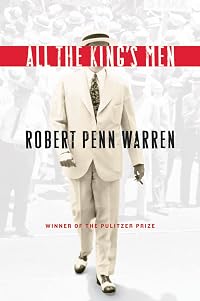
All the King's Men
by Robert Penn Warren
On This Page
Description
Winner of the Pulitzer Prize, this classic book is generally regarded as the finest novel ever written on American politics. It describes the career of Willie Stark, a back-country lawyer whose idealism is overcome by his lust for power..
Tags
Recommendations








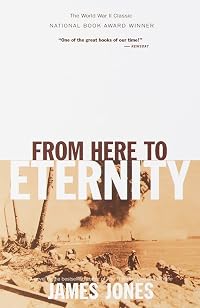
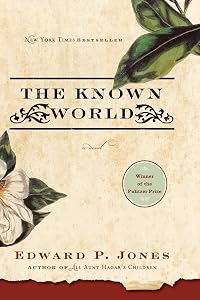
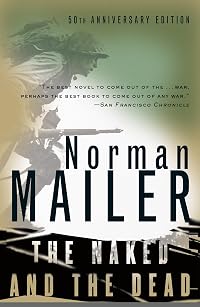

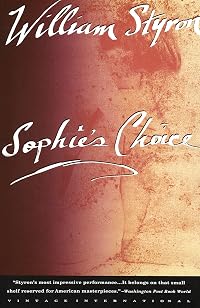


Member Recommendations


wildbill A loosely fictionalized account of the life of the Kingfish.
10

Burr by Gore Vidal
5hrdrive Similar premise.

Member Reviews
This is commonly billed as a "political novel", but much like its close spiritual successor, Billy Lee Brammer's The Gay Place, much of it doesn't really have anything to do with politics at all in the sense of policy. This is understandable, because the technical vocabulary of statutes, subclauses, and ad valorem taxes is essentially antithetical to most people, and also because the book is more about the effect of politics on people's lives and behavior, especially the seedier types of behavior, which are always the most interesting. Warren packed some great character studies of ambitions, infidelities, and aspirations inside a great big sprawling tome of a novel that contains some epic plot twists and soaring language, only very show more rarely ever feeling less than grandiose and all-encompassing in its examinations of the life of a politician who chased his dreams at all costs.
The novel is told through a frame story of journalist Jack Burden recounting his life with Governor Willie Stark. Despite Stark disappearing from the book for several long stretches, it's fair to call him the center of the story and the most important hook for readers, since it's his ambitions that drive the action. After all, an adulated orator is on the front cover of my edition and the back cover promises a tale of the rise and fall of a populist Depression-era governor who "resembles" infamous Louisiana Governor Huey Long. Though the book is very carefully set in an unnamed Southern state with no discernible Cajun identity at all - no Desautels or LeBlanc or Breaux characters show up, and all the towns have perfectly generic names like "Mason City" - many elements of Stark's background do resemble those of Long's even if this isn't quite a roman à clef. Even his nickname of "the Boss" echoes Long's own "Kingfish" sobriquet. One portion of Stark's backstory that vividly recall Long's also shows off the kind of sweeping Steinbeckian meditations/psychoanalysis that Warren engages in from time to time:
"He was a lawyer now. He could hang the overalls on a nail and let them stiffen with the last sweat he had sweated in them. He could rent himself a room over the dry-goods store in Mason City and call it his office, and wait for somebody to come up the stairs where it was so dark you had to feel your way and where it smelled like the inside of an old trunk that's been in the attic twenty years. He was a lawyer now and it had taking him a long time. It had taken him a long time because he had had to be a lawyer on his terms and in his own way. But that was over. But maybe it had taken him too long. If something takes too long, something happens to you. You become all and only the thing you want and nothing else, for you have paid too much for it, too much in wanting and too much in waiting and too much in getting."
So Stark starts off small and gradually rises in importance over time, using every weapon he can to get his ambitious program of public works and infrastructure investment accomplished. To do this he uses the services of Burden, a nihilistic, somewhat directionless journalist who he meets early in his career and whose personal life becomes ever more entwined with that of the Boss who rescued him from his previously aimless existence. Burden's role as a journalist/researcher/fixer for Governor Willie Stark requires him to recruit his childhood friend Adam Stanton, a gifted yet ethically over-rigid doctor, to run a new hospital the Governor is having built. He also does odd jobs for the Boss like digging up dirt on political opponents, including Judge Irwin, a close family friend of both Burden and the Stantons. The entire middle third of the book is centered on Burden and his turbulent love affair with Adam's sister Anne Stanton, for whom he has a complicated series of emotions that take up big chunks of time. I found Burden's rhapsodizing on his infatuation with her interesting for a bit, but dangerously dilatory until the plot picked back up again, although Warren does deploy some more good prose that keeps it from being too slow:
"So maybe she was up in the room trying to discover what her new self was, for when you get in love you are made all over again. The person who loves you has picked you out of the great mass of uncreated clay which is humanity to make something out of, and the poor lumpish clay which is you wants to find out what it has been made into. But at the same time, you, in the act of loving somebody, become real, cease to be a part of the continuum of the uncreated clay and get the breath of life in you and rise up. So you create yourself by creating another person, who, however, has also created you, picked up the you-chunk of clay out of the mass. So there are two you's, the one you yourself create by loving and the one the beloved creates by loving you. The farther those two you's are apart the more the world grinds and grudges on it axis. But if you loved and were loved perfectly then there wouldn't be any difference between the two you's or any distance between them. They would coincide perfectly, there would be a perfect focus, as when a stereoscope gets the twin images on the card into perfect adjustment."
The turning point of the novel arrives when a girl that the Governor's hot-shot football star son Tom has been fooling around with gets knocked up, and one of his political opponents tries to use it as leverage in an upcoming race for the Senate. The price for the scandal being kept quiet is that the contract to build that new hospital has to be awarded to an ally of his enemy. The Governor has Burden try to use evidence of a long-ago bribe to convince the Judge to help him out, however it's revealed that the Governor has also been cheating on his wife with, among others, Anne Stanton, and also that the Judge's relationship to Burden's family is much more complicated than he had known. The end of the book is basically one long string of corpses as Jack and Anne are about the only two people left standing and Stark's career follows roughly the same path that Huey Long's did in real life.
One interesting point in the book is that while Stark is portrayed by his enemies as being awash in graft, he's actually about as clean as could be expected in a fairly corrupt environment. In fact, the climactic scandal of the book doesn't involve much actual wrongdoing on his part at all, really. He's had to crush his opponents, but only so that they didn't stand in the way of his efforts to improve people's lives, such as with the hospital. It's a common pattern for popular politicians with populist/left-wing economic policies to set the terms of the debate so completely that using tawdry scandals is the only way for their opponents to fight back at all after being crushed at the ballot box. Meanwhile, the lesser people involved have to weigh their own senses of morality and loyalty - are they following their own consciences, the leader's goals, or simply the leader himself? One of the most riveting sections of the book that deals with loyalty and humanity has basically nothing to do with the main story at all. It's the story of a research project that Burden abandoned years ago, a history of Civil War-era plantation owner Cass Mastern, who gets involved in an affair that ends in the suicide of the wronged husband. Burden's early inability to finish the story says a lot about his own immaturity, which gets highlighted even more by his reaction to his discovery of Anne's sleeping with the Boss. Do Burden's efforts at the end to get rid of painful parts of his past show his growth?
While I, and evidently most readers, enjoyed Warren's treatment of those questions, I don't like that the book dodges the question of whether the Governor's actions were "worth it" overall, and that it treats Burden's personal fulfillment or lack thereof at the end as the main yardstick by which to judge everything preceding it. In The Passage of Power, the fourth volume of Robert Caro's biography of Lyndon Johnson, there's a section describing how, very early in his Presidency, Johnson has to decide whether to expend his precious political capital on pushing civil rights legislation. During one particularly contentious late-night debate, his advisers tell him it's a bad move, and LBJ replies with "Well, what the hell's the presidency for?" That's a brilliant response - the point of being elected is to improve people's lives. Stark is certainly portrayed as trying to do that, yet seemingly all anyone can talk about is irrelevant trivialities. This exactly same thing happens in real life too, so I can't blame Warren for writing the book that he did. I won't call it the "ultimate" political novel, since there's certainly room for more, but it's certainly worthy of all the acclaim it's been given. show less
The novel is told through a frame story of journalist Jack Burden recounting his life with Governor Willie Stark. Despite Stark disappearing from the book for several long stretches, it's fair to call him the center of the story and the most important hook for readers, since it's his ambitions that drive the action. After all, an adulated orator is on the front cover of my edition and the back cover promises a tale of the rise and fall of a populist Depression-era governor who "resembles" infamous Louisiana Governor Huey Long. Though the book is very carefully set in an unnamed Southern state with no discernible Cajun identity at all - no Desautels or LeBlanc or Breaux characters show up, and all the towns have perfectly generic names like "Mason City" - many elements of Stark's background do resemble those of Long's even if this isn't quite a roman à clef. Even his nickname of "the Boss" echoes Long's own "Kingfish" sobriquet. One portion of Stark's backstory that vividly recall Long's also shows off the kind of sweeping Steinbeckian meditations/psychoanalysis that Warren engages in from time to time:
"He was a lawyer now. He could hang the overalls on a nail and let them stiffen with the last sweat he had sweated in them. He could rent himself a room over the dry-goods store in Mason City and call it his office, and wait for somebody to come up the stairs where it was so dark you had to feel your way and where it smelled like the inside of an old trunk that's been in the attic twenty years. He was a lawyer now and it had taking him a long time. It had taken him a long time because he had had to be a lawyer on his terms and in his own way. But that was over. But maybe it had taken him too long. If something takes too long, something happens to you. You become all and only the thing you want and nothing else, for you have paid too much for it, too much in wanting and too much in waiting and too much in getting."
So Stark starts off small and gradually rises in importance over time, using every weapon he can to get his ambitious program of public works and infrastructure investment accomplished. To do this he uses the services of Burden, a nihilistic, somewhat directionless journalist who he meets early in his career and whose personal life becomes ever more entwined with that of the Boss who rescued him from his previously aimless existence. Burden's role as a journalist/researcher/fixer for Governor Willie Stark requires him to recruit his childhood friend Adam Stanton, a gifted yet ethically over-rigid doctor, to run a new hospital the Governor is having built. He also does odd jobs for the Boss like digging up dirt on political opponents, including Judge Irwin, a close family friend of both Burden and the Stantons. The entire middle third of the book is centered on Burden and his turbulent love affair with Adam's sister Anne Stanton, for whom he has a complicated series of emotions that take up big chunks of time. I found Burden's rhapsodizing on his infatuation with her interesting for a bit, but dangerously dilatory until the plot picked back up again, although Warren does deploy some more good prose that keeps it from being too slow:
"So maybe she was up in the room trying to discover what her new self was, for when you get in love you are made all over again. The person who loves you has picked you out of the great mass of uncreated clay which is humanity to make something out of, and the poor lumpish clay which is you wants to find out what it has been made into. But at the same time, you, in the act of loving somebody, become real, cease to be a part of the continuum of the uncreated clay and get the breath of life in you and rise up. So you create yourself by creating another person, who, however, has also created you, picked up the you-chunk of clay out of the mass. So there are two you's, the one you yourself create by loving and the one the beloved creates by loving you. The farther those two you's are apart the more the world grinds and grudges on it axis. But if you loved and were loved perfectly then there wouldn't be any difference between the two you's or any distance between them. They would coincide perfectly, there would be a perfect focus, as when a stereoscope gets the twin images on the card into perfect adjustment."
The turning point of the novel arrives when a girl that the Governor's hot-shot football star son Tom has been fooling around with gets knocked up, and one of his political opponents tries to use it as leverage in an upcoming race for the Senate. The price for the scandal being kept quiet is that the contract to build that new hospital has to be awarded to an ally of his enemy. The Governor has Burden try to use evidence of a long-ago bribe to convince the Judge to help him out, however it's revealed that the Governor has also been cheating on his wife with, among others, Anne Stanton, and also that the Judge's relationship to Burden's family is much more complicated than he had known. The end of the book is basically one long string of corpses as Jack and Anne are about the only two people left standing and Stark's career follows roughly the same path that Huey Long's did in real life.
One interesting point in the book is that while Stark is portrayed by his enemies as being awash in graft, he's actually about as clean as could be expected in a fairly corrupt environment. In fact, the climactic scandal of the book doesn't involve much actual wrongdoing on his part at all, really. He's had to crush his opponents, but only so that they didn't stand in the way of his efforts to improve people's lives, such as with the hospital. It's a common pattern for popular politicians with populist/left-wing economic policies to set the terms of the debate so completely that using tawdry scandals is the only way for their opponents to fight back at all after being crushed at the ballot box. Meanwhile, the lesser people involved have to weigh their own senses of morality and loyalty - are they following their own consciences, the leader's goals, or simply the leader himself? One of the most riveting sections of the book that deals with loyalty and humanity has basically nothing to do with the main story at all. It's the story of a research project that Burden abandoned years ago, a history of Civil War-era plantation owner Cass Mastern, who gets involved in an affair that ends in the suicide of the wronged husband. Burden's early inability to finish the story says a lot about his own immaturity, which gets highlighted even more by his reaction to his discovery of Anne's sleeping with the Boss. Do Burden's efforts at the end to get rid of painful parts of his past show his growth?
While I, and evidently most readers, enjoyed Warren's treatment of those questions, I don't like that the book dodges the question of whether the Governor's actions were "worth it" overall, and that it treats Burden's personal fulfillment or lack thereof at the end as the main yardstick by which to judge everything preceding it. In The Passage of Power, the fourth volume of Robert Caro's biography of Lyndon Johnson, there's a section describing how, very early in his Presidency, Johnson has to decide whether to expend his precious political capital on pushing civil rights legislation. During one particularly contentious late-night debate, his advisers tell him it's a bad move, and LBJ replies with "Well, what the hell's the presidency for?" That's a brilliant response - the point of being elected is to improve people's lives. Stark is certainly portrayed as trying to do that, yet seemingly all anyone can talk about is irrelevant trivialities. This exactly same thing happens in real life too, so I can't blame Warren for writing the book that he did. I won't call it the "ultimate" political novel, since there's certainly room for more, but it's certainly worthy of all the acclaim it's been given. show less
All the King's Men is topically very similar to Primary Colors. Both are narrated by a confidant to a powerful, charismatic, Southern populist politician. Each narrator discovers that the man he works for believes in ideals, but at the same time, is willing to use crooked means to accomplish just ends, and believes himself exempt from the strictures that govern other men.
However, unlike Primary Colors, All the King's Men is not really about politics, and the politician whose career narrator Jack Burden discusses is less important than the narrator himself. Perhaps a theme closer to its heart is the interaction between the past and the present and future through the counterpoised conduits of truth and falsehood. But Warren is a poet (I show more read his poetry before I knew he wrote prose), and what ultimately makes this an excellent novel is its poetic ability to connect with something deeper and more universally than such a theme. To put it more simply, I cared what Jack Burden had to say.
And then there's the poetry disguised as prose. Warren is sometimes purple, and often reiterates word-for-word a description which loses its power in repetition. But there are also passages like this one (page 9):
"... the clammy, sad foetus which is you way down in the dark which is you too lifts up its sad little face and its eyes are blind, and it shivers cold inside you for it doesn't want to know what is in that envelope. It wants to lie in the dark and not know, and be warm in its not-knowing. The end of man is knowledge, but there is one thing he can't know. He can't know whether knowledge will save him or kill him. He will be killed, all right, but he can't know whether he is killed because of the knowledge which he has got or because of the knowledge which he hasn't got and which if he had it, would save him. There's the cold in your stomach, but you open the envelope, you have to open the envelope, for the end of man is to know."
Or this (page 17):
"Not that I much blame Duffy. Duffy was face to face with the margin of mystery where all our calculations collapse, where the stream of time dwindles into the sands of eternity, where the formula fails in the test tube, where chaos and old night hold sway and we hear the laughter in the ether dream. But he didn't know he ways, and so he said, 'Yeah.'"
The pacing and poetry start to lag at the end. Nonetheless, the novel as a whole is well worth reading. show less
However, unlike Primary Colors, All the King's Men is not really about politics, and the politician whose career narrator Jack Burden discusses is less important than the narrator himself. Perhaps a theme closer to its heart is the interaction between the past and the present and future through the counterpoised conduits of truth and falsehood. But Warren is a poet (I show more read his poetry before I knew he wrote prose), and what ultimately makes this an excellent novel is its poetic ability to connect with something deeper and more universally than such a theme. To put it more simply, I cared what Jack Burden had to say.
And then there's the poetry disguised as prose. Warren is sometimes purple, and often reiterates word-for-word a description which loses its power in repetition. But there are also passages like this one (page 9):
"... the clammy, sad foetus which is you way down in the dark which is you too lifts up its sad little face and its eyes are blind, and it shivers cold inside you for it doesn't want to know what is in that envelope. It wants to lie in the dark and not know, and be warm in its not-knowing. The end of man is knowledge, but there is one thing he can't know. He can't know whether knowledge will save him or kill him. He will be killed, all right, but he can't know whether he is killed because of the knowledge which he has got or because of the knowledge which he hasn't got and which if he had it, would save him. There's the cold in your stomach, but you open the envelope, you have to open the envelope, for the end of man is to know."
Or this (page 17):
"Not that I much blame Duffy. Duffy was face to face with the margin of mystery where all our calculations collapse, where the stream of time dwindles into the sands of eternity, where the formula fails in the test tube, where chaos and old night hold sway and we hear the laughter in the ether dream. But he didn't know he ways, and so he said, 'Yeah.'"
The pacing and poetry start to lag at the end. Nonetheless, the novel as a whole is well worth reading. show less
This is impressive, and it's clear why it won the Pulitzer for fiction. The prose flows beautifully, and the banter and schemes and relationships are captivating and infuriating
Corruption by inches, that’s how it works. Willie Stark sets out to do the right thing, to represent people who are under-represented, who don’t get what they need, to whom no one pays attention. But he finds that he must work in a system so bent that he has to wink or nod instead of stand firm and honest. Each time he succeeds, he slips a little further into himself until he has lost sight of his beginning.
Though Robert Penn Warren admitted that he was influenced by Louisiana’s Huey Long in writing [All the King’s Men], he also maintained that the story was a bigger story than about only one corrupt politician. The story is more about how corruption set in and takes hold, and it’s timeless.
Warren’s prose is mesmerizing, show more from the first page. As he describes driving down a humid, sun-blinding road in the first few paragraphs, he captivates you for the duration.
Bottom Line: A tale of corruption by inches.
5 bones!!!!! show less
Though Robert Penn Warren admitted that he was influenced by Louisiana’s Huey Long in writing [All the King’s Men], he also maintained that the story was a bigger story than about only one corrupt politician. The story is more about how corruption set in and takes hold, and it’s timeless.
Warren’s prose is mesmerizing, show more from the first page. As he describes driving down a humid, sun-blinding road in the first few paragraphs, he captivates you for the duration.
Bottom Line: A tale of corruption by inches.
5 bones!!!!! show less
Author Robert Penn Warren took pains in the preface to say that his character Willie Stark is not based (at least not solely) on Huey Long ... but with the basic story of Long that I know it's hard to believe. The book was published in 1946 (and awarded the Pulitzer in 1947) after having started as a play (never published) begun in 1937-38. It's set in the 1930's in Lousiana and, I think, does a good job of evoking the setting through the language it uses (which is cringe worthy to the modern ear). The main character is Jack Burden, aide to Governor Willie Stark. We share Jack's life from when he leaves the university just short of a Ph.D. in History until middle-age. We get a close-up view of Louisiana politics of the age through which show more we are made to reflect on the choices society always must make. Pragmatism vs. idealism, good vs. evil
Some of the descriptions in the book are lovely IMHO -- here's a sample
...a big pale apple-green moth, big as a bullbat and soft and silent as a dream--a Luna moth, the name is, and it is a wonderful name--came flying in. Somebody had left the screen door open, and the moth drifted in over the tables and chairs like a big palegreen, silky, live leaf, drifting and dancing along without any wind...
.
I found the several main characters to be well drawn and compelling, the story interesting and well-paced and the book thought provoking. It's old but not dated. I highly recommend it. show less
Some of the descriptions in the book are lovely IMHO -- here's a sample
...a big pale apple-green moth, big as a bullbat and soft and silent as a dream--a Luna moth, the name is, and it is a wonderful name--came flying in. Somebody had left the screen door open, and the moth drifted in over the tables and chairs like a big palegreen, silky, live leaf, drifting and dancing along without any wind...
.
I found the several main characters to be well drawn and compelling, the story interesting and well-paced and the book thought provoking. It's old but not dated. I highly recommend it. show less
A serious, ambitious, somewhat overwritten classic political novel. The first five hundred pages pass in a blur as Warren follows the rise to power of Willie Stark and the moral conflicts of Jack Burden, his right-hand man. The last few chapters devolve into operatic melodrama - over-the-top tragedy, whiplash-inducing plot developments, poetic passages in which our intrepid narrator tries to make sense of it all.
I'm getting ready to read Faulkner again and am constantly reminded of the "Burden" of history in the South, of the desire for goodness in a world mired in sin. The original sin of our country was slavery - the South was Eve, the beautiful sensual wife who brought the fruit of knowledge to the lips of the Union. We were cast show more out of the Garden with the Civil War - our own innocence and ideals were stained and we began the long process of living with each other, a fallen people in a vast land who have little in common.
Southern writers understand that nothing is pure, that an attempt to keep up appearances only causes the poison under the surface to roil more violently.
Near the end of All the King's Men, Jack's supposed father says that "the creation of evil is therefore the index of God's glory and His power." This is the paradox of the world that Willie Stark knew in his deepest instinctual fiber - that we are constantly being made to sin against ourselves and each other, but that this sin can also lead to redemption. show less
I'm getting ready to read Faulkner again and am constantly reminded of the "Burden" of history in the South, of the desire for goodness in a world mired in sin. The original sin of our country was slavery - the South was Eve, the beautiful sensual wife who brought the fruit of knowledge to the lips of the Union. We were cast show more out of the Garden with the Civil War - our own innocence and ideals were stained and we began the long process of living with each other, a fallen people in a vast land who have little in common.
Southern writers understand that nothing is pure, that an attempt to keep up appearances only causes the poison under the surface to roil more violently.
Near the end of All the King's Men, Jack's supposed father says that "the creation of evil is therefore the index of God's glory and His power." This is the paradox of the world that Willie Stark knew in his deepest instinctual fiber - that we are constantly being made to sin against ourselves and each other, but that this sin can also lead to redemption. show less
It's a long read but surprisingly very readable. Captivating dialogue - not stilted at all and it's just what normal people will say. A study of power, how it is wielded and how it corrupts. Seen through the eyes of Jack Burden (personal aide to Stark), Willie Stark was an unassuming lawyer before he rose to be governor and built a political machine by patronage and intimidation. His son took on his swagger and was sadly paralysed in a football game. The denouement was very quick and perhaps not surprising (no spoilers).
Members
- Recently Added By
Published Reviews
ThingScore 75
Robert Penn Warren's "All the King's Men" is magnificently vital reading, a book so charged with dramatic tension it almost crackles with blue sparks, a book so drenched with fierce emotion, narrative pace and poetic imagery that its stature as a "readin' book," as some of its characters would call it, dwarfs that of most current publications. Here, my lords and ladies, is no book to curl up show more with in a hammock, but a book to read until 3 o'clock in the morning, a book to read on trains and subways, while waiting for street cars and appointments, while riding elevators or elephants. show less
added by Lemeritus
Lists

1001 Books You Must Read Before You Die
1,448 works; 1,134 members

Pulitzer Prize Winners for Fiction
102 works; 54 members

Radcliffe's 100 Best Novel of the 20th Century
100 works; 32 members
Top-Rated Books on LibraryThing
272 works; 117 members
501 Must-Read Books
529 works; 72 members
Southern Fiction
212 works; 52 members

Read the book and saw the movie
1,170 works; 195 members

Great American Novels
158 works; 42 members

Unread books
1,063 works; 87 members
Favourite Books
1,819 works; 316 members

Recommend the 20 best books you've read in the last five years
2,168 works; 606 members

Favorite Long Books
330 works; 42 members
Newsweek's Top 100 Books: The Meta-List
100 works; 18 members
Time Magazine's "All-Time 100"
113 works; 15 members

1940s
221 works; 25 members

The Top Ten: Writers Pick Their Favorite Books
240 works; 31 members
The American Experience
173 works; 18 members

Books recommended by Barack Obama
295 works; 28 members
Historical Fiction
889 works; 91 members
Best Political Fiction
92 works; 12 members

Books Set in Louisiana
29 works; 8 members
20th Century Literature
1,161 works; 54 members
Banned or Challenged Books
400 works; 41 members

Read the Book, Hated the Movie
30 works; 25 members
Fiction For Men
142 works; 11 members

The Guardian's 100 Best Novels Written in English
105 works; 13 members
The Modern Library's 100 Best Novels: The Board's List
85 works; 6 members

One Book, Many Authors
441 works; 40 members

Five star books
1,757 works; 108 members
Time's All-Time 100 Novels
100 works; 27 members

Watched the Movie, Probably Won't Read the Book
185 works; 34 members
The Greatest Books
99 works; 5 members
Page Turners
185 works; 11 members

A Novel Cure
742 works; 23 members

A's favorite novels
100 works; 3 members

in pursuit of power
17 works; 2 members

Willoyd's Tour of the USA
25 works; 1 member
Books Featured on Readers' Review of the Diane Rehm Show
161 works; 8 members
Books with Noble Titles
179 works; 11 members

SHOULD Read Books!
354 works; 9 members
Overdue Podcast
806 works; 9 members
Books to Reread Someday
53 works; 7 members

DigitalDreamDoor top 300
300 works; 4 members
Vlogbrothers Book Recommendations
307 works; 4 members
Retrospective of 20th- and 21st-century literature
154 works; 1 member

The Torchlight List
95 works; 1 member

Recommended Reading : 600 Classics Reviewed, Editors of Salem Press, 2015
634 works; 6 members
Canon de la narrativa universal del s. XX (cicutadry)
499 works; 3 members

Top Five Books of 2025
954 works; 303 members

.
396 works; 1 member
Modern Library's 100 Best Novels
100 works; 2 members

The Five Books That Represent Us
391 works; 148 members
On the pile
20 works; 1 member

The 150 Greatest Novels of All Time
150 works; 6 members
Mensa for Kids Excellence in Reading Award Program (Grades 9-12)
116 works; 3 members

The Atlantic's The Great American Novel
136 works; 12 members

Mustich's 1000 Books to Read Before You Die: A Life Changing List
1,001 works; 19 members

AP Lit
363 works; 6 members

Greatest Books, allegedly
484 works; 9 members
Mensa for Kids Excellence in Reading Award Program (Grades 9-12)
116 works; 5 members

Books I Loved
17 works; 1 member

Política - Clásicos
164 works; 2 members

Books With Nursery Rhyme Titles
37 works; 8 members
Blue Pyramid 1,276 Best Books of All Time
1,248 works; 32 members

100 World Classics
99 works; 15 members
Banned Books Week 2014
268 works; 63 members

Library List - Pulitzer
18 works; 1 member
Literary Travelogue of the United States Challenge
133 works; 6 members

You Couldn't Pay Me to Read That (Take 2)
203 works; 82 members
Author Information

137+ Works 14,419 Members
Robert Penn Warren, the first Poet Laureate of the United States, was an unusually versatile writer who tried his hand at almost every kind of literature. In all of these forms, he achieved recognition and distinction, but it is as a poet, critic, and novelist that he was most widely known. Writing almost always about his native South, Warren show more produced 10 novels and a collection of short stories, The Circus in the Attic and Other Stories (1948). By far the most successful of his novels is All the King's Men (1946), the story of a southern politician and demagogue named Willie Stark, which Warren based on the rise and fall of Huey Long. Warren was considered one of the most influential of the New Critics, whose influence on the teaching of literature in American schools and universities during the late 1940s and 1950s could scarcely be overestimated. Because All the King's Men seemed to be the very epitome of what a good work of literature should be in New Critical terms---a complicated but highly readable narrative filled with irony and ambiguity---the novel came to be used widely in courses on modern fiction. It won both the Pulitzer Prize and the Southern Authors Award in 1947. Warren's other novels are disappointing by comparison. Following the success of All the King's Men, however, Warren seemed to turn to more loosely told stories about dramatic and romantic subjects, such as the interracial theme of Band of Angels (1955) or the natural catastrophes that serve as the crisis background for The Cave (1959) and Flood: A Romance of Our Time (1964). Wilderness: A Tale of the Civil War (1961) is an allegory of a man's spiritual quest for truth about himself and the world. Meet Me in the Green Glen (1971), the story of a tragic love affair, seemed to mark a return to the tighter structure and more complex artistry of Warren's earlier novels, but A Place to Come To (1977), his last novel, in which an elderly and renowned scholar who seems to owe much to Warren himself looks back on his family's past in an effort to find the meaning of his life, struck some reviewers as a confused and tired work. Sometime midway through his career as a novelist it is as if Warren stopped thinking of himself as a southern writer in the tradition of William Faulkner and turned instead to Thomas Wolfe for inspiration. Although in retrospect that switch must be regretted, no one can deny the immense influence of Robert Penn Warren on modern letters. Warren's poetry is intellectual, rich in powerful images, and has its roots in the pre-Civil War South. He continued to write impressive poetry almost until the time of his death. (Bowker Author Biography) show less
Some Editions
Awards and Honors
Awards
Distinctions
Notable Lists
Greatest Books algorithm (126)
Torchlight List (43)
The Great American Novels (1946)
Series
Belongs to Publisher Series
Work Relationships
Is contained in
Has the adaptation
Has as a reference guide/companion
Has as a commentary on the text
Has as a student's study guide
Common Knowledge
- Canonical title
- All the King's Men
- Original title
- All the King's Men
- Original publication date
- 1946
- People/Characters
- Jack Burden; Willie Stark; Anne Stanton; Sadie Burke; Adam Stanton
- Related movies
- All the King's Men (1949 | IMDb); Kraft Television Theatre" All the King's Men: Part 1 (1958 | IMDb); All the King's Men (2006 | IMDb); Carlisle Floyd's Willie Stark (2008 | IMDb)
- Epigraph
- Mentre che la speranza ha fior del verde.
—La Divina Commedia, Purgatorio, III - Dedication
- To Justine and David Mitchell Clay
- First words
- MASON CITY.
To get there you follow Highway 58, going northeast out of the city, and it is a good highway and new. Or was new, that day we went up it. - Quotations
- It was like the second when you come home late at night and see the yellow envelope of the telegram sticking out from under your door and you lean and pick it up, but don't open it yet, not for a second. While you stand there... (show all) in the hall, with the envelope in your hand, you feel like there's an eye on you, a great big eye looking straight at you from miles and dark and through walls and houses and through your coat and vest and hide and sees you huddled up way inside, in the dark which is you, inside yourself, like a clammy, sad little foetus you carry around inside yourself. The eye knows what's in the envelope, and it is watching you to see you when you open it and know it, too. But the clammy, sad little foetus which is you way down in the dark which is you too lifts up its sad little face and its eyes are blind, and it shivers cold inside you for it doesn't want to know what is in that envelope. It wants to lie in the dark and not know, and be warm in its not-knowing. The end of man is knowledge, but there is one thing he can't know. He can't know whether knowledge will save him or kill him. He will be killed, all right, but he can't know whether he is killed because of the knowledge which he has got or because of the knowledge he hasn't got and which if he had it, would save him. There's the cold in your stomach, but you open the envelope, you have to open the envelope, for the end of man is to know.
It was not so much any one example, any one event, which I recollected which was important, but the flow, the texture of the events, for meaning is never in the event but in the motion through event. Otherwise we could ... (show all)isolate an instant in the event and say that this is the event itself. The meaning. But we cannot do that. For it is the motion which is important.
So there are two you's, the one you yourself create by loving and the one the beloved creates by loving you. The farther those two you's are apart the more the world grinds and grudges on its axis. But if you love... (show all)d and were loved perfectly then there wouldn't be any difference between the two you's or any distance between them.
The creation of man whom God in His foreknowledge knew doomed to sin was the awful index of God's omnipotence. For it would have been a thing of trifling and contemptible ease for Perfection to create mere perfection. To ... (show all)do so would, to speak truth, be not creation but extension. Separateness is identity and the only way for God to create, truly create, man was to make him separate from God Himself,and to be separate from God is to be sinful. The creation of evil is therefore the index of God's glory and His power. - Last words
- (Click to show. Warning: May contain spoilers.)But that will be a long time from now, and soon now we shall go out of the house and go into the convulsion of the world, out of history into history and the awful responsibility of Time.
- Original language
- English
- Canonical DDC/MDS
- 813.52
- Canonical LCC
- PS3545.A748
Classifications
Statistics
- Members
- 8,110
- Popularity
- 1,372
- Reviews
- 133
- Rating
- (4.12)
- Languages
- 14 — Czech, Dutch, English, Finnish, French, German, Hungarian, Italian, Multiple languages, Norwegian (Bokmål), Polish, Portuguese, Russian, Spanish
- Media
- Paper, Audiobook, Ebook
- ISBNs
- 63
- UPCs
- 1
- ASINs
- 115