On This Page
Description
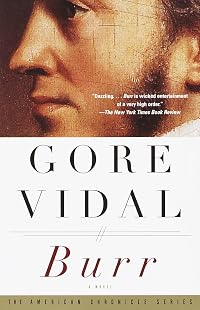
Here is an extraordinary portrait of one of the most complicated--and misunderstood--figures among the Founding Fathers. In 1804, while serving as vice president, Aaron Burr fought a duel with his political nemesis, Alexander Hamilton, and killed him. In 1807, he was arrested, tried, and acquitted of treason. In 1833, Burr is newly married, an aging statesman considered a monster by many. But he is determined to tell his own story, and he chooses to confide in a young New York City show more journalist named Charles Schermerhorn Schuyler. Together, they explore both Burr's past--and the continuing civic drama of their young nation.Burr is the first novel in Gore Vidal's Narratives of Empire series, which spans the history of the United States from the Revolution to post-World War II. With their broad canvas and sprawling cast of fictional and historical characters, these novels present a panorama of American politics and imperialism, as interpreted by one of our most incisive and ironic observers. show lessTags
Recommendations




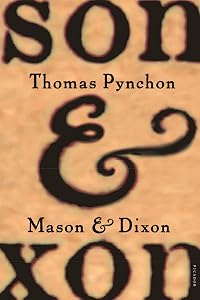
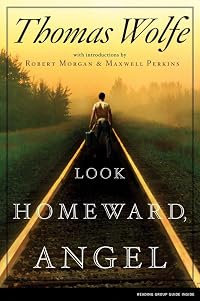










Member Recommendations
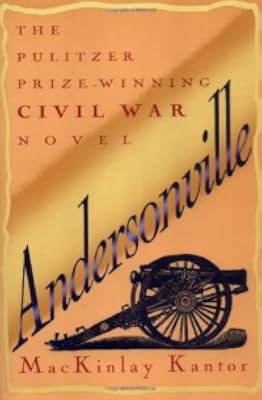
5hrdrive Similar premise.

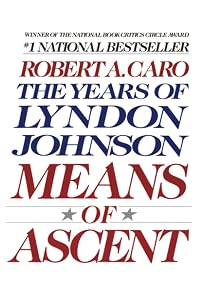
charlie68 A fictionalized portrayal of historical figures.

Myron by Gore Vidal
by John_Vaughan
Member Reviews
Gore Vidal's Burr: A Novel represents the best type of historical fiction. Vidal does not bind himself to historical fact except where it enhances the narrative, at times moving people through time or space to better his story, but using the dynamism of the history he describes to drive his tale. He even creates a fictional protagonist, Charles Schuyler (not of the Schuylers into whose family Alexander Hamilton married), in order to allow him access to the object of his focus. Though Vidal appears to attempt a rehabilitation of Aaron Burr's reputation, he describes him as "a monster, in short" (pg. 4). Vidal's descriptions of Burr return continuously to diabolic imagery. He writes, "Aaron Burr has made an arrangement with the devil. show more Every dark legend is true" (pg. 69). Vidal's Burr continually reclines near a fire, unable to stay warm even in summer. Vidal's protagonist writes of Washington City, "If this is not Hell, it will do. I have never been so hot. I can see why Colonel Burr wanted to be president - to revel in the stifling, damp heat of this depressing tropical swamp" (pg. 409). Even his desire to keep his word evokes Milton's Lucifer. Vidal writes, "In politics, as in life, one ought to do what one has promised to do. This has been my Quixotic code" (pg. 194). This foreshadows the concept of honor that historian Joanne B. Freeman later argued prevented Burr from dropping his campaign for the presidency when he tied with Jefferson in 1800. Despite these literary touches, Vidal delights in accurately describing individuals as they might have appeared to Burr as well as the locations in which they worked and lived. He even tells the story of Helen Jewett, who had faded from notoriety by the 1970s and would not experience a resurgence of popular interest until Patricia Cline Cohen's 1999 biography. Historians, both professional and casual, of the colonial and early Republic periods will find much to enjoy in this novel. show less
"Although Americans justify their self-interest in moral terms, their true interest is never itself moral. Yet, paradoxically, only Americans - a few, that is- ever try to be moral in politics."
-- Gore Vidal
Vidal takes full responsibility for his perjury. Okay he only admits to errors and anachronisms, but sides himself with Richard Nixon in the process. Burr is a wonderful tale, finding delight in skewering the reputations of the Founding Fathers and all the hypocrisy which didn't make its way into elementary school textbooks. Well, the ones I was exposed to during the late 70s. It was also written at the height of Watergate.
Unlike most historical fiction, Burr breathes. The sighs it emits are laced with bourbon. I loved this book, show more though the royal ear grew weary with too many notes. That remains my problem, not Vidal's.. show less
-- Gore Vidal
Vidal takes full responsibility for his perjury. Okay he only admits to errors and anachronisms, but sides himself with Richard Nixon in the process. Burr is a wonderful tale, finding delight in skewering the reputations of the Founding Fathers and all the hypocrisy which didn't make its way into elementary school textbooks. Well, the ones I was exposed to during the late 70s. It was also written at the height of Watergate.
Unlike most historical fiction, Burr breathes. The sighs it emits are laced with bourbon. I loved this book, show more though the royal ear grew weary with too many notes. That remains my problem, not Vidal's.. show less
A stunning novel, in which Vidal uses the cannily chosen Aaron Burr as a hatchet to take apart the founding fathers and our various myths about them and show how all their human frailties are embedded in the nation and its direction. Burr, and his Boswell, Charles Schuyler, are an impeccably drawn pair of unreliable narrators who take us down the river of the creation of the United States and show us nooks and crannies in it we never even suspected.
This does have a very 1970s feel when you read it nowadays, but that isn't necessarily a bad thing. We need a bit of refreshing iconoclasm from time to time.
Vidal is out to make us look a bit more critically at some of the sacred cows of US history, which he does by telling the main story through the rather Flashmanesque voice of the elderly Aaron Burr. This works well, but I was a bit less comfortable with the structural device of having Burr dictate his memoirs to the young law-clerk and would-be journalist Schuyler, so that we effectively alternate between Burr's voice and Schuyler's. This allows Vidal to give us a bit more perspective about what other people thought of Burr, and what New York was like in the 1830s, but it means that show more he has to manage a lot of transitions in and out of Burr's narrative, which can't help becoming rather repetitive. We get rather more than we would like of the dull story of Schuyler and his girl, and far too many throwaway jokes for the modern reader about pigs in the streets of Manhattan. I did feel that there's something to be said for Scott's approach of banishing the secondary narrator to the first and last chapters. Sadly, Vidal evidently shares Scott's conviction hat a book has to have bulk on the shelf if you want readers to take it seriously, so we do get quite a bit of padding and recycling along the way. Paper must have been cheap in the seventies.
Structural quibbles aside, Vidal does a very good job of guiding the reader through the complexities of American politics in the early days of the republic without a lot of intrusive explanation. And we do get to have quite a bit of fun on the way. So why not? show less
Vidal is out to make us look a bit more critically at some of the sacred cows of US history, which he does by telling the main story through the rather Flashmanesque voice of the elderly Aaron Burr. This works well, but I was a bit less comfortable with the structural device of having Burr dictate his memoirs to the young law-clerk and would-be journalist Schuyler, so that we effectively alternate between Burr's voice and Schuyler's. This allows Vidal to give us a bit more perspective about what other people thought of Burr, and what New York was like in the 1830s, but it means that show more he has to manage a lot of transitions in and out of Burr's narrative, which can't help becoming rather repetitive. We get rather more than we would like of the dull story of Schuyler and his girl, and far too many throwaway jokes for the modern reader about pigs in the streets of Manhattan. I did feel that there's something to be said for Scott's approach of banishing the secondary narrator to the first and last chapters. Sadly, Vidal evidently shares Scott's conviction hat a book has to have bulk on the shelf if you want readers to take it seriously, so we do get quite a bit of padding and recycling along the way. Paper must have been cheap in the seventies.
Structural quibbles aside, Vidal does a very good job of guiding the reader through the complexities of American politics in the early days of the republic without a lot of intrusive explanation. And we do get to have quite a bit of fun on the way. So why not? show less
https://nwhyte.livejournal.com/3122632.html
This turned out to be a surprisingly timely read. Gore Vidal tells the story of Aaron Burr through a young journalist, Charlie Schuyler (“not one of *the* Schuylers”), who downloads Burr’s version of his career in the months before his death in 1836. It’s a nice alternate take on the received version of America’s founding story (which has been reinforced by Hamilton), rather like his novel about Julian the Apostate (who has however had rather better historiography than Aaron Burr). The book is rather long, but there is a lot of story here, including also young Schuyler’s ultimately doomed relationship with a sex worker.
When this was published in 1973, it was seen as commentary on show more Watergate. I’m sure that Watergate was in Vidal’s mind, and I have seen contemporary reviews complaining that he portrays Washington and Jefferson as less than heroic. For me the most interesting nuance was Andrew Jackson, the president of the day in 1836, who had come to power as a revolutionary and failed to really deliver much more than patronage for his friends; Burr remembers him as a young and fairly mainstream political actor, who only later decided that it suited him to be anti-establishment.
Going back a bit, I was interested by the reflections on the Revolutionary War, particularly the story of the Arnold/Montgomery invasion of Canada and the general critique of Washington’s leadership. The Burr defensive account of the election of 1800 is of course revisionist. But there are some nicely done twists at the end which remind us that Burr, like everyone else, is an unreliable narrator.
I enjoyed this, and I would positively recommend it as an expansion of the Hamilton universe; not so much to readers who are not interested in early American politics. Also it should be said that Vidal does not give the women of Burr’s story much voice. show less
This turned out to be a surprisingly timely read. Gore Vidal tells the story of Aaron Burr through a young journalist, Charlie Schuyler (“not one of *the* Schuylers”), who downloads Burr’s version of his career in the months before his death in 1836. It’s a nice alternate take on the received version of America’s founding story (which has been reinforced by Hamilton), rather like his novel about Julian the Apostate (who has however had rather better historiography than Aaron Burr). The book is rather long, but there is a lot of story here, including also young Schuyler’s ultimately doomed relationship with a sex worker.
When this was published in 1973, it was seen as commentary on show more Watergate. I’m sure that Watergate was in Vidal’s mind, and I have seen contemporary reviews complaining that he portrays Washington and Jefferson as less than heroic. For me the most interesting nuance was Andrew Jackson, the president of the day in 1836, who had come to power as a revolutionary and failed to really deliver much more than patronage for his friends; Burr remembers him as a young and fairly mainstream political actor, who only later decided that it suited him to be anti-establishment.
Going back a bit, I was interested by the reflections on the Revolutionary War, particularly the story of the Arnold/Montgomery invasion of Canada and the general critique of Washington’s leadership. The Burr defensive account of the election of 1800 is of course revisionist. But there are some nicely done twists at the end which remind us that Burr, like everyone else, is an unreliable narrator.
I enjoyed this, and I would positively recommend it as an expansion of the Hamilton universe; not so much to readers who are not interested in early American politics. Also it should be said that Vidal does not give the women of Burr’s story much voice. show less
I read Burr about forty years ago, when I was about the same age as its callow narrator. Rereading was an interesting experience; this time I found Vidal/Burr's continual takedowns and mockery of every virtually every Revolutionary person and historical piety over the top. That said, I did become involved in the novel per se about halfway through, and you can't fault Vidal's research; there's much to be learned here. I'm sure the book would be a worthwhile corrective to anyone interested enough in the first thirty years of the American nation to have already familiarized themselves with the major figures and events.
When evaluating the possible accuracy of Vidal's portrayals of historical figures, you do have to keep in mind the author's show more prejudices and weaknesses. In Vidal's world, every human being, male or female, is engaged in a continual battle for power or prestige. No one has a drop of religious feeling; one might act from love, and one might act in accordance with one's own ideas of political good, but one never acts out of altruism. To apologize is to be weak and is never considered. To regret one's failure is understandable, but to regret one's actions is pathetic.
For all I know, this worldview may actually be a closer representation of the societal strata that Vidal is concerned with than is the worldview of many of his readers. But I suspect that even in the corridors of power, there is room for more ambiguity and more moments of kindness than Vidal would allow, so I read with this in mind. show less
When evaluating the possible accuracy of Vidal's portrayals of historical figures, you do have to keep in mind the author's show more prejudices and weaknesses. In Vidal's world, every human being, male or female, is engaged in a continual battle for power or prestige. No one has a drop of religious feeling; one might act from love, and one might act in accordance with one's own ideas of political good, but one never acts out of altruism. To apologize is to be weak and is never considered. To regret one's failure is understandable, but to regret one's actions is pathetic.
For all I know, this worldview may actually be a closer representation of the societal strata that Vidal is concerned with than is the worldview of many of his readers. But I suspect that even in the corridors of power, there is room for more ambiguity and more moments of kindness than Vidal would allow, so I read with this in mind. show less
This is my first Gore Vidal novel and I’m glad I finally got around to reading his work. This novel, as well as several others in a series (Lincoln, 1876 to name a couple) can best be described as historical fiction, somewhat disguised as biography. In selecting Burr as a subject, Vidal made an excellent choice, both from the standpoint of originality and due to the fact that Burr was a fascinating character.
Known primarily for his dual with bitter political rival Alexander Hamilton, many are not aware that Burr was a Revolutionary War hero and came within a hair’s breadth of becoming the third President, tying Thomas Jefferson in the Electoral College and throwing the election into the House of Representatives. Settling for the show more Vice-Presidency, Burr went West after his duel with Hamilton and sought to invade and conquer Mexico, leading to a politically motivated trial for treason in which he was exonerated by Supreme Court Chief Justice John Marshall. Quite a life.
Told from the standpoint of a fictional aide to Burr (Charles Schuyler), the story is set during the Andrew Jackson presidency, but reverts to revolutionary America through reference to Burr’s memoirs. The individuals who make an appearance (all the usual suspects- Washington, Jefferson, Hamilton, etc.) are presented as normal human beings, warts and all. This is refreshing, as the Founding Fathers are frequently placed on a pedestal, immune from criticism and the foibles of everyday life.
In reality, the period was one of intense factional conflict (why do you think Burr dueled Hamilton?), the presidential races between Adams/Jefferson, and Jackson/Adams being perhaps the most bitter in American history. As a result, Burr has few good things to say about Washington (who Burr portrays as a military incompetent) or Jefferson (who Burr asserts was mentally ill during his second term), as you would expect.
American history from the first half of the 19th century is somewhat neglected in favor of the Revolutionary and Civil War eras, but this time of the nation’s establishment and growth is truly a fascinating period, both with respect to historical events and fascinating characters. Burr was an excellent prism through which to examine both and Vidal does an outstanding job in that respect. show less
Known primarily for his dual with bitter political rival Alexander Hamilton, many are not aware that Burr was a Revolutionary War hero and came within a hair’s breadth of becoming the third President, tying Thomas Jefferson in the Electoral College and throwing the election into the House of Representatives. Settling for the show more Vice-Presidency, Burr went West after his duel with Hamilton and sought to invade and conquer Mexico, leading to a politically motivated trial for treason in which he was exonerated by Supreme Court Chief Justice John Marshall. Quite a life.
Told from the standpoint of a fictional aide to Burr (Charles Schuyler), the story is set during the Andrew Jackson presidency, but reverts to revolutionary America through reference to Burr’s memoirs. The individuals who make an appearance (all the usual suspects- Washington, Jefferson, Hamilton, etc.) are presented as normal human beings, warts and all. This is refreshing, as the Founding Fathers are frequently placed on a pedestal, immune from criticism and the foibles of everyday life.
In reality, the period was one of intense factional conflict (why do you think Burr dueled Hamilton?), the presidential races between Adams/Jefferson, and Jackson/Adams being perhaps the most bitter in American history. As a result, Burr has few good things to say about Washington (who Burr portrays as a military incompetent) or Jefferson (who Burr asserts was mentally ill during his second term), as you would expect.
American history from the first half of the 19th century is somewhat neglected in favor of the Revolutionary and Civil War eras, but this time of the nation’s establishment and growth is truly a fascinating period, both with respect to historical events and fascinating characters. Burr was an excellent prism through which to examine both and Vidal does an outstanding job in that respect. show less
Members
- Recently Added By
Published Reviews
ThingScore 100
Burr is about the Founding Father who has been airbrushed out of history. Aaron Burr very nearly became America's third president in 1800, when he narrowly lost to Thomas Jefferson. He ended up as Jefferson's Vice-President and, four years later, while still in office, he killed Alexander Hamilton in a duel, which killed his own political career.
History has painted Burr as a chancer and a show more rogue. Vidal takes Burr's side to show that he was much better than that: a chancer, for sure, but self-aware enough to know that's what he was, which makes him intensely likable. In this novel, the usual pantheon of American heroes – Washington, Jefferson, Hamilton – come across as various stripes of pompous hypocrite. Burr is the one you want to win. show less
History has painted Burr as a chancer and a show more rogue. Vidal takes Burr's side to show that he was much better than that: a chancer, for sure, but self-aware enough to know that's what he was, which makes him intensely likable. In this novel, the usual pantheon of American heroes – Washington, Jefferson, Hamilton – come across as various stripes of pompous hypocrite. Burr is the one you want to win. show less
added by SnootyBaronet
Lists

Best Historical Fiction
620 works; 262 members

Historical Fiction
889 works; 91 members

Best Political Fiction
92 works; 12 members

Great American Novels
158 works; 42 members
National Book Award Finalists - Fiction
377 works; 12 members

1970s
657 works; 23 members

Blue Pyramid 1,276 Best Books of All Time
1,248 works; 32 members

One Book, Many Authors
441 works; 40 members
LibraryThingers' 1001 Books You Must Read Before You Die
442 works; 29 members

Fiction Featuring Real People
81 works; 17 members

Five star books
1,767 works; 110 members

real people in fiction circumstances
74 works; 10 members

Publisher's Weekly Bestsellers - Part II - 1940 - 1979
355 works; 6 members

Historical Fiction Lovers
88 works; 4 members

Books Read in 2016
4,666 works; 197 members
discontinued
24 works; 4 members
Best Books of the 20th Century
193 works; 5 members

Favorite Books from the 1970s
28 works; 3 members

American Lit for Eng 11 Research Project
368 works; 6 members

Authors from the United States
245 works; 3 members

Swinging Seventies
255 works; 18 members

Mustich's 1000 Books to Read Before You Die: A Life Changing List
1,001 works; 20 members

The Torchlight List
95 works; 1 member
Author Information

169+ Works 31,323 Members
Gore Vidal was born Eugene Luther Gore Vidal Jr. on October 3, 1925 at the U.S. Military Academy at West Point, New York. He did not go to college but attended St. Albans School in Washington and graduated from Phillips Exeter Academy in New Hampshire in 1943. He enlisted in the Army, where he became first mate on a freight supply ship in the show more Aleutian Islands. His first novel, Williwaw, was published in 1946 when he was twenty-one years old and working as an associate editor at the publishing company E. P. Dutton. The City and the Pillar was about a handsome, athletic young Virginia man who gradually discovers that he is homosexual, which caused controversy in the publishing world. The New York Times refused to advertise the novel and gave a negative review of it and future novels. He had such trouble getting subsequent novels reviewed that he turned to writing mysteries under the pseudonym Edgar Box and then gave up novel-writing altogether for a time. Once he moved to Hollywood, he wrote television dramas, screenplays, and plays. His films included I Accuse, Suddenly Last Summer with Tennessee Williams, Is Paris Burning? with Francis Ford Coppola, and Ben-Hur. His most successful play was The Best Man, which he also adapted into a film. He started writing novels again in the 1960's including Julian, Washington, D.C., Myra Breckenridge, Burr, Myron, 1876, Lincoln, Hollywood, Live From Golgotha: The Gospel According to Gore Vidal, and The Golden Age. He also published two collections of essays entitled The Second American Revolution, which won the National Book Critics Circle Award for criticism in 1982 and United States: Essays 1952-1992. In 2009, he received the National Book Awards lifetime achievement award. He died from complications of pneumonia on July 31, 2012 at the age of 86. (Bowker Author Biography) show less
Awards and Honors
Awards
Distinctions
Series

Work Relationships
Common Knowledge
- Canonical title
- Burr
- Original publication date
- 1973
- People/Characters
- Aaron Burr; Thomas Jefferson; Charles Schuyler; Martin van Buren; Alexander Hamilton; George Washington (show all 10); Benedict Arnold; Peggy Shippen; Theodosia Burr; Helen Jewett
- Important places
- New York, New York, USA; Washington, D.C., USA; Philadelphia, Pennsylvania, USA
- Important events
- Burr-Hamilton Duel; American Revolution
- Dedication
- For my nephews Ivan, Hugh and Burr
- First words
- A Special Despatch to the New York Evening Post:
Shortly before midnight, July 1, 1833, Colonel Aaron Burr, aged seventy-seven, married Eliza Jumel, born Bowen fifty-eight years ago (more likely sixty-five but remem... (show all)ber: she is prone to litigation!). - Quotations
- We do not want the old to be sharper than we. It’s bad enough that they were there first, and got the best things.
Eventually all things are known. And few matter.
As a lawyer he was—is—meticulous. Yet he has a certain contempt for the whole business. “The law,” he likes to say, “is simply whatever is boldly asserted and plausibly maintained.”
Elizabeth was uncommonly handsome as a girl, if too square-jawed. I have been told that Hamilton used to discuss his infidelities with her. If he did, they must have had a good deal to talk about.
But the Colonel was not listening. The past is now more vivid for him than the present. He is, finally, old.
I was more pleased than not by the loose confederation of states that existed between 1783 and 1787. All in all, New York was agreeably governed by the Clinton faction. If certain of the other states were less well-governed, ... (show all)that was their affair; to be set right by them and not be a group of clever lawyers in Philadelphia. Yes, I was equivocal. A degree of anarchy is no bad thing.
The Colonel laughed suddenly, and recalled “the time Hamilton made an election speech to a group of mechanics. Unfortunately Hamilton always addressed his inferiors as if they were his inferiors. This is never charming, and... (show all) I fear the crowd made fun of him. Furious, exasperated, he shouted, ‘You are your own worst enemy!’ What would he think now when ‘the beast,’ as he used to call the generality, governs, or at least we flatter it into thinking that it governs.”
That season, by the way, was a splendid one for the ladies; or perhaps I should say for their admirers. The so-called Empire fashion had swept America and even the most respectable of maidens (and, alas, the most mature of ma... (show all)trons) wore high bodices two-thirds bare. It is a moot point which issue most concerned the republic in the summer of 1807: my alleged treason or the brazen and ubiquitous baring of breasts that called forth from every pulpit warnings of the wrath of Jehovah. The lascivious press was in an ecstasy: teats and treason—could any other combination be more popular? - Last words
- (Click to show. Warning: May contain spoilers.)But there was no wish that I could make that I have not already been granted by my father Aaron Burr.
- Canonical DDC/MDS
- 813.54
- Canonical LCC
- PZ3.V6668
Classifications
- Genres
- Fiction and Literature, General Fiction, Historical Fiction
- DDC/MDS
- 813.54 — Literature & rhetoric American literature in English American fiction in English 1900-1999 1945-1999
- LCC
- PZ3 .V6668 — Language and Literature Fiction and juvenile belles lettres Fiction and juvenile belles lettres Fiction in English
- BISAC
Statistics
- Members
- 2,596
- Popularity
- 7,342
- Reviews
- 60
- Rating
- (3.96)
- Languages
- 10 — Czech, English, French, German, Hungarian, Italian, Slovak, Spanish, Swedish, Portuguese (Portugal)
- Media
- Paper, Audiobook, Ebook
- ISBNs
- 32
- ASINs
- 26