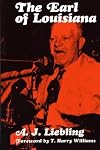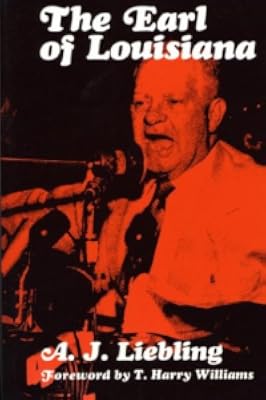
The Earl of Louisiana
by A. J. Liebling
On This Page
Description
"In the summer of 1959, A.J. Liebling, veteran writer for the New Yorker, came to Louisiana to cover a series of bizarre events that began with Governor Earl K. Long's commitment to a mental institution. Captivated by his subject, Liebling remained to write the fascinating yet tragic story of 'Uncle Earl's' final year in politics. First published in 1961, The Earl of Louisiana recreates a stormy era in Louisiana politics and captures the style and personality of one of the most colorful and show more paradoxical figures in the state's history. This updated edition of the book includes a foreword by T. Harry Williams, Pulitzer prize-winning author of Huey Long: A biography, and a new introduction by Pulitzer prize-winning critic Jonathan yardley that discusses Liebling's career and his most famous book from a twenty-first-century perspective." from back cover. show lessTags
Recommendations












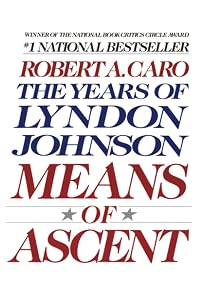

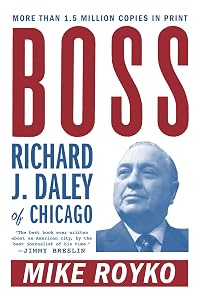


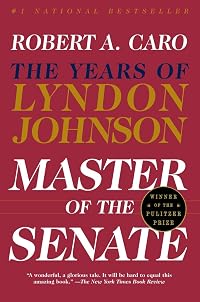





Member Recommendations

Member Reviews
Abbott Joseph Liebling’s 1961 book “The Earl of Louisiana” has been on my shelves for a long time. I bought it thinking it was about Huey Long and shelved it when I learned otherwise. After seeing the movie “Blaze” I had the opinion that younger brother Earl was a bit of a fool. If Rachel Shteir had not mentioned Liebling so many times in her book “Striptease: the untold history of the girlie show” I doubt I would have bothered to read it at all. I now have a new rule, if a book stays in print for over fifty years I need to read it.
This is not a biography of Earl Long, it is more a memoir of Liebling’s trip to Louisiana to report on the their governor's mental breakdown. What he found, Louisiana style politics, was so show more different from what he expected that he stayed on the story even when he had to do it from long distance, covering the British elections. Earl Long, did have a physical breakdown, he was exhausted fighting to stop a bill intended to purge Louisiana’s voting rolls of African Americans. Louisiana, the entire south, was having a resurgence in segregation politics after the Brown V Board decision. Long called the segregationists “grass eaters”, herd animals, and Liebling adopted the practice.
As interesting as it was to have a glimpse into Louisiana politics it was Liebling’s playful use of language that most impressed me. Discussing how every Southern physician seemed to have an opinion on Earl Long’s health and pointing out the partisan divide on the diagnoses Liebling wrote, “Even his own experts, who denied he was demented, said in explanation of his antislavery views that he was beset by arteriosclerosis, several small strokes, oscillatory blood pressure and an irreverent gleam in his eye.” To illustrate the confusing mix of conversations at a campaign office on the night of the election he wrote, “Carried away by the stream of idiom like a drunk on a subway train, I missed a lot of stations.” Liebling had an ear for language. He quoted Earl Long at a campaign stop after opponents started labeling him crazy, “Wouldn’t you rather have a tried and true man, half crazy and half intelligent, than some bladderskite?”
I could go on and on with quotes like that, in places I gave up on highlighting sentences and simply put brackets around entire pages. I remember reviewing another book that had been in print continuously for over fifty years, “How to Lie with Statistics”, this is that good and just as deserving of being read. show less
This is not a biography of Earl Long, it is more a memoir of Liebling’s trip to Louisiana to report on the their governor's mental breakdown. What he found, Louisiana style politics, was so show more different from what he expected that he stayed on the story even when he had to do it from long distance, covering the British elections. Earl Long, did have a physical breakdown, he was exhausted fighting to stop a bill intended to purge Louisiana’s voting rolls of African Americans. Louisiana, the entire south, was having a resurgence in segregation politics after the Brown V Board decision. Long called the segregationists “grass eaters”, herd animals, and Liebling adopted the practice.
As interesting as it was to have a glimpse into Louisiana politics it was Liebling’s playful use of language that most impressed me. Discussing how every Southern physician seemed to have an opinion on Earl Long’s health and pointing out the partisan divide on the diagnoses Liebling wrote, “Even his own experts, who denied he was demented, said in explanation of his antislavery views that he was beset by arteriosclerosis, several small strokes, oscillatory blood pressure and an irreverent gleam in his eye.” To illustrate the confusing mix of conversations at a campaign office on the night of the election he wrote, “Carried away by the stream of idiom like a drunk on a subway train, I missed a lot of stations.” Liebling had an ear for language. He quoted Earl Long at a campaign stop after opponents started labeling him crazy, “Wouldn’t you rather have a tried and true man, half crazy and half intelligent, than some bladderskite?”
I could go on and on with quotes like that, in places I gave up on highlighting sentences and simply put brackets around entire pages. I remember reviewing another book that had been in print continuously for over fifty years, “How to Lie with Statistics”, this is that good and just as deserving of being read. show less
The funniest biography of a political figure that I have ever read. Liebling looks upon the arcane doings of Louisiana politicians with the obvious glee of a sports writer covering a particularly hard-fought boxing match.
Ratings
Members
- Recently Added By
Author Information

34+ Works 2,443 Members
A. J. Liebling was an urbane and prolific journalist whose style, incorporating first-person narrative, street talk, and exuberant metaphor, became a model for the New Journalism of the 1960's and later. Although he came from a genteel New York family, he was fascinated by the irreverent underworld all his life and made it his special subject. show more After being expelled from Dartmouth College for refusing to attend chapel, Liebling graduated from Columbia University's Pulitzer School of Journalism in 1925 and then worked for various newspapers, including The New York Times, which fired him, and the New York World, before he found his metier at The New Yorker magazine in 1935. It was there that he developed his signature style and did his best work, writing about a wide range of subjects, from the city's characters to gastronomy to boxing to the London Blitz and the Normandy invasion. A born raconteur with a fertile imagination, Liebling carved out a territory between objective reporting and fiction, which so many other journalists have mined since. Yet he could also produce straight war reportage fine enough to merit receiving the Legion of Honor from a grateful France in 1952. Starting in 1945, Liebling wrote a widely admired column for The New Yorker called "The Wayward Pressman," in which he criticized American journalism's priorities and performance. This was probably the first such column in U.S. journalism. During the 1950s and 1960s, he also wrote book reviews for Esquire. Besides his massive newspaper and magazine output, Liebling wrote about 20 books. He was married three times, the last time to the writer Jean Stafford. (Bowker Author Biography) show less
Awards and Honors
Notable Lists
Work Relationships
Common Knowledge
- Canonical title
- The Earl of Louisiana
- Original publication date
- 1961
- People/Characters
- Earl Kemp Long
- Important places
- Louisiana, USA
Classifications
- Genres
- Nonfiction, History, General Nonfiction, Biography & Memoir, Politics and Government
- DDC/MDS
- 976.3 — History & geography History of North America South central United States Louisiana
- LCC
- F376 .L6 .L5 — Local History of the United States, Canada and Latin America United States local history Louisiana
- BISAC
Statistics
- Members
- 161
- Popularity
- 203,915
- Reviews
- 2
- Rating
- (4.32)
- Languages
- English
- Media
- Paper
- ISBNs
- 3
- ASINs
- 4