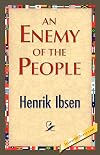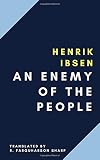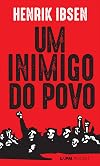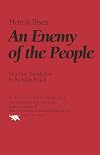
An Enemy of the People
by Henrik Ibsen
On This Page
Description
Norwegian playwright Henrik Ibsen wrote An Enemy of the People in 1882 as a response to the public outrage over his play Ghosts. Part comedy, part serious drama, the play looks at Dr. Thomas Stockmann's struggle to uphold the truth in the face of intolerance and willful ignorance, as his entire community turns against him. Branded an "Enemy of the People," Dr. Stockmann can only take solace in the idea that "the strongest man in the world is the man who stands most alone.".
Tags
Recommendations

















Member Reviews
It's an evergreen problem, and very good play; pitting a community's treasured resource against a public health emergency, reason against greed, the many against the few. However, there are clear anti-democratic and elitist lines in this play that it's surprising to see a modern audience skip right past in seeing modern parallels to climate and pollution issues. The play makes several direct appeals to the madness of democracy and the wisdom of the educated elite, that aren't challenged at all in the little post-play interview LA Theatre Works put together to draw parallels to modern issues.
ایبسن یکی از نمایشنامهنویسان مورد علاقهی منه... یه نویسنده که به نظر من مثل داستایفسکی از زمان خودشون خیلی جلوتر بودند... کسی که تو قرن 19 از فردیت زن حرف میزنه و شخصیت زنی قوی شده مثل «لورا»ی خانهی عروسک رو مینویسه. هر چند تفکرات ناتورالیستی داره و احتمالاً فکر میکرده خصلتهای آدمی نسل به نسل قابل وراثته (هم تو نمایشنامهی اشباح، هم توی موعظهی بلند دکتر استوکمان داخل همین نمایشنامه)، اما نمیشه بهش show more خرده گرفت چون شاید اگه ما هم همدورهی زولا و ایبسن بودیم، همین اعتقاد رو پیدا میکردیم.
دشمن مردم داستان یک مسیح مدرنه... داستانی که سیاست و به خصوص جامعه رو مضحکهی خودش میکنه و چیزهایی میگه که تو جهان و سیاست امروزی ما هم مصادیق عینی بسیاری داره... البته اینبار داستان مملو از یهوداست... دکتر استوکمان، به عنوان یک مسیح مدرن عمل میکنه و خواستار اصلاح جامعهشه اما جامعه خواستار اصلاح نیست. show less
دشمن مردم داستان یک مسیح مدرنه... داستانی که سیاست و به خصوص جامعه رو مضحکهی خودش میکنه و چیزهایی میگه که تو جهان و سیاست امروزی ما هم مصادیق عینی بسیاری داره... البته اینبار داستان مملو از یهوداست... دکتر استوکمان، به عنوان یک مسیح مدرن عمل میکنه و خواستار اصلاح جامعهشه اما جامعه خواستار اصلاح نیست. show less
A great work that I found incredibly pertinent for me as an American in late 2025, though it was written in 1882. I was unfamiliar with the film or with other adaptations like Miller’s, but came aware of the play through Wisdom of the Open Air by Reed/Rothenberg. Environmental crisis, political corruption, the good and ills of democracy and the ‘compact majority’ - it’s all here in a tight, compelling tale.
I love Ibsen for his dense dramatic works with dialogue that has both a surface meaning and a subtext and the subtlety with which "scandalous" material is handled. This play is much more overt. Written as a reaction to the negative reception of his brilliant Ghosts, An Enemy of the People depicts how a respectable man can be ruined by the powers-that-be. Even though the characters seem to be closer to caricatures, the first few acts are quite well done. I loved how the antagonist, Peter, manipulates the very people that swore to support the protagonist; it felt very real. And at first I admired how Thomas refused to back down. But in an effort underscore the "moral", Ibsen gives Thomas actions and speeches that are beyond reason and the show more play loses the previous tight focus. (And it is at this point in the play where recent productions have gotten creative and eschewed the script). So, unfortunately, I have to conclude that this is not one of Ibsen's best plays. show less
Not as profound a character study as Hedda Gabler, still an incisive critique of the greed and moral corruption of the bourgeois and the gullibility and shallowness of the working people who are easily misdirected from their best interests. Deeply resonant in the Age of Trump, thankfully subdued for now.
A truly magnificent play. The speeches by Dr. Stockmann in Act 4 were simply brilliant. I was worried in Act 5 that the play would turn into tragedy and Dr. Stockmann would sell his soul to the devil. Instead, his heroism increased tenfold. A beautifully written -- not predictable, unexpected and truly the stuff that plays should be made of.
Armiku i popullit”, një nga veprat më të njohura të Henrik Ibsen, u shkrua në vitin 1882 si kundërpërgjigje ndaj protestave publike kundër veprës së tij “Fantazma”, që në atë kohë u konsiderua si skandaloze. “Armiku i popullit” u adresohet tendencave irracionale të masës dhe natyrës korruptive të sistemit politik
Members
- Recently Added By
Lists

Favourite Books
1,820 works; 316 members

19th Century
190 works; 16 members

Plays I Like
230 works; 31 members

Books I've read
87 works; 2 members

Greatest Books, allegedly
484 works; 9 members

AP Lit
363 works; 6 members
New Lifetime Reading Plan by Fadiman and Major
225 works; 5 members

Recommended Reading : 600 Classics Reviewed, Editors of Salem Press, 2015
634 works; 6 members
My Play Collection
769 works; 3 members
School Made Us Read It
380 works; 197 members

Films
217 works; 1 member
Author Information

717+ Works 27,563 Members
Henrik Ibsen, poet and playwright was born in Skein, Norway, in 1828. His creative work spanned 50 years, from 1849-1899, and included 25 plays and numerous poems. During his middle, romantic period (1840-1875), Ibsen wrote two important dramatic poems, Brand and Peer Gynt, while the period from 1875-1899 saw the creation of 11 realistic plays show more with contemporary settings, the most famous of which are A Doll's House, Ghosts, Hedda Gabler, and The Wild Duck. Henrik Ibsen died in Christiania (now Oslo), Norway in 1906. (Bowker Author Biography) show less
Some Editions
Awards and Honors
Series
Belongs to Publisher Series
Work Relationships
Is contained in
Pillars of Society / A Doll House / Ghosts / An Enemy of the People / The Wild Duck / Rosmersholm / The Lady from the Sea / Hedda Gabler / The Master Builder / Little Eyolf / John Gabriel Borkman / When We Dead Awaken by Henrik Ibsen
The Master Builder / The Wild Duck / Peer Gynt / Hedda Gabler / Pillars of Society / A Doll's House / The League of Youth / Ghosts / Rosmersholm / John Gabriel Borkman / An Enemy of the People by Henrik Ibsen
Werke 2 : Das Fest auf Solhaug, Brand, Ein Volksfeind, Der Bund der Jugend, Gespenster by Henrik Ibsen
A Doll's House / Ghosts / Hedda Gabler / The Master Builder / An Enemy of the People / The Lady from the Sea by Henrik Ibsen
A Doll's House / Ghosts / An Enemy of the People / The Wild Duck / Hedda Gabler / The Master Builder by Henrik Ibsen
A Doll’s House / Ghosts / An Enemy of the People / The Wild Duck / Rosmersholm / The Lady from the Sea / Hedda Gabler / The Master Builder by Henrik Ibsen
Hedda Gabler / Ghosts / An Enemy of the People / A Doll's House / The League of Youth / The Wild Duck / The Master Builder by Henrik Ibsen
Little Eyolf / John Gabriel Borkman / When We Dead Awaken / An Enemy of the People / The Wild Duck by Henrik Ibsen
Nine Famous Plays, Including: Peer Gynt, A Doll's House, Ghosts, Hedda Gabler, An Enemy of the People by Henrik Ibsen
Hedda Gabler / Ghosts / An Enemy of the People / A Doll's House / The League of Youth / The Wild Duck / Peer Gynt by Henrik Ibsen
An Enemy of the People / The Wild Duck / Rosmersholm / Hedda Gabler / John Gabriel Borkman by Henrik Ibsen
An Enemy of the People / The Wild Duck / Rosmersholm / The Lady From The Sea / The Master Builder / When We Dead Awaken by Henrik Ibsen
I capolavori: I pilastri della società-Casa di bambola-Spettri-Un nemico del popolo-La casa dei Rosmer-La donna del mare-Hedda Gabler. Ediz. integrale by Henrik Ibsen
Peer Gynt | Pillars of Society | A Doll's House | Ghosts | An Enemy of the People | The Wild Duck | Hedda Gabler | John Gabriel Borkman by Henrik Ibsen
Nora - Ein Puppenheim. Gespenster. Ein Volksfeind. Die Wildente. Rosmersholm (= Sämtliche Werke Band IV) by Henrik Ibsen
A Doll's House / An Enemy of the People / Ghosts / Hedda Gabler / The Master Builder / Little Eyolf by Henrik Ibsen
Die Höhepunkte seines Schaffens. DAS KLASSISCHE WERK -PeerGynt; Die Stützen der Gesellschaft; Nora oder ein Puppenheim; Gespenster, Ein Volksfeind, Die Wildente, Hedda Gabler, Das Fest auf Solhaug by Henrik Ibsen
Peer Gynt / A Doll's House / Ghosts / An Enemy of the People / The Wild Duck / John Gabriel Borkman by Henrik Ibsen
Samlede verker Bind3 : Samfundets støtter ; Et dukkehjem ; Gengangere ; En folkefiende ; Vildanden ; Rosmersholm by Henrik Ibsen
Samfundets støtter. Et dukkehjem. Gengangere. En folkefiende. Vildanden. Rosmersholm. Fruen fra havet. Hedda Gabler. By by Henrik Ibsen
Has the adaptation
Is abridged in
Has as a study
Has as a supplement
Has as a student's study guide
Common Knowledge
- Canonical title
- An Enemy of the People
- Original title
- En folkefiende
- Alternate titles
- A Public Enemy
- Original publication date
- 1882
- People/Characters
- Dr. Thomas Stockmann; Mrs. Stockmann; Ejlif Stockmann; Morten Stockmann; Peter Stockmann; Morten Kill (show all 9); Captain Horster; Aslaksen; Petra Stockmann
- Important places
- Norway
- First words
- Mrs. Stockmann. You see, if you come home an hour late, Mr. Billing, you have to put up with cold meat.
- Last words
- (Click to show. Warning: May contain spoilers.)Petra (encouragingly, as she grasps her father's hands). Father!
- Original language
- Norwegian
Classifications
- Genre
- Fiction and Literature
- DDC/MDS
- 839.8226 — Literature & rhetoric German & related literatures Other Germanic literatures Danish and Norwegian literatures Norwegian literature Norwegian drama 1800–1899
- LCC
- PT8862 .A45 — Language and Literature German, Dutch and Scandinavian literatures Norwegian literature Individual authors or works 19th century Ibsen, Henrik
- BISAC
Statistics
- Members
- 923
- Popularity
- 29,129
- Reviews
- 21
- Rating
- (3.82)
- Languages
- 13 — Catalan, Danish, Dutch, English, French, German, Greek, Norwegian (Bokmål), Norwegian, Portuguese (Portugal), Russian, Spanish, Swedish
- Media
- Paper, Audiobook, Ebook
- ISBNs
- 135
- UPCs
- 2
- ASINs
- 30