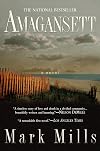
Amagansett
by Mark Mills
On This Page
Description
Snow Falling on Cedars meets The Shipping News in this enthralling literary crime novel set in post World War II Long Island. In the small town of Amagansett, perched on Long Island's windswept coast, generations have followed the same calling as their forefathers, fishing the dangerous Atlantic waters. Little has changed in the three centuries since white settlers drove the Montaukett Indians from the land. But for Conrad Labarde, a second-generation Basque immigrant recently returned from show more the Second World War, and his fellow fisherman Rollo Kemp, this stability is shattered when a beautiful New York socialite turns up dead in their nets. On the face of it, her death was accidental, but deputy police chief Tom Hollis -- an incomer from New York -- is convinced the truth lies in the intricate histories and family secrets of Amagansett's inhabitants. Meanwhile the enigmatic Labarde is pursuing his own investigation. In unravelling the mystery, this haunting and evocative novel captures a community whose way of life is disappearing, its demise hastened by war in Europe and the incursions of wealthy city dwellers in search of a playground. show lessTags
Recommendations















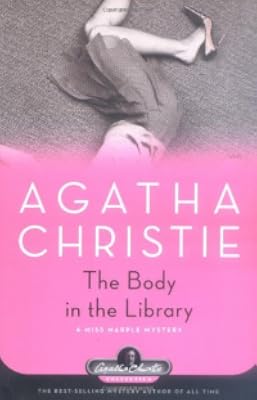
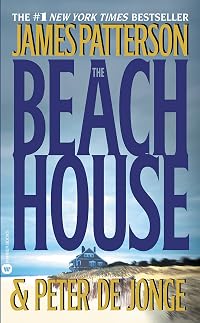
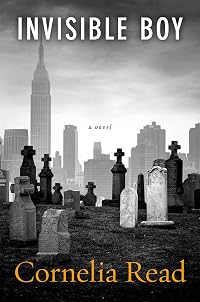
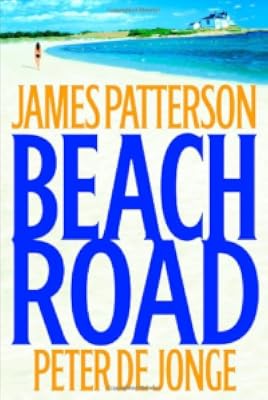












Member Recommendations

Member Reviews
On the south fork of Long Island, New York, the fishing village of Amagansett and its people live in the shadow of the ocean, depending on it to shape and season their lives. The blue collar fisherman literally live and die with the whims of the sea current and the cycles of their quarry. Among them, Conrad Labarde casts out a singular existence. Conrad, a Basque immagrant, returned to the chilled and salty village after serving in a World War II special forces unit, coming back to the place of his youth but also to a place of great pain for him. The other inhabitants of this region are the monied elite, the privileged class who float through life with an air of entitlement. The two live and work in the same place, carefully passing show more each other by, interacting only when necessary and then according to the delicately scripted roles of breeding.
When Conrad nets the body of a young woman from a wealthy Amagansett family, the opposing forces of the island are sure to collide. Though it is unclear why, Conrad trolls for clues as to the cause of the young woman's death, refusing to cooperate with the local deputy sheriff, Hollis. Hollis, a disgraced New York detective, sounds the depths of the victim's life, hoping to solve an unusual and exotic crime and, therein, find a buoy for his own failing life.
Mark Mill's languid opening was probably meant to echo the rhythm and patient perserverance of the professional fishing life. The first several pages of the mystery are filled with a long description of a day in the life of Conrad and his fishing partner, a day which ends with the discovery of the dead woman. While the detailed prose firmly afixes the reader in a place and a way of life, it is a poor way to set the hook for a mystery such as this, even one reeled in slowly. Once the hook is set, though, Mills does a fine job of flaying off the layers of his major characters and the major events of the story in a way that is neither hurried nor too deliberate. Mills only hasty sections are the ones bearing the violence of the story and the climax of the mystery. In both cases, he brushes over events superficially.
All in all, the strength of the main characters, including Amagansett itself, and their backstory made the book a good catch. Outside of some small criticisms, the novel was a good read and a solid first effort from a new writer, one whom warrants reading again. show less
When Conrad nets the body of a young woman from a wealthy Amagansett family, the opposing forces of the island are sure to collide. Though it is unclear why, Conrad trolls for clues as to the cause of the young woman's death, refusing to cooperate with the local deputy sheriff, Hollis. Hollis, a disgraced New York detective, sounds the depths of the victim's life, hoping to solve an unusual and exotic crime and, therein, find a buoy for his own failing life.
Mark Mill's languid opening was probably meant to echo the rhythm and patient perserverance of the professional fishing life. The first several pages of the mystery are filled with a long description of a day in the life of Conrad and his fishing partner, a day which ends with the discovery of the dead woman. While the detailed prose firmly afixes the reader in a place and a way of life, it is a poor way to set the hook for a mystery such as this, even one reeled in slowly. Once the hook is set, though, Mills does a fine job of flaying off the layers of his major characters and the major events of the story in a way that is neither hurried nor too deliberate. Mills only hasty sections are the ones bearing the violence of the story and the climax of the mystery. In both cases, he brushes over events superficially.
All in all, the strength of the main characters, including Amagansett itself, and their backstory made the book a good catch. Outside of some small criticisms, the novel was a good read and a solid first effort from a new writer, one whom warrants reading again. show less
It's the summer of 1947, and two Amagansett fishermen pull a woman's lifeless body from the ocean. What then unravels is the story of a handful of players in this small, Long Island town. Who was this woman? Was she murdered? If so, by whom?
This an enjoyable read with good pacing and interesting plot lines. The story is mostly told following two main characters: Conrad Labarde, the fisherman who pulls the body from the water; and Tom Hollis, the detective investigating the death. The investigation is interspersed with flashbacks from the past to develop the history of the major players. The author did a fine job researching the time period and setting. His descriptions were also beautifully detailed and you could actually feel yourself show more down by the ocean, breathing in the sea air.
However, my major complaint is that the book moved so slowly - it kind of unravels things at its own pace – and it lacked focus. It seems a number of peripheral characters and plotlines are introduced without really advancing the plot. Fortunately, these bits are still interesting enough to not bog down the story, but it almost seems as if the book was meant to be a longer, more involved tale that got whittled down without adequate thought.
That being said, I will certainly read further works by this author. show less
This an enjoyable read with good pacing and interesting plot lines. The story is mostly told following two main characters: Conrad Labarde, the fisherman who pulls the body from the water; and Tom Hollis, the detective investigating the death. The investigation is interspersed with flashbacks from the past to develop the history of the major players. The author did a fine job researching the time period and setting. His descriptions were also beautifully detailed and you could actually feel yourself show more down by the ocean, breathing in the sea air.
However, my major complaint is that the book moved so slowly - it kind of unravels things at its own pace – and it lacked focus. It seems a number of peripheral characters and plotlines are introduced without really advancing the plot. Fortunately, these bits are still interesting enough to not bog down the story, but it almost seems as if the book was meant to be a longer, more involved tale that got whittled down without adequate thought.
That being said, I will certainly read further works by this author. show less
Brilliant Debut Novel: 1947. East Hampton, NY. Conrad Labarde, a Basque immigrant fisherman, finds a dead woman in his seine. Another drowning? But Lillian Wallace swam every day. Her room wasn't slept in, but the toilet seat's up. And why was she wearing pearl earrings? She never wore them when she swam. What's wrong here?
So begins a mystery unique, deep and textured. Conrad and Tom Hollis, Deputy Chief, are unlikely allies, but they appear to be the only ones who think the tragic drowning of Lillian Wallace may have been something more than a sad but not uncommon summer's misadventure. And they're both loners; they don't know or trust each other. So why are they being pressured to leave the death alone? Hollis hates his job and show more wants to split. Conrad is just surviving. He's a war hero coping with trauma: family sadness, the loss of love, and post-trauma stress disorder. What do these men have in common? Only a sense that something's wrong with the Lillian Wallace picture, and it must be made right. The smell of money pollutes the air. Blue fins run.
Mark Mills has written a stellar novel: more than a mystery, literary, but going someplace. Just don't ask me to pronounce the title. Mills' descriptions of the deceptive seas, the fine points of commercial fishing, and the struggles of local fishing families living like crabs in the bolt-holes, pockets and hard-up interiors of the developing post-war East Hampton are full and textured. East Hampton is both a sea-based rural community, where life is hard and values are simple and well-learned, and a playground for the rich and powerful, where rules bend under the weight of money. How does the murder of Lillian Wallace span this expanding culture chasm?
You won't soon be lending "Amagansett."
show less
So begins a mystery unique, deep and textured. Conrad and Tom Hollis, Deputy Chief, are unlikely allies, but they appear to be the only ones who think the tragic drowning of Lillian Wallace may have been something more than a sad but not uncommon summer's misadventure. And they're both loners; they don't know or trust each other. So why are they being pressured to leave the death alone? Hollis hates his job and show more wants to split. Conrad is just surviving. He's a war hero coping with trauma: family sadness, the loss of love, and post-trauma stress disorder. What do these men have in common? Only a sense that something's wrong with the Lillian Wallace picture, and it must be made right. The smell of money pollutes the air. Blue fins run.
Mark Mills has written a stellar novel: more than a mystery, literary, but going someplace. Just don't ask me to pronounce the title. Mills' descriptions of the deceptive seas, the fine points of commercial fishing, and the struggles of local fishing families living like crabs in the bolt-holes, pockets and hard-up interiors of the developing post-war East Hampton are full and textured. East Hampton is both a sea-based rural community, where life is hard and values are simple and well-learned, and a playground for the rich and powerful, where rules bend under the weight of money. How does the murder of Lillian Wallace span this expanding culture chasm?
You won't soon be lending "Amagansett."
show less
One fine day in July 1947 Conrad Labarde a Basque fisherman and his partner Rollo are hauling in their net and the familiar twitch of the line is absent, and where are the pulls and tugs against the twine, or a flicker of a surface break? They both know that they have an inert load beneath the pewter skin of the sea and there is nothing else to do but bring it in. It is what they hoped it wasn’t, a dead woman still beautiful but sea washed and peaceful.
The setting for this mystery is the south fork of Long Island at Amagansett near East Hampton not far from the most eastern part of New York, Montauk Point. This is a community that has been settled over the centuries by fishermen of all kinds and all nationalities. From early days this show more was a perfect spot for capturing the right whale, which swam in these cold Atlantic waters, and yet it was a great breeding ground for smaller sea life like scallops and oysters. The gatherers of this kind of food were called Bonackers.
Montauk folk were initially the Montaukett Indians but Norwegians, Finns, Spaniards, Danes, Dutch and Portuguese joined them for the fishing. The Italians came for the building of the Long Island Railroad and the Irish just came. The whalers had distain for the Bonackers who harvested mainly small stuff such as clams, scallops and oysters, the early settlers looked down on all new comers and worst of all they were all considered invisible and of no account to the Gatsbian types who left the city to build summer homes in the Hamptons.
In this fairly isolated area it was not surprising that Conrad knew the dead woman and he wanted to know what happened to her. But this was the job of a relative newcomer to the area, Deputy Tom Hollis, originally from the city, to find out why this young woman was found in the water. The first thing he notices is that she was wearing jewelry and he realizes there is more to the story.
The victim of the drowning is soon revealed to be Lillian Wallace who belongs to a wealthy family who wants a quick resolution to the case because her brother is interested in running for a political office. The Chief of the East Hampton Police is a kowtower to people of influence and he too wants the death written off.
The power of this story comes from the depths of the characters and their backgrounds. Conrad Labarde served in a very elite unit during the war, and even in it he was unique and feared because he seemed to be guarded by angels. He knew better, but like most he never spoke of his wartime experiences, except for one time. He said that war tears at the heart of every man and at the sense of who he is.
‘ You could be brave one minute, a coward the next, selfless then cruel, compassionate and heartless within moments of each other. You spent a lifetime forging a view of what made you tick, what marked you out from other men. Then war came along and ripped that construct limb from limb. It seized you by the neck, pressed your face to the mirror and showed you that you weren’t one thing or another, but all things at the same time. The only question was: which bit of you would show up next? That’s what F**ed you up. The not knowing.’
Tom Hollis had his life torn apart in a different way but he learned many of the same life lessons. He knew that it had to be something Lillian had experienced that led to her death.
Eastern Long Island in 1947 is distant time and place but Mark Mills has no problem capturing the essence of the era as well as the location. This book brought back memories of my own of visiting Montauk Point with friends in the early ‘60s and watching the breakers of the Atlantic crash on the shore as we looked out from what seemed like land’s end.
He also used the language of the sea beautifully and it was foreign to me as he spoke of longshore sets turning and right whales bound east’rd inside the bar. I loved it.
I also took home from this book that this area once belonged to the Montaukett Indians and moneyed developers wanted to make a northern Miami Beach in the area, setting aside agreement with the native people. Judges declared the Montauketts extinct even while they sat in their courtrooms in full regalia. A hurricane in 1938 stopped the plans for a while but money will always talk and it will be heard. show less
The setting for this mystery is the south fork of Long Island at Amagansett near East Hampton not far from the most eastern part of New York, Montauk Point. This is a community that has been settled over the centuries by fishermen of all kinds and all nationalities. From early days this show more was a perfect spot for capturing the right whale, which swam in these cold Atlantic waters, and yet it was a great breeding ground for smaller sea life like scallops and oysters. The gatherers of this kind of food were called Bonackers.
Montauk folk were initially the Montaukett Indians but Norwegians, Finns, Spaniards, Danes, Dutch and Portuguese joined them for the fishing. The Italians came for the building of the Long Island Railroad and the Irish just came. The whalers had distain for the Bonackers who harvested mainly small stuff such as clams, scallops and oysters, the early settlers looked down on all new comers and worst of all they were all considered invisible and of no account to the Gatsbian types who left the city to build summer homes in the Hamptons.
In this fairly isolated area it was not surprising that Conrad knew the dead woman and he wanted to know what happened to her. But this was the job of a relative newcomer to the area, Deputy Tom Hollis, originally from the city, to find out why this young woman was found in the water. The first thing he notices is that she was wearing jewelry and he realizes there is more to the story.
The victim of the drowning is soon revealed to be Lillian Wallace who belongs to a wealthy family who wants a quick resolution to the case because her brother is interested in running for a political office. The Chief of the East Hampton Police is a kowtower to people of influence and he too wants the death written off.
The power of this story comes from the depths of the characters and their backgrounds. Conrad Labarde served in a very elite unit during the war, and even in it he was unique and feared because he seemed to be guarded by angels. He knew better, but like most he never spoke of his wartime experiences, except for one time. He said that war tears at the heart of every man and at the sense of who he is.
‘ You could be brave one minute, a coward the next, selfless then cruel, compassionate and heartless within moments of each other. You spent a lifetime forging a view of what made you tick, what marked you out from other men. Then war came along and ripped that construct limb from limb. It seized you by the neck, pressed your face to the mirror and showed you that you weren’t one thing or another, but all things at the same time. The only question was: which bit of you would show up next? That’s what F**ed you up. The not knowing.’
Tom Hollis had his life torn apart in a different way but he learned many of the same life lessons. He knew that it had to be something Lillian had experienced that led to her death.
Eastern Long Island in 1947 is distant time and place but Mark Mills has no problem capturing the essence of the era as well as the location. This book brought back memories of my own of visiting Montauk Point with friends in the early ‘60s and watching the breakers of the Atlantic crash on the shore as we looked out from what seemed like land’s end.
He also used the language of the sea beautifully and it was foreign to me as he spoke of longshore sets turning and right whales bound east’rd inside the bar. I loved it.
I also took home from this book that this area once belonged to the Montaukett Indians and moneyed developers wanted to make a northern Miami Beach in the area, setting aside agreement with the native people. Judges declared the Montauketts extinct even while they sat in their courtrooms in full regalia. A hurricane in 1938 stopped the plans for a while but money will always talk and it will be heard. show less
A young woman's body is found in a fishing net off the Long Island coast. Everyone believes it was a tragic accident, but the Deputy Chief of Police and the fisherman who discovered her have their suspicions from the outset, so each pursues their own investigation into her death.
This was a real slow-burner with lots of background information to each of the characters and local colour (with obscure fishing terminology), so much in fact that the plot hardly progressed at all. When you come across the old "Was it an accident or murder?" question in a novel, there is usually only one answer to it, and it proved true here too. In fact, after a certain point the sequence of events was easily predictable, and the only reason this book didn't show more get a lower rating was because the author delivered a well-written snapshot of life in a fishing community after the Second World War. show less
This was a real slow-burner with lots of background information to each of the characters and local colour (with obscure fishing terminology), so much in fact that the plot hardly progressed at all. When you come across the old "Was it an accident or murder?" question in a novel, there is usually only one answer to it, and it proved true here too. In fact, after a certain point the sequence of events was easily predictable, and the only reason this book didn't show more get a lower rating was because the author delivered a well-written snapshot of life in a fishing community after the Second World War. show less
Actually preferred this to Savage Garden, maybe it was the setting by the sea. The town and its inhabitants seemed very realistic and in some ways familiar. The body of a rich girl is picked up by 2 fishermen, but death by accidental drowning seems to be too easy a solution. An old American town with some of its original families is a difficult place to break into, as the newcomers see. The wealthy come here for sport, the fishermen try to survive and a cop comes to escape his past.
Good read for the train, kept my interest.
Good read for the train, kept my interest.
In "Amagansett" Mark Mills creates a vivid look into the southern coast of Long Island, mid-20th century. This story places you squarely in this historical scene, and builds a very effective mystery with a terrific climax. Not to be missed.
for a fuller treatment, see http://bassoprofundo1.blogspot.com/2010/07/amagansett-by-mark-mills.html
for a fuller treatment, see http://bassoprofundo1.blogspot.com/2010/07/amagansett-by-mark-mills.html
Members
- Recently Added By
Lists

Best Beach Reads
99 works; 61 members
Author Information

9 Works 3,163 Members
Awards and Honors
Common Knowledge
- Canonical title*
- Amagansett
- Original title
- Amagansett
- Alternate titles
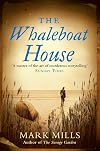
- The Whaleboat House
- Original publication date
- 2004
- People/Characters
- Conrad Labarde; Tom Hollis
- Important places
- Amagansett, New York, USA
- Epigraph
- I stand as on some mighty eagle's beak, Eastward the sea absorbing, viewing, (nothing but sea and sky,) The tossing waves, the foam, the ships in the distance, The wild unrest, the snowy, curling caps - that inbound urge and ... (show all)urge of waves, Seeking the shores forever. -Walt Whitman, "From Montauk Point"
- Dedication
- For Caroline, Gus, and Rosie And to the memory of John N. Cole (1923-2003)
- First words
- Conrad knew it was a body the moment he started hauling on the net.
- Last words
- (Click to show. Warning: May contain spoilers.)The oars bit, the dory sprang forward, rising steeply, its high, sharp bow splitting the face of the capping sea, carving a passage through.
- Blurbers
- DeMille, Nelson; Boyd, William
- Original language
- English US
*Some information comes from Common Knowledge in other languages. Click "Edit" for more information.
Classifications
Statistics
- Members
- 847
- Popularity
- 32,526
- Reviews
- 27
- Rating
- (3.57)
- Languages
- 9 — Dutch, English, Finnish, French, German, Italian, Norwegian (Bokmål), Portuguese, Swedish
- Media
- Paper, Audiobook, Ebook
- ISBNs
- 29
- ASINs
- 8