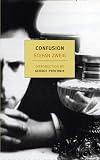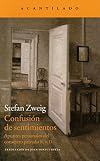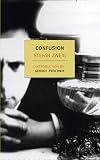
Confusion: The Private Papers of Privy Councillor R. von D.
by Stefan Zweig
On This Page
Description
An NYRB Classics Original Stefan Zweig was particularly drawn to the novella, and" Confusion," a rigorous and yet transporting dramatization of the conflict between the heart and the mind, is among his supreme achievements in the form. A young man who is rapidly going to the dogs in Berlin is packed off by his father to a university in a sleepy provincial town. There a brilliant lecture awakens in him a wild passion for learning--as well as a peculiarly intense fascination with the graying show more professor who gave the talk. The student grows close to the professor, be-coming a regular visitor to the apartment he shares with his much younger wife. He takes it upon himself to urge his teacher to finish the great work of scholarship that he has been laboring at for years and even offers to help him in any way he can. The professor welcomes the young man's attentions, at least on some days. On others, he rages without apparent reason or turns away from his disciple with cold scorn. The young man is baffled, wounded. He cannot understand. But the wife understands. She understands perfectly. And one way or another she will help him to understand too. show lessTags
Recommendations










Member Reviews
I picked up the novella known to me as [La confusion des sentiments] yesterday on audio, which I'd gotten from the library in the French translation read by an excellent narrator, Daniel Mesguich, a French-Algerian actor and director in theater and opera. I ended up doing lots of things around the house I'd put off for weeks and months just so I could listen to the whole thing in one 'sitting' so to speak. There's something about Zweig's writing I find deeply satisfying. He seems to go to the centre of human feeling and look at what moves us in a manner both unflinching, and also very gentle, perhaps because of all the attention to the finer movements of the heart he delves on. I had started this audiobook some months back and couldn't show more concentrate and so decided to put it off to a time when I felt more receptive to it, and I'm glad I did. It's a story told in the first person by a beautiful and naive young man of nineteen who initially has little or no interest in literature and studying, who on his first day at a new university meets a professor whose passionate delivery about Shakespeare and the Elizabethans is so mesmerizing that he becomes instantly enamoured of both the subject and the professor, both of which he decides to dedicate himself to heart and soul. Pure poetry and complex and satisfying character studies. show less
‘Confusión de sentimientos’ es una novela breve de iniciación, en la que el protagonista y narrador, un joven estudiante universitario, nos relata su epifanía cuando descubrió una asignatura de literatura y, sobre todo, al profesor que la impartía, uno de esos profesores que dejan una profunda huella. Este momento fue el más importante en la vida del protagonista, que sin embargo pasó desapercibido para sus biógrafos. La novela trata la relación del estudiante con este particular profesor, a la vez que diserta sucintamente sobre Shakespeare y los poetas isabelinos.
El estilo de Stefan Zweig es brillante, elegante y preciso, y consigue subyugar al lector haciéndole partícipe de lo que está sucediendo en la historia. show more Destaca, como es habitual en el escritor vienés, la profundidad psicológica a la hora de caracterizar personajes, de manera que con un sutil matiz, es capaz de iluminar el interior de un personaje. No es su obra más conocida, pero se trata de una pequeña joya. show less
El estilo de Stefan Zweig es brillante, elegante y preciso, y consigue subyugar al lector haciéndole partícipe de lo que está sucediendo en la historia. show more Destaca, como es habitual en el escritor vienés, la profundidad psicológica a la hora de caracterizar personajes, de manera que con un sutil matiz, es capaz de iluminar el interior de un personaje. No es su obra más conocida, pero se trata de una pequeña joya. show less
A particularly fitting title for my life these days, but that's a whole other story...
As for this story, I enjoyed the refined, poetic voice (sometimes to an almost absurd extreme, but fitting for the "old man putting himself into his younger self to tell a story of the loss of innocence" motif) and the exploration of the dark desires and twisted circumstances that lie just below the surface of lives we at first idealize.
I started this just before seeing Wes Anderson's "The Grand Budapest Hotel." I had no idea that he was inspired by Stefan Zweig (swear to God). The connection served to make the film less quirky in retrospect (which was a good thing) and allowed me to see glimpses of humor even in Zweig's brooding.
Zweig seems to have show more written many bite-sized novellas, which appeals to me these days as I have to steal moments for reading fiction. I will most definitely have another taste. (New York Review of Books e-book editions are available through the library here. Nice.) show less
As for this story, I enjoyed the refined, poetic voice (sometimes to an almost absurd extreme, but fitting for the "old man putting himself into his younger self to tell a story of the loss of innocence" motif) and the exploration of the dark desires and twisted circumstances that lie just below the surface of lives we at first idealize.
I started this just before seeing Wes Anderson's "The Grand Budapest Hotel." I had no idea that he was inspired by Stefan Zweig (swear to God). The connection served to make the film less quirky in retrospect (which was a good thing) and allowed me to see glimpses of humor even in Zweig's brooding.
Zweig seems to have show more written many bite-sized novellas, which appeals to me these days as I have to steal moments for reading fiction. I will most definitely have another taste. (New York Review of Books e-book editions are available through the library here. Nice.) show less
In the past couple of decades, Austrian writer Stefan Zweig (1881-1942) has gained a new-found readership in the English-speaking world. This is largely thanks to the impassioned advocacy of a handful of independent publishing houses. Foremost amongst these is Pushkin Press, which has published most of Zweig's work in new translations, the majority of them by award-winning translator Anthea Bell.
Zweig enjoyed great popularity during his lifetime and this led some critics to dismiss his works as facile and superficial. His novella Confusion should put such criticism to rest. The premise of the work is admittedly simple - a Privy Councillor who has dedicated his life to academia recalls the aging professor who, in his student days, show more kindled in him a love for learning. The (then) student’s instant and obsessive admiration for his teacher led him to take up lodgings in the same building where the professor lived with his young wife, and to assume the role of amanuensis/disciple to the older man. The novella effectively projects and dissects the “confusion of feelings” which this awkward triangular relationship gives rise to. Zweig’s interest in psychology, especially of the Freudian stamp, is evident in this novel’s insightful exploration of the mind-set of its characters and in the suppressed eroticism implied by words said and unsaid.
I have elsewhere commented on my impression of Zweig as a “nostalgic” adrift in a rapidly changing world ( https://www.goodreads.com/review/show/1673924203 ) This 1927 novella is, however, very much of its time – not only in its psychological concerns, but also in its head-on approach to (what must then have been) a taboo subject. If there is a harkening back to the 19th Century, it is in its rather overblown, melodramatic language – this, however, lends authenticity to the voice of the narrator who is, after all, an academic who has devoted his life to the study of past literature.
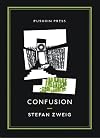
This paperback edition of Confusion (in Anthea Bell’s brilliant translation) forms part of the attractively presented (and temptingly collectible) Pushkin Collection series. show less
Zweig enjoyed great popularity during his lifetime and this led some critics to dismiss his works as facile and superficial. His novella Confusion should put such criticism to rest. The premise of the work is admittedly simple - a Privy Councillor who has dedicated his life to academia recalls the aging professor who, in his student days, show more kindled in him a love for learning. The (then) student’s instant and obsessive admiration for his teacher led him to take up lodgings in the same building where the professor lived with his young wife, and to assume the role of amanuensis/disciple to the older man. The novella effectively projects and dissects the “confusion of feelings” which this awkward triangular relationship gives rise to. Zweig’s interest in psychology, especially of the Freudian stamp, is evident in this novel’s insightful exploration of the mind-set of its characters and in the suppressed eroticism implied by words said and unsaid.
I have elsewhere commented on my impression of Zweig as a “nostalgic” adrift in a rapidly changing world ( https://www.goodreads.com/review/show/1673924203 ) This 1927 novella is, however, very much of its time – not only in its psychological concerns, but also in its head-on approach to (what must then have been) a taboo subject. If there is a harkening back to the 19th Century, it is in its rather overblown, melodramatic language – this, however, lends authenticity to the voice of the narrator who is, after all, an academic who has devoted his life to the study of past literature.
This paperback edition of Confusion (in Anthea Bell’s brilliant translation) forms part of the attractively presented (and temptingly collectible) Pushkin Collection series. show less
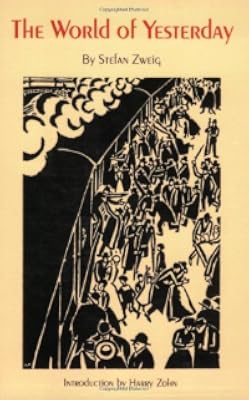
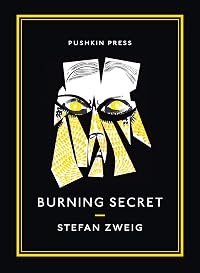
Stefan Zweig's depiction of sexuality is really interesting. It was obvious (at least to me) from [b:Confusion|41088474|Confusion|Stefan Zweig|https://i.gr-assets.com/images/S/compressed.photo.goodreads.com/books/1533901601l/41088474._SX50_.jpg|1383854]'s blurb that the mystery would be homoerotic desire and the 'secret' of [b:Burning Secret|4455573|Burning Secret|Stefan Zweig|https://i.gr-assets.com/images/S/compressed.photo.goodreads.com/books/1328696629l/4455573._SY75_.jpg|21479495] is also sexual desire. In both novellas, the protagonist knows something is going on but doesn't understand what it is. In [b:Burning Secret|4455573|Burning Secret|Stefan show more Zweig|https://i.gr-assets.com/images/S/compressed.photo.goodreads.com/books/1328696629l/4455573._SY75_.jpg|21479495] this is reasonable as it is told from the point of view of a sheltered twelve year old. [b:Confusion|41088474|Confusion|Stefan Zweig|https://i.gr-assets.com/images/S/compressed.photo.goodreads.com/books/1533901601l/41088474._SX50_.jpg|1383854], by contrast, is narrated by a professor named Roland looking back on his student years. Although student Roland slept with many women during his first term of university, he apparently didn't read much from the ancient Greeks. Thus he is confused by the behaviour of his academic mentor, who has fallen in love with him. I think both these novellas are further illuminated by the chapter on sexuality in Zweig's memoir/historical reflection [b:The World of Yesterday|629429|The World of Yesterday|Stefan Zweig|https://i.gr-assets.com/images/S/compressed.photo.goodreads.com/books/1347696322l/629429._SY75_.jpg|615762]. He bitterly criticises the repression and hypocrisy around sex that prevailed in Austrian society in his youth. In his fiction, Zweig challenges this by taking a relatively frank approach to sexuality and showing the consequences of secrecy and shame about it.
Nonetheless, [b:Confusion|41088474|Confusion|Stefan Zweig|https://i.gr-assets.com/images/S/compressed.photo.goodreads.com/books/1533901601l/41088474._SX50_.jpg|1383854] is not a happy gay romance by any stretch of the imagination, but an intense examination of repression and secret longing.Roland's desires are left carefully ambiguous, while his mentor's are made explicit - [b:Confusion|41088474|Confusion|Stefan Zweig|https://i.gr-assets.com/images/S/compressed.photo.goodreads.com/books/1533901601l/41088474._SX50_.jpg|1383854] included more description of underground gay culture in Berlin than I expected. In this way Zweig treads a careful line, writing sympathetically while neither condemning nor endorsing homosexuality. He is a skilful enough writer to manage this with great elegance and [b:Confusion|41088474|Confusion|Stefan Zweig|https://i.gr-assets.com/images/S/compressed.photo.goodreads.com/books/1533901601l/41088474._SX50_.jpg|1383854] is as beautifully written as all his fiction. I particularly liked this metaphor:
[b:Confusion|41088474|Confusion|Stefan Zweig|https://i.gr-assets.com/images/S/compressed.photo.goodreads.com/books/1533901601l/41088474._SX50_.jpg|1383854] is full of sensual imagery like this, which increases the emotional intensity of the narrative. It's a powerful depiction of longing and unacknowledged tension. show less
Nonetheless, [b:Confusion|41088474|Confusion|Stefan Zweig|https://i.gr-assets.com/images/S/compressed.photo.goodreads.com/books/1533901601l/41088474._SX50_.jpg|1383854] is not a happy gay romance by any stretch of the imagination, but an intense examination of repression and secret longing.
I had sensed the secret quite close, its hot breath already on my face, and now it had retreated again, but its shadow, its silent, opaque shadow still murmured in the air, I felt it as a dangerous presence in the house, stalking on quiet paws like a cat, always there, leaping back and forth, always touching and confusing me with its electrically charged fur, warm yet ghostly.
[b:Confusion|41088474|Confusion|Stefan Zweig|https://i.gr-assets.com/images/S/compressed.photo.goodreads.com/books/1533901601l/41088474._SX50_.jpg|1383854] is full of sensual imagery like this, which increases the emotional intensity of the narrative. It's a powerful depiction of longing and unacknowledged tension. show less
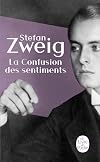
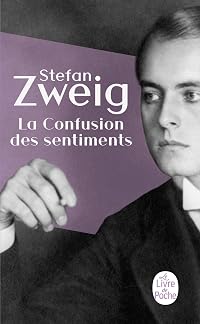
Stefan Zweig : La confusion des sentiments
Translated title: Confusion of Feelings or Confusion: The Private Papers of Privy Councillor R. von D.
Zweig is just one of those authors where I find it nearly impossible not to give him a full 5 stars everytime I read one of his works. He just has an uncanny ability to pull a reader in and toy with their emotions.
This novella was particularly uncomfortable to read. It speaks of a 19 year old student who has been newly reformed by the inspiration he has gained thanks to his professor. He becomes utterly fascinated with his professor and does all he can to learn from him and learn about him. This idolatry leads, as the title suggests, to a confusion of feelings, and we are forced to continue to show more see if the protagonist succumbs to what is being hinted at us.
As I mentioned before, the book is almost uncomfortable to read. Not due to its subject matter but due to the way the subject is presented. You can feel the tension of the characters, the oppression that comes from an intellectual mind and the uncomfortable passion the student has for his professor. Truly stunning.
I would have to rank this one at the top of Zweig's works. show less
Translated title: Confusion of Feelings or Confusion: The Private Papers of Privy Councillor R. von D.
Zweig is just one of those authors where I find it nearly impossible not to give him a full 5 stars everytime I read one of his works. He just has an uncanny ability to pull a reader in and toy with their emotions.
This novella was particularly uncomfortable to read. It speaks of a 19 year old student who has been newly reformed by the inspiration he has gained thanks to his professor. He becomes utterly fascinated with his professor and does all he can to learn from him and learn about him. This idolatry leads, as the title suggests, to a confusion of feelings, and we are forced to continue to show more see if the protagonist succumbs to what is being hinted at us.
As I mentioned before, the book is almost uncomfortable to read. Not due to its subject matter but due to the way the subject is presented. You can feel the tension of the characters, the oppression that comes from an intellectual mind and the uncomfortable passion the student has for his professor. Truly stunning.
I would have to rank this one at the top of Zweig's works. show less
This is another fantastic Zweig. A respected, successful professor looks back on the relationship that both made him and scarred him. He recalls his youth, first as a dissipated young man, then as a dedicated student who revered his literature professor, a moody but passionate man with a disapproving, changeable wife. The book is a highly addictive read and as usual, Zweig has excellent, intense depictions of varying psychological states. The central secret will probably be easy for modern readers to guess but it is still a powerful story.
The narrator, Roland, first relates his hedonistic days as a student at a large university in Berlin. After being discovered by his father, he shamefacedly transfers to a smaller school in a provincial show more town. Roland was never a very dedicated student. However, when he walks in on his English professor giving a fiery, passionate lecture, he is swept away and delves into the material, transforming into a model student. The professor comes to act as a mentor to him and Roland spends more and more time at his professor’s apartment. He is also introduced to the professor’s wife, a cool and self-effacing woman. Strangely, when Roland meets her in public, she is cheerful and gregarious, seemingly a different person. When Roland decides to help his professor complete his unfinished magnum opus, the fragile relations between the three of them come crashing down.
The literal translation of the original title is something like “Emotional Maelstrom” and this could fit almost any of Zwieg’s novels. Zweig does an amazingly good job of conveying the intensity of the characters’ feelings even when he does some telling instead of showing. However, the English title, Confusion, is also apt – the narrator is frequently uncertain about the thoughts and intentions of the professor and his wife. All the characters have two versions of their selves that are seen throughout the book and there are a number of scenes that have someone “catching” another character in a different mode. Roland’s father walks in on him with a girl, a moment of shame and discovery as well as the start of the actual plot. The narrator switches between thoughtless hedonist and dedicated student but remembering people observing him as the former is a source of embarrassment. The professor also has a double life. Roland catches him as an enthusiastic molder of minds and is inspired. Later, though, he reverts back to an old and tired man going through the motions of teaching. As they get closer, the professor is alternately a kind mentor or cold and insulting. His wife is caught in public by Roland in another confusion scene. This duality clearly leads up to the denouement and there is a related motif of observation and voyeurism. The frequent idea of someone watching becomes oppressive and the climactic scene takes place in the dark. In addition, the whole story is Roland’s memory of the past and it becomes obvious that he has preserved the confusing doubling of his youth – a point made clear in the last sentences. show less
The narrator, Roland, first relates his hedonistic days as a student at a large university in Berlin. After being discovered by his father, he shamefacedly transfers to a smaller school in a provincial show more town. Roland was never a very dedicated student. However, when he walks in on his English professor giving a fiery, passionate lecture, he is swept away and delves into the material, transforming into a model student. The professor comes to act as a mentor to him and Roland spends more and more time at his professor’s apartment. He is also introduced to the professor’s wife, a cool and self-effacing woman. Strangely, when Roland meets her in public, she is cheerful and gregarious, seemingly a different person. When Roland decides to help his professor complete his unfinished magnum opus, the fragile relations between the three of them come crashing down.
The literal translation of the original title is something like “Emotional Maelstrom” and this could fit almost any of Zwieg’s novels. Zweig does an amazingly good job of conveying the intensity of the characters’ feelings even when he does some telling instead of showing. However, the English title, Confusion, is also apt – the narrator is frequently uncertain about the thoughts and intentions of the professor and his wife. All the characters have two versions of their selves that are seen throughout the book and there are a number of scenes that have someone “catching” another character in a different mode. Roland’s father walks in on him with a girl, a moment of shame and discovery as well as the start of the actual plot. The narrator switches between thoughtless hedonist and dedicated student but remembering people observing him as the former is a source of embarrassment. The professor also has a double life. Roland catches him as an enthusiastic molder of minds and is inspired. Later, though, he reverts back to an old and tired man going through the motions of teaching. As they get closer, the professor is alternately a kind mentor or cold and insulting. His wife is caught in public by Roland in another confusion scene. This duality clearly leads up to the denouement and there is a related motif of observation and voyeurism. The frequent idea of someone watching becomes oppressive and the climactic scene takes place in the dark. In addition, the whole story is Roland’s memory of the past and it becomes obvious that he has preserved the confusing doubling of his youth – a point made clear in the last sentences. show less
Members
- Recently Added By
Lists

Le Monde - Les 100 livres du siècle
121 works; 25 members

Pre-1969 LGBTQ Literature
182 works; 69 members

German Literature
518 works; 55 members

Books Read in 2014
2,343 works; 86 members

Books Read in 2019
4,052 works; 108 members

Recommended Literary Books
111 works; 1 member
Author Information

Born in Vienna, the prolific Zweig was a poet in his early years. In the 1920s, he achieved fame with the many biographies he wrote of famous people including Balzac, Dostoevsky, Dickens and Freud. Erasmus with whom he closely identified, was the subject of a longer biography. He also wrote the novellas Amok (1922) and The Royal Game (1944). As show more Nazism spread, Zweig, a Jew, fled to the United States and then to Brazil. He hoped to start a new life there, but the haunting memory of Nazism, still undefeated, proved too much for him. He died with his wife in a suicide pact. (Bowker Author Biography) show less
Some Editions
Awards and Honors
Notable Lists
Series
Belongs to Publisher Series
Work Relationships
Is contained in
Common Knowledge
- Canonical title
- Confusion: The Private Papers of Privy Councillor R. von D.
- Original title
- Verwirrung der Gefühle
- Alternate titles
- La confusion des sentiments; Notes intimes du professeur R de D
- Original publication date
- 1927; 1948 (French translation) (French translation)
- Related movies*
- La confusion des sentiments (1981 | IMDb)
- Original language
- German
*Some information comes from Common Knowledge in other languages. Click "Edit" for more information.
Classifications
Statistics
- Members
- 840
- Popularity
- 32,648
- Reviews
- 25
- Rating
- (4.02)
- Languages
- 17 — Albanian, Catalan, Chinese, Czech, Danish, English, French, German, Greek, Hebrew, Hungarian, Italian, Norwegian (Bokmål), Portuguese (Portugal), Russian, Spanish, Turkish
- Media
- Paper, Audiobook, Ebook
- ISBNs
- 53
- UPCs
- 1
- ASINs
- 25