
Second Stage Lensman
by Edward E. Smith
Lensman: Publication order (3), Lensman: Chronological order (5)
On This Page
Description
Kim Kinnison, Number One man of his time, had faced challenges before - but rarely one as daunting as this. To him fell the perilous task of infiltrating the inner circle of Boskone, stronghold of galactic civilization's most deadly foe. Kinnison had to become a loyal Boskonian in every gesture, deed and thought. He had to work his way up through the ranks of an alien enemy organization, right into the highest echelons of power. Then it would be he who issued the orders - orders that would show more destroy his own civilization . . . Second Stage Lensmen is the fifth self-contained novel in E. E. 'Doc' Smith's epic Lensman series, one of the all-time classics of adventurous, galaxy-spanning science fiction. show lessTags
Recommendations







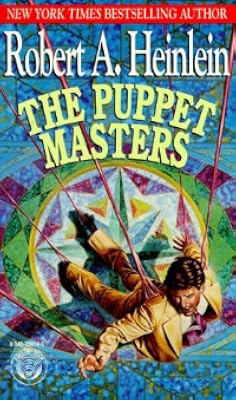


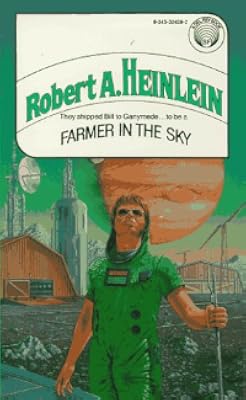


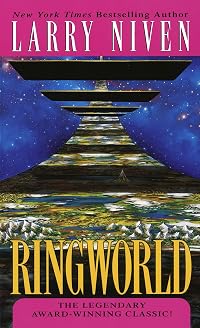


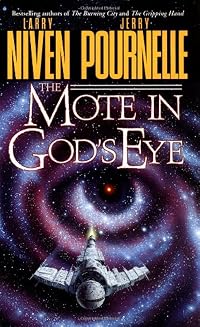

Member Reviews
Second Stage Lensmen is the penultimate volume in the Lensman series, and the last to feature Kimball Kinnison as the most powerful Lensman in the service of the Galactic Patrol. Despite the fact that Second Stage Lensmen features the first female Lensman, the story remains a strange combination of highly imaginative interstellar conflict muddied with the usual mundane drug-smuggling subplot, and incredibly reactionary 1930s attitudes towards gender roles. The story focuses upon the exploits of the "Second Stage" Lensmen: those who have gone through the advanced training Kinnison underwent in Gray Lensman. These superior Lensmen, including Kinnison, Worsel, Tregonese, and Nadreck, are armed with mental powers allowing them to control show more the minds of others and see, hear, and feel without using their physical senses: the "sense of perception". This elite cadre allows Civilization to tip the balance against Boskone.
The story picks up immediately where Gray Lensman left off as Kimball and Clarissa are heading off to get ready for their impending nuptials. Mentor or Arisa spoils the fun by commanding Kim to "think" before he acts, and Kim, of course, immediately realizes (having been prodded that way by Mentor) that Boskonia was not destroyed when Jarnevon was cracked between two other planets and still poses a grave threat to Civilization. The wedding is put on hold as Kinnison and the other Lensmen set about coming up with a defense for the expected attack upon Earth. Since one of the themes of the series is that as soon as one side develops a particular weapon, the other figures out how to build their own in short order, the Lensmen assume that Earth will be subjected to an attack using two free planets used like a nutcracker (as they did against Jarnevon) after being transported through a hyperspace tube to achieve surprise. As typical for this series, the ultimate weapon featured in the previous book becomes merely the fodder for the opening stages of this one, and newer, more powerful weaponry is developed to deal with the danger: the entire output of the sun is converted to a massive beam weapon and used to vaporize much of the Boskonian fleet when it does show up. Every book's technology swallows up the advances of the previous books: by now everyone has "thought shields" rendering the ability of the Lensmen to read others minds only useful when the opposition is captured or sloppy. Kinnison is handed a superweapon, allowing him to kill hundreds (or possibly thousands) with a thought, and apparently he is the only being in the galaxy thought responsible enough to have it (even by Worsel, who invents the thing). And so on.
And then, as usual, the story changes from Star Wars to Miami Vice as Kinnison returns to tracking down the drug traffickers that Boskone, for some reason, continues to rely upon to form the underpinnings of their operations in the "First Galaxy" (i.e. the Milky Way). His investigations take him to the "exotic" planet of Lyrane, ruled by a matriarchy of women indistinguishable from human women save for the fact that they eschew the company of men, go about naked, have advanced mental abilities, and apparently have no art, literature, music, or other cultural assets. Presumably when women are bereft of the uplifting association with men, they become bitter, soulless harridans intent on killing anyone new they meet: the Lyranian who meets Kinnison when he lands immediately tries to kill him, as does every other Lyranian. Kinnison, of course, handles their attacks easily, and threatens to kill them all if they don't cooperate in handing over the "zwilnik" (the series slang for a Boskonian drug dealer) he came for. Some claims have been made that Lyrane is the way it is because of Boskonian interference in their culture, attempting to eliminate the "gender equality" that exists in Civilization (although by any standard, even that of the 1930s, the "gender equality" of Civilization leaves a lot to be desired), but there isn't anything in the text of Second Stage Lensmen that would support this in any substantial way. In fact, Lyrane comes under attack by a Boskonian force and the helpless women have to ask Kinnison and the Patrol to come and bail them out.
It is difficult to decide which is the most sexist depiction of women in the book: is it (a) the Lyran matriarchy, populated by nasty, ignorant, and soulless women, (b) the captured zwilnik Illona, an empty-headed drug moll whose only real talent is exotic dancing, or (c) Clarissa MacDougall herself, who, despite being described as the most capable woman in the galaxy, deems herself entirely unworthy to be chosen as a Lensman (and is chosen solely because the Patrol needs an operative on Lyrane), and to confirm her opinion proves to be mostly ineffective in that role, unable to convince the Lyranians of much of anything. Her great accomplishment appears to be locating points on a map.
After a healthy dollop of sexism, and mucking about with the drug trade subplots, Kinnison and Nadreck set about actually dealing with the main Boskonian threat, and Port Admiral Haynes sets about invading the Second Galaxy with his Grand Fleet. Nadreck journeys to the headquarters of the helium breathing Eich, the frigid world of Onlo (where he is at home, being a helium-breather himself) and sets about carefully fomenting discord by tampering with the minds of the various Eich he finds there. Kinnision, on the other hand, infiltrates Thrale, inhabited by a near-human race that forms the core race around which Boskone's strength is built. Kinnison is absurdly reckless, and has a surprisingly easy time climbing the ladders of power to become Tyrant of Thrale (with a minor detour to deal with some wayward Delgonians and a hyperspace tube that requires Mentor's direct intervention to rescue him from). Once there, to fool the mentally super powerful prime-minister Fossten (the real power on Thrale), he directs the construction of a massive fleet to attack the Patrol's foothold in the Second Galaxy: the massively fortified Klovia. Of course, he keeps the Patrol advised of the construction via his Lens, so when Thrale launches its attack, it is beaten quite handily. During the battle Kimball faces off against Fossten, who apparently turns out to be a renegade Arisian. Kimball, of course defeats the villain, and then, exhausted, grills himself a thick juicy steak to recover (really). Having orchestrated the death of millions of Thralians, Kimball returns to Thrale with agents of the Patrol by the boatload in tow and announces that the citizens will be reeducated by the Lensman so they can appreciate everything that Civilization has to offer. Leaving aside the Orwellian overtones of having thousands of Lensman mentally modify the populace of an entire planet into compliance, one wonders why Kimball thought it necessary to go through the charade in the first place as he presumably could have gotten rid of Fossten at the beginning of the process rather than at the end (as the entire charade was orchestrated merely to fool Fossten). Further, one wonders at the Thralian response to learning that Kimball, acting as their leader, arranged for the deaths of millions of their sons, husbands, and fathers, the Thralians seem to do little more than give a collective shrug of resignation.
The more interesting battle (in my opinion) of Nadreck in defeating the Eich is simply glossed over and handled entirely off-stage, which is a tremendous disappointment. But Nadreck isn't Kinnison, and if you aren't Kinnison in the book, you presumably aren't very important. The book ends with Kinnison being made Galactic Coordinator of the Second Galaxy and finally marrying MacDougall, who has some embarrasing scenes near the end of the book shopping for clothes.
This book contains as much swashbuckling space opera action as any of the books in the series, but suffers because the sexism, more or less latent in the other volumes, takes center stage for significant chunks of the book. In addition, Kinnison's actions on Thrale seem in many cases to be needlessly cruel. Although some half-hearted explanations are made for his decision to unnecessarily condemn millions to death, they seem pretty weak considering the monstrosity of what the reader is expected to accept as the actions of a heroic figure. The superscience introduced, while more powerful than that in previous books, isn't quite as cool as using planets as nutcrackers, or creating a sphere of negative matter. In many ways, Second Stage Lensmen feels like a rehash of Gray Lensman, just bigger and more extravagant. Somehow, the book still ends up reading like a diminished version of its predecessor. Despite its flaws, the book remains a classic of the genre, and worth reading for anyone who can overlook the 1930s sexism and loves stories chock full of massive space battles, square jawed heroes, bizarre aliens, and dastardly villains.
This review has also been posted to my blog Dreaming About Other Worlds. show less
The story picks up immediately where Gray Lensman left off as Kimball and Clarissa are heading off to get ready for their impending nuptials. Mentor or Arisa spoils the fun by commanding Kim to "think" before he acts, and Kim, of course, immediately realizes (having been prodded that way by Mentor) that Boskonia was not destroyed when Jarnevon was cracked between two other planets and still poses a grave threat to Civilization. The wedding is put on hold as Kinnison and the other Lensmen set about coming up with a defense for the expected attack upon Earth. Since one of the themes of the series is that as soon as one side develops a particular weapon, the other figures out how to build their own in short order, the Lensmen assume that Earth will be subjected to an attack using two free planets used like a nutcracker (as they did against Jarnevon) after being transported through a hyperspace tube to achieve surprise. As typical for this series, the ultimate weapon featured in the previous book becomes merely the fodder for the opening stages of this one, and newer, more powerful weaponry is developed to deal with the danger: the entire output of the sun is converted to a massive beam weapon and used to vaporize much of the Boskonian fleet when it does show up. Every book's technology swallows up the advances of the previous books: by now everyone has "thought shields" rendering the ability of the Lensmen to read others minds only useful when the opposition is captured or sloppy. Kinnison is handed a superweapon, allowing him to kill hundreds (or possibly thousands) with a thought, and apparently he is the only being in the galaxy thought responsible enough to have it (even by Worsel, who invents the thing). And so on.
And then, as usual, the story changes from Star Wars to Miami Vice as Kinnison returns to tracking down the drug traffickers that Boskone, for some reason, continues to rely upon to form the underpinnings of their operations in the "First Galaxy" (i.e. the Milky Way). His investigations take him to the "exotic" planet of Lyrane, ruled by a matriarchy of women indistinguishable from human women save for the fact that they eschew the company of men, go about naked, have advanced mental abilities, and apparently have no art, literature, music, or other cultural assets. Presumably when women are bereft of the uplifting association with men, they become bitter, soulless harridans intent on killing anyone new they meet: the Lyranian who meets Kinnison when he lands immediately tries to kill him, as does every other Lyranian. Kinnison, of course, handles their attacks easily, and threatens to kill them all if they don't cooperate in handing over the "zwilnik" (the series slang for a Boskonian drug dealer) he came for. Some claims have been made that Lyrane is the way it is because of Boskonian interference in their culture, attempting to eliminate the "gender equality" that exists in Civilization (although by any standard, even that of the 1930s, the "gender equality" of Civilization leaves a lot to be desired), but there isn't anything in the text of Second Stage Lensmen that would support this in any substantial way. In fact, Lyrane comes under attack by a Boskonian force and the helpless women have to ask Kinnison and the Patrol to come and bail them out.
It is difficult to decide which is the most sexist depiction of women in the book: is it (a) the Lyran matriarchy, populated by nasty, ignorant, and soulless women, (b) the captured zwilnik Illona, an empty-headed drug moll whose only real talent is exotic dancing, or (c) Clarissa MacDougall herself, who, despite being described as the most capable woman in the galaxy, deems herself entirely unworthy to be chosen as a Lensman (and is chosen solely because the Patrol needs an operative on Lyrane), and to confirm her opinion proves to be mostly ineffective in that role, unable to convince the Lyranians of much of anything. Her great accomplishment appears to be locating points on a map.
After a healthy dollop of sexism, and mucking about with the drug trade subplots, Kinnison and Nadreck set about actually dealing with the main Boskonian threat, and Port Admiral Haynes sets about invading the Second Galaxy with his Grand Fleet. Nadreck journeys to the headquarters of the helium breathing Eich, the frigid world of Onlo (where he is at home, being a helium-breather himself) and sets about carefully fomenting discord by tampering with the minds of the various Eich he finds there. Kinnision, on the other hand, infiltrates Thrale, inhabited by a near-human race that forms the core race around which Boskone's strength is built. Kinnison is absurdly reckless, and has a surprisingly easy time climbing the ladders of power to become Tyrant of Thrale (with a minor detour to deal with some wayward Delgonians and a hyperspace tube that requires Mentor's direct intervention to rescue him from). Once there, to fool the mentally super powerful prime-minister Fossten (the real power on Thrale), he directs the construction of a massive fleet to attack the Patrol's foothold in the Second Galaxy: the massively fortified Klovia. Of course, he keeps the Patrol advised of the construction via his Lens, so when Thrale launches its attack, it is beaten quite handily. During the battle Kimball faces off against Fossten, who apparently turns out to be a renegade Arisian. Kimball, of course defeats the villain, and then, exhausted, grills himself a thick juicy steak to recover (really). Having orchestrated the death of millions of Thralians, Kimball returns to Thrale with agents of the Patrol by the boatload in tow and announces that the citizens will be reeducated by the Lensman so they can appreciate everything that Civilization has to offer. Leaving aside the Orwellian overtones of having thousands of Lensman mentally modify the populace of an entire planet into compliance, one wonders why Kimball thought it necessary to go through the charade in the first place as he presumably could have gotten rid of Fossten at the beginning of the process rather than at the end (as the entire charade was orchestrated merely to fool Fossten). Further, one wonders at the Thralian response to learning that Kimball, acting as their leader, arranged for the deaths of millions of their sons, husbands, and fathers, the Thralians seem to do little more than give a collective shrug of resignation.
The more interesting battle (in my opinion) of Nadreck in defeating the Eich is simply glossed over and handled entirely off-stage, which is a tremendous disappointment. But Nadreck isn't Kinnison, and if you aren't Kinnison in the book, you presumably aren't very important. The book ends with Kinnison being made Galactic Coordinator of the Second Galaxy and finally marrying MacDougall, who has some embarrasing scenes near the end of the book shopping for clothes.
This book contains as much swashbuckling space opera action as any of the books in the series, but suffers because the sexism, more or less latent in the other volumes, takes center stage for significant chunks of the book. In addition, Kinnison's actions on Thrale seem in many cases to be needlessly cruel. Although some half-hearted explanations are made for his decision to unnecessarily condemn millions to death, they seem pretty weak considering the monstrosity of what the reader is expected to accept as the actions of a heroic figure. The superscience introduced, while more powerful than that in previous books, isn't quite as cool as using planets as nutcrackers, or creating a sphere of negative matter. In many ways, Second Stage Lensmen feels like a rehash of Gray Lensman, just bigger and more extravagant. Somehow, the book still ends up reading like a diminished version of its predecessor. Despite its flaws, the book remains a classic of the genre, and worth reading for anyone who can overlook the 1930s sexism and loves stories chock full of massive space battles, square jawed heroes, bizarre aliens, and dastardly villains.
This review has also been posted to my blog Dreaming About Other Worlds. show less
I'm reading this mainly because it's on the ballot for the retro Hugos for 1953 and, incidentally, I've read the fourth in the series already because it keeps being put on the "best SF ever lists". (I don't think it should be, but I may be a minority.)
Moving on.
I cringed a lot while reading this. Mostly I just went intellectual and pointed at all the Kirk-like alpha gets the alien girls swooning for him, the pleasure planets that pretend not to be (nudist planet of women, anyone?), or the equally cringeworthy ugly-factor for competent women.
Okay. This was pulp SF of '53. Have you SEEN THOSE COVERS? Like, ANY OF THEM? It's interesting to note which Golden-Age SF actually HAS scenes of naked women leaning up against silver spaceships both show more IN the text and ONLY on the cover. :)
MOVING ON.
Despite all this, Toots, I was actually rather surprised to find some BIG SF going on here. Maybe it's all cliché now, with Star-Trek tractor beams and boarding parties and pirates in space as well as deep infiltration tactics so wildly implausible that it could only be the work of Bond, James Bond, but let's put this in its proper place. The early fifties. This kind of thing is POPULAR. Add super super super powerful telepathic abilities and a weakness for the ladies, and we've got a square-jawed hero that later becomes the Green Lantern.
No. Wait. He was never the Green Lantern. Just as powerful as, perhaps, and as a Corpsman devoted to justice with uber powerful aliens using these gene-sports as their proxy weapons...
Oh, wait. Well. Never mind. This is STILL 1953 and no one takes SF seriously. Except those who do. And those who did, back then, ALSO found a lot of decent and exciting action and adventure with super-heroic and courageous derring-do right here in E. E. "Doc" Smith's work.
I didn't hate this. I did want to tear my eyes out for the first quarter or so. Certain depictions. But once we went into the whole infiltration of the baddies' empire, using telepathy to cloud the minds of all the aliens to make them think he was one of them, I was pretty much hooked and rocking along.
The good. The bad. The action is always pretty awesome. Think Star Wars meets Babylon 5 meets Pirates of the Carribean. Add James Bond with the powers of Voldemort. It can be VERY FUN, too!
All in all, I'd have to give it a 5 star on the one and a single star on the other. If you read this, manage your expectations and you might have a grand time or just find so much fodder for your ire that you'll have a different kind of a good time. :) show less
Moving on.
I cringed a lot while reading this. Mostly I just went intellectual and pointed at all the Kirk-like alpha gets the alien girls swooning for him, the pleasure planets that pretend not to be (nudist planet of women, anyone?), or the equally cringeworthy ugly-factor for competent women.
Okay. This was pulp SF of '53. Have you SEEN THOSE COVERS? Like, ANY OF THEM? It's interesting to note which Golden-Age SF actually HAS scenes of naked women leaning up against silver spaceships both show more IN the text and ONLY on the cover. :)
MOVING ON.
Despite all this, Toots, I was actually rather surprised to find some BIG SF going on here. Maybe it's all cliché now, with Star-Trek tractor beams and boarding parties and pirates in space as well as deep infiltration tactics so wildly implausible that it could only be the work of Bond, James Bond, but let's put this in its proper place. The early fifties. This kind of thing is POPULAR. Add super super super powerful telepathic abilities and a weakness for the ladies, and we've got a square-jawed hero that later becomes the Green Lantern.
No. Wait. He was never the Green Lantern. Just as powerful as, perhaps, and as a Corpsman devoted to justice with uber powerful aliens using these gene-sports as their proxy weapons...
Oh, wait. Well. Never mind. This is STILL 1953 and no one takes SF seriously. Except those who do. And those who did, back then, ALSO found a lot of decent and exciting action and adventure with super-heroic and courageous derring-do right here in E. E. "Doc" Smith's work.
I didn't hate this. I did want to tear my eyes out for the first quarter or so. Certain depictions. But once we went into the whole infiltration of the baddies' empire, using telepathy to cloud the minds of all the aliens to make them think he was one of them, I was pretty much hooked and rocking along.
The good. The bad. The action is always pretty awesome. Think Star Wars meets Babylon 5 meets Pirates of the Carribean. Add James Bond with the powers of Voldemort. It can be VERY FUN, too!
All in all, I'd have to give it a 5 star on the one and a single star on the other. If you read this, manage your expectations and you might have a grand time or just find so much fodder for your ire that you'll have a different kind of a good time. :) show less
E.E. "Doc" Smith probably thought he was a feminist, and I guess for the late 1940's and early 1950's, the Lensmen series isn't too bad, and I can kind of look past it in most of the series. But in this one, which features the first (and only) female lensman, his whole "different but equal" shtick kind of gets a bit more in your face. There's also a lot less other interesting stuff going on to balance it out.
The last book of the year 2013. An overly sexist contradictory work yet full of grand science fiction battles of truly huge scope. A product of its time before its time.
This is marginally not as poor as the previous books in the series, though that's not saying much. Smith's deus ex machina to get Kinnison undercover towards the end of the book is laughable; as is his assertion, through Kinnison, that Civilisation depends on equality among its members. His treatment of women and non-white's is offensive.
In this novel of the Lensmen we continue the adventures of Kimball Kinnison as he attempts to destroy Boskone, the inimical enemy of Civilisation.
After nearly getting himself killed in destroying the base on Jarnevon, Kim and Cris reckon that it's time to get married but a blistering intervention by Mentor of Arisia they learn that they haven't even come close to getting a handle on the situation.
Like most of these books, 'Second Stage Lensman' has lots of seriously large space battles and supertechnology that gets whipped up seemingly on the spot
After nearly getting himself killed in destroying the base on Jarnevon, Kim and Cris reckon that it's time to get married but a blistering intervention by Mentor of Arisia they learn that they haven't even come close to getting a handle on the situation.
Like most of these books, 'Second Stage Lensman' has lots of seriously large space battles and supertechnology that gets whipped up seemingly on the spot
One from one of the Fathers of science fiction. Love how he writes and how archaic the written word can sound in these pages. This volume completes my Lensman collection.
Members
- Recently Added By
Lists

S.F. Masterworks (Complete)
229 works; 15 members

1943 Retro-Hugo Eligible Novels
18 works; 2 members

Books Read in 2018
4,360 works; 110 members
Talk Discussions
Past Discussions
Perspective Problematic! in Good Show Sir! — bad science fiction and fantasy covers (December 2024)
***Group Read: The Lensman Series (Spoiler-free) in 75 Books Challenge for 2010 (June 2010)
Author Information

10+ Works 9,198 Members
Some Editions
Awards and Honors
Awards
Series


Belongs to Publisher Series
Work Relationships
Is contained in
Common Knowledge
- Canonical title
- Second Stage Lensman
- Original title
- Second Stage Lensmen
- Original publication date
- 1953
- People/Characters
- Kimball Kinnison; Clarissa MacDougall; Worsel; Tregonsee; Nadreck
- Original language
- English
- Canonical DDC/MDS
- 813.087625
Classifications
- Genres
- Science Fiction, Fiction and Literature
- DDC/MDS
- 813.087625 — Literature & rhetoric American literature in English American fiction in English By type Genre fiction Adventure fiction Speculative fiction Science fiction Space opera
- LCC
- PS3537 .M349 .S43 — Language and Literature American literature American literature Individual authors 1900-1960
- BISAC
Statistics
- Members
- 1,381
- Popularity
- 17,289
- Reviews
- 18
- Rating
- (3.45)
- Languages
- English, French, German, Portuguese
- Media
- Paper, Audiobook, Ebook
- ISBNs
- 26
- ASINs
- 43