
On This Page
Description
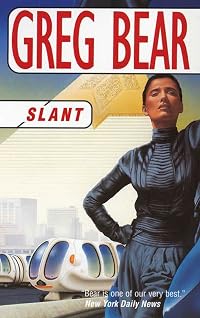
A novel on the impact of new technologies and the steps people take to avoid becoming their prisoner. The action centers on separatist militiamen who in the next century create a country of their own in Idaho.Tags
Recommendations














Member Reviews
Characters and plot development: 2 stars
Universe building: 4 stars
Underlying philosophy: WTF
Do me please the favour of tolerating a small personal indiscretion, for the sake of further clarity down the road of this review. Many, many years ago, I finally gathered the courage to send The Great Love Of My Life on his merry way, explaining to him that, looking back, it was clear to me that we had been mutually toxic for virtually all the fifteen years of our relationship, and also that I had felt empty, un-loved, in need of more respect and trust, and desperately lonely for the best part of it. I also reminded him of how he was so unhappy himself that he had been constantly threatening to break up and complaining about my shortcomings for show more years. His answer was a boyish, pained look of disbelief and the unforgettable statement: "Why? Why do you want to throw it all away?! I AM SO HAPPY WITH YOU..."
Yes, he did. And yes, he probably was.
Great world-building and disappointing plot development with some glimpses of interest seem to be signatures of Greg Bear's narrative style. So is the veiled sexism poking out the futuristic sexual freedom like nettles through the fabric of an old blanket.
Here the first chapters promise a whole lot, that is not delivered by the end of the novel. The AI story arc is compelling and well concluded, while many other characters fizzle out running around without purpose after being introduced as main actors in the plot. One of them even opens one the introductory chapters only to be carried around as a dead weight, while another seems to be the protagonist, but in the end is just there to be substantially tortured by the plot, and to let readers revel into the aforementioned gorgeous world-building. Maybe even to show how women are fragile, but I am not sure about that.
Possibly the most unnerving quirk of Greg Bear's novels is the streak of sexism and broken psychology that makes some characters and their choices feel like a glitch in the matrix. One of the main plot devices arises from the necessity, for a woman scientist, to MODIFY HER OWN BRAIN BECAUSE THE FEMALE BRAIN IS NOT CREATIVE ENOUGH TO GIVE HER AN EDGE AS A RESEARCHER. Yes, you just read that. It's not all, and here we get to the reason for my little dirty confession above. One of the main characters is an insufferable, holier-than-thou, arrogant, puritan American yuppie convinced that life, wife, children and society at large all owe him more than they gave him. The Great Love Of My Life and our break-up exchange came immediately to my mind. Oh boy, did I savour his fall from grace (or the apocalyptic damage he may cause if victorious). I am a long-hating green monster, I know. By the way, much to my dismay, it became clear half-way through the novel that he was the good guy all along. We are even treated to a molassey happy family ending. People, Greg Bear IDENTIFIES with this guy. Shivers of uneasiness and cringe. Long, painful soul-searching and questioning of my literary choices and taste. Conclusion: I know I will go looking for the first installment of the series (this book is a stand-alone, but I understand it takes part in a longer story arc). This man Bear builds worlds so well. I will just write it down to Guilty Pleasures, together with watching dr. Phil videos on You Tube and reading the Guardian, knowing it will infuriate me.
Today I learned that there is such a thing as hate-reading. show less
Universe building: 4 stars
Underlying philosophy: WTF
Do me please the favour of tolerating a small personal indiscretion, for the sake of further clarity down the road of this review. Many, many years ago, I finally gathered the courage to send The Great Love Of My Life on his merry way, explaining to him that, looking back, it was clear to me that we had been mutually toxic for virtually all the fifteen years of our relationship, and also that I had felt empty, un-loved, in need of more respect and trust, and desperately lonely for the best part of it. I also reminded him of how he was so unhappy himself that he had been constantly threatening to break up and complaining about my shortcomings for show more years. His answer was a boyish, pained look of disbelief and the unforgettable statement: "Why? Why do you want to throw it all away?! I AM SO HAPPY WITH YOU..."
Yes, he did. And yes, he probably was.
Great world-building and disappointing plot development with some glimpses of interest seem to be signatures of Greg Bear's narrative style. So is the veiled sexism poking out the futuristic sexual freedom like nettles through the fabric of an old blanket.
Here the first chapters promise a whole lot, that is not delivered by the end of the novel. The AI story arc is compelling and well concluded, while many other characters fizzle out running around without purpose after being introduced as main actors in the plot. One of them even opens one the introductory chapters only to be carried around as a dead weight, while another seems to be the protagonist, but in the end is just there to be substantially tortured by the plot, and to let readers revel into the aforementioned gorgeous world-building. Maybe even to show how women are fragile, but I am not sure about that.
Possibly the most unnerving quirk of Greg Bear's novels is the streak of sexism and broken psychology that makes some characters and their choices feel like a glitch in the matrix. One of the main plot devices arises from the necessity, for a woman scientist, to MODIFY HER OWN BRAIN BECAUSE THE FEMALE BRAIN IS NOT CREATIVE ENOUGH TO GIVE HER AN EDGE AS A RESEARCHER. Yes, you just read that. It's not all, and here we get to the reason for my little dirty confession above. One of the main characters is an insufferable, holier-than-thou, arrogant, puritan American yuppie convinced that life, wife, children and society at large all owe him more than they gave him. The Great Love Of My Life and our break-up exchange came immediately to my mind. Oh boy, did I savour his fall from grace (or the apocalyptic damage he may cause if victorious). I am a long-hating green monster, I know. By the way, much to my dismay, it became clear half-way through the novel that he was the good guy all along. We are even treated to a molassey happy family ending. People, Greg Bear IDENTIFIES with this guy. Shivers of uneasiness and cringe. Long, painful soul-searching and questioning of my literary choices and taste. Conclusion: I know I will go looking for the first installment of the series (this book is a stand-alone, but I understand it takes part in a longer story arc). This man Bear builds worlds so well. I will just write it down to Guilty Pleasures, together with watching dr. Phil videos on You Tube and reading the Guardian, knowing it will infuriate me.
Today I learned that there is such a thing as hate-reading. show less
This was probably my least favourite Bear so far. The story was so broad, it was hard to get into and care about. He uses a lot of future slang that makes it hard to understand (a cardinal sin in writing; don't make it hard for the reader to read) and a lot of attempts to present events as data or web searches or results, which might have been neat in 1997 when it was written but in 2026 is just useless clutter.
I hate dystopias! Several sub-plots coalesce into a nano-nightmare of complexity: the bad guys are trying to create a shelter so they can ride out the eventual collapse of world civilization--which they are aiding and abetting, so they can reemerge from safety and then take over the world--in comfort. The writing and excitement deserve a 5* rating....but I hate dystopias.
The first two stories take place about the same time—but the next 2 seem to have been written out of sequence. Book 4, “Slant”, takes place about 3 or 4 years past the first book and even mentions Mars as a major focal point of human expansion. But this is where/when we learn of the mysterious world-wide society that controls much of the real world. Book 3, show more “Moving Mars”, even mentions this secret society, in passing.
The reference to Mars in “Slant” and to the secret society in “Moving Mars” hint at the preferred chronology. While the distinctly unsatisfying ending to “Slant” makes me wish I had read “Moving Mars” last—with its much more encouraging ending. show less
The first two stories take place about the same time—but the next 2 seem to have been written out of sequence. Book 4, “Slant”, takes place about 3 or 4 years past the first book and even mentions Mars as a major focal point of human expansion. But this is where/when we learn of the mysterious world-wide society that controls much of the real world. Book 3, show more “Moving Mars”, even mentions this secret society, in passing.
The reference to Mars in “Slant” and to the secret society in “Moving Mars” hint at the preferred chronology. While the distinctly unsatisfying ending to “Slant” makes me wish I had read “Moving Mars” last—with its much more encouraging ending. show less
High time for a quick read, I headed to the science fiction section at the used bookstore and picked up Slant, as Greg Bear has made it onto my list of trusted authors. Despite that, the first noteworthy thought I had reading this book was "Please, dear Greg, no more writing sex scenes!" I was a tad concerned when sex/porn turned out to be rather central to the plot, but the most cringe-worthy moment had passed and I was soon absorbed by the story.
Basic idea -- it's 60ish years in the future. The internet dominates modern life. It has advanced to allow direct plug-ins that let the user see, fell, etc. the experiences of others -- live or recorded. This has taken over the economy. Those who produce popular content make money, those who show more only consume struggle. Also important is that large sections of the population have been "therapied" -- destructive/non-functional brain circuits are physically repaired by nanites.
I would not place this among Bear's strongest works, though there are many interesting ideas here. Commentary on the internet, elitism, runaway capitalism. Bear's female characters are starting to feel a little similar, but at least they're smart, powerful, and allowed to have relationships with each other, so I'll give him a pass for now.
Give it a read if you're a fan of Greg Bear. If you haven't read him before, start with Darwin's Radio or Moving Mars. show less
Basic idea -- it's 60ish years in the future. The internet dominates modern life. It has advanced to allow direct plug-ins that let the user see, fell, etc. the experiences of others -- live or recorded. This has taken over the economy. Those who produce popular content make money, those who show more only consume struggle. Also important is that large sections of the population have been "therapied" -- destructive/non-functional brain circuits are physically repaired by nanites.
I would not place this among Bear's strongest works, though there are many interesting ideas here. Commentary on the internet, elitism, runaway capitalism. Bear's female characters are starting to feel a little similar, but at least they're smart, powerful, and allowed to have relationships with each other, so I'll give him a pass for now.
Give it a read if you're a fan of Greg Bear. If you haven't read him before, start with Darwin's Radio or Moving Mars. show less
Substance: The second half is much better than the first half, most of which, it being an exercise in pornography disguised as an explanation of the techniques of popular entertainment, could have been jettisoned without effecting the main plot of the book. The science and technology are assumed, not explained, in a duolithic world of sad and not very likeable people. No middle-class, no middle-ground.
However, the well-constructed plot reveals itself satisfactorily, disclosing hidden motives and other secrets as needed, although the ideological worldview of the novel as a whole is shallow and one-sided. Protagonists do assert that family is the most important thing in their lives, but it's hard to credit their sincerity sometimes.
The show more self-aware computer is well-done, although the concept of warbots clearly breaches Asimov's Laws of Robotics (no specs are given for Bear's computers). He describes his AI in technical jargon that he never defined.
Style: Multiple protagonists took a while to get straightened out, although at least they are all different from each other, and not cardboard characters. Graphic.
NOTES:
p. 330ff: Major discussion of the AI situation. Jargon included "loop awareness" and "autopoietic systems", which I had to look up later. I got the idea anyway, but it would have been nice if Bear had slipped the definitions into the conversation somewhere.
p. 407: "bio-neural mind"
p. 475: I like the phrase "elite arrogance", even though it is directed at the books boogie-men, the Neo-Federalists, a species of elite conservatives not to be confused with the gun-toting libertarian unhinged patriots of Green Idaho.
p. 482: danger from a simple infection vector - "corrupt Disneyland and you corrupt the world".
p. 487: throw-away comment encapsulates the state of the art in this milieu - "The Alexandria Quartet" being produced by Disney for children, with the novel's porn star. show less
However, the well-constructed plot reveals itself satisfactorily, disclosing hidden motives and other secrets as needed, although the ideological worldview of the novel as a whole is shallow and one-sided. Protagonists do assert that family is the most important thing in their lives, but it's hard to credit their sincerity sometimes.
The show more self-aware computer is well-done, although the concept of warbots clearly breaches Asimov's Laws of Robotics (no specs are given for Bear's computers). He describes his AI in technical jargon that he never defined.
Style: Multiple protagonists took a while to get straightened out, although at least they are all different from each other, and not cardboard characters. Graphic.
NOTES:
p. 330ff: Major discussion of the AI situation. Jargon included "loop awareness" and "autopoietic systems", which I had to look up later. I got the idea anyway, but it would have been nice if Bear had slipped the definitions into the conversation somewhere.
p. 407: "bio-neural mind"
p. 475: I like the phrase "elite arrogance", even though it is directed at the books boogie-men, the Neo-Federalists, a species of elite conservatives not to be confused with the gun-toting libertarian unhinged patriots of Green Idaho.
p. 482: danger from a simple infection vector - "corrupt Disneyland and you corrupt the world".
p. 487: throw-away comment encapsulates the state of the art in this milieu - "The Alexandria Quartet" being produced by Disney for children, with the novel's porn star. show less
Slant, is a aequel to Queen of Angels, but, I would say, is much less ambitious and also a much better book.
Policewoman Mary Choy is back, after a few life changes (divorce, move from LA to Seattle, job change). When she's called on to assist in an investigation of sex workers killed through botched back-alley nanotech operations, she does not expect to be launched into a far-reaching conspiracy to bring down society. But a billionaire investor's mysterious suicide, a virtual-reality murder, and an unprecedented epidemic of mental disturbances and general crime all seem to be somehow related...
With diverse characters that include a has-been porn star, a scientist with self-induced Tourette's syndrome, a renegade AI, and a heist show more mastermind without a past, Bear discusses many of the same themes as in the previous book, but in the context of a complex, entertaining and action-filled novel. show less
Policewoman Mary Choy is back, after a few life changes (divorce, move from LA to Seattle, job change). When she's called on to assist in an investigation of sex workers killed through botched back-alley nanotech operations, she does not expect to be launched into a far-reaching conspiracy to bring down society. But a billionaire investor's mysterious suicide, a virtual-reality murder, and an unprecedented epidemic of mental disturbances and general crime all seem to be somehow related...
With diverse characters that include a has-been porn star, a scientist with self-induced Tourette's syndrome, a renegade AI, and a heist show more mastermind without a past, Bear discusses many of the same themes as in the previous book, but in the context of a complex, entertaining and action-filled novel. show less
Way better than the first in the series. In fact I didn't actually know this was part of a series until after I'd started it. I didn't much like Queen of Angels and wouldn't have knowing continued reading the series. This however is very different despite being set in the same world with many of the same characters. They are all introduced anew, and there is very little reference to previous events, bar odd fleeting remarks. It can easily (and I would recommmend doing so) be read as a standalone. All of the confusingly dull supposed physcology in QoA has been completely removed, which is a huge bonus.
As in QoA though there are several disperate plots, that only just merge together at the very end: Johnathon is a conservative (ludite) show more mid leval manager and family man, loving his wife and children. His mentor mentions he has a serious proposition to make, but Johnathon finds himself unable to think clearly when his wife collapses in a therapy fallback. Martin Burke (he of QoA fame) has retained enough professional standing to survive as a therapy consultant remapping the physics personalities of offenders. He's extremely concerned by a sudden upsurge in the number of breakdowns occuring. Mary Choi (also of QoA) has elected to reverse gradually her striking transform and transferred to LA Public Defense. Co-opted by criminal dvision to investigate suspicious behavior from one Terrence Crest, she meets a porn starlet Alice and begins to uncover some of the murkier depths of the high 'comb' society. Meanwhile AI thinker Jill is continuing to grow up and work on social data trends. Finally Jak Griffin is setting up a small team to go an burgle an expensive monument of any valuables it might contain.
Confused already? Well you should be. It isn't helped by having interleaved chapters continually jumping form one character to another, although this is better than not having the character jumps seperated by chapters. - The chapter breaks are made worse by very bad Ebook formatting, which has the first page of the new chapter, preceding instead of followinf the blank chapter header page! The chapters get shorter and shorter as the action picks up and the location of all of the characters converges, before a climactic finish and slow epilogue of withdrawal from the stroy.
There is a lot of social commentry especially in the opening third of book. A lot of sex and discussions on and around sex, and it's importance in society, different cultural accepted patterns of sex and consequences. And as a predominating theme the right of individual action and responsability with sidebars of technological support and the level of intrusion govenment should be permitted to establish norms. It's all worth thinking over, although I wouldn't ponder too deeply on the somewhat bizare and briefly explained biological computing evolution theories which sound good but aren't based on anything very solid. The discontinuity in proposed timescales with those actually quoted in the book is quite an immense barrier to start with. Additional societal insights are provded at the end of each chapter by exerts from mail/vox filtering program search routine responces (and spam) it's amazing how little changes despite the vastly different society!
It's fun and inventive and thought provoking - not totally gripping, and sometimes more than a little disturbing. The characters are too rushed into the action to ever gain much depth, but still emphatic and overall well worth reading.
................................................................................................. show less
As in QoA though there are several disperate plots, that only just merge together at the very end: Johnathon is a conservative (ludite) show more mid leval manager and family man, loving his wife and children. His mentor mentions he has a serious proposition to make, but Johnathon finds himself unable to think clearly when his wife collapses in a therapy fallback. Martin Burke (he of QoA fame) has retained enough professional standing to survive as a therapy consultant remapping the physics personalities of offenders. He's extremely concerned by a sudden upsurge in the number of breakdowns occuring. Mary Choi (also of QoA) has elected to reverse gradually her striking transform and transferred to LA Public Defense. Co-opted by criminal dvision to investigate suspicious behavior from one Terrence Crest, she meets a porn starlet Alice and begins to uncover some of the murkier depths of the high 'comb' society. Meanwhile AI thinker Jill is continuing to grow up and work on social data trends. Finally Jak Griffin is setting up a small team to go an burgle an expensive monument of any valuables it might contain.
Confused already? Well you should be. It isn't helped by having interleaved chapters continually jumping form one character to another, although this is better than not having the character jumps seperated by chapters. - The chapter breaks are made worse by very bad Ebook formatting, which has the first page of the new chapter, preceding instead of followinf the blank chapter header page! The chapters get shorter and shorter as the action picks up and the location of all of the characters converges, before a climactic finish and slow epilogue of withdrawal from the stroy.
There is a lot of social commentry especially in the opening third of book. A lot of sex and discussions on and around sex, and it's importance in society, different cultural accepted patterns of sex and consequences. And as a predominating theme the right of individual action and responsability with sidebars of technological support and the level of intrusion govenment should be permitted to establish norms. It's all worth thinking over, although I wouldn't ponder too deeply on the somewhat bizare and briefly explained biological computing evolution theories which sound good but aren't based on anything very solid. The discontinuity in proposed timescales with those actually quoted in the book is quite an immense barrier to start with. Additional societal insights are provded at the end of each chapter by exerts from mail/vox filtering program search routine responces (and spam) it's amazing how little changes despite the vastly different society!
It's fun and inventive and thought provoking - not totally gripping, and sometimes more than a little disturbing. The characters are too rushed into the action to ever gain much depth, but still emphatic and overall well worth reading.
................................................................................................. show less
Members
- Recently Added By
Author Information

140+ Works 47,137 Members
Greg Bear was born in San Diego, California, on August 20, 1951. He received a Bachelor of Arts degree from San Diego State University in 1973. At age 14, he began submitting pieces to magazines and at 15 he sold his first story to Robert Lowndes' Famous Science Fiction. It would be five years before he sold another piece, but by 23 he was selling show more stories regularly. He has written more than 30 science fiction and fantasy books and has won numerous awards for his work. In 1984, Hardfought and Blood Music won the Nebula Awards for best novella and novelette; Blood Music went on to win the Hugo Award. The novel version of that story, also called Blood Music, won the Prix Apollo in France. In 1987, Tangents won the Hugo and Nebula awards for best short story. He also won a Nebula in 1994 for Moving Mars and in 2001 for Darwin's Radio. Both Dinosaur Summer and Darwin's Radio have been awarded the Endeavour for best novel published by a Northwest science fiction author. He is also an illustrator and his work has appeared in Galaxy, Fantasy and Science Fiction, and Vertex, and in both hardcover and paperback books. He was a founding member of ASFA, the Association of Science Fiction Artists. His works include City at the End of Time, Hull Zero Three, The Mongoliad, Mariposa, Halo: Cryptum, Halo: Primordium and Halo: Silentium. (Bowker Author Biography) show less
Some Editions
Awards and Honors
Series

Belongs to Publisher Series
Common Knowledge
- Canonical title
- Slant
- Alternate titles
- /
- Original publication date
- 1997
- People/Characters
- Mary Choy; Nathan; Jill; Alice Grale; Martin Burke
- Important places
- Green Idaho
- First words
- Omphalos dominates Moscow, Green Idaho.
- Last words
- (Click to show. Warning: May contain spoilers.)He is trying to go home.
Classifications
Statistics
- Members
- 1,499
- Popularity
- 15,412
- Reviews
- 20
- Rating
- (3.41)
- Languages
- 6 — Dutch, English, French, German, Italian, Spanish
- Media
- Paper, Audiobook, Ebook
- ISBNs
- 19
- ASINs
- 8