On This Page
Description
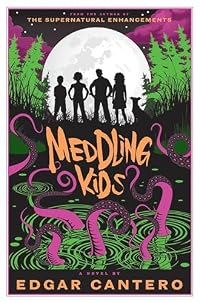
NEW YORK TIMES BESTSELLER "Freaky pleasure...it scratches a nostalgic itch for those who grew up on Saturday morning Scooby-Doo cartoons and sugar-bombed breakfast cereal" --USA Today "Deliriously wild, funny and imaginative. Cantero is an original voice." --Charles Yu, author of How to Live in a Science Fictional Universe With raucous humor and brilliantly orchestrated mayhem, Meddling Kids subverts teen detective archetypes like the Hardy Boys, the Famous Five, and Scooby-Doo, and show more delivers an exuberant and wickedly entertaining celebration of horror, love, friendship, and many-tentacled, interdimensional demon spawn. SUMMER 1977. The Blyton Summer Detective Club (of Blyton Hills, a small mining town in Oregon's Zoinx River Valley) solved their final mystery and unmasked the elusive Sleepy Lake monster--another low-life fortune hunter trying to get his dirty hands on the legendary riches hidden in Deboën Mansion. And he would have gotten away with it too, if it weren't for those meddling kids. 1990. The former detectives have grown up and apart, each haunted by disturbing memories of their final night in the old haunted house. There are too many strange, half-remembered encounters and events that cannot be dismissed or explained away by a guy in a mask. And Andy, the once intrepid tomboy now wanted in two states, is tired of running from her demons. She needs answers. To find them she will need Kerri, the one-time kid genius and budding biologist, now drinking her ghosts away in New York with Tim, an excitable Weimaraner descended from the original canine member of the club. They will also have to get Nate, the horror nerd currently residing in an asylum in Arkham, Massachusetts. Luckily Nate has not lost contact with Peter, the handsome jock turned movie star who was once their team leader . . . which is remarkable, considering Peter has been dead for years. The time has come to get the team back together, face their fears, and find out what actually happened all those years ago at Sleepy Lake. It's their only chance to end the nightmares and, perhaps, save the world. A nostalgic and subversive trip rife with sly nods to H. P. Lovecraft and pop culture, Edgar Cantero's Meddling Kids is a strikingly original and dazzling reminder of the fun and adventure we can discover at the heart of our favorite stories, no matter how old we get. show lessTags
Recommendations
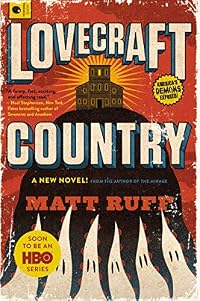
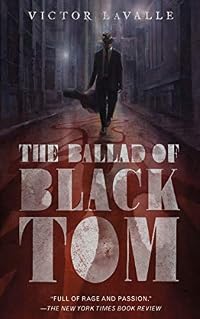
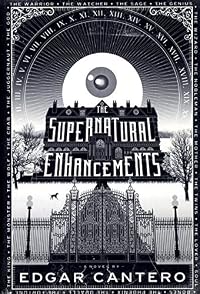
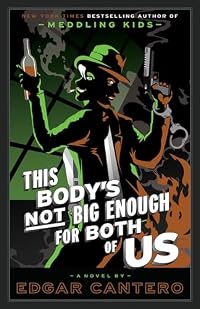

Member Recommendations
Vulco1 Cthulu (sp?) esque horror. Young people getting into and out of trouble. Associated TV shows. Good quality writing.
Member Reviews
TL;DR - transphobic, not recommended
In the summer of 1977 in Blyton Hills, Oregon, four thirteen-year-olds solved spooky mysteries - it was always an adult in a mask! Years later, in 1990, the former kid sleuths are not doing so hot. Andrea "Andy" Rodriguez (the tomboy) breaks out of prison and picks up Kerri (the brains) so they can break Nate (the dreamer) out of a mental health facility he's been locked in for having hallucinations of Peter (the handsome leader) who committed suicide a year earlier. Andy explains that nothing has been right with them since their final mystery in 1977, and they have to go back to the haunted mansion on top of a mine shaft in the middle of Sleepy Lake in Oregon. And this time the villain is definitely show more not just a normal adult in a mask.
The general idea of this book is very good, but the writing and the execution are awful. The close-third person narration is completely inconsistent, bouncing between characters within the same paragraph, sometimes within the same sentence. Randomly, the dialog is occasionally presented as lines from a script, complete with camera directions, for no discernible reason. I assume that this is meant to be clever, as are the heaping piles of references to disciplines that the author does not understand. These range from the very minor (two 26yos who barely know each other would not have an argument about Captain Planet within a few weeks of its TV premiere) to complete misrepresentations of mental health (Nate keeps admitting himself to an in-patient mental health facility just because he likes the slow pace of life there, and goes on and off his anti-hallucinogenic medication willy-nilly, with no side effects), sciences of all kinds (Kerri has a bachelors degree in biology and zero work experience, which qualifies her to perform a police autopsy, and she has studied insects but has never owned hiking boots), women and sexuality (Andy has been in love with Kerri since they were 13 and is constantly creepily ogling or touching her while they're supposed to be running for their lives or whatever. She ends upbeing in a relationship with Kerri at the end, despite the fact that Kerri says many times that she is not attracted to women and might not ever want to be physically intimate, and Andy says she's fine with that? What?? ).
All of that is small potatoes compared to the most egregious: this book is very transphobic. It starts at the beginning, with unnecessarily referring to a one-sentence background character only as "the H********dite" (a slur for intersex) and continues through the end wherethe villain turns out to be an immortal witch who changes their gender through surgery every 30-ish years so no one will realize they have been causing trouble since Salem. Gender reassignment surgery presented as a means to trick people for nefarious reasons. The author kind of tries to counterbalance by hinting that the main character, Andy, might be trans herself. However, the only vague evidence for this is 1) she wants to be called Andy, NOT Andrea; 2) she has short hair; 3) she gets mad at the idea that girls can't do things that boys can do; and 4) she is attracted to women. Mostly irrelevant and unconvincing.
There's little of value here to balance what is objectively offensive. Where was this author's editor??
Very much NOT recommended. show less
In the summer of 1977 in Blyton Hills, Oregon, four thirteen-year-olds solved spooky mysteries - it was always an adult in a mask! Years later, in 1990, the former kid sleuths are not doing so hot. Andrea "Andy" Rodriguez (the tomboy) breaks out of prison and picks up Kerri (the brains) so they can break Nate (the dreamer) out of a mental health facility he's been locked in for having hallucinations of Peter (the handsome leader) who committed suicide a year earlier. Andy explains that nothing has been right with them since their final mystery in 1977, and they have to go back to the haunted mansion on top of a mine shaft in the middle of Sleepy Lake in Oregon. And this time the villain is definitely show more not just a normal adult in a mask.
The general idea of this book is very good, but the writing and the execution are awful. The close-third person narration is completely inconsistent, bouncing between characters within the same paragraph, sometimes within the same sentence. Randomly, the dialog is occasionally presented as lines from a script, complete with camera directions, for no discernible reason. I assume that this is meant to be clever, as are the heaping piles of references to disciplines that the author does not understand. These range from the very minor (two 26yos who barely know each other would not have an argument about Captain Planet within a few weeks of its TV premiere) to complete misrepresentations of mental health (Nate keeps admitting himself to an in-patient mental health facility just because he likes the slow pace of life there, and goes on and off his anti-hallucinogenic medication willy-nilly, with no side effects), sciences of all kinds (Kerri has a bachelors degree in biology and zero work experience, which qualifies her to perform a police autopsy, and she has studied insects but has never owned hiking boots), women and sexuality (Andy has been in love with Kerri since they were 13 and is constantly creepily ogling or touching her while they're supposed to be running for their lives or whatever. She ends up
All of that is small potatoes compared to the most egregious: this book is very transphobic. It starts at the beginning, with unnecessarily referring to a one-sentence background character only as "the H********dite" (a slur for intersex) and continues through the end where
There's little of value here to balance what is objectively offensive. Where was this author's editor??
Very much NOT recommended. show less
Meddling Kids was definitely not was I was expecting when I cracked it open, and in this case that's not a good thing. Even were I to disregard not living up to expectations, there are also some jarring craft issues that leave me baffled as to its popularity and success (besides what I'm sure is Blumhouse's marketing machine).
First, do not go in expecting an actual scooby doo, or in even scooby gang, style romp. It bills itself as that and as horror/comedy and neither is really fitting. Scooby doo and lovecraftian influences can be mixed to a great deal of success, as Mystery Inc. showed us, and a more grown up, adult version of those characters could have been a lot of fun. Though I do think a lot of current things playing in this show more space overlook the fact that in original scooby doo the gang was clearly in their late teens through mid 20s rather than stranger things-esque children. That's not what we get here. There's backstory about them as a scooby style troop in their pre-teen years, but by the time we pick up the story one of them is dead and the rest aren't really analogous to scooby gang characters (velma and daphne seem merged into one character and we have a non-anthropomorphic dog, but otherwise the characters seem disconnected from that mythos).
There's a lot of weird anthropomorphizing of one characters hair throughout the book that seems to serve no purpose?
The dog is definitely *not* anthropomorphized, yet we get occasional and seemingly random internal monologue from him, that also doesn't seem to be explained by the pay off at the end.
We have a hallucination, that insists its a ghost, that apparently isn't a ghost, but is also not effected by if or how much of his medication the hallucinating character takes, which feels nonsensical but also serves to make the entire character extraneous to the plot?
Culturally, I feel like there's some questionable treatment of LGBTQIA+ folks. Its great we have an LGBTQ main character, but her internal narrative and behavior towards others seems *very* male gaze-y and insists she's not a lesbian save for one specific character? Which feels like a combination of erasure and just being poorly written by a male author. There's also a lot of distasteful stuff towards where everyone seems to be pressuring that character to be trans because they're a butch/masc maybe lesbian? There's also a character that is repeatedly referred to as a 'hermaphrodite', but I'm not even sure its referring to their sexual organs?
On to the problems with craft...
Seemingly at random, the structure of the writing changes back and forth between a novel and a script. This includes stage and camera direction. Sometimes there is stage and camera direction even when its structured like a novel. There are also, again seemingly at random, offhand meta-textual comments about the structure of the text and how it relates to events which *sometimes* characters also seem aware of? This might mean describing or referencing an event that happened as 'it occurred two lines ago' or 'as we saw in the previous paragraph'. Maybe I'm too dense and there's some pattern to all of this that is absolutely brilliant ala House of Leaves playing with text, but I'm pretty sure there isn't and its just lazy.
The author also has a bad of making up words...not in a creative, Shakespearean, expanding-the-language sort of way but rather by just mashing two pre-existing words together an calling it good. Again, it feels lazy.
I have some piddly quibbles with how the action is written as well, but those are minor.
The positives I would say I had were 1)I think its got some great things to say about traumas and how they effect the rest of our lives, have the potential to change us as people, and the road to recovery. And 2) I think some of the minor, side characters were a lot of fun and a lot better written than our protagonists.
All in all, a disappointment that really misses the mark on what could either have been a very dark and grown up interpretation of scooby doo, or a very fun light hearted romp that either way I could have seen expanded into a series. show less
First, do not go in expecting an actual scooby doo, or in even scooby gang, style romp. It bills itself as that and as horror/comedy and neither is really fitting. Scooby doo and lovecraftian influences can be mixed to a great deal of success, as Mystery Inc. showed us, and a more grown up, adult version of those characters could have been a lot of fun. Though I do think a lot of current things playing in this show more space overlook the fact that in original scooby doo the gang was clearly in their late teens through mid 20s rather than stranger things-esque children. That's not what we get here. There's backstory about them as a scooby style troop in their pre-teen years, but by the time we pick up the story one of them is dead and the rest aren't really analogous to scooby gang characters (velma and daphne seem merged into one character and we have a non-anthropomorphic dog, but otherwise the characters seem disconnected from that mythos).
There's a lot of weird anthropomorphizing of one characters hair throughout the book that seems to serve no purpose?
The dog is definitely *not* anthropomorphized, yet we get occasional and seemingly random internal monologue from him, that also doesn't seem to be explained by the pay off at the end.
We have a hallucination, that insists its a ghost, that apparently isn't a ghost, but is also not effected by if or how much of his medication the hallucinating character takes, which feels nonsensical but also serves to make the entire character extraneous to the plot?
Culturally, I feel like there's some questionable treatment of LGBTQIA+ folks. Its great we have an LGBTQ main character, but her internal narrative and behavior towards others seems *very* male gaze-y and insists she's not a lesbian save for one specific character? Which feels like a combination of erasure and just being poorly written by a male author. There's also a lot of distasteful stuff towards where everyone seems to be pressuring that character to be trans because they're a butch/masc maybe lesbian? There's also a character that is repeatedly referred to as a 'hermaphrodite', but I'm not even sure its referring to their sexual organs?
On to the problems with craft...
Seemingly at random, the structure of the writing changes back and forth between a novel and a script. This includes stage and camera direction. Sometimes there is stage and camera direction even when its structured like a novel. There are also, again seemingly at random, offhand meta-textual comments about the structure of the text and how it relates to events which *sometimes* characters also seem aware of? This might mean describing or referencing an event that happened as 'it occurred two lines ago' or 'as we saw in the previous paragraph'. Maybe I'm too dense and there's some pattern to all of this that is absolutely brilliant ala House of Leaves playing with text, but I'm pretty sure there isn't and its just lazy.
The author also has a bad of making up words...not in a creative, Shakespearean, expanding-the-language sort of way but rather by just mashing two pre-existing words together an calling it good. Again, it feels lazy.
I have some piddly quibbles with how the action is written as well, but those are minor.
The positives I would say I had were 1)I think its got some great things to say about traumas and how they effect the rest of our lives, have the potential to change us as people, and the road to recovery. And 2) I think some of the minor, side characters were a lot of fun and a lot better written than our protagonists.
All in all, a disappointment that really misses the mark on what could either have been a very dark and grown up interpretation of scooby doo, or a very fun light hearted romp that either way I could have seen expanded into a series. show less
I'm seeing this one take some shit over some stylistic choices, etc. I'm gonna call bullshit on all of that and defend the shit out of this book.
I loved it. From start to finish, I loved it.
So, let's tackle the three major complaints I remember reading about:
Shifting over to screenplay dialogue: Yup. Happens relatively frequently in the book. Hell there's times where the author goes from screenplay dialogue to a regular paragraph, then back again. Did he need to? Nope. Does it matter that much? Nope.
I'll suggest you go read some Cormac MacCarthy (who refuses to use most punctuation, so "can't" becomes "cant" ...which is a completely different word... and also refuses to use quotation marks to delineate dialogue). Then tell me which one show more is the worse offender. Yeah, it's a stylistic choice, and it's not necessarily what I'd have chosen, but once you clued in that it was going to occur here and there, wasn't no biggie.
Occasional stage direction: Totally caught me by surprise the first time, and I actually had to go back and re-read it. Then I clued in. And from then on, I was in on the joke, and from then on, I actually tended to find these bits absolutely hilarious most of the time. So, again, not my first choice, but it served the story.
Making up words: Yes, he created new verbs. People didn't just say things, sometimes they "triviaed" or "piccoloed" (that one's a favourite of mine). And there are a few others that, quite frankly, I'd rather let the reader discover because they were awesome.
Here's the thing with writing fiction... it's a forgiving yet demanding medium. We have a ton of words, and yet, there are times when even the best of them are not quite right. And, then, it's down to the reader to get his or her idea across in the best way they know how. So if that means creating or repurposing a word, then fine. Do it.
I'm old enough to remember when "party" was only a noun. Now, it's a commonly accepted verb. How about "milf"? I don't hear anyone bitching about the 1700-ish words that Shakespeare introduced to the language...mostly by changing nouns to verbs, or verbs to adjectives, etc. It's a writer's job to find the best word possible. And Cantero did so admirably.
So, having said all that, what about the damn story?
It's just a shitload of fun. It's the Scooby gang without necessarily being the Scooby gang. It's Lovecraft and yet, not quite. Cantero has created a story that's completely worthy of both ends of the horror spectrum - from the watered-down Saturday morning cartoon pablum horror that won't actually scare or offend anyone, to the cosmic horror of Lovecraft, who seems to offend everyone these days.
And he's done it well, with an engaging story that never slowed down on the jokes, or the fun of those Saturday mornings, and yet, when he got to the cosmic horror section, he didn't blink. In between, we got some great characters, a budding romance, and a dog that was completely not Scooby-Doo, but was even better. Tim, protect that penguin at all costs.
I loved this book. My advice is to go in, don't judge, let the story flow over you, and you'll have a great time. show less
I loved it. From start to finish, I loved it.
So, let's tackle the three major complaints I remember reading about:
Shifting over to screenplay dialogue: Yup. Happens relatively frequently in the book. Hell there's times where the author goes from screenplay dialogue to a regular paragraph, then back again. Did he need to? Nope. Does it matter that much? Nope.
I'll suggest you go read some Cormac MacCarthy (who refuses to use most punctuation, so "can't" becomes "cant" ...which is a completely different word... and also refuses to use quotation marks to delineate dialogue). Then tell me which one show more is the worse offender. Yeah, it's a stylistic choice, and it's not necessarily what I'd have chosen, but once you clued in that it was going to occur here and there, wasn't no biggie.
Occasional stage direction: Totally caught me by surprise the first time, and I actually had to go back and re-read it. Then I clued in. And from then on, I was in on the joke, and from then on, I actually tended to find these bits absolutely hilarious most of the time. So, again, not my first choice, but it served the story.
Making up words: Yes, he created new verbs. People didn't just say things, sometimes they "triviaed" or "piccoloed" (that one's a favourite of mine). And there are a few others that, quite frankly, I'd rather let the reader discover because they were awesome.
Here's the thing with writing fiction... it's a forgiving yet demanding medium. We have a ton of words, and yet, there are times when even the best of them are not quite right. And, then, it's down to the reader to get his or her idea across in the best way they know how. So if that means creating or repurposing a word, then fine. Do it.
I'm old enough to remember when "party" was only a noun. Now, it's a commonly accepted verb. How about "milf"? I don't hear anyone bitching about the 1700-ish words that Shakespeare introduced to the language...mostly by changing nouns to verbs, or verbs to adjectives, etc. It's a writer's job to find the best word possible. And Cantero did so admirably.
So, having said all that, what about the damn story?
It's just a shitload of fun. It's the Scooby gang without necessarily being the Scooby gang. It's Lovecraft and yet, not quite. Cantero has created a story that's completely worthy of both ends of the horror spectrum - from the watered-down Saturday morning cartoon pablum horror that won't actually scare or offend anyone, to the cosmic horror of Lovecraft, who seems to offend everyone these days.
And he's done it well, with an engaging story that never slowed down on the jokes, or the fun of those Saturday mornings, and yet, when he got to the cosmic horror section, he didn't blink. In between, we got some great characters, a budding romance, and a dog that was completely not Scooby-Doo, but was even better. Tim, protect that penguin at all costs.
I loved this book. My advice is to go in, don't judge, let the story flow over you, and you'll have a great time. show less
THIS is really a 5.5. Very entertaining, lots of references to the beloved TV show (the River Zoinks?!?), as you might guess, but not those kids at all. Has parts of Nancy Drew, Buffy, Supernatural, The Incredibles and Brave even....
Snappy repartee galore (including monologuing by the villain), and enough...interesting... verbiage to cause me to "Ok Google, define:" several times, but not overboard. Thylacine. And Chiaroscuro. (It works though, trust me!) Very creative cursing too.
If you liked Grady Hendrix's Horrorstor, or David Wong, or Christopher Moore, you will like this.
Absolutely NO Spoilers. Just don't - everyone should get to bliss out over this very unique story experience. Bravo!
Now I'm off to investigate Enid Blyton......
Snappy repartee galore (including monologuing by the villain), and enough...interesting... verbiage to cause me to "Ok Google, define:" several times, but not overboard. Thylacine. And Chiaroscuro. (It works though, trust me!) Very creative cursing too.
If you liked Grady Hendrix's Horrorstor, or David Wong, or Christopher Moore, you will like this.
Absolutely NO Spoilers. Just don't - everyone should get to bliss out over this very unique story experience. Bravo!
Now I'm off to investigate Enid Blyton......
Ever wonder what happened to the Scooby Doo gang when they grew up? It wasn't exactly a question I ever thought I needed an answer to until Edgar Cantero decided he needed to give his unique twist on what that adulthood could have looked like. In his beautifully bizarre (bizarrely beautiful?) novel Meddling Kids, Cantero introduces us to the Blyton Summer Detective Club, a group of 4 teenagers and their dog who spend their summer vacations solving mysteries in idyllic Blyton Hills. We're familiar with the team: there's Peter, the jock; Nate, the nerdy outsider; Andy, the tomboy; Kerri, the smart one; and Sean, the faithful Weimaraner. After their final case in the summer of 77, involving a masked fortune hunter trying to find the buried show more treasure of Deboën Mansion, the kids suddenly hang up their spy gear and retire from mystery solving.
Jump ahead thirteen years, and those same crime solving sleuths of young are now disillusioned 20-somethings trying to make their way thru life, not really understanding where their lives went wrong. Peter is dead (even tho Nate still talks to him), Nate is institutionalized (he talks to a dead guy, after all), Andy is a wanderer with a somewhat criminal past, and Kerri is a bartender in a seedy bar, who is also taking care of Tim, Sean's descendant. There was something about that last case, the one they all can't stop thinking about, that wasn't quite right, that is at the root of their problems. When Andy finally decides that enough is enough and they need to go back to Blyton Hills to face these demons and reopen that last case, the group gets together one last time to try to bring sense and closure to that final, haunting case.
Of course, it's not as easy as just a guy in a mask, and as they face down eco-villainous corporations, primordial monsters, ecological disasters, and something that defies description, they begin to come to terms with what has been haunting them over the years. This sounds wildly simplistic as I type it out, and I'm leaving it that way. It's not simplistic in the slightest, but the joy in this book is in the details and following along with the BSDC as they uncover one clue after the next, taking them on a whirlwind ride that makes you unable to put the book down until the very last page.
Much like his previous novel The Supernatural Enhancements (which I am a huge fan of as well), Cantero takes his time with the story, creating a slow build that eventually spirals into this wild adventure, making unexpected twists and turns in the narrative so you never really are sure that you know what's going on. His characters are exactly who they appear to be, rifs of the Scooby gang, but he doesn't make clichés of them. These characters are all their own and as individual as can be. Eagle-eyed readers will also notice fun callbacks to the Scooby cartoons.
So, if you're looking for something with a little mystery, a little horror, with some supernatural hijinx thrown in for fun, you can't go wrong with Meddling Kids. And if you like this, be sure to check out Cantero's The Supernatural Enhancements as well.
I received a printed ARC of this book from the publisher for a fair and honest review. show less
Jump ahead thirteen years, and those same crime solving sleuths of young are now disillusioned 20-somethings trying to make their way thru life, not really understanding where their lives went wrong. Peter is dead (even tho Nate still talks to him), Nate is institutionalized (he talks to a dead guy, after all), Andy is a wanderer with a somewhat criminal past, and Kerri is a bartender in a seedy bar, who is also taking care of Tim, Sean's descendant. There was something about that last case, the one they all can't stop thinking about, that wasn't quite right, that is at the root of their problems. When Andy finally decides that enough is enough and they need to go back to Blyton Hills to face these demons and reopen that last case, the group gets together one last time to try to bring sense and closure to that final, haunting case.
Of course, it's not as easy as just a guy in a mask, and as they face down eco-villainous corporations, primordial monsters, ecological disasters, and something that defies description, they begin to come to terms with what has been haunting them over the years. This sounds wildly simplistic as I type it out, and I'm leaving it that way. It's not simplistic in the slightest, but the joy in this book is in the details and following along with the BSDC as they uncover one clue after the next, taking them on a whirlwind ride that makes you unable to put the book down until the very last page.
Much like his previous novel The Supernatural Enhancements (which I am a huge fan of as well), Cantero takes his time with the story, creating a slow build that eventually spirals into this wild adventure, making unexpected twists and turns in the narrative so you never really are sure that you know what's going on. His characters are exactly who they appear to be, rifs of the Scooby gang, but he doesn't make clichés of them. These characters are all their own and as individual as can be. Eagle-eyed readers will also notice fun callbacks to the Scooby cartoons.
So, if you're looking for something with a little mystery, a little horror, with some supernatural hijinx thrown in for fun, you can't go wrong with Meddling Kids. And if you like this, be sure to check out Cantero's The Supernatural Enhancements as well.
I received a printed ARC of this book from the publisher for a fair and honest review. show less
This is a very tongue-in-cheek self-aware mish-mash of genres that I love, starting with teen detectives and finishing with Cthulhu type mythos. As well as commentary on the many genres it tromps across, there are numerous meta-textual references to the way that stories are pulled together, the way that scenes are shot, and the art of fiction.
Although the three protagonists are the surviving members of the 'Blyton Hills Summer Detective Club', they are much more Scooby Doo than they are Famous Five, even though the author has gone to some lengths to try and throw in references to the latter. They are each of them damaged by their early experience, with one alcoholic, one criminal, and one insane. The fourth human member of their group show more committed suicide prior to the start of this story, but it is repeatedly referenced, and he manages to play an important part in much of the story. show less
Although the three protagonists are the surviving members of the 'Blyton Hills Summer Detective Club', they are much more Scooby Doo than they are Famous Five, even though the author has gone to some lengths to try and throw in references to the latter. They are each of them damaged by their early experience, with one alcoholic, one criminal, and one insane. The fourth human member of their group show more committed suicide prior to the start of this story, but it is repeatedly referenced, and he manages to play an important part in much of the story. show less
Put on your pajamas, grab a bowl of Apple Jacks (my mom wouldn't let me have Lucky Charms, my first choice in ridiculous sugars disguised as breakfast cereals, With 8 Added Vitamins and Minerals!), and settle in for a delightful romp through The Case of The Really Deep Lake.
Homages can wildly miss the mark, turning into tiresome parody after a few minutes (reference: most Saturday Night Life skits), but Cantero has done something marvelous, re-imagining the Scooby-Doo gang* as real, somewhat complicated people scarred by their youthful adventures.** Well, Scooby-Doo (©, I'm sure) is never explicitly mentioned. But we have a crew of four--sort of--and a dog, and they were made famous after solving the Mystery of Sleepy Lake Monster. show more They went their separate ways until Andy realizes that the mystery was never really solved, leaving them all more than a bit dysfunctional, and she decides to get the gang back together.
I won't say much more, as bullet points are too reductionist for the complexity here. Suffice it to say that although I expected somewhat cartoonish capers, there was also an emotional depth that proved surprising. That said, I loved the dog, Tim, and his newfound love, Squeaky Penguin.
Cantero is very playful with the narrative, a technique other reviewers note as distracting and disjointed. Besides the ubiquitous point-of-view changes in everyone's writing these days, occasionally the writing jumps from third-person limited point-of-view into screenwriting format, including cues. There's also a number of made up words (sadly, not zoinks!) that I tended to find amusing.
[Pause while carol looks through other reviews]. There's allegations of Native culture co-opting, which I'd argue are unfounded; there's a difference between using a legend as a piece of a puzzle and claiming authority on said legend or culture.
Even more serious is concern over gender and sexual identities, incompletely portrayed. For me, a budding romance was awkward and gentle, the ultimate distillation of a non-definable relationship between two people. But I'm old, and feel less need to categorize or identify with definitions of sexuality and partnership. There are a couple other characters that have a more ambiguous kind of persona, and a number of reviews found those problematic. I did not. Some of it may be lost to translation. Some may be lost to Contero abandoning a more literary effort for Hollywood-style/cartoon-style reductionism. Whichever. For me, these things were small enough to overlook (honestly, the first instance was confusing enough that I just ignored it; the second is a plot point), but that may be a generational and/or personal issue.
Recommended for fans of Daryl Gregory; it reminded me quite a bit of Pandemonium and We Are All Completely Fine, although something about Cantero is sweeter, without being teeth-tingling.
*for heaven's sake, don't even mention "Scrappy Doo" to me.
**Example of the old-school Scooby Doo here: https://www.youtube.com/watch?v=b4JLLv1lE7A&t=23s
Many thanks to Tim and Tony, whose reviews brought this to my attention. show less
Homages can wildly miss the mark, turning into tiresome parody after a few minutes (reference: most Saturday Night Life skits), but Cantero has done something marvelous, re-imagining the Scooby-Doo gang* as real, somewhat complicated people scarred by their youthful adventures.** Well, Scooby-Doo (©, I'm sure) is never explicitly mentioned. But we have a crew of four--sort of--and a dog, and they were made famous after solving the Mystery of Sleepy Lake Monster. show more They went their separate ways until Andy realizes that the mystery was never really solved, leaving them all more than a bit dysfunctional, and she decides to get the gang back together.
I won't say much more, as bullet points are too reductionist for the complexity here. Suffice it to say that although I expected somewhat cartoonish capers, there was also an emotional depth that proved surprising. That said, I loved the dog, Tim, and his newfound love, Squeaky Penguin.
Cantero is very playful with the narrative, a technique other reviewers note as distracting and disjointed. Besides the ubiquitous point-of-view changes in everyone's writing these days, occasionally the writing jumps from third-person limited point-of-view into screenwriting format, including cues. There's also a number of made up words (sadly, not zoinks!) that I tended to find amusing.
[Pause while carol looks through other reviews]. There's allegations of Native culture co-opting, which I'd argue are unfounded; there's a difference between using a legend as a piece of a puzzle and claiming authority on said legend or culture.
Even more serious is concern over gender and sexual identities, incompletely portrayed. For me, a budding romance was awkward and gentle, the ultimate distillation of a non-definable relationship between two people. But I'm old, and feel less need to categorize or identify with definitions of sexuality and partnership. There are a couple other characters that have a more ambiguous kind of persona, and a number of reviews found those problematic. I did not. Some of it may be lost to translation. Some may be lost to Contero abandoning a more literary effort for Hollywood-style/cartoon-style reductionism. Whichever. For me, these things were small enough to overlook (honestly, the first instance was confusing enough that I just ignored it; the second is a plot point), but that may be a generational and/or personal issue.
Recommended for fans of Daryl Gregory; it reminded me quite a bit of Pandemonium and We Are All Completely Fine, although something about Cantero is sweeter, without being teeth-tingling.
*for heaven's sake, don't even mention "Scrappy Doo" to me.
**Example of the old-school Scooby Doo here: https://www.youtube.com/watch?v=b4JLLv1lE7A&t=23s
Many thanks to Tim and Tony, whose reviews brought this to my attention. show less
Members
- Recently Added By
Lists

LGBTQ+ Speculative Fiction
819 works; 51 members

Read-alike - It by Stephen King
9 works; 1 member

Best Horror Mega-List
342 works; 6 members

Books Read in 2023
5,547 works; 144 members

Books for Fans of Stranger Things
84 works; 7 members

Diverse Horror
262 works; 6 members

Reedsydiscovery 100 Best Horror Books of All Time
100 works; 5 members

Books Read in 2019
4,052 works; 110 members
Haunted Places and Ghost Stories Reading List
99 works; 4 members

Books Read in 2020
4,379 works; 124 members

Favorite Books from the 2010s
75 works; 3 members

Reading Glasses Podcast
410 works; 3 members

Books Read in 2025
4,090 works; 97 members

Contemporary Fantasy to Read
63 works; 5 members
Author Information

8+ Works 3,121 Members
Edgar Cantero is a writer and cartoonist from Barcelona. His books are written in Catalan, Spanish, and English. He is the author of "The Supernatural Enhancements" (2014) and "Meddling Kids" (2017). His book "Dormir amb Winona Ryder", won the 2007 Joan Crexells Award. (Bowker Author Biography)
Some Editions
Awards and Honors
Awards
Distinctions
Series

Common Knowledge
- Original publication date
- 2017-07-11
- People/Characters
- Peter Manner; Kerri Hollis; Andrea Rodriguez; Nate Rogers; Al Urich; Thomas X. Wickley (show all 13); Sam Copperseed; Dunia Deboën; Thtaggoa; Joey Krantz; Daniel Deboën; Ashen Fox; A. Z. Kimrean ("the hermaphrodite")
- First words
- It starts when you pull the lamp chain and light doesn't come. Then you know you will never wake up in time, you will not make it to the end of this paragraph alive.
- Last words
- (Click to show. Warning: May contain spoilers.)Tim shrugged, a bittersweet smile in his mouth. "You know. It's all been done before."
- Blurbers
- Yu, Charles; Reid, Rob
- Canonical DDC/MDS
- 823.91
- Canonical LCC
- PR9155.C27
Classifications
Statistics
- Members
- 1,948
- Popularity
- 10,823
- Reviews
- 122
- Rating
- (3.54)
- Languages
- English, Hungarian, Spanish, Portuguese (Portugal)
- Media
- Paper, Audiobook, Ebook
- ISBNs
- 13
- ASINs
- 5