
All Passion Spent
by Vita Sackville-West
On This Page
Description
Classic Literature. Fiction. Literature. HTML:Irreverently funny and surprisingly moving, All Passion Spent is the story of a woman who discovers who she is just before it is too late.After the death of elder statesman Lord Slane—a former prime minister of Great Britain and viceroy of India—everyone assumes that his eighty-eight-year-old widow will slowly fade away in her grief, remaining as proper, decorative, and dutiful as she has been her entire married life. But the deceptively show more gentle Lady Slane has other ideas. First she defies the patronizing meddling of her children and escapes to a rented house in Hampstead. There, to her offspring’s utter amazement, she revels in her new freedom, recalls her youthful ambitions, and gathers some very unsuitable companions—who reveal to her just how much she had sacrificed under the pressure of others’ expectations. show less
Tags
Recommendations
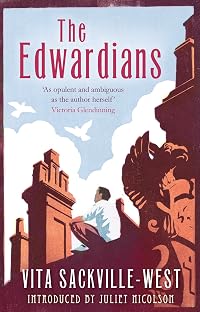

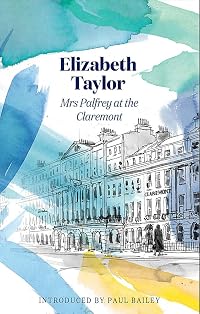

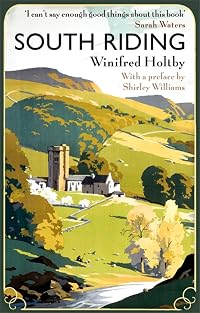


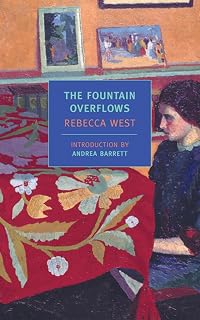


















Member Recommendations

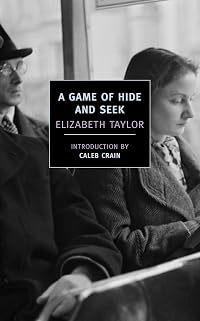
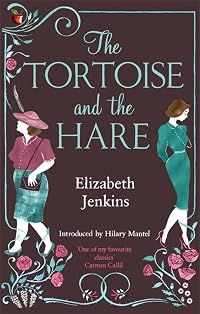
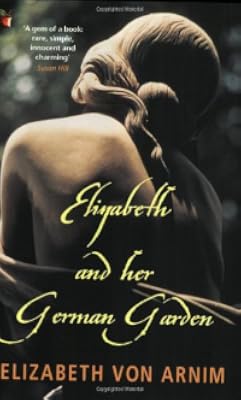
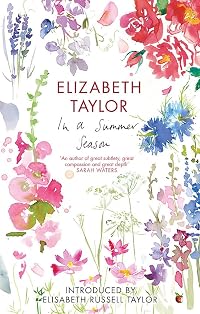
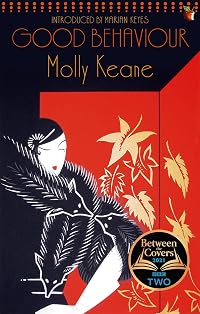
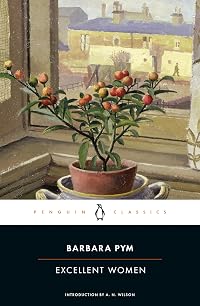
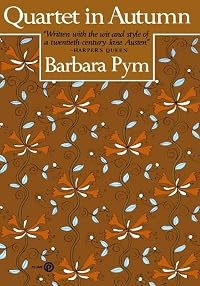
GeraniumCat Thematically similar to All Passion Spent this wise and gentle book is much less well-known and makes an interesting comparison.
20

Member Reviews
When 90-year-old Lord Slane dies, his six children and their spouses come to the home of their mother and condescendingly pat her hand while they plan her future. Ah, but Lady Slane has already made a different plan -- a plan of independence and solitude that she’s been dreaming of through the decades that she devoted to her husband, children and public service.
If you like English-literature classics (including Woolf’s A Room of One’s Own), you’ll like this 1931 novella. If you like quiet stories about aging (for example, Taylor’s Mrs. Palfrey at the Claremont and Pym’s Quartet in Autumn), you’ll like it. It called to my mind Kate Chopin’s short-short work, “The Story of an Hour” which captures in a brilliant flash show more the devastation of going-along vs pursuing one’s own interests. This novella captures it also, though the extended rumination dulls it a little.
(Review based on a copy of the book provided by the publisher.) show less
If you like English-literature classics (including Woolf’s A Room of One’s Own), you’ll like this 1931 novella. If you like quiet stories about aging (for example, Taylor’s Mrs. Palfrey at the Claremont and Pym’s Quartet in Autumn), you’ll like it. It called to my mind Kate Chopin’s short-short work, “The Story of an Hour” which captures in a brilliant flash show more the devastation of going-along vs pursuing one’s own interests. This novella captures it also, though the extended rumination dulls it a little.
(Review based on a copy of the book provided by the publisher.) show less
All Passion Spent by Vita Sackville-West is a delightful and introspective novel about societal expectations of women versus their personal desires. As a young woman, Lady Slane was expected to be a dutiful wife of a future politician and, hence, abandoned her dreams of being an artist. After the death of her husband 70 years later, she steps away from the expectations of her children and ventures out to finally experience life as an independent woman. All Passion Spent introduces us to a few heart-warming characters and provides a lesson that life should be about the “coulds” not the “shoulds,” and most importantly, to lead life with your heart. This was my first Vita Sackville-West novel, and I found her writing style show more absolutely lovely. While a contemporary of the more modernist Bloomsbury writers, she wrote in a more traditional style with lush, flowing narratives. Vita Sackville-West didn’t consider herself a feminist, but All Passion Spent certainly carries themes of autonomy and self-determination of women. “Achievement was good, but the spirit was better.” Vita may have been best known for her relationship with Virginia Woolf and as muse for Woolf's novel Orlando, but she was also a prolific novelist, nature writer, biographer, and poet. Certainly one of my favorite early 20th century British personalities. Now a favorite author. show less
All Passion Spent by Vita Sackville-West is a delightful and introspective novel about societal expectations of women versus their personal desires. As a young woman, Lady Slane was expected to be a dutiful wife of a future politician and, hence, abandoned her dreams of being an artist. After the death of her husband 70 years later, she steps away from the expectations of her children and ventures out to finally experience life as an independent woman. All Passion Spent introduces us to a few heart-warming characters and provides a lesson that life should be about the “coulds” not the “shoulds,” and most importantly, to lead life with your heart. This was my first Vita Sackville-West novel, and I found her writing style show more absolutely lovely. While a contemporary of the more modernist Bloomsbury writers, she wrote in a more traditional style with lush, flowing narratives. Vita Sackville-West didn’t consider herself a feminist, but All Passion Spent certainly carries themes of autonomy and self-determination of women. “Achievement was good, but the spirit was better.” Vita may have been best known for her relationship with Virginia Woolf and as muse for Woolf's novel Orlando, but she was also a prolific novelist, nature writer, biographer, and poet. Certainly one of my favorite early 20th century British personalities. Now a favorite author. show less
All Passion Spent by Vita Sackville-West; (5*)
What a beautifully written novel!
"All Passion Spent" is about a woman in her late eighties whose husband has just passed away and who finds herself suddenly with the freedom to do as she likes with the remainder of her life. Up until now, she has lived for her husband and her six children.
The children expect her to sell her home, which she does, and share the remaining years she has with them; rotating months between their homes. But Lady Slane has a very different idea for the years she has left. She wants to live very privately in the countryside with her one devoted servant and far from all of her family. She yearns for peace and quiet. So ignoring all of their demands upon her, she show more does exactly that.
Not a lot happens in this novel, but it is not what happens that invades the mind and spirit of the one reading it. It is the getting there, the prose, the language of the book that is taken into one's heart, treasured and held there that matters. This is simply a beautiful story and one I won't forget for a long time. show less
What a beautifully written novel!
"All Passion Spent" is about a woman in her late eighties whose husband has just passed away and who finds herself suddenly with the freedom to do as she likes with the remainder of her life. Up until now, she has lived for her husband and her six children.
The children expect her to sell her home, which she does, and share the remaining years she has with them; rotating months between their homes. But Lady Slane has a very different idea for the years she has left. She wants to live very privately in the countryside with her one devoted servant and far from all of her family. She yearns for peace and quiet. So ignoring all of their demands upon her, she show more does exactly that.
Not a lot happens in this novel, but it is not what happens that invades the mind and spirit of the one reading it. It is the getting there, the prose, the language of the book that is taken into one's heart, treasured and held there that matters. This is simply a beautiful story and one I won't forget for a long time. show less
Little old lady tries, at last, to make her own life after a lifetime of looking after other people's interests and especially her children. Of course, this only rings true if you are from the class of the little old lady or the author - exactly how much 'looking-after' does the Vicereine of India do? She is once described as arranging flowers though - onerous duties indeed. So here we have a deluded, very wealthy old bat who buys a house in Hampstead and has only one servant in order that she may fulfil her childhood ambition of being an artist, although she's never even produced a drawing and never will. She is courted by a very wealthy old man who once fell in love with her (when she was arranging flowers) who pops off leaving her show more his priceless collection of gewgaws instead of the museums and art galleries who are panting for such marvellous freebies to own for themselves.
So what does she do, well she gives away all the money and collections not because she is charitable old bat and doesn't need funds anyway, no, she does it because she is a real bitch, no matter how softly-spoken, so she can dispossess her rapacious children.
Eventually, persuaded by the maid and her lawyer, she does feel guilty about such a thing, but there you go, the wages of sin and all that. Eventually she pops off too and that's that.
Good read, well-written, set in a time and by an author who could not imagine anything much outside her realm of extreme privilege and where poor was only being able to afford a tiny house in a very posh area with only one servant. show less
So what does she do, well she gives away all the money and collections not because she is charitable old bat and doesn't need funds anyway, no, she does it because she is a real bitch, no matter how softly-spoken, so she can dispossess her rapacious children.
Eventually, persuaded by the maid and her lawyer, she does feel guilty about such a thing, but there you go, the wages of sin and all that. Eventually she pops off too and that's that.
Good read, well-written, set in a time and by an author who could not imagine anything much outside her realm of extreme privilege and where poor was only being able to afford a tiny house in a very posh area with only one servant. show less
This was an unusual book. I enjoyed the beginning and the end the most, when Lady Slane's appalling children were entertaining. The middle however was boring and unconvincing. I didn't believe in Lady Slane as a thwarted artist at all, and I didn't believe in her love for her husband either. She seemed incapable of any warm emotion at all. Then there was Mr Bucktrout, who seemed to have wandered in from a Dickens novel...
About Love, Sacrifice, and Redemption
Upon reflection, Vita Sackville-West seems the perfect person to write the story of a highborn woman who subordinates her life fully to the needs of her husband, the demands of his public office, and to motherhood, because she lived her life in nearly complete opposite fashion. While her diplomat husband Harold Nicolson toiled in offices in Europe and the Middle East, she maintained their residence in England, occasionally visiting him and writing of her journey, as in . Lady Deborah Slane only discovers the independence VSW maintained after the death of her husband, Henry Holland, as she casts back upon her life in Part Two, the beautiful and thoughtful heart of the novel. And why did Lady Slane show more sacrifice her ambition to live her life as a painter? For the same reason VSW gave up her famously scandalous affair with Violet Trefusis:
"All the parts of her that were not Henry Holland's had pulled in opposition, yet by this single giant of love they had all been pulled over, as the weaker team in a tug-of-war. Her ambitions, her secret existence, all had given way. She had loved him so much that even her resentment was subdued. She could not grudge him ever the sacrifice he had imposed upon her."
Part Two is where VSW displays her strongly feminist (though she would vigorously object to the word, preferring human rights) viewpoint, particularly in Lady Slane's recollection of her internal struggle over the meaning of her impending marriage to Henry. Betty Friedan gave it a name in 1963: The Feminine Mystique.
Part One of the novel in three parts sets the scene. Upon the death of Henry, the Holland children, all in their 60s, and none, with the exceptions of muddling, sweet Edith and solitary Kay, a man who collects astrolabes and such, present themselves as very likable. They conspire a plan spun from their own needs to care for their mother. Then Lady Slane shocks them with her announcement she will take a house in Hampstead, an expression of unexpected independence that most of them see as a bit of senility. As VSW tells it:
"Herbert, Carrie, Charles, and William decided that their mother must be mad. They took a step forward, and from having always thought her simple, decided that old age had definitely affected her brain. Her madness, however, was taking a harmless and even convenient form. William might be thinking rather regretfully of the lost subsidy to his house-books, Carrie and Herbert might remain still a little dubious about the eyes of the world, but, on the whole, it was a relief to find their mother settling her own affairs. Kay gazed inquiringly at his mother. He had taken her so much for granted--her gentleness, her unselfishness, her impersonal activities--and now, for the first time in his life, it was becoming apparent to Kay that people could still hold surprises up their sleeves, however long one had known them. Edith alone frolicked in her mind. She thought her mother not mad, but most conspicuously sane."
After Lady Slane moves, we meet people, in addition to her equally elderly maid Genoux, we do like, namely Mr. Bucktrout, the friendly and caring landlord, and the tradesman of varied skills, Mr. Gosheron, two gentlemen who take a greater interest in her well being than her children. Later, VSW introduces Mr. FitzGeorge, the remarkably reclusive millionaire collector of invaluable art purchased at bargain basement prices, what gratifies him most in life. Each of these individuals enriches Lady Slane's last months. And it is Mr. FitzGeorge who empowers Lady Slane to truly stun her children.
Part Three expands upon her relationship with Mr. FitzGeorge, who met her in India when she was Vicereine. She had forgotten him, simply another of the many faces that passed before her during her years with Henry. She, however, forever captivated him. As the months pass, Mr. FitzGeorge explains himself and makes cogent observations about her life and, really, about the lives of many talented women, two of which will give the flavor of his thinking, doubtless the mirror image of VSW's. He says:
"Face it, Lady Slane. Your children, your husband, your splendour, were nothing but obstacles that kept you from yourself. They were what you chose to substitute for your real vocation." To which, upon consideration, she agrees. He follows with: "According to his [Henry] lights, he gave you all you could desire. He merely killed you, that's all. Men do kill women. Most women enjoy being killed; so I am told. Being a woman, I daresay that even you took a certain pleasure in the process."
In the end, Mr. FitzGeorge provides her with something of a second chance. He enables her to upend the selfish plans of her children, delight Edith and Genoux, and allow her great-granddaughter, Deborah, to escape an ordained marriage to pursue her creative dreams, as Lady Slane could and did not.
Highly recommended for its graceful beauty, insights into love and personal independence, and its forward-looking viewpoint. show less
Upon reflection, Vita Sackville-West seems the perfect person to write the story of a highborn woman who subordinates her life fully to the needs of her husband, the demands of his public office, and to motherhood, because she lived her life in nearly complete opposite fashion. While her diplomat husband Harold Nicolson toiled in offices in Europe and the Middle East, she maintained their residence in England, occasionally visiting him and writing of her journey, as in . Lady Deborah Slane only discovers the independence VSW maintained after the death of her husband, Henry Holland, as she casts back upon her life in Part Two, the beautiful and thoughtful heart of the novel. And why did Lady Slane show more sacrifice her ambition to live her life as a painter? For the same reason VSW gave up her famously scandalous affair with Violet Trefusis:
"All the parts of her that were not Henry Holland's had pulled in opposition, yet by this single giant of love they had all been pulled over, as the weaker team in a tug-of-war. Her ambitions, her secret existence, all had given way. She had loved him so much that even her resentment was subdued. She could not grudge him ever the sacrifice he had imposed upon her."
Part Two is where VSW displays her strongly feminist (though she would vigorously object to the word, preferring human rights) viewpoint, particularly in Lady Slane's recollection of her internal struggle over the meaning of her impending marriage to Henry. Betty Friedan gave it a name in 1963: The Feminine Mystique.
Part One of the novel in three parts sets the scene. Upon the death of Henry, the Holland children, all in their 60s, and none, with the exceptions of muddling, sweet Edith and solitary Kay, a man who collects astrolabes and such, present themselves as very likable. They conspire a plan spun from their own needs to care for their mother. Then Lady Slane shocks them with her announcement she will take a house in Hampstead, an expression of unexpected independence that most of them see as a bit of senility. As VSW tells it:
"Herbert, Carrie, Charles, and William decided that their mother must be mad. They took a step forward, and from having always thought her simple, decided that old age had definitely affected her brain. Her madness, however, was taking a harmless and even convenient form. William might be thinking rather regretfully of the lost subsidy to his house-books, Carrie and Herbert might remain still a little dubious about the eyes of the world, but, on the whole, it was a relief to find their mother settling her own affairs. Kay gazed inquiringly at his mother. He had taken her so much for granted--her gentleness, her unselfishness, her impersonal activities--and now, for the first time in his life, it was becoming apparent to Kay that people could still hold surprises up their sleeves, however long one had known them. Edith alone frolicked in her mind. She thought her mother not mad, but most conspicuously sane."
After Lady Slane moves, we meet people, in addition to her equally elderly maid Genoux, we do like, namely Mr. Bucktrout, the friendly and caring landlord, and the tradesman of varied skills, Mr. Gosheron, two gentlemen who take a greater interest in her well being than her children. Later, VSW introduces Mr. FitzGeorge, the remarkably reclusive millionaire collector of invaluable art purchased at bargain basement prices, what gratifies him most in life. Each of these individuals enriches Lady Slane's last months. And it is Mr. FitzGeorge who empowers Lady Slane to truly stun her children.
Part Three expands upon her relationship with Mr. FitzGeorge, who met her in India when she was Vicereine. She had forgotten him, simply another of the many faces that passed before her during her years with Henry. She, however, forever captivated him. As the months pass, Mr. FitzGeorge explains himself and makes cogent observations about her life and, really, about the lives of many talented women, two of which will give the flavor of his thinking, doubtless the mirror image of VSW's. He says:
"Face it, Lady Slane. Your children, your husband, your splendour, were nothing but obstacles that kept you from yourself. They were what you chose to substitute for your real vocation." To which, upon consideration, she agrees. He follows with: "According to his [Henry] lights, he gave you all you could desire. He merely killed you, that's all. Men do kill women. Most women enjoy being killed; so I am told. Being a woman, I daresay that even you took a certain pleasure in the process."
In the end, Mr. FitzGeorge provides her with something of a second chance. He enables her to upend the selfish plans of her children, delight Edith and Genoux, and allow her great-granddaughter, Deborah, to escape an ordained marriage to pursue her creative dreams, as Lady Slane could and did not.
Highly recommended for its graceful beauty, insights into love and personal independence, and its forward-looking viewpoint. show less
Members
- Recently Added By
Lists

Favourite Virago Modern Classics
183 works; 38 members

Fiction Featuring Cranky, Eccentric Old Folks
80 works; 35 members

Top Five Books of 2013
1,562 works; 721 members

20th Century Literature
1,161 works; 55 members

the old and the restless
62 works; 14 members

Bibliography for How to be a Heroine
148 works; 12 members

1930s
262 works; 5 members

Books About Older People
50 works; 11 members

Books Read in 2020
4,379 works; 123 members

Books referenced in A Very Great Profession: The Woman's Novel 1914-39
199 works; 6 members

Best Books of 1926-1935
403 works; 10 members

Unmarried women
66 works; 6 members

Mustich's 1000 Books to Read Before You Die: A Life Changing List
1,001 works; 19 members

Recommend the 20 best books you've read in the last five years
2,168 works; 601 members
Author Information

99+ Works 7,282 Members
Poet and novelist Vita Sackville-West began writing as a child. Born at elegant Knole Castle, scene of Virginia Woolf's novel Orlando (1928), Sackville-West was educated in that 365-room dwelling. In 1913 she married Harold Nicolson (see Vol. 3), journalist, diplomat, and biographer. Despite Nicolson's homosexuality and her own lesbian affair with show more Violet Trefusis, this marriage survived. Poems of East and West, her first book, was published in 1917. She remained unknown except by a small group of literary connoisseurs until 1927, when she received the Hawthornden Prize for a second volume of poetry. At this time she lived in London and was part of the Bloomsbury group, which also included Lytton Strachey (see Vol. 3), E. M. Forster, John Maynard Keynes (see Vol. 3), and Woolf. Sackville-West published many novels and volumes of poetry, biography, and family history, and several books on gardening, as well as book reviews and criticism. All of her writings reflect the same unhurried approach, deep reflection, and brilliantly polished style. Her influence on other writers, especially Woolf, was perhaps greater than her own individual achievement. The Edwardians (1930) and All Passion Spent (1931) are her best-known novels. Sackville-West's son, Nigel Nicholson, recounted the close, but unconventional relationship of his parents in the memoir Portrait of a Marriage, published in 1973. (Bowker Author Biography) show less
Some Editions
Awards and Honors
Notable Lists
Series
Belongs to Publisher Series
Work Relationships
Is contained in
Is abridged in
Common Knowledge
- Canonical title
- All Passion Spent
- Original title
- All Passion Spent
- Alternate titles*
- Toda pasión concluida
- Original publication date
- 1931
- People/Characters
- Deborah Holland (Lady Slane); Mr FitzGeorge; Genoux; Mr Bucktrout; Mr Gosheron; Deborah (Lady Slane's great-grandchild) (show all 12); Edith Holland; Kay Holland; Herbert Holland; Carrie Holland; Charles Holland; William Holland
- Important places
- London, England, UK; Hampstead; India
- Related movies
- All Passion Spent (1986 | TV | IMDb)
- Epigraph
- His servants he with new acquist
Of true experience from this great event
With peace and consolation hath dismist,
And calm of mind, all passions spent.
Samson Agonistes - Dedication
- For Benedict and Nigel
who are young
this story of people who are old
FOR
BENEDICT AND NIGEL
WHO ARE YOUNG
THIS STORY OF PEOPLE WHO ARE OLD - First words
- Henry Lyulph Holland, first Earl of Slane, had existed for so long that the public had begun to regard him as immortal.
Vita Sackville-West began writing All Passion Spent in the spring of 1930. (Introduction) - Quotations
- Man has founded his calculations upon a mathematical system fundamentally false. His sums work out right for his own purposes, because he has crammed and constrained his planet into accepting his premises. Judged by other law... (show all)s, though the answers remain correct, the premises would appear merely crazy; ingenious enough, but crazy.
Of course, she would not question the wisdom of any arrangements they might choose to make. Mother had no will of her own; all her life long, gracious and gentle, she had been wholly submissive - an appendage. It was ssumed t... (show all)hat she had not enough brain to be self-assertive. "Thank goodness," Herbert sometimes remarked, "Mother is not one of those clever women." That she might have ideas whcih she kept to herself never entered into their estimate.
Henry by the compulsion of love had cheated her of her chosen life, yet had given her another life, an ample life, a life in touch with the greater world, if that took her fancy; or a life, alternatively, pressed close up aga... (show all)inst her own nursery. For a life of her own, he had substituted his life with its interests, or the lives of her children with their potentialities. He assumed that she might sink herself in either, if not in both, with equal joy. It had never occurred to him that she might prefer simply to be herself.lf. - Last words
- (Click to show. Warning: May contain spoilers.)
"In the presence of death," she said to Mr. Gosheron, taking refuge in a last convention, "you might at least take off your hat."
(Click to show. Warning: May contain spoilers.)All Passion Spent, the theme and title of her best novel, was not to be her own epitaph. (Introduction) - Blurbers
- Glendinning, Victoria; Nicolson, Nigel
- Canonical DDC/MDS
- 823.912
*Some information comes from Common Knowledge in other languages. Click "Edit" for more information.
Classifications
Statistics
- Members
- 1,338
- Popularity
- 17,901
- Reviews
- 64
- Rating
- (4.06)
- Languages
- 11 — Danish, Dutch, English, French, German, Greek, Italian, Polish, Spanish, Swedish, Portuguese (Portugal)
- Media
- Paper, Audiobook, Ebook
- ISBNs
- 41
- ASINs
- 24