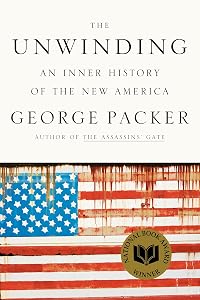
The Unwinding: An Inner History of the New America
by George Packer
On This Page
Description
NATIONAL BOOK AWARD WINNERA NEW YORK TIMES BESTSELLER
A NEW YORK TIMES NOTABLE BOOK
AN NPR BEST BOOK
Selected by New York Times' critic Dwight Garner as a Favorite Book
A Washington Post Best Political Book
A New Republic Best Book
A riveting examination of a nation in crisis, from one of the finest political journalists of our generation
American democracy is beset by a sense of crisis. Seismic shifts during a single generation have created a country of winners and losers, allowing show more unprecedented freedom while rending the social contract, driving the political system to the verge of breakdown, and setting citizens adrift to find new paths forward. In The Unwinding, George Packer, author of The Assassins' Gate: America in Iraq, tells the story of the United States over the past three decades in an utterly original way, with his characteristically sharp eye for detail and gift for weaving together complex narratives.
The Unwinding journeys through the lives of several Americans, including Dean Price, the son of tobacco farmers, who becomes an evangelist for a new economy in the rural South; Tammy Thomas, a factory worker in the Rust Belt trying to survive the collapse of her city; Jeff Connaughton, a Washington insider oscillating between political idealism and the lure of organized money; and Peter Thiel, a Silicon Valley billionaire who questions the Internet's significance and arrives at a radical vision of the future. Packer interweaves these intimate stories with biographical sketches of the era's leading public figures, from Newt Gingrich to Jay-Z, and collages made from newspaper headlines, advertising slogans, and song lyrics that capture the flow of events and their undercurrents.
The Unwinding portrays a superpower in danger of coming apart at the seams, its elites no longer elite, its institutions no longer working, its ordinary people left to improvise their own schemes for success and salvation. Packer's novelistic and kaleidoscopic history of the new America is his most ambitious work to date.
. show less
Tags
Recommendations








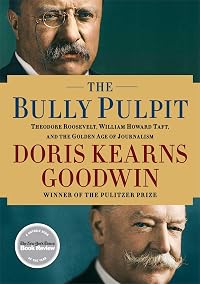
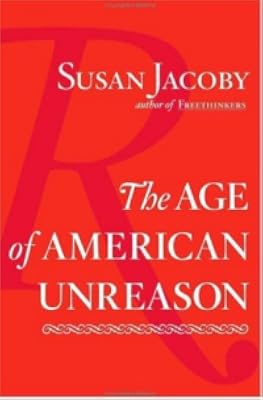

Member Recommendations
Member Reviews
For a book that I bought under a misconception, and for a discount, The Unwinding actually proved to be both instructive and engrossing. True, there are around 130 pages too many for the subject - Packer makes his point in part one - but I love reading about life's successes and survivors, and this account of twenty-first century America has plenty of both.
Packer writes about Tammy Thomas, working to bring together a struggling Ohio community; Dean Price, an biofuel entrepreneur from North Carolina; Peter Thiel, who cofounded PayPal in Silicon Valley; Jeff Connaughton, getting nowhere fast in Washington; and covers the housing market in Tampa, Florida, from the perspective of a reporter and the polarized views of residents. Also covered show more are brief biographies on celebrities including Oprah Winfrey, Sam Walton (Wal-Mart), Colin Powell and Jay-Z. Some stories were more interesting than others - Tammy Thomas, the Occupy Wall Street sit-in of 2011 - but the contrast of the best and the worst of the American Dream in action really got me thinking. Basically, modern day America can be summed up in two phrases - 'I'm all right, Jack, pull up the ladder', and 'the rich are getting richer, while the poor are getting poorer'. No different to the UK, I suppose, except that money and materialism determine the 'class system' of the US, while the top layer driving this country into the dirt have either inherited or married power, rather than earning it. Fact is more depressing than fiction. show less
Packer writes about Tammy Thomas, working to bring together a struggling Ohio community; Dean Price, an biofuel entrepreneur from North Carolina; Peter Thiel, who cofounded PayPal in Silicon Valley; Jeff Connaughton, getting nowhere fast in Washington; and covers the housing market in Tampa, Florida, from the perspective of a reporter and the polarized views of residents. Also covered show more are brief biographies on celebrities including Oprah Winfrey, Sam Walton (Wal-Mart), Colin Powell and Jay-Z. Some stories were more interesting than others - Tammy Thomas, the Occupy Wall Street sit-in of 2011 - but the contrast of the best and the worst of the American Dream in action really got me thinking. Basically, modern day America can be summed up in two phrases - 'I'm all right, Jack, pull up the ladder', and 'the rich are getting richer, while the poor are getting poorer'. No different to the UK, I suppose, except that money and materialism determine the 'class system' of the US, while the top layer driving this country into the dirt have either inherited or married power, rather than earning it. Fact is more depressing than fiction. show less
The Unwinding tells the story of the American economic and cultural shifts through the stories of a variety of individual Americans. He starts and ends with Dean Price, a smart white working class guy living in the piedmont of North Carolina, descendent of a tobacco-growing family in a tobacco-growing region which had, by the millennium, fallen into apparently permanent disintegration. Packer also follows Jeff Connaughton, a white upper-middle-class political strategist who spent much of his career shadowing Joe Biden, hoping for a crack at helping "his guy" earn a term in the White House. We meet Tammy Thomas, a relatively uneducated black assembly line worker from Youngstown, Ohio, who watched her community go into deep decline after show more the Steel jobs disappeared and who, later, found purpose and meaning in local politics as she poured herself into saving the town she loves. We also peek briefly into the lives of Newt Gingrich, Robert Ruben, Andrew Breitbart, Elizabeth Warren, and we follow the radically different trajectories of Tampa and Silicon Valley through the latter part of the 20th and the first decade of the 21st centuries.
Packer's story is that of a persistent unwinding of the American dream, and the role that big money (and I mean big money) has played in that decline. The influence held by the extremely wealthy few and the ineffectualness of even the most inspired leaders to nudge the direction of our plutocracy is, at best, discouraging. Packer calls out individuals who hold some bit of responsibility in creating our current economic and political mess, including Presidents Clinton and Obama, as well as (for example) banks that have lobbied effectively for deregulation even in the face of sound evidence that said regulations protect our economy from boom-bust cycles that tend to most adversely affect the middle and working classes. But this work is less about individuals than it is about a system. It is about a system that is vulnerable to manipulation and undermining, and it is about a system that has become so esoteric and complicated that it's difficult to see where actual individuals might alter its course.
Packer published this book well before the 2016 election but his work appears to have predicted the outcome. I was particularly struck by his description of Matt, Dean Price's lodger who found himself working for Wal-Mart, earning about $8 an hour:
'What really depressed Matt was how monetary everything had become in America, how it was just the biggest profit at the lowest cost. It was all about me, me, me, and no one wanted to help anyone else. The lobbyists, the politicians -- they were all corrupt, taking everything from those who had the least. His favorite thing to do when he was alone in Dean's basement relaxing with a beer was to watch old episodes of The Andy Griffith Show. It was a better America back then. If he could have grown up at any time it would have been in the fifties, which was the last great time in America. He hated to say it but it was true.'
And there is this, referring to Peter Thiel, who originally founded PayPal and has become a wacky but terrifyingly influential billionaire who is on the executive committee of Donald Trump's transition team:
'Thiel was an elite among elites, but he directed his intellectual fire at his own class, or the people a couple of rungs down -- professionals making two or three hundred thousand a year. Elites had become complacent. If they couldn't grasp the reality of a tech slowdown, it was because their own success skewed them in an optimistic direction, and wealth inequality kept them from seeing what was happening in places like Ohio. "If you were born in 1950 and were in the top ten percent, everything got better for twenty years automatically. Then, after the late sixties, you went to a good grad school, and you got a good job on Wall Street in the late seventies, and then you hit the boom. Your story has been one of incredible, unrelenting progress for sixty years. Most people who are sixty years old in the U.S. -- not their story at all." The establishment had been coasting for a long time and was out of answers. Its failure pointed to new directions, maybe Marxist, maybe libertarian, along a volatile trajectory that it could no longer control.'
I don't make that much money nor did I ever work on Wall Street, but I know he is speaking to and of me.
This book moved along at an easy clip: engaging, infuriating, terrifying, and fascinating. I learned a lot. I feel a deeper and more complex understanding of our political and economic system and how we have ended up where we currently are. I feel no more clarity about how we get out of this mess, but I'm also no less determined to join the chorus of voices demanding that the 1950s were not really the greater America and that a return to the cultural values of that time are not the answer to our apparently inexorable decline as a nation. Highly recommended. show less
Packer's story is that of a persistent unwinding of the American dream, and the role that big money (and I mean big money) has played in that decline. The influence held by the extremely wealthy few and the ineffectualness of even the most inspired leaders to nudge the direction of our plutocracy is, at best, discouraging. Packer calls out individuals who hold some bit of responsibility in creating our current economic and political mess, including Presidents Clinton and Obama, as well as (for example) banks that have lobbied effectively for deregulation even in the face of sound evidence that said regulations protect our economy from boom-bust cycles that tend to most adversely affect the middle and working classes. But this work is less about individuals than it is about a system. It is about a system that is vulnerable to manipulation and undermining, and it is about a system that has become so esoteric and complicated that it's difficult to see where actual individuals might alter its course.
Packer published this book well before the 2016 election but his work appears to have predicted the outcome. I was particularly struck by his description of Matt, Dean Price's lodger who found himself working for Wal-Mart, earning about $8 an hour:
'What really depressed Matt was how monetary everything had become in America, how it was just the biggest profit at the lowest cost. It was all about me, me, me, and no one wanted to help anyone else. The lobbyists, the politicians -- they were all corrupt, taking everything from those who had the least. His favorite thing to do when he was alone in Dean's basement relaxing with a beer was to watch old episodes of The Andy Griffith Show. It was a better America back then. If he could have grown up at any time it would have been in the fifties, which was the last great time in America. He hated to say it but it was true.'
And there is this, referring to Peter Thiel, who originally founded PayPal and has become a wacky but terrifyingly influential billionaire who is on the executive committee of Donald Trump's transition team:
'Thiel was an elite among elites, but he directed his intellectual fire at his own class, or the people a couple of rungs down -- professionals making two or three hundred thousand a year. Elites had become complacent. If they couldn't grasp the reality of a tech slowdown, it was because their own success skewed them in an optimistic direction, and wealth inequality kept them from seeing what was happening in places like Ohio. "If you were born in 1950 and were in the top ten percent, everything got better for twenty years automatically. Then, after the late sixties, you went to a good grad school, and you got a good job on Wall Street in the late seventies, and then you hit the boom. Your story has been one of incredible, unrelenting progress for sixty years. Most people who are sixty years old in the U.S. -- not their story at all." The establishment had been coasting for a long time and was out of answers. Its failure pointed to new directions, maybe Marxist, maybe libertarian, along a volatile trajectory that it could no longer control.'
I don't make that much money nor did I ever work on Wall Street, but I know he is speaking to and of me.
This book moved along at an easy clip: engaging, infuriating, terrifying, and fascinating. I learned a lot. I feel a deeper and more complex understanding of our political and economic system and how we have ended up where we currently are. I feel no more clarity about how we get out of this mess, but I'm also no less determined to join the chorus of voices demanding that the 1950s were not really the greater America and that a return to the cultural values of that time are not the answer to our apparently inexorable decline as a nation. Highly recommended. show less
Using portraits of Americans, both famous and generally unknown, Packer explores the unwinding of the American dream, which he claims began in the 70’s and has continued unabated since. From the perspective of the bizarre and disappointing 2016 presidential campaign, one can only conclude that this book, published in 2013, was indeed prescient. Income inequality has widened; little substantive has been done to reduce global warming; our involvement in war has increased; our political system has morphed to more closely resemble an oligarchy favoring the wealthy and corporations than a representative democracy; and the social contract is unraveling leaving more and more people behind. Based on the rhetoric of the 2016 campaign, show more Americans have begun to awaken to the problems, but are divided about how to tackle them—more war and repression versus sweeping social programs. Unfortunately, there seems to be little interest in coming together to seek solutions. Instead, fear and bickering are the order of the day and the beat goes on.
This is not an easy book to read because it offers little in the way of solutions and sees few leaders willing or able to address the problems. We seem to be trapped in a complex world that is rapidly changing while we have few resources to respond. The take home lessons from Packer’s portraits seem to be that we are all on our own. Grifters and con men abound in these stories and most of us are pretty easy pickings because the resources that used to sustain us no longer work. The few continue to prosper while the majority languishes. show less
This is not an easy book to read because it offers little in the way of solutions and sees few leaders willing or able to address the problems. We seem to be trapped in a complex world that is rapidly changing while we have few resources to respond. The take home lessons from Packer’s portraits seem to be that we are all on our own. Grifters and con men abound in these stories and most of us are pretty easy pickings because the resources that used to sustain us no longer work. The few continue to prosper while the majority languishes. show less
"As Van Sickler drove back to the office to write up his story, he thought about the way Bender had looked at him. The contempt. Just like the comments that came in after one of his stories went up on the Web—they had nothing to do with what he'd written, minds were already made up. Every local issue was drowned out by the shouting on national cable news. There were no longer any facts that everyone in America could agree on at the start. For example, his paper had gone to great effort and expense to dig up information about the benefits as well as the costs, of light rail in Tampa, and none of it had sunk in. What had sunk in was “No tax for tracks” … p 314
“Peter Thiel told an interviewer, 'In the history of the modern world, show more inequality has only been ended through communist revolution, war or deflationary economic collapse. It's a disturbing question which of these three is going to happen today or if there's a fourth way out.' ” p372.
How did we get this way?
George Packer follows both well known and unknown people in this episodic biography of the last few decades. Attitudes change: civility in public office fails, profit rules, there is less and less recognition of the humanity behind the people effected by companies closing, downsizing, pension plans disappearing, real estate bubbles bursting. At last it seems that doing all the right things – working to own a home and educate your kids aren't enough; in fact in many cases it isn't even a possibility.
This book was written in 2013 but, clearly illustrates what is going on in America in 2017. Many of the biographical political snippets are people in power today.
Highly recommended. Deeply saddening.
My only criticism is that I wish it had an index. show less
“Peter Thiel told an interviewer, 'In the history of the modern world, show more inequality has only been ended through communist revolution, war or deflationary economic collapse. It's a disturbing question which of these three is going to happen today or if there's a fourth way out.' ” p372.
How did we get this way?
George Packer follows both well known and unknown people in this episodic biography of the last few decades. Attitudes change: civility in public office fails, profit rules, there is less and less recognition of the humanity behind the people effected by companies closing, downsizing, pension plans disappearing, real estate bubbles bursting. At last it seems that doing all the right things – working to own a home and educate your kids aren't enough; in fact in many cases it isn't even a possibility.
This book was written in 2013 but, clearly illustrates what is going on in America in 2017. Many of the biographical political snippets are people in power today.
Highly recommended. Deeply saddening.
My only criticism is that I wish it had an index. show less
George Packer attempts to tell the story of the unwinding of the American post war consensus, unapologetically using the techniques adopted by the great Dos Passos in "USA". He follows the stories of 4 people closely - Dean Price, born on a tobacco farm but with entrepreunerialism in his DNA, Tammy Thomas, a factory worker from Pennsylvania turned activist, trying her best to give her children a better life as American manufacturing and manufacturing towns fall apart, Jeff Conaughton, lawyer, lobbyist, Biden activist and Peter Thiel, Silicon valley innovator.
Interspersed with these are profiles of the great and the good - Oprah, Collin Powell, Elizabeth Warren, Newt Gingrich et al - and a significant exposure of the real estate bubble show more in Florida and its impact on ordinary people caught in the get rich quick illusion of house flipping
I enjoyed the book a lot. I found myself full of admiration for the resilience of people like Thomas and Price. They are constantly dealt a bad hand from factors outside their control - especially in the case of Thomas. As the song goes, they get knocked down and they get back up again. But I was also struck forcefully - as must be the authors intent - by the deepening inequality thats increasingly built into the system. The difference between the world of Connaughton and Thiel, who despite occasional setbacks, are cushioned and protected by their education and networks, and the lives of some of the Florida residents described in the book, living in their cars, is very very stark.
The pen portraits of famous Americans are good fun; Winfrey and Gingrich are ripped into, Powell gets a sympathetic review and the appraisal of Jay Z is acute. But its the main protaganists that carry the book. A greater number of these would have made the book even better; the immigrant experience for example is not covered and surely America is nothing without its immigrants. Some older citizens would also have been welcomed
But its still a very compelling read show less
Interspersed with these are profiles of the great and the good - Oprah, Collin Powell, Elizabeth Warren, Newt Gingrich et al - and a significant exposure of the real estate bubble show more in Florida and its impact on ordinary people caught in the get rich quick illusion of house flipping
I enjoyed the book a lot. I found myself full of admiration for the resilience of people like Thomas and Price. They are constantly dealt a bad hand from factors outside their control - especially in the case of Thomas. As the song goes, they get knocked down and they get back up again. But I was also struck forcefully - as must be the authors intent - by the deepening inequality thats increasingly built into the system. The difference between the world of Connaughton and Thiel, who despite occasional setbacks, are cushioned and protected by their education and networks, and the lives of some of the Florida residents described in the book, living in their cars, is very very stark.
The pen portraits of famous Americans are good fun; Winfrey and Gingrich are ripped into, Powell gets a sympathetic review and the appraisal of Jay Z is acute. But its the main protaganists that carry the book. A greater number of these would have made the book even better; the immigrant experience for example is not covered and surely America is nothing without its immigrants. Some older citizens would also have been welcomed
But its still a very compelling read show less
This is a book which sounds depressing and fatalistic, but presents wonderful stories of individuals making things work in a declining middle America. It's beautifully written, and may be the best non fiction book I read in 2013.
This National Book Award winner tells the story of the US over the last 30 years or so--and it's the way of telling it that makes the book unique. Packer uses the lives of several people as examples of what has happened. These include Tammy Thomas, factory worker/community organizer in Youngstown, Dean Price, son of a North Carolina tobacco farmer, now biofuel manufacturer/advocate, Jeff Connaughton, a D.C. insider, on again/off again lobbyist/Biden aide, and Peter Thiel, a Valley venture capitalist billionaire. Their stories over the last thirty years are told in episodic, roughly chronological chapters. Interspersed with their stories are the stories of a dozen or so public figures, including Oprah, Newt Gingrich, Elizabeth Warren, show more Jay-Z, Colin Powell, Sam Walton, Raymond Carver, Robert Rubin, and so on. There's also a long series of narratives devoted to the city of Tampa, which Packer uses to illustrate the real estate bubble and burst. There are also excerpts from newspaper headlines, advertisements and song lyrics, a la Dos Passos's USA Trilogy.
I loved this book. There are no authorial intrusions, and each of the individuals profiled. Each story is independent, and there are varying political biases, but all share a common theme: things are falling apart.
Highly recommended:
4 1/2 stars show less
I loved this book. There are no authorial intrusions, and each of the individuals profiled. Each story is independent, and there are varying political biases, but all share a common theme: things are falling apart.
Highly recommended:
4 1/2 stars show less
Members
- Recently Added By
Lists

Top Five Books of 2013
1,562 works; 721 members

Top Five Books of 2017
757 works; 230 members

Non-Fiction Worth Reading
1,016 works; 262 members

Entender el mundo
46 works; 1 member

True Color
16 works; 1 member

Books Read in 2013
1,630 works; 51 members

National Book Award winners
65 works; 11 members

Pleasant Surprises: Books That Exceeded Our Expectations
418 works; 143 members
Talk Discussions
Past Discussions
Group Read: The Unwinding, by George Packer in 75 Books Challenge for 2017 (March 2017)
Author Information

26+ Works 3,760 Members
George Packer is an American writer, teacher, and former Peace Corps volunteer. He was also a writing instructor at Harvard, Bennington, and Emerson Universities. Packer was born on August 13, 1960, in Santa Clara, California. Packer's experience with the Peace Corps helped him write the book The Village is Waiting. He has also written The Half show more Man, Central Square and The Assassins' Gate: America in Iraq. He was a supporter of the Iraq war. He was a finalist for the 2004 Michael Kelly Award. In 2013, Packer's work of nonfiction entitled, The Unwinding: An Inner History of the New America, won the U.S. National Book Award. (Bowker Author Biography) George Packer's journalism & essays have appeared in "Harper's", "Dissent", "The New York Times", "The 1997 Pushcart Prize" anthology, "The Art of the Essay", & elsewhere. His latest books is "Blood of the Liberals" (FSG, 2000). He lives in Brooklyn, New York. (Publisher Provided) show less
Some Editions
Awards and Honors
Awards
Distinctions
Work Relationships
Has as a student's study guide
Common Knowledge
- Original publication date
- 2013
- People/Characters
- Ann Waters; Colin Powell; Jay-Z; Sam Walton; Oprah Winfrey; Jeff Connaughton (show all 12); Robert Rubin; Raymond Carver; Elizabeth Warren; Joe Biden; Tammy Thomas; Frank Purnell
- Important places
- Washington, D.C., USA; Youngstown, Ohio, USA; Tampa, Florida, USA; Silicon Valley, California, USA
- Dedication
- For Laura, Charlie, and Julia
- First words
- No one can say when the unwinding began--when the coil that held Americans together in its secure and sometimes stifling grip first gave way.
- Last words
- (Click to show. Warning: May contain spoilers.)He would get the land back.
- Original language
- English
- Canonical DDC/MDS
- 973.924
- Canonical LCC
- E839
Classifications
- Genres
- General Nonfiction, History, Nonfiction
- DDC/MDS
- 973.924 — History & geography History of North America United States 1901- Cold War, Vietnam War, Digital Age (1953-2001) Richard Nixon (1969-1974) Watergate Scandal, U.S. withdrawal from Vietnam
- LCC
- E839 — History of the United States United States Later twentieth century, 1961-2000 Political history Un-American activities
- BISAC
Statistics
- Members
- 1,496
- Popularity
- 15,555
- Reviews
- 38
- Rating
- (4.05)
- Languages
- 8 — Chinese, Dutch, English, French, German, Italian, Portuguese, Spanish
- Media
- Paper, Audiobook, Ebook
- ISBNs
- 26
- ASINs
- 14