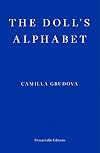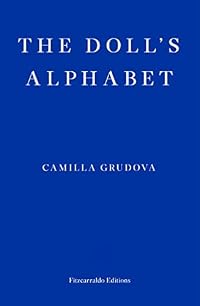
The Doll's Alphabet
by Camilla Grudova
On This Page
Description
""This doll's eye view is a total delight and surveys a world awash with shadowy wit and exquisite collisions of beauty and the grotesque." -Helen Oyeyemi, author of Boy, Snow, Bird "Down to its most particular details, The Doll's Alphabet creates an individual world-a landscape I have never encountered before, which now feels like it was been waiting to be captured, and waiting to captivate, all along." -Sheila Heti, author of How Should a Person Be "Marvellous. Grudova understands that the show more best writing has to pull off the hardest aesthetic trick-it has to be both memorable and fleeting." -Deborah Levy, author of Hot Milk Dolls, sewing machines, tinned foods, mirrors, malfunctioning bodies-by constantly reinventing ways to engage with her obsessions and motifs, Camilla Grudova has built a universe that's highly imaginative, incredibly original, and absolutely discomfiting. The stories in The Doll's Alphabet are by turns child-like and naive, grotesque and very dark: the marriage of Margaret Atwood and Angela Carter. Camilla Grudova lives in Toronto. She holds a degree in Art History and German from McGill University, Montreal. Her fiction has appeared in The White Review and Granta"-- show lessTags
Recommendations




Member Reviews
‘’A woman discovered that a bunch of her jewels had faces carved into them, someone else a gargoyle tattoo on their back, and a car was found with three stone kings sitting inside.’’
I had read a number of reviews and articles on Camilla Grudova’s work but I hadn’t found the chance to familiarise myself with her writing. Now that I’ve read The Doll’s Alphabet, all I can say is that I have found a new writer whose books I’ll always choose without even glancing at the blurb. This is a mesmerizing collection.
Traces of Angela Carter and Margaret Atwood can be found in these stories but I would say that Grudova has established a style of her own and can be considered a household name that needs no comparisons. Personally, I show more found her writing to be miles ahead of Atwood’s short stories and the features of Magical Realism are presented in a more whimsical, ethereal yet terrifying way than Carter, even when we’re dealing with ‘’heavy’’ themes. And every story serves serious themes related to womanhood, gender dynamics and freedom.
Setting her stories in fluid time periods, in unnamed cities and countries, Grudova uses recurring motifs to comment on transformation and development, the woman’s struggle to escape a world dominated by men and a society that ‘’honours’’ preconceived notions about woman with religious devotion, imposing false expectations on the women’s shoulders. The sewing machine is an instrument that creates tailor-made clothes and tailor-made ideas. Women use this invention to create their own visions and escape. Same goes for dolls that retain a prominent position throughout the collection. The doll is one of the simulacra of life and, let us be honest, the deep desire of the society to regard women as dolls that need to stay pretty, delicate and above all silent. Well, thank you very much but no.
Still, love exists even in terrifying settings. There may be dysfunctional couples but desire and love haven’t vanished. Feelings change, bound to external factors that influence our lives and change is fundamental to achieve independence. These are the 13 stories created by a brilliant mind.
Unstitching: A woman unstitches herself. Soon, more women follow her example much to the dismay of their husbands and partners. A simple yet powerful metaphor of expressing your true self and the difficulty of being a woman.
The Mouse Queen: A couple of young academics specializing in Latin. The corpse of a female dwarf, pagan gods, Catholicism, Ovid, dolls, English Literature, Greek Mythology, motherhood and, naturally, Tchaikovsky and The Nutcracker in a story that is the definition of perfection.
The Gothic Society: A Gothic Society creates havoc in a community. A story that is extremely short, cryptic and exciting.
Waxy: A totalitarian state where women are taught how to ‘’support’’ and ‘’please’’ their Men, where participation in the Exams is mandatory, where the regime’s Philosophy Books have become twisted Bibles. A community where privacy is nonexistent, where chemicals leave women bold, where people disappear overnight. A terrifying story about birth control and motherhood, twist and betrayal, relationships and freedom of choice in a state that seems like a more twisted version of the Soviet era. A story that rings all the bells for the current political situation in the USA and in many European countries.
The Doll’s Alphabet: Make of this what you will. I loved it…
The Mermaid: An interesting take on the Selkie myth in a haunting story about marriage and lost chances with references to folklore and Greek Mythology.
Agata’s Machine: Agata has created a rather extraordinary sewing machine...I felt extremely connected to her views on life and I was fascinated by the use of the Pierrot and the Angel as archetypes.
Rhinoceros: A story of a couple that struggles to serve a very particular vision of Art. It may sound simple but the last three pages of this tale will have you stare in shock for minutes…
The Sad Tale of the Sconce: A tale about the ‘’offspring’’ of a wooden mermaid. About sailors, antiques and the circle of life. A haunting story reminiscent of Japanese myths and with a strong influence of Angela Carter. There is an aura of dark sexuality in this tale that makes it extremely powerful and memorable. And did I mention the footnotes at the end?
Edward, Do Not Pamper the Dead: The story of two strange people, set in a country resembling the members of the Soviet Union. Poverty, independence, relationships. And an unusual cemetery.
Hungarian Sprats: What if we had the opportunity to can everything, literally everything, in order to protect and maintain our possessions? It sounds positively scary but for Baron Dambski it becomes an obsession.
The Moth Emporium: A vintage costume shop surrounded by a fence of dismembered mannequin limbs painted blue. A story rich in Danish Literature, Art, culture and the aura of bygone eras. As we approach the end, things take a sinister turn…
Notes From A Spider: The thoughts of a spider in an old European capital. A story definitely inspired by Kafka.
If I had to compare Grudova to another writer, my choice would be Isak Dinesen. Magical Realism, sexuality, feminism, independence. This collection will stay with you long after you read the last page. If you give this collection a chance -even though the themes may seem ‘’dark’’ to you-you will discover one of the most unique stops of your reading journey.
‘’The angel hasn’t come back since you left. He’s waiting for you.’’ show less
I had read a number of reviews and articles on Camilla Grudova’s work but I hadn’t found the chance to familiarise myself with her writing. Now that I’ve read The Doll’s Alphabet, all I can say is that I have found a new writer whose books I’ll always choose without even glancing at the blurb. This is a mesmerizing collection.
Traces of Angela Carter and Margaret Atwood can be found in these stories but I would say that Grudova has established a style of her own and can be considered a household name that needs no comparisons. Personally, I show more found her writing to be miles ahead of Atwood’s short stories and the features of Magical Realism are presented in a more whimsical, ethereal yet terrifying way than Carter, even when we’re dealing with ‘’heavy’’ themes. And every story serves serious themes related to womanhood, gender dynamics and freedom.
Setting her stories in fluid time periods, in unnamed cities and countries, Grudova uses recurring motifs to comment on transformation and development, the woman’s struggle to escape a world dominated by men and a society that ‘’honours’’ preconceived notions about woman with religious devotion, imposing false expectations on the women’s shoulders. The sewing machine is an instrument that creates tailor-made clothes and tailor-made ideas. Women use this invention to create their own visions and escape. Same goes for dolls that retain a prominent position throughout the collection. The doll is one of the simulacra of life and, let us be honest, the deep desire of the society to regard women as dolls that need to stay pretty, delicate and above all silent. Well, thank you very much but no.
Still, love exists even in terrifying settings. There may be dysfunctional couples but desire and love haven’t vanished. Feelings change, bound to external factors that influence our lives and change is fundamental to achieve independence. These are the 13 stories created by a brilliant mind.
Unstitching: A woman unstitches herself. Soon, more women follow her example much to the dismay of their husbands and partners. A simple yet powerful metaphor of expressing your true self and the difficulty of being a woman.
The Mouse Queen: A couple of young academics specializing in Latin. The corpse of a female dwarf, pagan gods, Catholicism, Ovid, dolls, English Literature, Greek Mythology, motherhood and, naturally, Tchaikovsky and The Nutcracker in a story that is the definition of perfection.
The Gothic Society: A Gothic Society creates havoc in a community. A story that is extremely short, cryptic and exciting.
Waxy: A totalitarian state where women are taught how to ‘’support’’ and ‘’please’’ their Men, where participation in the Exams is mandatory, where the regime’s Philosophy Books have become twisted Bibles. A community where privacy is nonexistent, where chemicals leave women bold, where people disappear overnight. A terrifying story about birth control and motherhood, twist and betrayal, relationships and freedom of choice in a state that seems like a more twisted version of the Soviet era. A story that rings all the bells for the current political situation in the USA and in many European countries.
The Doll’s Alphabet: Make of this what you will. I loved it…
The Mermaid: An interesting take on the Selkie myth in a haunting story about marriage and lost chances with references to folklore and Greek Mythology.
Agata’s Machine: Agata has created a rather extraordinary sewing machine...I felt extremely connected to her views on life and I was fascinated by the use of the Pierrot and the Angel as archetypes.
Rhinoceros: A story of a couple that struggles to serve a very particular vision of Art. It may sound simple but the last three pages of this tale will have you stare in shock for minutes…
The Sad Tale of the Sconce: A tale about the ‘’offspring’’ of a wooden mermaid. About sailors, antiques and the circle of life. A haunting story reminiscent of Japanese myths and with a strong influence of Angela Carter. There is an aura of dark sexuality in this tale that makes it extremely powerful and memorable. And did I mention the footnotes at the end?
Edward, Do Not Pamper the Dead: The story of two strange people, set in a country resembling the members of the Soviet Union. Poverty, independence, relationships. And an unusual cemetery.
Hungarian Sprats: What if we had the opportunity to can everything, literally everything, in order to protect and maintain our possessions? It sounds positively scary but for Baron Dambski it becomes an obsession.
The Moth Emporium: A vintage costume shop surrounded by a fence of dismembered mannequin limbs painted blue. A story rich in Danish Literature, Art, culture and the aura of bygone eras. As we approach the end, things take a sinister turn…
Notes From A Spider: The thoughts of a spider in an old European capital. A story definitely inspired by Kafka.
If I had to compare Grudova to another writer, my choice would be Isak Dinesen. Magical Realism, sexuality, feminism, independence. This collection will stay with you long after you read the last page. If you give this collection a chance -even though the themes may seem ‘’dark’’ to you-you will discover one of the most unique stops of your reading journey.
‘’The angel hasn’t come back since you left. He’s waiting for you.’’ show less
I'm always on the lookout for Canadian authors doing new and exciting things with fiction, so I'm grateful to have found Camilla Grudova. The familiar becomes unfamiliar in these warped stories, as the stories seem to be set in a time and place that feels recognizable but impossible to put your finger on. Grudova is imaginative and inventive with language. While most of these stories can be depressing in subject matter, I found this collection to be quite a delight.
It's hard to pick favourite stories, as each story had something unique to offer, but Agatha's Machine and The Moth Emporium definitely stick out in my memory.
It's hard to pick favourite stories, as each story had something unique to offer, but Agatha's Machine and The Moth Emporium definitely stick out in my memory.
The blurb likens this beautifully presented book of short stories to the work of Angela Carter, which I both agree and disagree with. Aesthetically, there are strong similarities; both are ornately macabre. Philosophically, I found in Grudova’s stories little of Carter’s clever social commentary. My favourite of the collection, ‘Waxy’, was a dark little satire on gender roles, but the others presented grotesque imagery and strange happenings without investing them with a great deal of meaning. I don’t object to this on principle, I just prefer a little more substance. The stories circled back to particular objects, rather than themes: sewing machines, bugs, and babies. The treatment of babies as grotesque objects was pretty show more uncomfortable, possibly because I’ve never wanted to have one. I did like Grodova’s knack for evoking cheap and horrible rented rooms. Her worlds are unusually squalid for gothic fiction, which does make them interestingly distinctive. They have an air of entropy and irresistible decline comparable to [b:In the Country of Last Things|19486|In the Country of Last Things |Paul Auster|https://images.gr-assets.com/books/1328287715s/19486.jpg|1010901], a favourite novel of mine. Although I appreciated these settings, the stories didn’t do very much with them. The preoccupation with objects seemed to result in a lack of the structural discipline which sets truly great short stories apart. (The best examples being those of Borges.) Only one, ‘The Moth Emporium’, ends in a narratively satisfying manner.
I am probably harsher towards short story collections than novels because my preference is for the latter; I most likely wouldn’t have read ‘The Doll’s Alphabet’ if I hadn’t been given a copy as a present. Nonetheless, I did enjoy these stories and would be interested to read more of Grudova’s work. show less
I am probably harsher towards short story collections than novels because my preference is for the latter; I most likely wouldn’t have read ‘The Doll’s Alphabet’ if I hadn’t been given a copy as a present. Nonetheless, I did enjoy these stories and would be interested to read more of Grudova’s work. show less
This is an incredibly good book! -- once again Fitzcarraldo Editions have brought my attention to some of the freshest, exciting and inventive writing being written today. A collection of linked short stories linked by common motifs, each one is a perfectly crafted surreal gothic gem which combine into what is set to be one of my favourite books of 2017 (it is only January, but I'm confident of this).
The stories are dark and disturbing, in settings which are close enough to our own world to resonate, but faraway enough to twist and distort physiological and social norms. They are populated by recurring sewing machines, sardines, abandoned shops, bad births, pests, books, tins, wax... But above all ordinary people in nightmarishly drab show more environments under societal systems which are never spelt out.
The writing is alive, uncompromising and constantly surprising -- I can't recommend this book enough. show less
The stories are dark and disturbing, in settings which are close enough to our own world to resonate, but faraway enough to twist and distort physiological and social norms. They are populated by recurring sewing machines, sardines, abandoned shops, bad births, pests, books, tins, wax... But above all ordinary people in nightmarishly drab show more environments under societal systems which are never spelt out.
The writing is alive, uncompromising and constantly surprising -- I can't recommend this book enough. show less
I am somewhat torn between "this is so-so" and "this is complete genius". The writing is so good, though, that this ultimately had to be at least 4⭐️for me. The stories are strange and often grotesque. Many have the feel of being from another time/place. Frequent appearances by sewing machines, things in tin cans, art, pregnancy and birth, and stupid, lazy and/or arrogant men. Oh! And lists. Lots of lists. And, the doll's alphabet has 11 letters; not sure why.
Okay, I read about 2/3 of the short stories in The Doll's Alphabet and they are just plain weird. They start off weird and they stay that way. Without explanation or depth. There are recurring themes: births gone wrong, sewing machines, empty shops, wax, sardines, and people who's body types are outside the norms -- very short, excessively fat, almost albino. Grudova is very good at painting pictures: I could see the people and the places. But I wanted to know the why of the situation and that never came.
Brilliant collection of possibly post-apocalyptic or alternative history based fairy-tales which combine morality, gender roles, and Victorian manners into a strange and striking blend
Members
- Recently Added By
Lists

Books Read in 2018
4,360 works; 110 members
Author Information

6+ Works 408 Members
Awards and Honors
Common Knowledge
- First words
- One afternoon, after finishing a cup of coffee in her living room, Greta discovered how to unstitch herself.
- Last words
- (Click to show. Warning: May contain spoilers.)The last page ends with an indeterminate smudge, whether blood, ink or alcohol, it is too aged for the naked eye to determine.
Classifications
Statistics
- Members
- 248
- Popularity
- 130,251
- Reviews
- 10
- Rating
- (3.76)
- Languages
- English, French, German
- Media
- Paper, Ebook
- ISBNs
- 12
- ASINs
- 4