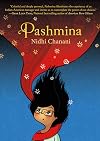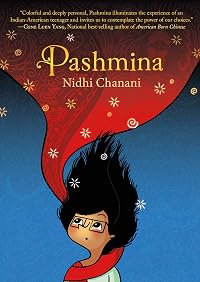
Pashmina
by Nidhi Chanani
On This Page
Description
Indian-American teen, Priyanka "Pri" Das, attempts to reconnect with her mother's homeland through a magical pashmina shawl. Presented in comic book format. Priyanka Das has so many unanswered questions: Why did her mother abandon her home in India years ago? What was it like there? And most importantly, who is her father, and why did her mom leave him behind? But Pri's mom avoids these questions and the topic of India is permanently closed. For Pri, her mother's homeland can only exist in show more her imagination. That is, until she find a mysterious pashmina tucked away in a forgotten suitcase. When she wraps herself in it, she is transported to a place more vivid and colorful than any guidebook or Bollywood film. show lessTags
Recommendations










Member Reviews
In this feminist graphic novel, a young woman searches for the truths of her past with the help of a long-lost aunt; Shakti, the Divine Mother Goddess; and a mysterious shawl.
Indian-American teenager Priyanka “Pri” Das, a talented artist and a bit of a loner, wants to know both why her deeply religious mother left India for California so abruptly years ago and her father’s whereabouts. But Pri’s mother refuses to speak of India: “That subject is permanently closed.” Soon, Pri discovers a mysterious pashmina tucked away in a forgotten suitcase in her Los Angeles home. When she wraps it around her shoulders, she is transported to an imagined, romanticized India—one as colorful as a Bollywood movie, in contrast to the show more black-and-white images of her everyday life. There, a talking elephant and bird introduce Pri (and readers) to the country’s festivals, foods, and fashion, but Pri knows this isn’t the “real” India. To find “her” India and uncover her mother’s secrets, Pri will travel to the subcontinent, where she learns about women’s choices—especially her mother’s—and living without fear. While the book covers well-worn territory about bicultural and immigrant conflicts, it also dramatically explores the ways women are constrained by patriarchy. Pri is the daughter of a single mother, a family structure rarely represented in young people’s literature of the South Asian diaspora.
An original graphic novel, the first written and illustrated by an Indian-American creator, this is both a needed contribution and a first-rate adventure tale. (Graphic novel. 10-14)
-Kirkus Review show less
Indian-American teenager Priyanka “Pri” Das, a talented artist and a bit of a loner, wants to know both why her deeply religious mother left India for California so abruptly years ago and her father’s whereabouts. But Pri’s mother refuses to speak of India: “That subject is permanently closed.” Soon, Pri discovers a mysterious pashmina tucked away in a forgotten suitcase in her Los Angeles home. When she wraps it around her shoulders, she is transported to an imagined, romanticized India—one as colorful as a Bollywood movie, in contrast to the show more black-and-white images of her everyday life. There, a talking elephant and bird introduce Pri (and readers) to the country’s festivals, foods, and fashion, but Pri knows this isn’t the “real” India. To find “her” India and uncover her mother’s secrets, Pri will travel to the subcontinent, where she learns about women’s choices—especially her mother’s—and living without fear. While the book covers well-worn territory about bicultural and immigrant conflicts, it also dramatically explores the ways women are constrained by patriarchy. Pri is the daughter of a single mother, a family structure rarely represented in young people’s literature of the South Asian diaspora.
An original graphic novel, the first written and illustrated by an Indian-American creator, this is both a needed contribution and a first-rate adventure tale. (Graphic novel. 10-14)
-Kirkus Review show less
Teen-aged Priyanka loves making comics and spending time with her extended 'family' (an uncle and aunt who are actually just friends of her mother. The latter is threatened by the arrival of a new baby in the family. Meanwhile, Priyanka is determined to learn more about the father she never knew as well as about her mother's past life in India, despite years of her mother staying mum on those two subjects. One day, Priyanka comes across a suitcase full of her mother's old things, including a pashmina scarf. Whenever Priyanka dons the scarf, she is transported to India -- but is this what India is really like?
There were a lot of things I liked about this book, including the gorgeous artwork that alternates between black-and-white, sepia, show more and full color, depending on what part of the story is being told. I also loved the magical realism, the relationship between the various family members, the subtle message about the rights and choices of women being respected, and the meta-references to the art of making comics. Where I thought the book faltered a little was on expanding some of these themes. Overall though, I was impressed by the author's first foray into graphic novels. My one big quibble is that Priyanka seems to have romantic feelings for one of her teachers, which was inappropriate and unnecessary to the rest of the story being told. show less
There were a lot of things I liked about this book, including the gorgeous artwork that alternates between black-and-white, sepia, show more and full color, depending on what part of the story is being told. I also loved the magical realism, the relationship between the various family members, the subtle message about the rights and choices of women being respected, and the meta-references to the art of making comics. Where I thought the book faltered a little was on expanding some of these themes. Overall though, I was impressed by the author's first foray into graphic novels. My one big quibble is that Priyanka seems to have romantic feelings for one of her teachers, which was inappropriate and unnecessary to the rest of the story being told. show less
This book is just lovely—part fantasy, part heartfelt family story. Much like the movie version of The Wizard of Oz, the "real-world" sequences are in monochrome and the pashmina sequences are in full, saturated color. Not only is it physically beautiful, but it's emotionally beautiful as well.
My only quibble is that Priyanka seems more like a young teen than the seventeen- or eighteen-year-old she's supposed to be. On the plus side, that makes the work suitable for and appealing to a younger reader than it might otherwise.
My only quibble is that Priyanka seems more like a young teen than the seventeen- or eighteen-year-old she's supposed to be. On the plus side, that makes the work suitable for and appealing to a younger reader than it might otherwise.
This is an absolutely stunning graphic novel that incorporates themes of family, belonging, and choice. I picked it up from the library shelves on a whim, and I'm so glad I did. The art is lovely, and the story it tells equally so. I highly recommend this book—but especially to anyone who feels torn between two cultures.
I liked the elements, but Pashmina doesn't quite manage to hang together, for me. The plot keeps darting in different directions, each of which could be the basis for an entire book (the ill-advised prayer which might have come true? mysterious family stuff? the difference between how you imagine a place and reality? straight up magic?), and then doesn't have time to resolve any of them satisfyingly. (A god shows up and tells you it's OK, the baby is going to be fine. You solved half the mysterious family stuff, but what is up with your aunt and uncle's relationship? The scarf is powerful because it shows women their options, and that's the thing that matters most!/Except how you imagine things is always different from how they are, and show more understanding the difference between fantasy and reality is what matters most! Yup straight up magic and ghosts all of a sudden at the end. )
The strongest thread is the one about the twin experiences of being an immigrant and being a child of the diaspora: colorful dreams that reality can't quite live up to, while also trying to distance yourself from the thing that wants to define you. That thread is enough to carry the book, you just have to live with the loose ends. show less
The strongest thread is the one about the twin experiences of being an immigrant and being a child of the diaspora: colorful dreams that reality can't quite live up to, while also trying to distance yourself from the thing that wants to define you. That thread is enough to carry the book, you just have to live with the loose ends. show less
Priyanka lives in America with her mother. They love each other, but Pri's mother always deflects her questions about Pri's father or any of their family back in India. Then, Priyanka finds a beautiful pashmina in her mother's things, and when she puts it on, she sees visions of India. She convinces her mother to let her go visit her aunt, who is pregnant, and learns more about her mother's past and the pashmina's origin. Panels in the real word are in grayscale; panels in which the pashmina shows Priyanka or someone else a vision are in color.
See also: Jukebox (same author/artist)
Quotes
"Do not look at the dirt. Look at the people." (Pri's aunt, 115)
"That pashmina will allow women to see their choices. You shall no longer be bound by show more fear." (Shakti to Rohini, 142) show less
See also: Jukebox (same author/artist)
Quotes
"Do not look at the dirt. Look at the people." (Pri's aunt, 115)
"That pashmina will allow women to see their choices. You shall no longer be bound by show more fear." (Shakti to Rohini, 142) show less
I'm glad to see more diversity in teen graphic novels and the illustrations bordered on manga style which may garner a wider teen audience. The story was pretty solid and discussed themes of cultural identity, women's rights, family issues, religion, and bullying. It is a perfect fit for teens trying to fit in and discover their place. Priyanka is a teenager with lots of questions, why does her mother hang out to their cultural identity, yet refuse to ever go back to India? Where is her father and better yet, who is he? Very well done.
Members
- Recently Added By
Lists

Graphic Novels
94 works; 6 members

Religious Fiction
8 works; 1 member

Asiatic Settings
21 works; 1 member

Books recommended by Calgary Public Library staff
1,588 works; 4 members
Author Information
14+ Works 1,087 Members
Awards and Honors
Awards
Distinctions
Notable Lists
Common Knowledge
- Original publication date
- 2017-10-03
- Blurbers
- Jamieson, Victoria; Yang, Gene Luan
Classifications
- Genres
- Tween, Kids, Graphic Novels & Comics
- DDC/MDS
- 741.5 — Arts & recreation Drawing & decorative arts Drawing Comic books, graphic novels, fotonovelas, cartoons, caricatures, comic strips
- LCC
- PZ7.7 .C415 .P — Language and Literature Fiction and juvenile belles lettres Fiction and juvenile belles lettres Juvenile belles lettres
- BISAC
Statistics
- Members
- 735
- Popularity
- 38,511
- Reviews
- 29
- Rating
- (3.70)
- Languages
- English, Italian
- Media
- Paper, Ebook
- ISBNs
- 9
- ASINs
- 1