On This Page
Description
Set in the world of Anne Charnock's novel A Calculated Life - shortlisted for the Philip K. Dick and Kitschies Golden Tentacle Awards - "The Enclave" reveals the harsh reality of life at the bottom of the heap in late twenty-first century Britain. Advances in genetic engineering have created a population free of addictive behaviour. Violent crime is rare. But out in the enclaves it's survival of the fittest for Lexie - embroiled in a recycling clan and judged unfit for cognitive implants - show more and Caleb, a young climate migrant working as an illegal, who is eager to prosper and one day find his father. The Enclave is a standalone novella. A must-read for any fan of the acclaimed novel A Calculated Life. "Charnock's dystopia is actually believable." - Strange Horizons. "What Charnock has in common with Philip K. Dick is the ability to write unease." - Adam Roberts. show lessTags
Recommendations



















Member Reviews
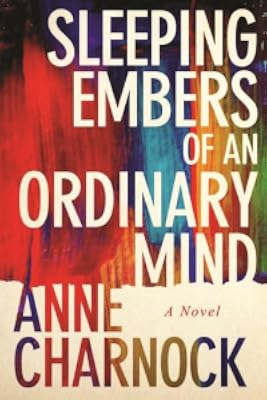
I read Charnock’s Sleeping Embers of an Ordinary Mind last year and thought it very good. In fact, it reminded me of Katie Ward’s Girl Reading, which is one of the best novels I’ve read in the last five years or so. Despite that, I hadn’t really known what to expect on opening The Enclave. Happily, it is good, although I’ve yet to decide if it’s good enough to be nominated for an award (although given how few novellas I read in their year of publication… On the other hand, I wouldn’t nominate an unworthy novella just because it was the only one I’d read that year). The title refers to a ghetto in, or near, a UK city, in which live migrants and UK citizens who have refused to be chipped. (It’s not entirely clear what show more this chipping entails or means in the story, but given The Enclave is set in the same world as Charnock’s novel A Calculated Life, I imagine it’s explained there.) Caleb is a twelve-year-old boy who walked from Spain to the UK with his mother, hoping to find his father who had left earlier. But somewhere in England, he lost his mother, was picked up by Skylark and sold into indentured labour under Ma Lexie. So now he lives in a shack on a rooftop in an enclave. Ma Lexie sells “remade clothes” at a street market, and has three boys to do the sewing for her. But Caleb has an eye for fashion and so Ma Lexie boots out her old overseer and puts Caleb in charge. The story is told first-person, initially from Caleb’s point of view, then from Ma Lexie’s, and finally again from Caleb’s. The characters are convincing, the setting is an all-too-frighteningly-likely consequence of Brexit and the rise in institutional racism in the UK, which means the whole chipping thing does tend to dilute the politics. I’ve never really taken to first-person narrative – it’s always struck me as the weakest, and the one writers with poor imaginations most frequently employ. A first-person narrator who is a Mary Sue (of any gender) is a complete waste of time. Happily, neither Caleb nor Ma Lexie can be accused of that, and the use of first-person here allows Charnock to confine the narrative only to what the narrators know. Although well-written, I’ve a feeling The Enclave could have been stronger, made more of a meal of its setting, said something trenchant about UK politics of the last twelve months. Other than that, bits of The Enclave reminded me, of all things, of Kes, especially the end. And there’s a slight hint of Keith Roberts to it, which is, of course, a plus. I think I probably will end up nominating it next year. show less
Anne Charnock returns to the world she wrote about in A Calculated Life, but it's not connected with that story in any way other than setting. This is a story about Caleb--a climate change refugee--and life in an enclave.
Caleb was traveling with his mother to find his father who had gone on ahead of them. They got separated one night, and Caleb was forced to travel with other refugees to find a "reception center" and, hopefully, his father. Instead, Caleb winds up in an enclave.
If you haven't read A Calculated Life, then here's your background (I'm copying this from my ACL review): "Late 21st Century England. Life isn't glamorous, nor is it horrific. It's a dystopia, where government and corporations control a pacified populace. The show more population has been divided into augmented professionals, who live in wonderful neighborhoods with all the trappings of upper middle class life we see today, and organics, who are crowded together in enclaves outside the city. The enclaves aren't filthy hellholes, but rather subsidized housing where their residents make use of everything to scrape up extra money to take the edge off of their spartan existence."
The story has quite a Dickensian feel to it. The enclave may as well be 19th century London, complete with gangs discretely fighting over the scraps. Caleb is a bit of an innocent waif caught up in it all. He earns his keep by taking recycled materials and making "new" products for his overseer (Ma Lexie) to sell at the flea market. There are other kids that work and live at the flat with him, taken under Ma Lexie's wing to work in her private sweatshop. Caleb spends a lot of time on the roof where he can see Odette, a girl who tends a rooftop tourist garden for her overseer. They exchange notes back and forth by throwing bottles from one roof to the next as neither one of them really gets to leave their buildings.
In the middle third of the book, we get a POV switch to Ma Lexie. Charnock really makes the most of this section. Through Ma Lexie's inner dialogue, we get to see how she views her life in the enclave and how Caleb fits into it. It's terribly revealing about how ignorant Ma Lexie is about her motivations and use of power.
The sci-fi elements are slight, which makes the story accessible to a larger audience. Remove a couple of elements and this story could easily be read as a contemporary fiction. It isn't hard to imagine that the Syrian refugees in Europe are having similar experiences. I think Dickens, with his penchant for an undercurrent of social commentary in his work, would approve. show less
Caleb was traveling with his mother to find his father who had gone on ahead of them. They got separated one night, and Caleb was forced to travel with other refugees to find a "reception center" and, hopefully, his father. Instead, Caleb winds up in an enclave.
If you haven't read A Calculated Life, then here's your background (I'm copying this from my ACL review): "Late 21st Century England. Life isn't glamorous, nor is it horrific. It's a dystopia, where government and corporations control a pacified populace. The show more population has been divided into augmented professionals, who live in wonderful neighborhoods with all the trappings of upper middle class life we see today, and organics, who are crowded together in enclaves outside the city. The enclaves aren't filthy hellholes, but rather subsidized housing where their residents make use of everything to scrape up extra money to take the edge off of their spartan existence."
The story has quite a Dickensian feel to it. The enclave may as well be 19th century London, complete with gangs discretely fighting over the scraps. Caleb is a bit of an innocent waif caught up in it all. He earns his keep by taking recycled materials and making "new" products for his overseer (Ma Lexie) to sell at the flea market. There are other kids that work and live at the flat with him, taken under Ma Lexie's wing to work in her private sweatshop. Caleb spends a lot of time on the roof where he can see Odette, a girl who tends a rooftop tourist garden for her overseer. They exchange notes back and forth by throwing bottles from one roof to the next as neither one of them really gets to leave their buildings.
In the middle third of the book, we get a POV switch to Ma Lexie. Charnock really makes the most of this section. Through Ma Lexie's inner dialogue, we get to see how she views her life in the enclave and how Caleb fits into it. It's terribly revealing about how ignorant Ma Lexie is about her motivations and use of power.
The sci-fi elements are slight, which makes the story accessible to a larger audience. Remove a couple of elements and this story could easily be read as a contemporary fiction. It isn't hard to imagine that the Syrian refugees in Europe are having similar experiences. I think Dickens, with his penchant for an undercurrent of social commentary in his work, would approve. show less
Strange and dangerous though its world might be, I was fascinated to be back in the technologically advanced, genetically enhanced, climate challenged future Manchester that Anne Charnock first explored in A Calculated Life. In that book the main character is Jayna, a simulant or lab created human who has been completely bio-engineered to have beyond genius level intelligence so she can process huge amounts of data for her employer, but in this novella we get a look at lives on the far other end of the human spectrum.
Caleb and Lexie have both been deemed unworthy for the cognitive implants that most natural born people receive to enhance their abilities. They eke out a living in the Enclave, a violent, gritty slum community far from show more Manchester’s hub. With a nod to current events, Caleb is a young illegal immigrant who had to flee Spain when climate change rendered his home virtually unlivable. Caleb and Lexie work together, but though they have a stronger bond than normally found in subordinate-boss relationships, the nature of their reality makes it hard for them to trust anyone.
Charnock writes what I think of as science fiction for grownups, stories in which realistic (if often futuristic) characters and thought-filled themes are as important as her high tension plots. While The Enclave isn’t exactly a sequel to A Calculated Life, those who’ve read the first book will recognize Jayna and her coworker Dave in a brief encounter they have with the characters in this novella. Even Dave’s bees make an appearance.
One thing left to explore in this world is the lives of the elite--the natural born (not lab created) humans who have been equipped with cognitive implants. They have best jobs and the nicest homes, but I wonder how life in this tenuous world would feel to one of them.
I received a complimentary copy of The Enclave from the author, with no obligation to write a review. Review opinions are mine. show less
Caleb and Lexie have both been deemed unworthy for the cognitive implants that most natural born people receive to enhance their abilities. They eke out a living in the Enclave, a violent, gritty slum community far from show more Manchester’s hub. With a nod to current events, Caleb is a young illegal immigrant who had to flee Spain when climate change rendered his home virtually unlivable. Caleb and Lexie work together, but though they have a stronger bond than normally found in subordinate-boss relationships, the nature of their reality makes it hard for them to trust anyone.
Charnock writes what I think of as science fiction for grownups, stories in which realistic (if often futuristic) characters and thought-filled themes are as important as her high tension plots. While The Enclave isn’t exactly a sequel to A Calculated Life, those who’ve read the first book will recognize Jayna and her coworker Dave in a brief encounter they have with the characters in this novella. Even Dave’s bees make an appearance.
One thing left to explore in this world is the lives of the elite--the natural born (not lab created) humans who have been equipped with cognitive implants. They have best jobs and the nicest homes, but I wonder how life in this tenuous world would feel to one of them.
I received a complimentary copy of The Enclave from the author, with no obligation to write a review. Review opinions are mine. show less
4.5/5 stars
The Enclave by Anne Charnock is an excellent short story (Too short! I wanted more). Charnock builds a highly detailed picture of a not-too-distant future world which intersects advances in bioengineering and technology (eg neural implants) with human complexity (refugees, poverty, human trafficking, refusal to assimilate, etc). It's a not too rosy picture of the future, and entirely plausible. The characters are well-developed and you can't help liking them, or at least sympathizing with their lack of choices. I found myself caring for the characters and the story stayed with me long after I finished it.
Summary: Highly recommended to readers of dystopian fiction (eg Wind Up Girl by Bacigalupi).
Disclaimer: I received an show more advance copy of this book via LibraryThing in exchange for a fair review. show less
The Enclave by Anne Charnock is an excellent short story (Too short! I wanted more). Charnock builds a highly detailed picture of a not-too-distant future world which intersects advances in bioengineering and technology (eg neural implants) with human complexity (refugees, poverty, human trafficking, refusal to assimilate, etc). It's a not too rosy picture of the future, and entirely plausible. The characters are well-developed and you can't help liking them, or at least sympathizing with their lack of choices. I found myself caring for the characters and the story stayed with me long after I finished it.
Summary: Highly recommended to readers of dystopian fiction (eg Wind Up Girl by Bacigalupi).
Disclaimer: I received an show more advance copy of this book via LibraryThing in exchange for a fair review. show less
 This review was written for LibraryThing Early Reviewers.
https://nwhyte.livejournal.com/2977240.html
A very nicely done, sad story about migration, exploitation and growing up in a flawed near future England. A story for our times.
A very nicely done, sad story about migration, exploitation and growing up in a flawed near future England. A story for our times.
“The Enclave” by Anne Charnock
As young adult dystopic fiction goes, “The Enclave” is standard. We have two points of view through which the novella is focalised and their lingual space does justice to the writer’s abilities: the adult thinks like an adult, in complete sentences and the child thinks like a child in fragmented sentences. We are introduced to a world in which ecology is relegated to roof tops, industry grimes the streets below and the un-modified people inhabit these outskirt slum towns while the elite modified people inhabit the cities. There is a very clear juxtaposition between the privilege of the city people who are at the same time trapped by their enhanced biology and the struggle of the slum people who show more are trapped in a cycle of survival, but who can exercise radical freedom. Despite these challenging underpinnings, the novella is lack-lustre, it felt too short, even for an instalment in a series. On finishing my copy, I considered that I had received a teaser, but I have since come to realise that this seemingly unfinished work is the story in its entirety.
Despite having access to the point of view of the protagonist, Caleb, it never seemed that his motivation was established, which is why I previously referred to radical freedom. In the context of radical freedom his actions make sense, instead of feeling like the narrative was rushing to a conclusion without reference to the development or history of the character. Likewise, Ma Lexie, the second focaliser, is inconsistent: is she neurotic, vulnerable or a villain? Perhaps the author is attempting to undermine narrative authority and introduce a level of distrust, which later feeds into the interaction between Caleb and his erstwhile fellow-fugitive, Odette. Again, this trust/distrust dichotomy is inconsistent. I wanted to like this novella but found myself having to re-read sections that did not make sense, though some were later explained. It was impossible for me to believe the characters and the narrative dragged. There is a vague feeling that the author is attempting a young adult homage to Margaret Atwood’s “Maddaddam” trilogy, but it did not hit the mark. show less
As young adult dystopic fiction goes, “The Enclave” is standard. We have two points of view through which the novella is focalised and their lingual space does justice to the writer’s abilities: the adult thinks like an adult, in complete sentences and the child thinks like a child in fragmented sentences. We are introduced to a world in which ecology is relegated to roof tops, industry grimes the streets below and the un-modified people inhabit these outskirt slum towns while the elite modified people inhabit the cities. There is a very clear juxtaposition between the privilege of the city people who are at the same time trapped by their enhanced biology and the struggle of the slum people who show more are trapped in a cycle of survival, but who can exercise radical freedom. Despite these challenging underpinnings, the novella is lack-lustre, it felt too short, even for an instalment in a series. On finishing my copy, I considered that I had received a teaser, but I have since come to realise that this seemingly unfinished work is the story in its entirety.
Despite having access to the point of view of the protagonist, Caleb, it never seemed that his motivation was established, which is why I previously referred to radical freedom. In the context of radical freedom his actions make sense, instead of feeling like the narrative was rushing to a conclusion without reference to the development or history of the character. Likewise, Ma Lexie, the second focaliser, is inconsistent: is she neurotic, vulnerable or a villain? Perhaps the author is attempting to undermine narrative authority and introduce a level of distrust, which later feeds into the interaction between Caleb and his erstwhile fellow-fugitive, Odette. Again, this trust/distrust dichotomy is inconsistent. I wanted to like this novella but found myself having to re-read sections that did not make sense, though some were later explained. It was impossible for me to believe the characters and the narrative dragged. There is a vague feeling that the author is attempting a young adult homage to Margaret Atwood’s “Maddaddam” trilogy, but it did not hit the mark. show less
This review was written for LibraryThing Early Reviewers.From the reviews above it is clear that Anne Charnock as a strong reader base and that her earlier work "A Calculated Life" was well received. I have not read her earlier work and "The Enclave" is my first introduction the world of "A Calculated Life". The challenge to any writer seeking to bring new readers into an established world is to make the entry as painless as possible, engaging the new reader while not boring the old. Charnock does this well distributing descriptions of the world through the novella and filling in the pieces of this new society deftly.
The greater issue is the development of the main character Caleb who undergoes a remarkable personal transformation over a fairly brief period of time, all while he is 12 years show more old. It stretched credulity that such a transformation could be affected so quickly at this age. With Caleb as narrator it seemed also that the book was reading as YA fiction.
As confusing was a narrative shift in the middle of the work to Lexie in the middle of the work. While this was useful to provide an adult's perspective of this world of Charnock's the shift also created a second story line that was unresolved at the end of the work.
My thanks to LibraryThing for a review copy. show less
The greater issue is the development of the main character Caleb who undergoes a remarkable personal transformation over a fairly brief period of time, all while he is 12 years show more old. It stretched credulity that such a transformation could be affected so quickly at this age. With Caleb as narrator it seemed also that the book was reading as YA fiction.
As confusing was a narrative shift in the middle of the work to Lexie in the middle of the work. While this was useful to provide an adult's perspective of this world of Charnock's the shift also created a second story line that was unresolved at the end of the work.
My thanks to LibraryThing for a review copy. show less
This review was written for LibraryThing Early Reviewers.Members
- Recently Added By
Lists

2018 Hugo Eligible Novellas
33 works; 9 members
Author Information

6+ Works 484 Members
Anne Charnock is a journalist and novelist. She attended the University of East Anglia, studying environmental sciences. She earned a master's in fine arts at The Manchester School of Art. Her journalism career includes time as a foreign correspondent, travelling in the Middle East, Africa and India. Her work was published in New Scientist, The show more Guardian, Financial Times, Geographical, and other publication. Her novels include A Calculated Life, Sleeping Embers of an Ordinary Mind, Dreams Before the Start of Time. She is author of the novella The Enclave, which won the British Science Fiction Association 2017 Award for Best Short Fiction. Her 2017 novel, Dreams Before the Start of Time, won the 2018 Arthur C Clarke Award for science-fiction. (Bowker Author Biography) show less

Anne Charnock is a LibraryThing Author, an author who lists their personal library on LibraryThing.
All Editions
Awards and Honors
Series

Belongs to Publisher Series
Work Relationships
Is contained in
Common Knowledge
- Canonical title
- The Enclave
- Original publication date
- 2017
Classifications
Statistics
- Members
- 34
- Popularity
- 839,477
- Reviews
- 12
- Rating
- (3.32)
- Languages
- English
- Media
- Paper, Ebook
- ISBNs
- 2
- ASINs
- 1