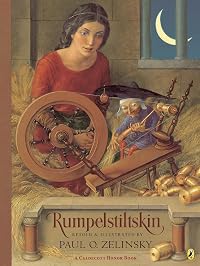
Rumpelstiltskin
by Paul O. Zelinsky
On This Page
Description
A strange little man helps the miller's daughter spin straw into gold for the king on the condition that she will give him her first-born child.Tags
Recommendations
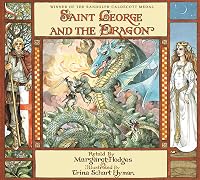
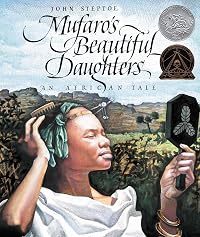
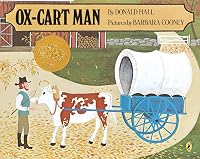
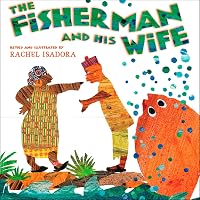


Member Recommendations


Member Reviews
Rumpelstiltskin was always one of my favorite fairytales. I think we discussed this in our fairytale and folklore unit, but I was always more upset by the fact that Rumpelstiltskin was the victim in all of this, not the miller or his daughter. While the promise of wealth and living comfortably would have been a dream come true for any poor family, the miller's daughter eventually ended up marrying a man (the king) who, if she hadn't been able to spin straw into gold, would have ended up killing her. I'm not quite sure what kind of message that sends to young readers. The line between good and evil is hazy at best. Personally, I think Rumple was pigeonholed as the "villian" because of his looks and his way of life; the king, on the other show more hand, because of his wealth, was cast as the "hero." I don't think the messaging in this fairytale is good, per se, but the story is interesting and I always enjoyed the way Rumple wanted to help the miller's daughter, and even though he asked for her first born child, in a way, I think perhaps he was in love with her and thought they could build a life and family together. I think this is an interesting story to read with young children and explore the idea of good and evil, and what that really means. show less
In this retelling of a Grimms' fairytale, a strange little man saves the miller's daughter's life by spinning a roomful of straw into gold. His price is the promise of the miller's daughter's firstborn. The king marries her, and soon after the birth of their first child, the little man comes to demand his payment. The queen is given just three days to discover the little man's name or lose her child forever.
This is the story my grandmother always told us at bedtime, and any retelling will suffer in comparison with her rendition. However, this story is beautifully illustrated. The rich colors and detail tempt the reader to linger over each page. I think my grandmother would have appreciated the charm of the illustrations, even if her show more version of the story was better! show less
This is the story my grandmother always told us at bedtime, and any retelling will suffer in comparison with her rendition. However, this story is beautifully illustrated. The rich colors and detail tempt the reader to linger over each page. I think my grandmother would have appreciated the charm of the illustrations, even if her show more version of the story was better! show less
I loved this story growing up but I had never read this version. This book surprised me. The illustrations were detailed and vibrant. The plot line was very traditional and had a great history at the end of the book that told the evolving tale of how fable came to be. What surprised me was my new take on the role of women in this story. Her rob is to make the king rich, that is what makes her worthy. He threatens to kill her if she cannot spin the straw into gold, yet she marries the man in the end. Is that what we want little girls to see as their role in life? Be beautiful, marry, and make your husband rich. It was a new perspective on an old fable that I had grown up listening and loving. I found discerning. In the classroom, you show more could use it to talk about ways in which women were interpreted throughout history in your curriculum. Have students share what the authors opinion of women might have been? You could also use it to discuss old fables that have lasted centuries and what makes them so engaging. If you were doing a unit on fairy tales or fantasy writing, this book would be great to incorporate. show less
Wonderful illustrations make this story a real treat to read, though it's hard to not feel mad at the fact that this girl was thrust into a predicament because her father was such a dumbass.
I liked this book, because the imagery clearly helps assist the development of the story. The author also did a wonderful job with the language of this book, because since it is an older book, it can be challenging to understand what is being said. A lot of students will pick up on some main themes, but they might not understand their full meaning, "greed and vain". This story also tells students to be careful of what happens in the moment, and to chose your words wisely, because you may never know when karma will come around and get you. This story is also a great way for students to compare and contrast other versions that maybe their other teachers and parents have read to them.
Zelinsky is such an amazing artist that it is hard not to get addicted to his books. He pays homage to the famous tale of Rumpelstiltskin by creating a beautiful Medieval setting, yet lends something new to this tale as well.
This is the version I remember from childhood. It is the classic tale of Rumpelstiltskin, who weaves straw into gold for a young woman whose father boasted of her (nonexistent) skill to the king, in exchange for her firstborn. (Why she would want to marry someone who had twice threatened to kill her doesn't enter into it, apparently. Fairy tales are brutal.) She guesses his name and he flies off in a rage (a less violent end for him than in some versions, where he tears himself in half). Gorgeous, timeless, enchanting illustrations.
Members
- Recently Added By
Lists

Caldecott Honor Books
296 works; 23 members

Reading Rainbow
193 works; 10 members

Books Read in 2023
5,547 works; 145 members

Favorite Picture Books
479 works; 160 members

Favorite Fairy Tales
269 works; 102 members
Author Information

19+ Works 5,965 Members
Paul O. Zelinsky Paul O. Zelinsky was born in Evanston, Illinois and grew up in the suburbs of Chicago. He received his B. A. from Yale and his M. F. A. from the Tyler School of Art, and from there went on to become an award winning illustrator. Zelinsky is the illustrator of three Caldecott Honor books, including "Hansel and Gretel" published in show more 1985, "Rumpelstiltskin" in 1987, and "Swamp Angel" by Anne Isaacs in 1995. He is the adapter and illustrator of "The Maid and the Mouse and the Odd-shaped House," "The Lion and the Stoat," "The Wheels on the Bus," and the illustrator of a trio of books by Beverly Cleary. In 2015 he illustrated the New Zealand Best Seller Circle, Square, Moose. (Bowker Author Biography) show less
Some Editions
Awards and Honors
Work Relationships
Is contained in
Is a retelling of
Common Knowledge
- Canonical title
- Rumpelstiltskin
- Original title
- Rumpelstiltskin
- Original publication date
- 1986
- People/Characters
- Rumpelstiltskin
- Dedication
- This one is for Anna
- First words
- Once there was a poor miller who had a beautiful daughter.
- Last words
- (Click to show. Warning: May contain spoilers.)And he was never heard from again.
- Disambiguation notice
- A retelling of the original Rumpelstiltskin story by Paul O. Zelinsky.
Classifications
Statistics
- Members
- 2,606
- Popularity
- 7,252
- Reviews
- 165
- Rating
- (4.09)
- Languages
- 7 — Chinese, English, Finnish, French, Greek, Spanish, Swedish
- Media
- Paper, Audiobook, Ebook
- ISBNs
- 45
- UPCs
- 1
- ASINs
- 13