On This Page
Description
Larry Niven created his popular Magic Goes Away universe in 1967, and it has been a source of delight and inspiration ever since. By asking the simple question, What if magic were a finite resource?, Niven brought to life a mesmerizing world of wonder and loss, of hope and despair. The success of his first story collection, The Magic Goes Away, birthed two sequel anthologies, The Magic May Return and More Magic. All three volumes are collected here for the first time, with stories by Niven show more himself, as well as contributions by such luminaries of fantasy as Roger Zelazny, Fred Saberhagen, Steven Barnes, and Poul Anderson.Featuring a brand-new introduction by Larry Niven, The Magic Goes Away Collection gives readers insight into the breathtaking world of Niven and Jerry Pournelle's The Burning City and Burning Tower and stands on its own as a landmark in fantasy fiction show lessTags
Recommendations





















Member Reviews
It's funny, I remember, strange little bits around this book.
I remember the book coming out the week of my 16th birthday. A couple of weeks after that event, I took the four-hour bus ride from the little town I lived in back to my home city of Oshawa to visit friends for the weekend. And while I was there, I visited the local Coles in the mall and picked up this book.
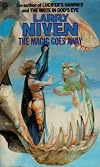
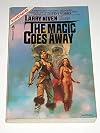
Of course I had to have it. It was Larry Niven, a SF author I'd been devouring for a couple of years now, ever since I read RINGWORLD. And even better, it had a Boris Vallejo cover, an artist I was quickly becoming enamoured with for his Doc Savage and fantasy book covers. And this seemed to have a vague Conan feel about it. What could go wrong?
And, on that long four-hour show more bus ride back home on the Sunday, I read the entire book, cover to cover. I was usually impressed with myself when I devoured a book in a day, but this one hardly counted. It seemed half the book was illustrations—granted, they were gorgeous illustrations by the talented Esteban Maroto—and the font size was...well, large.
Congratulations, young Tobin, your first case of shrinkflation, and your first novella.
I also remember feeling somewhat underwhelmed by the whole thing. I mean, this was a trade paperback, instead of the pocket sized books I typically bought. It was lavishly illustrated. It was Larry Niven!
And it was just...kind of...meh.
Now, almost five decades later, I have the opportunity to revisit it, as I'd stumbled across a copy of THE MAGIC MAY RETURN (up next in my reading order), so I figured I'd do a re-read to reacquaint myself with the world.
And now, just like when I was a freshly-minted sixteen, now I'm a freshly minted sixty-three and you know what?
It's still just...kind of...meh.
There's some interesting ideas in here, and there's a couple of times when the characters break out of their blandness and become fun for a moment, but overall, it feels very by-the-numbers. Curmudgeonly old magicians. A wise, but super-hot female magician who takes a fancy to the younger, scarred, manly, super-hot barbarian. Sure, Niven makes the barbarian a little more vulnerable because of his past sins, enough to swear off swords, but as soon as another sword presents itself, he's right back at it.
Had Niven more of the fantasy chops, and gave some depth to the characters, and some logic to the magic system, this might have been a classic in the genre. Instead, it feels more like a guy who had kind of a cool idea, and the publisher padded out the truncated plot with some pretty pictures.
We'll see what happens when Niven invites other authors into his sandbox with the next book. show less
I remember the book coming out the week of my 16th birthday. A couple of weeks after that event, I took the four-hour bus ride from the little town I lived in back to my home city of Oshawa to visit friends for the weekend. And while I was there, I visited the local Coles in the mall and picked up this book.
Of course I had to have it. It was Larry Niven, a SF author I'd been devouring for a couple of years now, ever since I read RINGWORLD. And even better, it had a Boris Vallejo cover, an artist I was quickly becoming enamoured with for his Doc Savage and fantasy book covers. And this seemed to have a vague Conan feel about it. What could go wrong?
And, on that long four-hour show more bus ride back home on the Sunday, I read the entire book, cover to cover. I was usually impressed with myself when I devoured a book in a day, but this one hardly counted. It seemed half the book was illustrations—granted, they were gorgeous illustrations by the talented Esteban Maroto—and the font size was...well, large.
Congratulations, young Tobin, your first case of shrinkflation, and your first novella.
I also remember feeling somewhat underwhelmed by the whole thing. I mean, this was a trade paperback, instead of the pocket sized books I typically bought. It was lavishly illustrated. It was Larry Niven!
And it was just...kind of...meh.
Now, almost five decades later, I have the opportunity to revisit it, as I'd stumbled across a copy of THE MAGIC MAY RETURN (up next in my reading order), so I figured I'd do a re-read to reacquaint myself with the world.
And now, just like when I was a freshly-minted sixteen, now I'm a freshly minted sixty-three and you know what?
It's still just...kind of...meh.
There's some interesting ideas in here, and there's a couple of times when the characters break out of their blandness and become fun for a moment, but overall, it feels very by-the-numbers. Curmudgeonly old magicians. A wise, but super-hot female magician who takes a fancy to the younger, scarred, manly, super-hot barbarian. Sure, Niven makes the barbarian a little more vulnerable because of his past sins, enough to swear off swords, but as soon as another sword presents itself, he's right back at it.
Had Niven more of the fantasy chops, and gave some depth to the characters, and some logic to the magic system, this might have been a classic in the genre. Instead, it feels more like a guy who had kind of a cool idea, and the publisher padded out the truncated plot with some pretty pictures.
We'll see what happens when Niven invites other authors into his sandbox with the next book. show less
A short fantasy novel. It delivers what it says on the tin: there was magic, now there isn't magic. Mana is a natural resource that has been used up. A group of wizards—some of them former rivals—team up with a soldier with PTSD from accidentally destroying Atlantis to try to reach the untapped magical energy they believe can be found on the moon. To do so, they'll have to kill a god. I was pleasantly surprised to find the entire book packed with line drawings by Esteban Maroto.
A short late-70s fantasy novel featuring several wizards and a warrior on a mission to replenish the world's dwindling reserves of magical energy. I'm not a huge sword 'n' sorcery fan, personally, but this one was a pleasant enough read as such things go. It features a few nice little wrinkles that make the usual fantasy cliches feel slightly less cliched, takes itself seriously but not too seriously, and completely avoids the bloat that is endemic to fantasy these days. In fact, it's even shorter than the 200 or so pages it appears to be; the edition I have devotes almost as much space to illustrations as to text. (The illustrations, by the way, are competent enough, but, unsurprisingly, they seem to exist largely to showcase a nearly show more naked woman, who is not, it should be noted, described as nearly naked anywhere in the story.)
There's also a pretty good little essay on the subject of Niven's fantasy included at the end. show less
There's also a pretty good little essay on the subject of Niven's fantasy included at the end. show less
This novel seems to pride itself on the rationality with which it presents the possibility of ancient thaumaturgy. Still, the theory of magic involved is pretty meager, and sustains little reflection. The book is too slow-paced to qualify as ripping adventure, and the prose style and characterizations rate no special acclaim. It does succeed to a certain degree as a parable about the economy of fossil fuels.
The illustrations are pretty, and complement the text nicely. The laudatory afterword isn't much worth reading, except that it did provide me with the genre term "logical fantasy," which I now use for library tagging purposes.
The illustrations are pretty, and complement the text nicely. The laudatory afterword isn't much worth reading, except that it did provide me with the genre term "logical fantasy," which I now use for library tagging purposes.
What I like about this book is the attempt to bring magic fantasy into science fiction. Or is it the other way around? Here Niven gives us a typical fantasy story and setting but with a twist: Magic is a real form of energy, and like fossil fuels it isn't exhaustible. So the story is in the dying age, where everything mythical and magical is crumbling as the energy that gives them life and form dribbles away. The reason: A weapon of mass destruction, a device that wastes energy at a tremendous pace, so sucking the power from any mage or beast. Sound familiar? I enjoyed this book and I think the idea works. What is a werewolf to do?
This is the first book I have ever read solely authored by Larry Niven. I'm a big fan of his collaborations with Jerry Pournelle. They have a great partnership. So I decided to try Niven at full strength to see whether I would enjoy the rest of his work. I'm reasonably pleased. This book provides the setting Niven and Pournelle would later use in Burning City and Burning Tower. A prehistoric world powered by magic, magic that is running dangerously low.
A council of wizards embarks on a last hopeless quest to save the magic. They seek to resurrect the last god, hidden away in the frozen wastes of the North. Sometimes you should be careful what you wish for.
I liked the book. Niven has a fun style, summed up in the surprise afterword by show more Sandra Miesel as logical fantasy. The afterword was truly a shock; I didn't expect any such thing in this massively illustrated paperback. It was a bit wordy, but there was some fun stuff in there. This was a good introduction to Niven. I'll probably pick up some more of his work soon. show less
A council of wizards embarks on a last hopeless quest to save the magic. They seek to resurrect the last god, hidden away in the frozen wastes of the North. Sometimes you should be careful what you wish for.
I liked the book. Niven has a fun style, summed up in the surprise afterword by show more Sandra Miesel as logical fantasy. The afterword was truly a shock; I didn't expect any such thing in this massively illustrated paperback. It was a bit wordy, but there was some fun stuff in there. This was a good introduction to Niven. I'll probably pick up some more of his work soon. show less
A quest story with some interesting episodes. An entertainment.
Members
- Recently Added By
Author Information

333+ Works 98,432 Members
Larry Niven received his B.A. in mathematics in 1962. His first novel, World of Ptavvs (1966), was a success and launched his career. Niven has won five Hugos and one Nebula award, testimony that his colleagues in the science fiction world respect his work. Perhaps Niven's most well-known creation is Ringworld, a distant planet that may be taken show more as a metaphor for Earth, as it was once great but has since fallen into decay. (Bowker Author Biography) show less
Some Editions
Awards and Honors
Awards
Series

Belongs to Publisher Series
Bastei Lübbe Fantasy (20035)
Work Relationships
Is contained in
Has the adaptation
Common Knowledge
- Canonical title*
- Wenn der Zauber vergeht
- Original title
- The Magic Goes Away
- Original publication date
- 1978
- People/Characters
- The Warlock of Warlock's Cave; Kranthkorpool; Clubfoot; Orolandes of Greece; Mirandee; Roze Kattee (show all 19); Hatchap; Llon of Fistfall; Captain Iason of Greece; Piranther; Sheefyre; White Eagle; Harric of Vendhabn; Poul of Vendhabn; Olganna of Vendhabn; Gannik the Frost Giant; Wilf the Frost Giant; Hathsson of Vendhabn; Tolerik the Frost Giant
- Important places
- Prissthil (fictional); Vendhabn (fictional)
- First words
- The waves washed him ashore aboard a section of the wooden roof of an Atlantean winery.
- Last words
- (Click to show. Warning: May contain spoilers.)“Might as well leave them. I wish —”
“What?”
“Nothing.” - Blurbers
- Pournelle, Jerry
- Original language*
- Englisch
*Some information comes from Common Knowledge in other languages. Click "Edit" for more information.
Classifications
Statistics
- Members
- 968
- Popularity
- 27,331
- Reviews
- 10
- Rating
- (3.56)
- Languages
- Dutch, English, German
- Media
- Paper
- ISBNs
- 11
- ASINs
- 13