
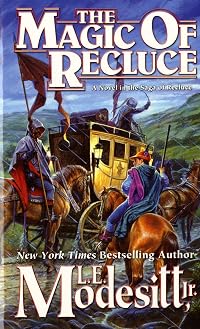
The Magic of Recluce
by L. E. Modesitt Jr.
Saga of Recluce: Publication (01), Saga of Recluce: Chronological (22)
On This Page
Description
L.E. Modesitt Jr.'s The Magic of Recluce begins his bestselling fantasy series the Saga of Recluce, which is one of the most popular in contemporary epic fantasy. Young Lerris yearns to find a place in the world better suited to his skills and temperament. In Recluce this means taking one of two options: permanent exile from Recluce or the dangergeld, a complex, rule-laden wanderjahr in the lands beyond. Many do not survive. Lerris chooses dangergeld. Lerris will need magic in the lands show more beyond, where the power of the Chaos Wizards reigns unchecked, and he must learn to use his powers in an orderly way before his wanderjahr, or fall prey to Chaos. show lessTags
Recommendations

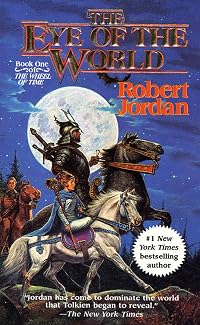
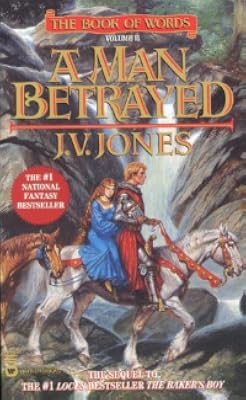
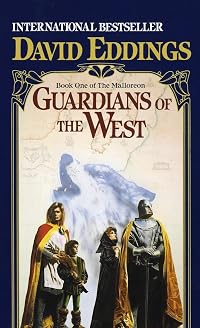
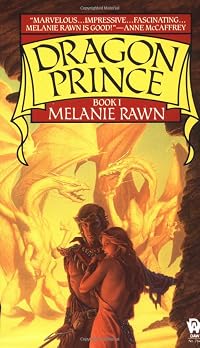


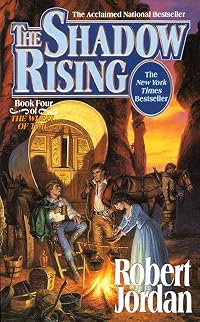
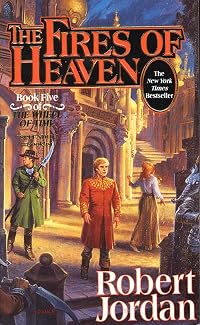
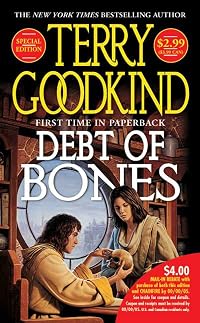
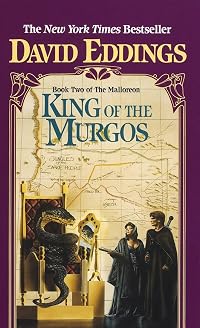
Member Recommendations
sandstone78 The Death of Chaos is the direct sequel to The Magic of Recluce, and continues the story from Lerris' perspective. It is also written from Lerris' first-person perspective, unlike most of the other Recluce books which are in third-person.

sandstone78 Two different takes on the theme of Order and Chaos, and the balance between them or lack thereof.
Member Reviews
An engaging read that starts out as a coming-of-age fantasy and advances into something...else. It reminds me in places of Robert Jordan, Michael Moorcock, and Steven Erikson, yet has its own voice.
Modesitt gets a high score for his world building. The world of Recluce is wonderful and the surface is only scratched at here. I'm intrigued enough by this to read more in the series at some point. Since all but one of the 15 or so other books out there happen before this one, there's plenty of backstory to add to the world here.
I also enjoyed Modesitt's pace and style. He uses the first person narrative style as the story is revealed by the main character, Lerris. He's a young man learning his powers and his way in the world. He seems to show more start out as a typical Rand/Frodo/Richard Cypher/Luke Skywalker type but eventually matures into an interesting character in his own right. And he does this mostly by learning things for himself, rather than having a Gandalf figure to tell him what to do.
The magic system of Recluce is excellent. Basically, all of the magic is centered around the forces of order and chaos, and the manipulation or of keeping them up. This is where the Moorcock reminders are. I enjoyed seeing Lerris learn about the system and seeing it in practice from him and others utilizing it. The chaos-masters and order-masters, commanding the white of chaos and black of order fascinated me. I love the switch from typical by having white reprsent evil and black for good, though they're not quite as black and white (forgive the play on words) as that. Chaos leads to evil but isn't evil in and of itself. Same thing with order. The relationships and manipulations of chaos and order are what end up defining good and evil here.
There are some small breaks in the course of the novel where the author switches to a present tense third person and gives us hints as to other happenings away from Lerris. I had mixed feelings about those. While they were interesting and helped set up some of the big picture drama, they were too few and far between to really help the story that much. They were also pretty vague and honestly took away from some of the surprise later. It was a jolt in the narrative whenever one of these came up, both to switch into the third person and then back to Lerris's view. In my opinion, they should have been left out. Or, where there was something useful there, maybe it could have been told to Lerris by someone on the road. As far as giving the reader something that Lerris didn't know, that doesn't make sense in a first person story. There was a LOT going on that he didn't pick up all the details on, and that was fine. It added to the mystery of the world and story.
The other annoying thing wasn't as minor. In fact, it bugged the piss out of me and might have helped keep this book from a 5-star rating. The f**king sound effects! That was a narrative flaw that could very well get a book tossed into the burn pile. If this story wasn't as engaging as it was, that would have had me heading right back to the library to drop this thing in the overnight return.
Here's an example:
"Tharoom...thud...tharoom... Walking the white fir was walking across a massive drum. Antonin's coach must have vied with the real thunder when it rumbled across his bridge...Tharummmm...
Creaaakkkk...The heavy wooden gate, set on massive bronze hinges, eased open even more widely as I watched."
That's annoying. I felt like I was watching one of those old cheesy Batman television episodes. There are ways to describe sound without treating the reader like an idiot or make them feel like they're reading a comic book without pictures. Luckily he didn't really get rolling with this technique too early in the book, and by the time he did I was already hooked by the story. Otherwise it would have been "holy cheesy effects, Batman" and I would have moved on to something else. I was able to live with them eventually, my eyes blurring over and past to the real narrative beyond.
Overall, I give this book high points for the world building, the magic system, the characters, and the writing voice used by Modesitt over the course of most of the novel. I'm definitely interested in reading more books in the Recluce series, I'm just hoping he cuts back on the special effects. show less
Modesitt gets a high score for his world building. The world of Recluce is wonderful and the surface is only scratched at here. I'm intrigued enough by this to read more in the series at some point. Since all but one of the 15 or so other books out there happen before this one, there's plenty of backstory to add to the world here.
I also enjoyed Modesitt's pace and style. He uses the first person narrative style as the story is revealed by the main character, Lerris. He's a young man learning his powers and his way in the world. He seems to show more start out as a typical Rand/Frodo/Richard Cypher/Luke Skywalker type but eventually matures into an interesting character in his own right. And he does this mostly by learning things for himself, rather than having a Gandalf figure to tell him what to do.
The magic system of Recluce is excellent. Basically, all of the magic is centered around the forces of order and chaos, and the manipulation or of keeping them up. This is where the Moorcock reminders are. I enjoyed seeing Lerris learn about the system and seeing it in practice from him and others utilizing it. The chaos-masters and order-masters, commanding the white of chaos and black of order fascinated me. I love the switch from typical by having white reprsent evil and black for good, though they're not quite as black and white (forgive the play on words) as that. Chaos leads to evil but isn't evil in and of itself. Same thing with order. The relationships and manipulations of chaos and order are what end up defining good and evil here.
There are some small breaks in the course of the novel where the author switches to a present tense third person and gives us hints as to other happenings away from Lerris. I had mixed feelings about those. While they were interesting and helped set up some of the big picture drama, they were too few and far between to really help the story that much. They were also pretty vague and honestly took away from some of the surprise later. It was a jolt in the narrative whenever one of these came up, both to switch into the third person and then back to Lerris's view. In my opinion, they should have been left out. Or, where there was something useful there, maybe it could have been told to Lerris by someone on the road. As far as giving the reader something that Lerris didn't know, that doesn't make sense in a first person story. There was a LOT going on that he didn't pick up all the details on, and that was fine. It added to the mystery of the world and story.
The other annoying thing wasn't as minor. In fact, it bugged the piss out of me and might have helped keep this book from a 5-star rating. The f**king sound effects! That was a narrative flaw that could very well get a book tossed into the burn pile. If this story wasn't as engaging as it was, that would have had me heading right back to the library to drop this thing in the overnight return.
Here's an example:
"Tharoom...thud...tharoom... Walking the white fir was walking across a massive drum. Antonin's coach must have vied with the real thunder when it rumbled across his bridge...Tharummmm...
Creaaakkkk...The heavy wooden gate, set on massive bronze hinges, eased open even more widely as I watched."
That's annoying. I felt like I was watching one of those old cheesy Batman television episodes. There are ways to describe sound without treating the reader like an idiot or make them feel like they're reading a comic book without pictures. Luckily he didn't really get rolling with this technique too early in the book, and by the time he did I was already hooked by the story. Otherwise it would have been "holy cheesy effects, Batman" and I would have moved on to something else. I was able to live with them eventually, my eyes blurring over and past to the real narrative beyond.
Overall, I give this book high points for the world building, the magic system, the characters, and the writing voice used by Modesitt over the course of most of the novel. I'm definitely interested in reading more books in the Recluce series, I'm just hoping he cuts back on the special effects. show less
Excellent world building and superb magic system with an annoyingly dense but affable young adult protagonist on a quest. Lerris is 'the chosen one' but for all the wrong reasons or completely mysterious hidden reasons until he's painted himself into a corner with his fumbling choices. Lerris isn't burdened with a prophecy, but he resists the status quo of Recluce. Lerris is just your typical young adult with attention deficit disorder (i.e., he's bored and finds everything boring), but Recluce doesn't prescribe Ritalin. Somewhat like extreme Amish, Recluce peacefully forces their misfits to either exile permanently or go on dangergeld (similar to rumspringa but with a quest attached), during which they must decide if they can return to show more Recluce and succumb to its creed and worldview (seeking perfection in Order). This novel follows Lerris on his journey as a dangergelder until he understands all that Recluce embodies and effects, and reaches his decision.
If you are looking for a story with character growth, Lerris' journey as an exile from Recluce will fit that bill. If you are looking for a new fantasy world with a detailed history, divergent societies, a logical robust magic system, with a different spin on the age-old struggle between angels and demons, good and evil, black and white, order and chaos, then you've come to the right story and series.
Modesitt's Recluce series reminds me of Asimov's robot stories. He sets up a scenario with some basic, seemingly simple rules (for example, Asimov's Three Laws of Robotics and Modesitt's Order/Chaos balance system as glimpsed through snippets of The Basis of Order) and proceeds to challenge those rules with his world and its characters. While each novel adds a piece of the broader puzzle, for the most part, like this first one, the books stand alone quite well. show less
If you are looking for a story with character growth, Lerris' journey as an exile from Recluce will fit that bill. If you are looking for a new fantasy world with a detailed history, divergent societies, a logical robust magic system, with a different spin on the age-old struggle between angels and demons, good and evil, black and white, order and chaos, then you've come to the right story and series.
Modesitt's Recluce series reminds me of Asimov's robot stories. He sets up a scenario with some basic, seemingly simple rules (for example, Asimov's Three Laws of Robotics and Modesitt's Order/Chaos balance system as glimpsed through snippets of The Basis of Order) and proceeds to challenge those rules with his world and its characters. While each novel adds a piece of the broader puzzle, for the most part, like this first one, the books stand alone quite well. show less
Stopped reading after about 2 hours of listening to the Audible version (he was doing a great job--I could tell who the characters were from the voices), primarily because it wasn't holding my interest and I know there are other books out there.
Right now Lerris is essentially at Dangergeld school, but instead of school being interesting, or mentioned as an aside to more exciting topics, or dealt with in a sentence (e.g. "and after five years had learned all they had to teach him"), no, we're getting lectures. Lots of specific lectures. Detailed lectures. And if Lerris dares breathe funny, the lecturers will say things like "No, you don't understand" and then repeat the lecture.
If I have to learn something, I'd rather learn Japanese, or show more macrame, not the complicated ethics of a magic system in an imaginary place. This is still supposed to be entertainment! So I'm out.
I also tend to have limited love for large, sprawling epics encompassing dozens of books and 20 times that many place names and 50 times that many characters, so I shall cut my losses quickly and move on. I love fantasy (The Last Unicorn, The Lies of Locke Lamora, Howl's Moving Castle), but not this kind, I guess (I'm similarly unenthralled by the works of Robert Jordan, George R.R. Martin, etc.).
(Note: 5 stars = amazing, wonderful, 4 = very good book, 3 = decent read, 2 = disappointing, 1 = awful, just awful. I'm fairly good at picking for myself so end up with a lot of 4s). I feel a lot of readers automatically render any book they enjoy 5, but I grade on a curve! show less
Right now Lerris is essentially at Dangergeld school, but instead of school being interesting, or mentioned as an aside to more exciting topics, or dealt with in a sentence (e.g. "and after five years had learned all they had to teach him"), no, we're getting lectures. Lots of specific lectures. Detailed lectures. And if Lerris dares breathe funny, the lecturers will say things like "No, you don't understand" and then repeat the lecture.
If I have to learn something, I'd rather learn Japanese, or show more macrame, not the complicated ethics of a magic system in an imaginary place. This is still supposed to be entertainment! So I'm out.
I also tend to have limited love for large, sprawling epics encompassing dozens of books and 20 times that many place names and 50 times that many characters, so I shall cut my losses quickly and move on. I love fantasy (The Last Unicorn, The Lies of Locke Lamora, Howl's Moving Castle), but not this kind, I guess (I'm similarly unenthralled by the works of Robert Jordan, George R.R. Martin, etc.).
(Note: 5 stars = amazing, wonderful, 4 = very good book, 3 = decent read, 2 = disappointing, 1 = awful, just awful. I'm fairly good at picking for myself so end up with a lot of 4s). I feel a lot of readers automatically render any book they enjoy 5, but I grade on a curve! show less
I rather liked this. I suspect it's a marmite book though. Hence this being more of an anti-review than a review. I also suspect I will come back to this once I've read further down the series.
On the surface it's a typical fantasy saga starter - young boy of modest means, goes on a quest to save the world, kind of thing. Except it's made pretty clear that isn't what's happening at all. Lerris is not of modest means, he's not going on a quest by choice, it's exile, and his task is less to save the world, than to figure out how to not be a nitwit and ruin it all with the great power he might be able to wield, if he ever learns how. And so with a modicum of training (but not all that much, relatively) he is set adrift.
Specifics then: Lots show more of the things that other reviewers complain about didn't bother me, or even were my favourite bits.
The pace (or lack of, in places) was fine for me. I deeply appreciated the way Lerris figured out his own abilities, and how to finish his quest Lerris was very young - but smart. The idea that given time, enough clues, and left to his own devices, things would "click" did not at all surprise me, that's how my brain works, and how one of my daughters does too. She, in particular will ask all day long for answers to study questions - but I learnt long ago if I tell her the answer, and ask again tomorrow, she's forgotten. It makes her whine when I go all Socratic method on her, but then a half hour later when we're doing dishes or something else entirely, she'll suddenly say "Oh! I got it!" My other kids are not at all like this (despite which, they also got the Socratic treatment, because it's how *my* brain works, as mentioned.) I suspect she'd be very like Lerris, in the same situation, she would complain, be annoying as hell, procrastinate on reading the damn book - and then it would all go "click" for her one day and she'd see through it all.
Initially the tendency to describe surroundings (particularly furniture) seemed to drag, but after a while, and once I came to understand the magic system in place here, it actually became not just useful, but enjoyable. It was like I was learning to see things through Lerris eyes, in some small way.
The onomatopoeia - didn't bother me. I only even noticed it from Gairloch, who at several points in the story was my favourite character anyway, so it's only fitting he should get dialogue. Of a kind.
The First/Third person switching (Lerris adventures are told in first person, anything he's not around for in omniscient third): I liked it! I am so tired of the multiple POV character style that seems trendy these days, and having to spend the first paragraph of every chapter trying to figure out who's telling me the story now. It was a tiny bit jarring the first instance, but only because I wasn't ready for it, by the second I knew what was happening.
There's really not much more to say - this is book 1 of a series that has so far reached 18 books, yet it's actually the second to last, chronologically. That's a little disconcerting (I'm almost tempted to skip the next book, which is the last book chronologically, and start reading the history until I get back to here.) show less
On the surface it's a typical fantasy saga starter - young boy of modest means, goes on a quest to save the world, kind of thing. Except it's made pretty clear that isn't what's happening at all. Lerris is not of modest means, he's not going on a quest by choice, it's exile, and his task is less to save the world, than to figure out how to not be a nitwit and ruin it all with the great power he might be able to wield, if he ever learns how. And so with a modicum of training (but not all that much, relatively) he is set adrift.
Specifics then: Lots show more of the things that other reviewers complain about didn't bother me, or even were my favourite bits.
The pace (or lack of, in places) was fine for me. I deeply appreciated the way Lerris figured out his own abilities, and how to finish his quest Lerris was very young - but smart. The idea that given time, enough clues, and left to his own devices, things would "click" did not at all surprise me, that's how my brain works, and how one of my daughters does too. She, in particular will ask all day long for answers to study questions - but I learnt long ago if I tell her the answer, and ask again tomorrow, she's forgotten. It makes her whine when I go all Socratic method on her, but then a half hour later when we're doing dishes or something else entirely, she'll suddenly say "Oh! I got it!" My other kids are not at all like this (despite which, they also got the Socratic treatment, because it's how *my* brain works, as mentioned.) I suspect she'd be very like Lerris, in the same situation, she would complain, be annoying as hell, procrastinate on reading the damn book - and then it would all go "click" for her one day and she'd see through it all.
Initially the tendency to describe surroundings (particularly furniture) seemed to drag, but after a while, and once I came to understand the magic system in place here, it actually became not just useful, but enjoyable. It was like I was learning to see things through Lerris eyes, in some small way.
The onomatopoeia - didn't bother me. I only even noticed it from Gairloch, who at several points in the story was my favourite character anyway, so it's only fitting he should get dialogue. Of a kind.
The First/Third person switching (Lerris adventures are told in first person, anything he's not around for in omniscient third): I liked it! I am so tired of the multiple POV character style that seems trendy these days, and having to spend the first paragraph of every chapter trying to figure out who's telling me the story now. It was a tiny bit jarring the first instance, but only because I wasn't ready for it, by the second I knew what was happening.
There's really not much more to say - this is book 1 of a series that has so far reached 18 books, yet it's actually the second to last, chronologically. That's a little disconcerting (I'm almost tempted to skip the next book, which is the last book chronologically, and start reading the history until I get back to here.) show less
If you like a fantasy series that will keep you in your reading hammock for a good long while, you can’t do better than L. E. Modesitt’s Recluce saga. The 25th book in the series was published this year. The Magic of Recluce (yes, spelled with two c’s) sets up a world with three kinds of magic. White magic invokes the power of chaos and is unsurprisingly the one preferred by villains. Black magic is based on order and is practiced mostly by the good guys. Gray magic tries to balance order and chaos.
This first volume is a coming-of-age story. Lerris is a young man living on the Island of Recluce, where only black magic is allowed. He is bored with order, and after a brief apprenticeship as a woodworker, he is sent on a show more “dangergeld,” a semi-voluntary exile, where, after some military training, he is dispatched into the chaotic world to discover where he fits. show less
This first volume is a coming-of-age story. Lerris is a young man living on the Island of Recluce, where only black magic is allowed. He is bored with order, and after a brief apprenticeship as a woodworker, he is sent on a show more “dangergeld,” a semi-voluntary exile, where, after some military training, he is dispatched into the chaotic world to discover where he fits. show less
This was another one of my series-sampling audio listens, to see if I might want to pursue it in print someday.
Audio Narration
The narrator is Kirby Heyborne. He wasn’t a favorite, but I think most of my issues with him had more to do with the text than with his narration. The main character is whiny, and Heyborne didn’t over dramatize that, but his voice definitely “enhanced” the whininess. I’m not sure I would have liked the character any more in print, but it was even more annoying to listen to him in audio.
I think the text must also have had a lot of spelled-out sound effects, because the narrator was constantly whinnying and making bird noises and crack, whoosh, etc. noises. His whinnying was quite convincing, at least to show more a person like me who has had minimal exposure to real live horses, but it was kind of startling when he would suddenly whinny out of nowhere. The bird noises got even more annoying. With some of the other sound effects, I often didn’t know what they meant until the subsequent text explained them, so it was just an annoyance that didn’t add anything.
He differentiated voices pretty well, so I didn’t have any issues on that score, and I thought he did well with female characters. My one complaint was with a male character whom he voiced like a female character. I don’t remember anything in the text, like mention of a girly voice, that would have given a reason for it. He wasn’t in the story that much though.
Story
The story focuses on Lerris, a young man from an isolated place called Recluce who lacks interest in learning marketable skills and is too restless to give anything the attention necessary to succeed. Recluce has a solution for people like him. They send them off on a “dangergeld” which is basically an ambiguous and unclear quest to go out into the real world and figure stuff out. In the process, he learns about order magic and chaos magic and gets bored a lot.
I got so sick of Lerris whining. Everything was boring to him, and I got bored listening to how bored he was. He constantly complained about not being given answers. The withholding of information for no good reason is a plot trope that annoys me, so I was annoyed both by that and by his complaining about it. Additionally, there were things he didn’t know that it made absolutely no sense for him not to know, considering everybody else from Recluce seemed to know it.
I also got annoyed, especially in the early half, with how Lerris would never take any initiative. He wanted everything to be spoon fed to him. He had a book that could have answered a lot of his questions and taught him things he needed to know, but he ignored it for weeks (months?). He reminded me of people I’ve worked with who were equally unwilling to research, analyze, and experiment in order to truly understand how to do their own job, using me as their auxiliary brain and their personal search engine. (The best is when you have to Google something to find readily available information and then use that info to teach somebody from another department how to do their job…!) So yeah, Lerris pushed a few buttons and made me want to punch the computer through which he was speaking. I restrained myself, if only because I knew I’d need that computer to rant and rave about him later.
He did get better later in the book, maybe around the second half or later, once he got out into the real world and started thinking about people other than himself. From that point the story was easier to listen to, but I also didn’t care that much about the character or his story by that point so it still didn’t hold my attention very well. And most of his successes seemed to be as much from luck as anything. I also never felt like I really understood why Lerris did some of the things he did. I don’t know if I was just missing some of the details because I wasn’t sufficiently engaged in the story, or if the necessary details were really missing. Maybe a combination of the two.
I’m rating it at 2.5 stars but rounding up to 3 on Goodreads. I’m not sure whether I’ll ever revisit this series in print. I didn’t hate it despite all my complaints. It had some potential, and I suspect it would be less annoying in print without all the whinnying and shrieking sound effects. Also, if the series continues to focus on Lerris, then maybe he’ll be less annoying in future books now that he’s grown up a bit. Even so, it’s also a really long series, I think 22 books and counting, and right now I can’t fathom the idea of reading 22+ books like this. show less
Audio Narration
The narrator is Kirby Heyborne. He wasn’t a favorite, but I think most of my issues with him had more to do with the text than with his narration. The main character is whiny, and Heyborne didn’t over dramatize that, but his voice definitely “enhanced” the whininess. I’m not sure I would have liked the character any more in print, but it was even more annoying to listen to him in audio.
I think the text must also have had a lot of spelled-out sound effects, because the narrator was constantly whinnying and making bird noises and crack, whoosh, etc. noises. His whinnying was quite convincing, at least to show more a person like me who has had minimal exposure to real live horses, but it was kind of startling when he would suddenly whinny out of nowhere. The bird noises got even more annoying. With some of the other sound effects, I often didn’t know what they meant until the subsequent text explained them, so it was just an annoyance that didn’t add anything.
He differentiated voices pretty well, so I didn’t have any issues on that score, and I thought he did well with female characters. My one complaint was with a male character whom he voiced like a female character. I don’t remember anything in the text, like mention of a girly voice, that would have given a reason for it. He wasn’t in the story that much though.
Story
The story focuses on Lerris, a young man from an isolated place called Recluce who lacks interest in learning marketable skills and is too restless to give anything the attention necessary to succeed. Recluce has a solution for people like him. They send them off on a “dangergeld” which is basically an ambiguous and unclear quest to go out into the real world and figure stuff out. In the process, he learns about order magic and chaos magic and gets bored a lot.
I got so sick of Lerris whining. Everything was boring to him, and I got bored listening to how bored he was. He constantly complained about not being given answers. The withholding of information for no good reason is a plot trope that annoys me, so I was annoyed both by that and by his complaining about it. Additionally, there were things he didn’t know that it made absolutely no sense for him not to know, considering everybody else from Recluce seemed to know it.
I also got annoyed, especially in the early half, with how Lerris would never take any initiative. He wanted everything to be spoon fed to him. He had a book that could have answered a lot of his questions and taught him things he needed to know, but he ignored it for weeks (months?). He reminded me of people I’ve worked with who were equally unwilling to research, analyze, and experiment in order to truly understand how to do their own job, using me as their auxiliary brain and their personal search engine. (The best is when you have to Google something to find readily available information and then use that info to teach somebody from another department how to do their job…!) So yeah, Lerris pushed a few buttons and made me want to punch the computer through which he was speaking. I restrained myself, if only because I knew I’d need that computer to rant and rave about him later.
He did get better later in the book, maybe around the second half or later, once he got out into the real world and started thinking about people other than himself. From that point the story was easier to listen to, but I also didn’t care that much about the character or his story by that point so it still didn’t hold my attention very well. And most of his successes seemed to be as much from luck as anything. I also never felt like I really understood why Lerris did some of the things he did. I don’t know if I was just missing some of the details because I wasn’t sufficiently engaged in the story, or if the necessary details were really missing. Maybe a combination of the two.
I’m rating it at 2.5 stars but rounding up to 3 on Goodreads. I’m not sure whether I’ll ever revisit this series in print. I didn’t hate it despite all my complaints. It had some potential, and I suspect it would be less annoying in print without all the whinnying and shrieking sound effects. Also, if the series continues to focus on Lerris, then maybe he’ll be less annoying in future books now that he’s grown up a bit. Even so, it’s also a really long series, I think 22 books and counting, and right now I can’t fathom the idea of reading 22+ books like this. show less
This is not the normal sort of book I’d read, as I’m not a huge fan of High Fantasy. But I read this as park of GroupRead on Instragram and I’m glad I did.
Modesitt has a talented for character and world-building. When we start, the main character Lerris is a bored whiny directionless boy. You know, a teenager. But in Recluse, his home country, a world of Order, his attitude creates Chaos. So he is sent on away, to find out if he wants to live by the rules of Recluse (Order) or if he wants to live in the Chaos that the rest of the world resides in.
Through this, Lerris learns and here is where Modesitt’s talent with character development because apparent. Lerris goes from a whiny child to an adult with courage and wisdom. It’s show more fantastic.
As for the world building – the idea of Order and Chaos as magic, the history of the planet, the dark and light, it’s intriguing. In particular, the idea that Chaos magic can help people (food and warmth) but too much causes problems, while Order seems cold and heartless, but in the end, in can bring balance. I want to read more of this world, to learn more about the difference between the magic.
If you enjoy well-developed characters, intriguing world-building, and epic fantasy stories, read this! show less
Modesitt has a talented for character and world-building. When we start, the main character Lerris is a bored whiny directionless boy. You know, a teenager. But in Recluse, his home country, a world of Order, his attitude creates Chaos. So he is sent on away, to find out if he wants to live by the rules of Recluse (Order) or if he wants to live in the Chaos that the rest of the world resides in.
Through this, Lerris learns and here is where Modesitt’s talent with character development because apparent. Lerris goes from a whiny child to an adult with courage and wisdom. It’s show more fantastic.
As for the world building – the idea of Order and Chaos as magic, the history of the planet, the dark and light, it’s intriguing. In particular, the idea that Chaos magic can help people (food and warmth) but too much causes problems, while Order seems cold and heartless, but in the end, in can bring balance. I want to read more of this world, to learn more about the difference between the magic.
If you enjoy well-developed characters, intriguing world-building, and epic fantasy stories, read this! show less
Members
- Recently Added By
Lists

Farm Boy Fantasy
51 works; 21 members

Epic Fantasy of the 90s
111 works; 4 members

Books read in 2015
213 works; 5 members

Books Read in 2017
4,249 works; 130 members
Author Information

184+ Works 41,709 Members
Leland Exton Modesitt, Jr., was born on October 19, 1943 in Denver to Leland Exton and Nancy Lila Modesitt. He was educated at Williams College and earned a graduate degree from the University of Denver. Modesitt's career has included stints as a navy lieutenant, a market research analyst, and a real estate sales associate. He has also held show more various positions within the U.S. government as a legislative assistant and as director of several agencies. In the early 1980s, he was a lecturer in science fiction writing at Georgetown University. After graduation, Modesitt began to write, but he did not have a novel published until he was 39 years old. He believes that a writer must "simultaneously entertain, educate and inspire... [failing any one of these goals], the book will fall flat." A part-time writer, he produces an average of one book per year, but he would eventually like to write full-time. The underlying themes of many of his science fiction novels are drawn from his work in government work and involve the various aspects of power and how it changes the people and the structure of government. Usually, his protagonist is an average individual with hero potential. Much of his "Forever Hero Trilogy"--Dawn for a Distant Earth, The Silent Warrior, and In Endless Twilight--is based on his experiences working with the Environmental Protection Agency. He made The New York Times Best Seller List in 2012 with his title Princeps. (Bowker Author Biography) show less
Some Editions
Series


Work Relationships
Is contained in
Has the adaptation
Has as a commentary on the text
Common Knowledge
- Canonical title
- The Magic of Recluce
- Original title
- The Magic of Recluce
- Original publication date
- 1991-05
- People/Characters
- Lerris; Tamra; Krystal; Justen; Antonin
- Important places
- Recluce; Candar; Freetown
- Dedication
- For Bob Muir, Clay Hunt, and Walter Rosenberry. Too belated an appreciation, but read for all the delay.
- First words
- Growing up, I always wondered why everything in Wandernaught seemed so dull.
- Last words
- (Click to show. Warning: May contain spoilers.)Someone knocked, of course, but that was later. Much later.
- Blurbers
- Dickson, Gordon R.; Jordan, Robert; Douglas, Carole Nelson; Norton, Andre; Van Vogt, A.E.
- Original language
- English
- Canonical DDC/MDS
- 813.08766
Classifications
- Genres
- Fantasy, Fiction and Literature
- DDC/MDS
- 813.08766 — Literature & rhetoric American literature in English American fiction in English By type Genre fiction Adventure fiction Speculative fiction Fantasy
- LCC
- PS3563 .O264 .M34 — Language and Literature American literature American literature Individual authors 1961-
- BISAC
Statistics
- Members
- 2,754
- Popularity
- 6,659
- Reviews
- 28
- Rating
- (3.67)
- Languages
- 6 — Czech, Dutch, English, French, German, Spanish
- Media
- Paper, Audiobook, Ebook
- ISBNs
- 25
- ASINs
- 14