On This Page
Tags
Recommendations
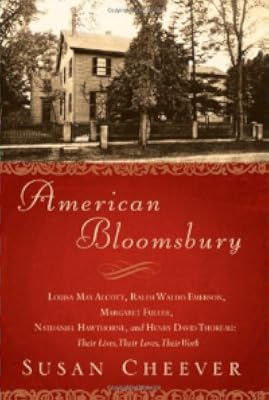
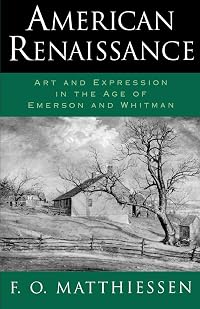


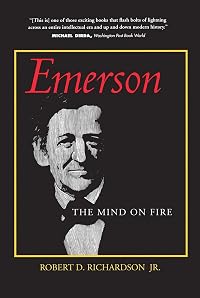


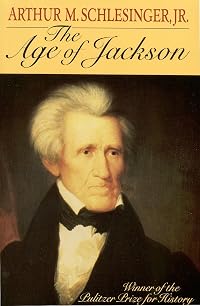





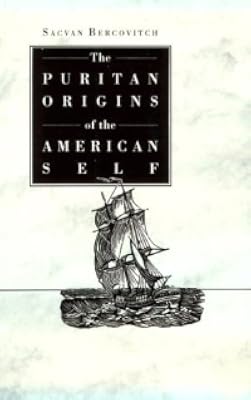


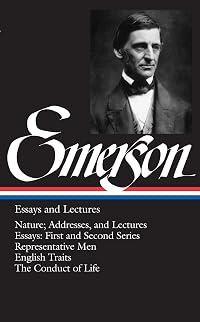
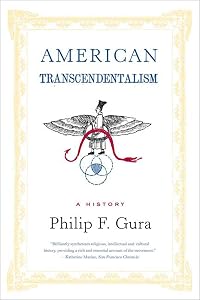

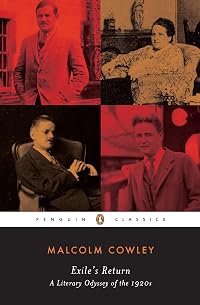









Member Recommendations

Midnightdreary This is the other side of the flowering of the American renaissance - one which is a little less, well, flowery.

Member Reviews
I was curious to read this book, an early recipient of both the National Book Award and the Pulitzer, because it was dedicated to legendary Scribners editor Max Perkins, Brooks’ childhood friend.
Brooks addresses why Boston and its environs dominated the first phase of a recognizably American literary culture, both in quantity and quality—a position it maintained for most of the nineteenth century. He framed his answer in terms borrowed from Oswald Spengler, a fashionable historian at the time: it was a culture cycle, with all the phases that belonged to it, albeit compressed in a shorter time frame than those described by Spengler.
When Brooks wrote the book, every schoolchild could recite “The Ride of Paul Revere.” I came show more along later, but even in my childhood, Longfellow and poetry were synonymous. I doubt this is still the case, so I wonder who the prospective reader of this book might be today. Brooks offers neither a straightforward history nor incisive literary analysis; it is a social history of literary production. His style is heavily allusive, but a reader who isn’t up on these writers will miss that.
His judgments, when he offers them, are often spoken as dicta. For instance, writing of Longfellow’s “The Spanish Student,” Brooks remarks: “The first of several poems in dramatic form without a dramatic moment” (306). Yet, Brooks speaks positively of Longfellow’s imagination and cadences in other places. In fact, Brooks takes pains to single out praiseworthy aspects of writers he criticizes, such as James Russell Lowell. And he vindicates Harriet Beecher Stowe as a great writer when her reputation had already sunk.
Brooks composes word pictures to convey a feeling for the figures who populate his book. He often crams much detail into his sentences. The result, read eighty years on, seems old-fashioned. However, there are rewards for readers who bring the necessary patience, for his narrative style is often entertaining. He refers to works by a multitude of authors. I readily believe he has read all of that and more—not just the remarkables (Emerson, Thoreau, Hawthorne, Melville, Margaret Fuller) and those whose reputation, once aglow, was already dimming by the 1930s (Longfellow, Holmes, Lowell, Whittier) but even those little heard of today, such as William Austin and Sylvester Judd.
I borrowed the copy I read from the library, and it showed every sign of having been frequently used. But nevertheless, the paper knife had not yet been applied in two places. show less
Brooks addresses why Boston and its environs dominated the first phase of a recognizably American literary culture, both in quantity and quality—a position it maintained for most of the nineteenth century. He framed his answer in terms borrowed from Oswald Spengler, a fashionable historian at the time: it was a culture cycle, with all the phases that belonged to it, albeit compressed in a shorter time frame than those described by Spengler.
When Brooks wrote the book, every schoolchild could recite “The Ride of Paul Revere.” I came show more along later, but even in my childhood, Longfellow and poetry were synonymous. I doubt this is still the case, so I wonder who the prospective reader of this book might be today. Brooks offers neither a straightforward history nor incisive literary analysis; it is a social history of literary production. His style is heavily allusive, but a reader who isn’t up on these writers will miss that.
His judgments, when he offers them, are often spoken as dicta. For instance, writing of Longfellow’s “The Spanish Student,” Brooks remarks: “The first of several poems in dramatic form without a dramatic moment” (306). Yet, Brooks speaks positively of Longfellow’s imagination and cadences in other places. In fact, Brooks takes pains to single out praiseworthy aspects of writers he criticizes, such as James Russell Lowell. And he vindicates Harriet Beecher Stowe as a great writer when her reputation had already sunk.
Brooks composes word pictures to convey a feeling for the figures who populate his book. He often crams much detail into his sentences. The result, read eighty years on, seems old-fashioned. However, there are rewards for readers who bring the necessary patience, for his narrative style is often entertaining. He refers to works by a multitude of authors. I readily believe he has read all of that and more—not just the remarkables (Emerson, Thoreau, Hawthorne, Melville, Margaret Fuller) and those whose reputation, once aglow, was already dimming by the 1930s (Longfellow, Holmes, Lowell, Whittier) but even those little heard of today, such as William Austin and Sylvester Judd.
I borrowed the copy I read from the library, and it showed every sign of having been frequently used. But nevertheless, the paper knife had not yet been applied in two places. show less
This is a work of such learning and grace that it transcends the literary history it nominally addresses, and becomes a historical high point in its own right. Only Paul Rosenfeld, Edmund Wilson, Lewis Mumford, and the power-duo of Curti & Parrington even come close to Brooks' accomplishment. As for American culture of the past half-century, perhaps a pathologist is needed more than a historian.
http://nwhyte.livejournal.com/1951346.html
explaining how New England in the early nineteenth century saw an extraordinary outburst of literary talent, which he attributes in part to the region developing its intellectual resources through Harvard and proximity to Europe, while at the same time it became increasingly politically and economically sidelined as the continent opened up, benefiting New York and points south. (This then of course doesn't explain why the era of literary excellence ended at the time of the Civil War, but perhaps the war itself is explanation enough.) I had not previously appreciated the literary importance of Concord, Massachusetts. As in his other book, which covers largely the same period but in the rest of show more the US, Brooks has a breezy and entertaining style telling us about all the connections between writers and other artists of the period; I felt also that he gave more attention to women writers (though none at all to non-whites) here. The most striking observation was that most schoolteachers across the entire country in the early nineteenth century came from New England, so it was very much setting the cultural pace for the new nation. (Another striking observation - Uncle Tom's Cabin had been translated into Welsh in three different editions before any of Charles Dickens or Walter Scott had appeared in that language.) Anyway, rounds out my political knowledge of the era nicely. show less
explaining how New England in the early nineteenth century saw an extraordinary outburst of literary talent, which he attributes in part to the region developing its intellectual resources through Harvard and proximity to Europe, while at the same time it became increasingly politically and economically sidelined as the continent opened up, benefiting New York and points south. (This then of course doesn't explain why the era of literary excellence ended at the time of the Civil War, but perhaps the war itself is explanation enough.) I had not previously appreciated the literary importance of Concord, Massachusetts. As in his other book, which covers largely the same period but in the rest of show more the US, Brooks has a breezy and entertaining style telling us about all the connections between writers and other artists of the period; I felt also that he gave more attention to women writers (though none at all to non-whites) here. The most striking observation was that most schoolteachers across the entire country in the early nineteenth century came from New England, so it was very much setting the cultural pace for the new nation. (Another striking observation - Uncle Tom's Cabin had been translated into Welsh in three different editions before any of Charles Dickens or Walter Scott had appeared in that language.) Anyway, rounds out my political knowledge of the era nicely. show less
269. The Flowering of New England 1815-1865, by Van Wyck Brooks (read 21 July 1946) (Pulitzer History prize in 1937) (National Book Award nonfiction prize for 1936) On July 19, 1946, I said: "Reading 'The Flowering of New England' OK. I hope I'm getting as much out of it as I should." On July 20 said: "Almost done with 'Flowering.'' But nothing as to what I thought of it, but my memory, all these years later, is that it was worth reading.
Very good condition. Stored in slipcase that is scuffed and worn. Book is covered in plastic and has retained color and shows little wear. Binding is tight and pages are clean.
Ratings
Members
- Recently Added By
Lists

Trinity College Booklist (1951): Class Ten, English Literature
358 works; 5 members
Author Information

60+ Works 1,747 Members
Awards and Honors
Awards
Distinctions
Series

Belongs to Publisher Series
Work Relationships
Is abridged in
Common Knowledge
- People/Characters
- Gilbert Stuart; Ralph Waldo Emerson; Henry David Thoreau; Nathaniel Bowditch; Noah Webster; George Ticknor (show all 26); Edward Everett; Daniel Webster; William Channing; Edward Channing; Richard Henry Dana; William Cullen Bryant; Jared Sparks; George Bancroft; William Hickling Prescott; Henry Wadsworth Longfellow; Nathaniel Hawthorne; Elizabeth Palmer Peabody; Bronson Alcott; Margaret Fuller; James Russell Lowell; John Lothrop Motley; Oliver Wendell Holmes, Sr. (Dr); John Greenleaf Whittier; Harriet Beecher Stowe; James T. Fields
- Important places
- USA; Boston, Massachusetts, USA; Brook Farm; Cambridge, Massachusetts, USA; Concord, Massachusetts, USA; Harvard College (show all 9); Massachusetts, USA; New England, USA; Salem, Massachusetts, USA
- Important events
- American Revolution (1775 | 1783); Treaty of Ghent (1814-12-24); Mexican-American War (1846 | 1848)
- Dedication
- To Maxwell Evarts Perkins
- First words
- At the time of the Peace of Ghent, which brought to a close the War of 1812, Gilbert Stuart, the portrait painter, was an old inhabitant of Boston.
- Quotations
- Boston, of course, was just like other towns, except for its excellent fish-market...
He [Oliver Wendell Holmes] also disliked [his friends] for their dingy linen.... - Last words
- (Click to show. Warning: May contain spoilers.)Others, as they saw him, tall and slender, leaving the village behind him, might have said to themselves, with the Swedish poet, "The last skald walks over the meadows."
Classifications
- Genres
- Nonfiction, Literature Studies and Criticism, History, Fiction and Literature
- DDC/MDS
- 810.903 — Literature & rhetoric American literature in English American literature in English History and criticism of American literature
- LCC
- PS243 .B7 — Language and Literature American literature American literature Special regions, states, etc. North
Statistics
- Members
- 429
- Popularity
- 71,623
- Reviews
- 5
- Rating
- (4.33)
- Languages
- English, German
- Media
- Paper
- ISBNs
- 5
- ASINs
- 29