On This Page
Description
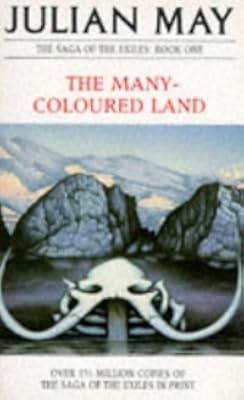
In the year 2034, Theo Quderian, a French physicist, made an amusing but impractical discovery: the means to use a one-way, fixed-focus time warp that opened into a place in the Rhone River valley during the idyllic Pliocene Epoch, six million years ago. But, as time went on, a certain usefulness developed. The misfits and mavericks of the future-many of them brilliant people-began to seek this exit door to a mysterious past. In 2110, a particularly strange and interesting group was show more preparing to make the journey-a starship captain, a girl athlete, a paleontologist, a woman priest, and others who had reason to flee the technological perfection of twenty-second-century life. Thus begins this dazzling fantasy novel that invites comparisons with the work of J.R.R. Tolkien, Arthur C. Clarke, and Ursula Le Quin. It opens up a whole world of wonder, not in far-flung galaxies but in our own distant past on Earth-a world that will captivate not only science-fiction and fantasy fans but also those who enjoy literate thrillers. The group that passes through the time-portal finds an unforeseen strangeness on the other side. Far from being uninhabited, Pliocene Europe is the home of two warring races from another planet. There is the knightly race of the Tanu-handsome, arrogant, and possessing vast powers of psychokinesis and telepathy. And there is the outcast race of Firvulag-dwarfish, malev-o olent, and gifted with their own supernormal skills. Taken captive by the Tanu and transported through the primordial European landscape, the humans manage to break free, join in an uneasy alliance with the forest-dwelling Firvulag, and, finally, launch an attack against the Tanu city of light on the banks of a river that, eons later, would be called the Rhine. Myth and legend, wit and violence, speculative science and breathtaking imagination mingle in this romantic fantasy, which is the first volume in a series about the exile world. The sequel, titled The Golden Torc, will follow soon. show lessTags
Recommendations










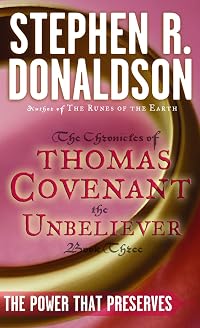


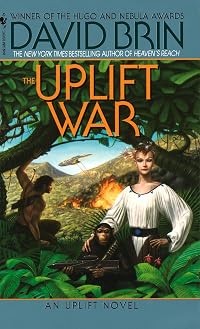
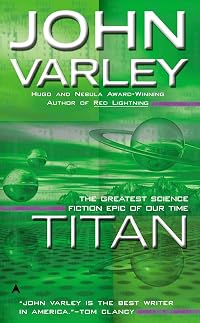
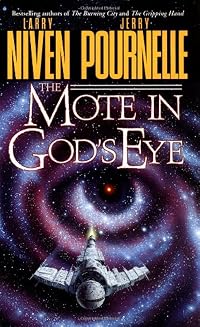





Member Recommendations
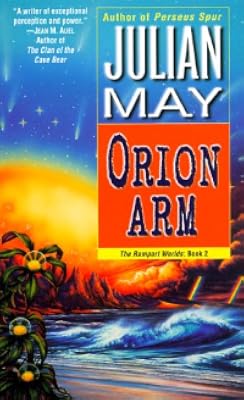
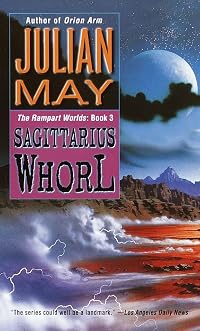
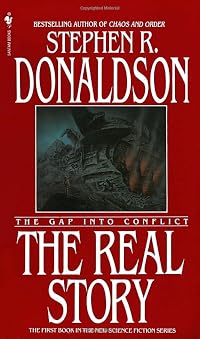
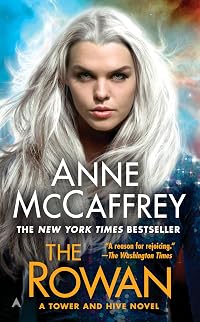
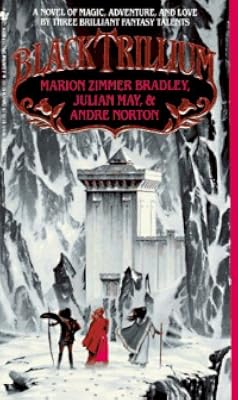
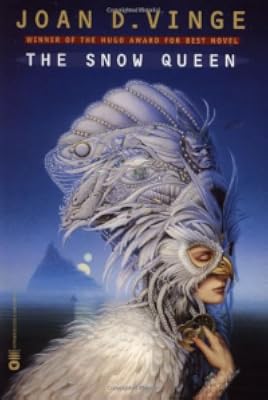
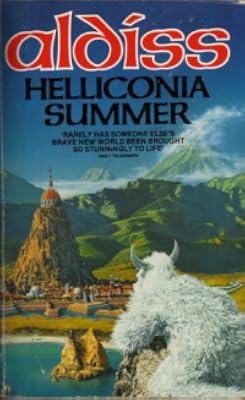
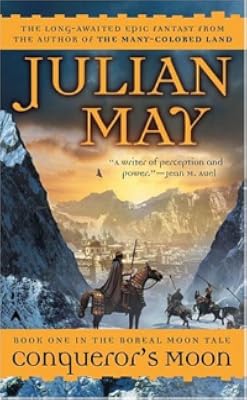
wegc Both are about humans enslaved by aliens and both feature humans with super-senses.
01
Member Reviews
Reread in 2024. I first read this as a teenager 40 plus years ago and loved it. Someone on Booktube read it for the first time in 2024 and gave an enthusiastic review which stimulated a massive sense of nostalgia in me for the series. A feeling which didn't disappear and I picked it up to reread. Firstly, I am massively impressed with myself that I read this when I was only about 14 - because it is a dense adult level read with vocabulary that I still need to occasionally look up now (suspect I just skimmed over those words as a teen). Secondly, while I'd forgotten a lot, I remembered a lot too. While there are a couple of slightly wince inducing descriptions which reflect when the book was written, it also has more modern attitudes show more too. I thoroughly enjoyed my revisit and despite the many new books on my TBR, I have already taken The Golden Torc off my bookshelf to reread. show less
Read in the Italian translation many years ago, the first book of Julian May's Saga of Exile again gave me great pleasure. The entire novel is a metaphor for the restlessness of humanity, which always has within its ranks a few naysayers and misfits, a few dreamers pursuing impossible ideas. What better, then, than to allow these people to disappear into a past so distant that it is impossible for them to interfere with the future? Only, as St. Teresa used to say, more tears are cried in the world for the prayers God has answered than for those he has not, and the fugitives find themselves to all intents and purposes prisoners of a strange dimorphic alien race, whose two forms have been fighting each other for centuries, and who seek to show more exploit the newcomers for their own ends. A most welcome re-reading. show less
8/10
A definite slow-starter. The author lays a lot of ground work and introduces two fistfuls of characters in the first many chapters, seemingly with no connection to each other. But once the connection is made, the story takes off.
I shelved this book as science fiction because of the initial setting in the future, the presence of alien sentient races, and the time travel aspect, yet much of the flavor is fantasy with a healthy dose of Celtic mythology and pinches of other ethnic folklore. Some aspects of the book have not aged well but reflect both the period in which the book was written and the themes the author was weaving through the story—gender roles, slavery and power, physical appearance and ability/disability, the role of show more religion.
Looking forward to discovering the rest of the series. show less
A definite slow-starter. The author lays a lot of ground work and introduces two fistfuls of characters in the first many chapters, seemingly with no connection to each other. But once the connection is made, the story takes off.
I shelved this book as science fiction because of the initial setting in the future, the presence of alien sentient races, and the time travel aspect, yet much of the flavor is fantasy with a healthy dose of Celtic mythology and pinches of other ethnic folklore. Some aspects of the book have not aged well but reflect both the period in which the book was written and the themes the author was weaving through the story—gender roles, slavery and power, physical appearance and ability/disability, the role of show more religion.
Looking forward to discovering the rest of the series. show less
This was a surprisingly good read, but I suppose I shouldn't have been that surprised. It won the Locus and was nominated for both the '82 Hugo and '81 Nebula, after all.
I had this odd assumption that it was all fantasy from the bookcovers I'd known and from the comments I'd heard, and that's true as far as most of the story elements are concerned, but at its core, it's Hard SF with a huge dash of space opera, a truly epic amount of world-building in both the future and 6 million years in the past, with, of course, a lot of time-travel, and there's a truly epic amount of psi abilities, too.
The story breaks a lot of long-established SF and Fantasy conventions for the time, focusing almost exclusively on being fun, fun, fun. Julian May show more has a lot of respect for the genres and has a great time playing with ideas and sub-genres.
I mean, where else can you combine starships and aliens and slightly veiled fae with time travel to the deep past and huge genetic manipulation and high psi abilities, a long commentary on what it means to be human-normal in a perfected galactic society and how that makes us throwbacks, and how long wars can destroy whole genetic lines and the part that culture has in the whole mix.
Sound complicated? Not the way she writes it! Like I said, it's all fun adventure the high-tech magical artifacts, winning epic battles in the deep past, and getting to know and love some very interesting characters who happen to be... us. Flawed, idiotic, us. :)
The bonus in this novel is that there's a lot of great characters and it takes on a lot more scope than I'm used to seeing, lately. Not just 6 million years worth of scope, either, but in space and characters, races, and intentions.
And you've got to love rule-breakers and revolution-starters, too. Like I said, it's all fun. :)
And, of course, if you love epic fantasy but always wanted to see it treated like SF, then this is your book, because a great portion of it is devoted to just that. It's really quite a cool crossover. :) show less
I had this odd assumption that it was all fantasy from the bookcovers I'd known and from the comments I'd heard, and that's true as far as most of the story elements are concerned, but at its core, it's Hard SF with a huge dash of space opera, a truly epic amount of world-building in both the future and 6 million years in the past, with, of course, a lot of time-travel, and there's a truly epic amount of psi abilities, too.
The story breaks a lot of long-established SF and Fantasy conventions for the time, focusing almost exclusively on being fun, fun, fun. Julian May show more has a lot of respect for the genres and has a great time playing with ideas and sub-genres.
I mean, where else can you combine starships and aliens and slightly veiled fae with time travel to the deep past and huge genetic manipulation and high psi abilities, a long commentary on what it means to be human-normal in a perfected galactic society and how that makes us throwbacks, and how long wars can destroy whole genetic lines and the part that culture has in the whole mix.
Sound complicated? Not the way she writes it! Like I said, it's all fun adventure the high-tech magical artifacts, winning epic battles in the deep past, and getting to know and love some very interesting characters who happen to be... us. Flawed, idiotic, us. :)
The bonus in this novel is that there's a lot of great characters and it takes on a lot more scope than I'm used to seeing, lately. Not just 6 million years worth of scope, either, but in space and characters, races, and intentions.
And you've got to love rule-breakers and revolution-starters, too. Like I said, it's all fun. :)
And, of course, if you love epic fantasy but always wanted to see it treated like SF, then this is your book, because a great portion of it is devoted to just that. It's really quite a cool crossover. :) show less
ORIGINALLY POSTED AT Fantasy Literature.
The Many-Colored Land, a classic (1981) science fantasy novel by Julian May, wasn’t too high on my TBR list until I noticed that Blackstone Audio released it last month. I like science fantasy, so I gave it shot, and I sure am glad I did. I loved every moment of The Many-Colored Land and my only disappointment is that the rest of The Saga of Pliocene Exile is not available on audio.
The story begins on Earth and the rest of the Galactic Milieu in our 22nd century. Professor Guderian has opened a time tunnel that goes back 6 million years to Earth’s Pliocene period. He can send objects or animals through the gate, but when he attempts to bring them back, they age 6 million years and decay during show more the journey. When Guderian dies, his wife discovers that she can pay her debts by selling passage through the tunnel to nice people who are unhappy with their lives and want to escape. It seems that there’s no law against sending people back in time, and there are lots of people who are willing to give Madame Guderian their money for a chance at a new and adventurous life.
As the history of the portal is explained to us, we meet eight men and women who we’ll follow through the tunnel: Bryan, a middle-aged anthropologist who’s in love with a woman who’s already gone through; Stein, who fantasizes about being a Viking; Richard, the black sheep of a rich family of spaceship captains who’d rather be a pirate; Aiken who, despite careful genetic engineering, became an incorrigible — yet charming and creative — sociopath who chooses “exile” over brain surgery or euthanasia; Claude, an elderly but “rejuvenated” paleontologist who just lost his wife; Sister Amerie, a medic and counselor who helped Claude during his wife’s long convalescence, and wants to become a religious hermit; Elizabeth, who was once a widely respected meta-psychic but lost her powers after a traumatic accident; Felice, a 17-year-old ring hockey player (gladiator) who has some coercive powers and a penchant for S & M; Each is a fascinating character but things get even more fun when they become “Group Green” as they get trained in survival skills and useful trades before they all go through the gate together.
Each of these characters is quickly and deeply developed, and I was fascinated by them and the anticipation of what they would find and who they’d become 6 million years in the past. All of the set-up and backstory, which is often the dullest part of a novel, moved quickly and was exciting as the tension built. What will it be like when they get to the other side? What’s happened to all the people (90,000 by this time) who’ve gone on before? Have they worked together to develop a new civilization? Or have they been eaten by beasts that may be waiting for them on the other side as if the portal is a big invisible Skinnerian food hopper? I couldn’t wait to find out, and when I did…. I was shocked. That’s all I’ll say: Shocked.
Besides the excellent characterization and the excitement of a story like this, the writing was excellent, too. The dialogue, in particular, felt so right for each of these diverse characters, and it was often humorous (“'Fuck You!' said the nun.”) My audio version was read by Bernadette Dunn who I liked in Memoirs of a Geisha but didn’t like in Bujold’s Beguilement. Here she was perfect — her voices worked well with all of Julian May’s characters and the subtle humor.
I only have one complaint about Blackstone audio’s version of The Many-Colored Land, and that’s that I’m dying to read the rest of this story and it’s not available yet on audio (and I’m not sure if it will be). This is not a self-contained story and readers will definitely want to have the next volume, The Golden Torc in hand. I've ordered the print version. show less
The Many-Colored Land, a classic (1981) science fantasy novel by Julian May, wasn’t too high on my TBR list until I noticed that Blackstone Audio released it last month. I like science fantasy, so I gave it shot, and I sure am glad I did. I loved every moment of The Many-Colored Land and my only disappointment is that the rest of The Saga of Pliocene Exile is not available on audio.
The story begins on Earth and the rest of the Galactic Milieu in our 22nd century. Professor Guderian has opened a time tunnel that goes back 6 million years to Earth’s Pliocene period. He can send objects or animals through the gate, but when he attempts to bring them back, they age 6 million years and decay during show more the journey. When Guderian dies, his wife discovers that she can pay her debts by selling passage through the tunnel to nice people who are unhappy with their lives and want to escape. It seems that there’s no law against sending people back in time, and there are lots of people who are willing to give Madame Guderian their money for a chance at a new and adventurous life.
As the history of the portal is explained to us, we meet eight men and women who we’ll follow through the tunnel: Bryan, a middle-aged anthropologist who’s in love with a woman who’s already gone through; Stein, who fantasizes about being a Viking; Richard, the black sheep of a rich family of spaceship captains who’d rather be a pirate; Aiken who, despite careful genetic engineering, became an incorrigible — yet charming and creative — sociopath who chooses “exile” over brain surgery or euthanasia; Claude, an elderly but “rejuvenated” paleontologist who just lost his wife; Sister Amerie, a medic and counselor who helped Claude during his wife’s long convalescence, and wants to become a religious hermit; Elizabeth, who was once a widely respected meta-psychic but lost her powers after a traumatic accident; Felice, a 17-year-old ring hockey player (gladiator) who has some coercive powers and a penchant for S & M; Each is a fascinating character but things get even more fun when they become “Group Green” as they get trained in survival skills and useful trades before they all go through the gate together.
Each of these characters is quickly and deeply developed, and I was fascinated by them and the anticipation of what they would find and who they’d become 6 million years in the past. All of the set-up and backstory, which is often the dullest part of a novel, moved quickly and was exciting as the tension built. What will it be like when they get to the other side? What’s happened to all the people (90,000 by this time) who’ve gone on before? Have they worked together to develop a new civilization? Or have they been eaten by beasts that may be waiting for them on the other side as if the portal is a big invisible Skinnerian food hopper? I couldn’t wait to find out, and when I did…. I was shocked. That’s all I’ll say: Shocked.
Besides the excellent characterization and the excitement of a story like this, the writing was excellent, too. The dialogue, in particular, felt so right for each of these diverse characters, and it was often humorous (“'Fuck You!' said the nun.”) My audio version was read by Bernadette Dunn who I liked in Memoirs of a Geisha but didn’t like in Bujold’s Beguilement. Here she was perfect — her voices worked well with all of Julian May’s characters and the subtle humor.
I only have one complaint about Blackstone audio’s version of The Many-Colored Land, and that’s that I’m dying to read the rest of this story and it’s not available yet on audio (and I’m not sure if it will be). This is not a self-contained story and readers will definitely want to have the next volume, The Golden Torc in hand. I've ordered the print version. show less
This book (and really, the whole series) falls into that strange spot between Sci-Fi and Fantasy that is really neither. The story is original, the characters are well fleshed out and very human (even the ones who aren't human), and the plot is just unpredictable enough to be very interesting. The themes are sweeping and develop throughout the series. May weaves together a huge cast of characters and sub-plots without confusion. She is clearly a highly intelligent and organized author, who put a huge amount if work into perfecting the details of her world. Spoilers would ruin this book, I think, but I highly recommend reading it!
This is the original start to the Pliocene Exile series. Later on some pre-quel books were added, but this is the book you should start with.
This book is just excellent. By today's standards, it isn't hard sci-fi, there's a bit of hand-waving when it comes to science, but it sure doesn't feel like it, the author does a very good job of making this feel futuristic. (Like almost all books that pre-date the 90's, there's no Internet equivalent). There's also a strong fantasy aspect to these books that actually blends well. What's perhaps best about this book is the setting - Pliocene Earth and the way it is described. The characters are also strong points, as is the plot. There really isn't much I didn't like about this series.
This book is just excellent. By today's standards, it isn't hard sci-fi, there's a bit of hand-waving when it comes to science, but it sure doesn't feel like it, the author does a very good job of making this feel futuristic. (Like almost all books that pre-date the 90's, there's no Internet equivalent). There's also a strong fantasy aspect to these books that actually blends well. What's perhaps best about this book is the setting - Pliocene Earth and the way it is described. The characters are also strong points, as is the plot. There really isn't much I didn't like about this series.
Members
- Recently Added By
Lists

Best Science Fiction Novels
816 works; 430 members

Favorite Science Fiction by Women Authors
737 works; 202 members

Best time travel books
56 works; 22 members
Locus Award for Best Novel/SF Novel
53 works; 6 members

Mythical Monsters of the World
199 works; 79 members

Prehistoric Peoples and Animals
10 works; 3 members

Books Read in 2021
5,361 works; 114 members

Books I Read Before The Invention Of The Internet.
144 works; 1 member

Books Read in 2025
4,091 works; 97 members
Favorite Science Fiction
456 works; 218 members
Author Information

178+ Works 20,954 Members
Julian May was born on July 10, 1931. She writes under her own name and several pseudonyms including Lee N. Falconer and Ian Thorne. Her first published work, a short story entitled Dune Roller, appeared in 1951 under the name J. C. May. She sold one more short story entitled Star of Wonder in 1953 before taking a break from the science fiction show more field. Starting in 1954, she wrote thousands of science encyclopedia articles for Consolidated Book Publishers. After finishing that project, she wrote similar articles for two other encyclopedia publishers. In 1957, she and her husband founded Publication Associates, a production and editorial service for small publishers. During this time, she wrote and edited two episodes of the Buck Rogers comic strip and a new Catholic catechism for Franciscan Herald Press. Between 1956 and 1981, she wrote more than 250 books for children and young adults. They were mostly non-fiction works dealing with the subjects of science, history, and short biographies of modern-day celebrities. She returned to the world of science fiction in the 1980s with such works as the Saga of Pliocene Exile and Galactic Milieu series. (Bowker Author Biography) show less
Some Editions
Awards and Honors
Awards
Series

Belongs to Publisher Series
Work Relationships
Common Knowledge
- Canonical title
- The Many-Colored Land
- Original title
- The Many-Colored Land
- Original publication date
- 1981-03
- People/Characters
- Aiken Drum (aka Aiken-Lugonn); Elizabeth Orme; Felice Landry; Claude Majewski; Annamaria "Amerie" Roccaro; Richard Voorhees (show all 25); Stein Olesen; Bryan Grenfell; Basil Wimborne; Peopeo Moxmox Burke; Sue-Gwen "Sukey" Davies; Creyn; Mercedes "Mercy" Lamballe; Raimo Hakkinen; Khalid Khan; Moe Marshak; Sugoll; Yeochee; Fitharn Pegleg; Epone; Pallol; Sharn-Mes; Uwe Guldenzopf; Velteyn; Angelique Guderian
- Important places
- Roniah, Pliocene Europe; Finiah, Pliocene Europe; High Vrazel, Pliocene Europe; Muriah, Pliocene Europe; Castle Gateway, Pliocene Europe
- Epigraph
- My heart is sore pained within me:
and the terrors of death are fallen upon me.
Fear and trembling have seized me:
and darkness has overwhelmed me
And I said: O that I had wings like a dove!
For then I ... (show all)would fly away and be at rest.
Lo, would I flee far away,
and live in the wilderness.
I would wait for him who will save me
from my cowardice and from the storm.
—Psalm 55 - Dedication
- For Tadeusz Maxim,
the noblest of them all - First words
- To confirm that it was indeed near death, the great vessel broke through into normal space with lingering slowness.
- Last words
- (Click to show. Warning: May contain spoilers.)Amerie blinked, and the speck became invisible against the bright vault of the heavens.
- Original language
- English
Classifications
Statistics
- Members
- 2,584
- Popularity
- 7,329
- Reviews
- 33
- Rating
- (3.90)
- Languages
- 7 — Czech, Dutch, English, French, German, Italian, Spanish
- Media
- Paper, Audiobook, Ebook
- ISBNs
- 29
- ASINs
- 17