Birds Art Life: A Year of Observation
by Kyo Maclear
On This Page
Description
"A writer's search for inspiration, beauty, and solace leads her to birds in this intimate and exuberant meditation on creativity and life--a field guide to things small and significant. When it comes to birds, Kyo Maclear isn't seeking the exotic. Rather she discovers joy in the seasonal birds that find their way into view in city parks and harbors, along eaves and on wires. In a world that values big and fast, Maclear looks to the small, the steady, the slow accumulations of knowledge, and show more the lulls that leave room for contemplation. A distilled, crystal-like companion to H is for Hawk, Birds Art Life celebrates the particular madness of chasing after birds in the urban environment and explores what happens when the core lessons of birding are applied to other aspects of art and life. Moving with ease between the granular and the grand, peering into the inner landscape as much as the outer one, this is a deeply personal year-long inquiry into big themes: love, waiting, regrets, endings. If Birds Art Life was sprung from Maclear's sense of disconnection, her passions faltering under the strain of daily existence, this book is ultimately about the value of reconnection--and how the act of seeking engagement and beauty in small ways can lead us to discover our most satisfying and meaningful lives"-- "A writer's search for inspiration, beauty, and solace leads her to birds in this intimate and exuberant meditation on creativity and life"-- show lessTags
Recommendations






Member Reviews
The Cover:
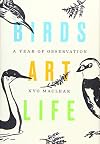
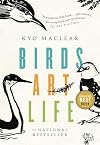
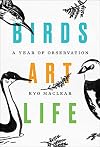
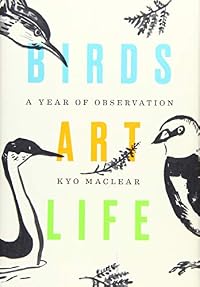
Simplistic in its beauty, Birds Art Life has a cover that is just meant to stand out. The doodles of birds – black and stark against the pure white – pop out even more than the brightly colored words. I usually pass on white backgrounds but for this, it is absolutely perfect.
The Review:
This book is beautiful. Incredibly well written, thought provoking and interesting. Kyo Maclear takes us on a journey throughout a year’s time, where she is set to learn the understandings of bird watching. We travel with her and her friend, lovingly referred to as The Musician throughout, as Maclear becomes more knowledgeable in her studying of birds.
This should be expected from the title, of course. But there is so much more. We are show more introduced to her family history. We are introduced to her art. We are introduced to her reading. She is able to take these parts of bird watching and use what she learns from these birds and what it takes to watch them and make it relatable to her life.
I found this to be a quick read. It was really enjoyable and incredibly well written. And I felt, afterward, as if I actually knew Maclear – which, I suppose, really is the hope when writing a memoir.
We learn of multiple parts of her – as a daughter whose father’s health is failing; as a mother of two children; as a wife to a loving husband; as an artist; as a writer. She is incredibly honest within these 240 pages. You are able to join her as she discusses feeling stuck, of feeling like she has lost her creative spark. I read this at a time when I was going through something similar; watching her grow throughout her year was inspirational.
If you are a fan of memoirs, read this. If you are a fan of watching others overcome, read this. If you have a slight interest in birds, read this – I personally do not have an interest in bird watching but found the information spread throughout incredibly interesting. show less
Simplistic in its beauty, Birds Art Life has a cover that is just meant to stand out. The doodles of birds – black and stark against the pure white – pop out even more than the brightly colored words. I usually pass on white backgrounds but for this, it is absolutely perfect.
The Review:
This book is beautiful. Incredibly well written, thought provoking and interesting. Kyo Maclear takes us on a journey throughout a year’s time, where she is set to learn the understandings of bird watching. We travel with her and her friend, lovingly referred to as The Musician throughout, as Maclear becomes more knowledgeable in her studying of birds.
This should be expected from the title, of course. But there is so much more. We are show more introduced to her family history. We are introduced to her art. We are introduced to her reading. She is able to take these parts of bird watching and use what she learns from these birds and what it takes to watch them and make it relatable to her life.
I found this to be a quick read. It was really enjoyable and incredibly well written. And I felt, afterward, as if I actually knew Maclear – which, I suppose, really is the hope when writing a memoir.
We learn of multiple parts of her – as a daughter whose father’s health is failing; as a mother of two children; as a wife to a loving husband; as an artist; as a writer. She is incredibly honest within these 240 pages. You are able to join her as she discusses feeling stuck, of feeling like she has lost her creative spark. I read this at a time when I was going through something similar; watching her grow throughout her year was inspirational.
If you are a fan of memoirs, read this. If you are a fan of watching others overcome, read this. If you have a slight interest in birds, read this – I personally do not have an interest in bird watching but found the information spread throughout incredibly interesting. show less
This deceptively gentle book began as a sort of memoir by the author when her father becomes ill and she searches for a way to deal with this. She befriends a musician who also happens to photograph birds and follows him for a year. In the process, she learns not only about birds, but about herself, and her family. A lot of insight and wisdom is packed into this lovely little volume. There is a short passage from Maclear as she contemplates her sons' independence and freedom to be kids:
- "We had been coming to our tiny cabin for ten years, trading modern conveniences for cool, sweet lake water. Any issues I had with communal dining, theme nights, bonfire singalongs (camp is an introvert's nightmare) were offset by the joy of watching my show more sons wander independently on the land. Most days, they left in the morning and returned - grubby, scuffed, and sometimes bleeding - after nightfall.
It was this self-reliance and freedom, so familiar to my own childhood, that I hoped to kindle. By the time I was nine, I roved freely around the neighbourhood until dark. My mother, busy minding her Japanese art gallery, left the leash long.
Thirty years later, in the same city, my children rarely strayed from our home or garden. As a parent who sat somewhere in the middle of the helicopter-laissez-faire spectrum, I wondered what it meant for their independence to be so severely compromised. I wondered and yet I found it hard to let them go. Other parents probably wondered too. Maybe we were just worried about the cold opinion of our peers if we didn't cosset our children enough. All I know is the neighbourhood was full of incarcerated children.
Having entered one of the most profoundly chaperoned moments in history, I wanted my sons to experience the kind of unstructured play that builds courage and curiosity. So late summer had become a time of jailbreak." show less
- "We had been coming to our tiny cabin for ten years, trading modern conveniences for cool, sweet lake water. Any issues I had with communal dining, theme nights, bonfire singalongs (camp is an introvert's nightmare) were offset by the joy of watching my show more sons wander independently on the land. Most days, they left in the morning and returned - grubby, scuffed, and sometimes bleeding - after nightfall.
It was this self-reliance and freedom, so familiar to my own childhood, that I hoped to kindle. By the time I was nine, I roved freely around the neighbourhood until dark. My mother, busy minding her Japanese art gallery, left the leash long.
Thirty years later, in the same city, my children rarely strayed from our home or garden. As a parent who sat somewhere in the middle of the helicopter-laissez-faire spectrum, I wondered what it meant for their independence to be so severely compromised. I wondered and yet I found it hard to let them go. Other parents probably wondered too. Maybe we were just worried about the cold opinion of our peers if we didn't cosset our children enough. All I know is the neighbourhood was full of incarcerated children.
Having entered one of the most profoundly chaperoned moments in history, I wanted my sons to experience the kind of unstructured play that builds courage and curiosity. So late summer had become a time of jailbreak." show less
When Maclear found herself "unmoored" and unable to concentrate on writing, she joined a musician who had treated his artistic doldrums by birdwatching and photographing birds in Toronto. She accompanied the unnamed musician on his bird walks for one year, writing about her experience and thoughts in chapters arranged by the month, each having a motif.
At one point she speaks of "spark birds", the first time I've heard this phrase that refers to the bird that sparked personal interest. I was happy to find Audubon's spark bird was the same as mine, a phoebe. My phoebe came back year after year to build a nest on the same spot on the wall beside the door of our weekend house in a remote area of northern Alberta. Maclear goes on to show more consider "spark books", another intriguing topic that naturally had me thinking of what book had sparked my interest in reading.
Maclear's memoir is profound without being scholarly, gentle, but never bland. There are many moments of quiet brilliance that demanded to be recorded in my own journal. Although birds feature large, this is not a book about birds, but about life. It is an absolute jewel.
I discovered Kyo Maclear through The Fog, an Early Reviewer win that led me to The Specific Ocean, another of her excellent children's books. show less
At one point she speaks of "spark birds", the first time I've heard this phrase that refers to the bird that sparked personal interest. I was happy to find Audubon's spark bird was the same as mine, a phoebe. My phoebe came back year after year to build a nest on the same spot on the wall beside the door of our weekend house in a remote area of northern Alberta. Maclear goes on to show more consider "spark books", another intriguing topic that naturally had me thinking of what book had sparked my interest in reading.
Maclear's memoir is profound without being scholarly, gentle, but never bland. There are many moments of quiet brilliance that demanded to be recorded in my own journal. Although birds feature large, this is not a book about birds, but about life. It is an absolute jewel.
I discovered Kyo Maclear through The Fog, an Early Reviewer win that led me to The Specific Ocean, another of her excellent children's books. show less
I loved this book! I had not heard of Kyo Maclear before but when she mentioned her war correspondent father I realized I was quite familiar with him. Kyo doesn't go running off to the world's troubled spots but she brings the same introspection and acuity to her writing that Michael Maclear did to his reportage.
Kyo didn't know much about birds when she started out. She was feeling anxious and adrift as a result of her father's health problems. She realized she wanted a journey and a guide for that journey but since she was an urbanite with family responsibilities her journey was going to have to be close to home. She learned of a local musician who was also a birder and gifted photographer who had found peace by birding in the city. show more She contacted him and asked him to guide her for a year to learn about birds. Along the way she thought about art and life. Each chapter is devoted to one month, the birds she saw that month and the thoughts she had about art and life. Each chapter is a gem!
In September Kyo and her guide saw a baby goldfinch on the ground unable to fly. Kyo wanted to help it somehow but was convince by the musician to leave it alone. Later Kyo regretted listening to him and wrote this about regret:
What do you regret? I regret the times I have acted with too much head or, conversely, with too much hear. I regret the times it seemed better, somehow, to hang back and not step forward. I regret, along with writer George Saunders, the tepid and timid response, the moments when another "being was there, in front of me, suffering, and I responded...sensibly. Reservedly. Mildly." I regret the instances I have turned to others for guidance even when I already had a hunch of what to do. I regret the part of me that is deferential, that fears being sentimental. I regret I am not more propelled by impulse, nerve, instinct. I regret I am not better able to hide my natural sincerity under a slant and sucy wit. I regret I am not captained by science.
Except for that last sentence those thoughts echo ones I have always had. How wonderful that someone else has felt the same things and put them into words! show less
Kyo didn't know much about birds when she started out. She was feeling anxious and adrift as a result of her father's health problems. She realized she wanted a journey and a guide for that journey but since she was an urbanite with family responsibilities her journey was going to have to be close to home. She learned of a local musician who was also a birder and gifted photographer who had found peace by birding in the city. show more She contacted him and asked him to guide her for a year to learn about birds. Along the way she thought about art and life. Each chapter is devoted to one month, the birds she saw that month and the thoughts she had about art and life. Each chapter is a gem!
In September Kyo and her guide saw a baby goldfinch on the ground unable to fly. Kyo wanted to help it somehow but was convince by the musician to leave it alone. Later Kyo regretted listening to him and wrote this about regret:
What do you regret? I regret the times I have acted with too much head or, conversely, with too much hear. I regret the times it seemed better, somehow, to hang back and not step forward. I regret, along with writer George Saunders, the tepid and timid response, the moments when another "being was there, in front of me, suffering, and I responded...sensibly. Reservedly. Mildly." I regret the instances I have turned to others for guidance even when I already had a hunch of what to do. I regret the part of me that is deferential, that fears being sentimental. I regret I am not more propelled by impulse, nerve, instinct. I regret I am not better able to hide my natural sincerity under a slant and sucy wit. I regret I am not captained by science.
Except for that last sentence those thoughts echo ones I have always had. How wonderful that someone else has felt the same things and put them into words! show less
"Birds Art Life" is the type of book that asks to be read slowly, with contemplation. I found that my enjoyment of the book increased as I set it aside for several days after reading, and then went back to review my notes before writing this review.
When Kyo Maclear's father faces a grave and terminal illness, she looks for a way to manage her own grief an anxiety about her father's health. On the recommendation of and with the help of a friend, she takes up bird watching deciding to enjoy small spots of nature every day rather than epic versions of wilderness and escape.
Maclear beautifully reflects on the way that her new pastime changes her ability to view the world: "If you hope to see something, especially the notably elusive, you show more will learn to wait, like a devotee or a sanguine lover. You will choose your sitting spot and then you will just sit there. You will sit there, in the wind or drippy cold, waiting for the possibility of something beautiful to appear.
You will discover that the magic of a sitting spot is that it teaches you to go nowhere. If you are lucky, it will bring birds closer, or you closer to noticing them."
Maclear isn't just talking about birds here -- it's a way of life. Biriding is her new meditation. Her new way to make sense of the world. The new prescription for the anxieties of life.
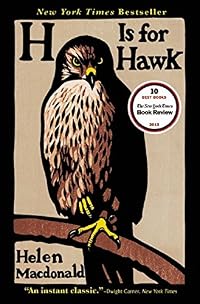
Some may liken this book to [b:H is for Hawk|18803640|H is for Hawk|Helen Macdonald|https://images.gr-assets.com/books/1442151714s/18803640.jpg|26732095]. I actually found Maclear's work to be more approachable, relatable, and frankly more moving.
3.5 stars rounded up to 4.
Thanks to NetGalley and Scribner for a galley of this book in exchange for an honest review. show less
When Kyo Maclear's father faces a grave and terminal illness, she looks for a way to manage her own grief an anxiety about her father's health. On the recommendation of and with the help of a friend, she takes up bird watching deciding to enjoy small spots of nature every day rather than epic versions of wilderness and escape.
Maclear beautifully reflects on the way that her new pastime changes her ability to view the world: "If you hope to see something, especially the notably elusive, you show more will learn to wait, like a devotee or a sanguine lover. You will choose your sitting spot and then you will just sit there. You will sit there, in the wind or drippy cold, waiting for the possibility of something beautiful to appear.
You will discover that the magic of a sitting spot is that it teaches you to go nowhere. If you are lucky, it will bring birds closer, or you closer to noticing them."
Maclear isn't just talking about birds here -- it's a way of life. Biriding is her new meditation. Her new way to make sense of the world. The new prescription for the anxieties of life.
Some may liken this book to [b:H is for Hawk|18803640|H is for Hawk|Helen Macdonald|https://images.gr-assets.com/books/1442151714s/18803640.jpg|26732095]. I actually found Maclear's work to be more approachable, relatable, and frankly more moving.
3.5 stars rounded up to 4.
Thanks to NetGalley and Scribner for a galley of this book in exchange for an honest review. show less
I love most birding memoirs, but there is a subset that I cannot stand: the I've-discovered-birds-in-middle-age-and-need-to-tell-everyone-about-it memoir. They all take the same form: life has thrown them a curveball, they stumble on to birding, and birding teaches them lessons about life. They discover what every birder already knows (nature is miraculous), and try to convince the reader of this by using flowery prose in an attempt to convey this mundane profundity.
Birds Art Life falls into this subset of birding memoirs. I found myself annoyed or arguing with something on every page. From her being able to distinguish among the 3 swans usually found in North America on one of her first birding trips (not exceptionally difficult, but show more highly unlikely for a beginner), to the tired cliche of looking at caged birds and musing on the cages we put ourselves in ("The cage of habit. The cage of ego. The cage of ambition. The cage of materialism.")
Throw in the obligatory climate change warnings, mix in anecdotes from life that remind her of the birds she's seen, then add a dash of the oft-told story of the extinction of the passenger pigeon, and you've got the typical How I Discovered Birding in Middle Age memoir.
For a better birding memoir, I recommend Kingbird Highway by Kenn Kaufman, and for a better year-in-the-life of nature type book, I highly recommend A Sand County Almanac by Aldo Leopold. show less
Birds Art Life falls into this subset of birding memoirs. I found myself annoyed or arguing with something on every page. From her being able to distinguish among the 3 swans usually found in North America on one of her first birding trips (not exceptionally difficult, but show more highly unlikely for a beginner), to the tired cliche of looking at caged birds and musing on the cages we put ourselves in ("The cage of habit. The cage of ego. The cage of ambition. The cage of materialism.")
Throw in the obligatory climate change warnings, mix in anecdotes from life that remind her of the birds she's seen, then add a dash of the oft-told story of the extinction of the passenger pigeon, and you've got the typical How I Discovered Birding in Middle Age memoir.
For a better birding memoir, I recommend Kingbird Highway by Kenn Kaufman, and for a better year-in-the-life of nature type book, I highly recommend A Sand County Almanac by Aldo Leopold. show less
this review is for the audiobook edition, narrated by laurel lefkow.
this is a lovely, contemplative work. i quite enjoyed how the book sat like a mindfulness exercise with me. (and i use the word 'exercise' in a not at all critical way -- this did not feel like work or require heavy effort.) maclear's book is a very personal work for her, but much also resonated with me, as though - at certain moments - maclear was in my head sharing the exact same experience.
lefkow's narration was mostly very good, though at quieter more meditative moments, her voice felt too strong, diverging from the tone in the writing. i would have enjoyed hearing maclear narrate her own book.
i also have the pretty paper edition on hand (Birds Art Life), and show more referred to it frequently during the listening. the book is a little work of art, and the story is complemented by illustrations throughout. i will say that, in audio, included lists were the one aspect of the story that did not work for me - with one exception: the 'spark birds' list. the rest of the lists worked better for me reading them on paper.
overall, i am so glad i finally got through this book properly. i've owned it since just before its release, and have dipped in and out periodically. but i'd never given it the proper time and attention it deserved. i was already a bird-nerd, and a fan of maclear's, so i am thrilled this book was such a lovely experience. during a particularly trying time, this story brought moments of calm and beautiful imagery.
I knew birds were not trivial. They were constantly chirping, and what they were saying, or what I heard them say, was Stand up. Look around. Be in the world. show less
this is a lovely, contemplative work. i quite enjoyed how the book sat like a mindfulness exercise with me. (and i use the word 'exercise' in a not at all critical way -- this did not feel like work or require heavy effort.) maclear's book is a very personal work for her, but much also resonated with me, as though - at certain moments - maclear was in my head sharing the exact same experience.
lefkow's narration was mostly very good, though at quieter more meditative moments, her voice felt too strong, diverging from the tone in the writing. i would have enjoyed hearing maclear narrate her own book.
i also have the pretty paper edition on hand (Birds Art Life), and show more referred to it frequently during the listening. the book is a little work of art, and the story is complemented by illustrations throughout. i will say that, in audio, included lists were the one aspect of the story that did not work for me - with one exception: the 'spark birds' list. the rest of the lists worked better for me reading them on paper.
overall, i am so glad i finally got through this book properly. i've owned it since just before its release, and have dipped in and out periodically. but i'd never given it the proper time and attention it deserved. i was already a bird-nerd, and a fan of maclear's, so i am thrilled this book was such a lovely experience. during a particularly trying time, this story brought moments of calm and beautiful imagery.
I knew birds were not trivial. They were constantly chirping, and what they were saying, or what I heard them say, was Stand up. Look around. Be in the world. show less
Members
- Recently Added By
Lists

Recommended Nature Writing
346 works; 180 members

Books Read in 2021
5,361 works; 114 members
Author Information

33+ Works 3,052 Members
Some Editions
Awards and Honors
Common Knowledge
- Alternate titles
- Birds Art Life Death: A Field Guide to the Small and Significant
- Original publication date
- 2017
Classifications
Statistics
- Members
- 263
- Popularity
- 122,477
- Reviews
- 22
- Rating
- (3.97)
- Languages
- English, Spanish
- Media
- Paper, Audiobook, Ebook
- ISBNs
- 17
- ASINs
- 6