
Kyo Maclear
Author of The Wish Tree
About the Author
Image credit: nancyfriedlandcbc.ca
Works by Kyo Maclear
Birds Art Life: A Year of Observation (2017) — Illustrator; Cover artist, some editions — 263 copies, 22 reviews
Maclear, Kyo (About) 1 copy
Associated Works
Intersecting Circles: The Voices of Hapa Women in Poetry and Prose (Bamboo Ridge, No. 76) (1999) — Contributor — 19 copies
Tagged
Common Knowledge
- Birthdate
- 1970
- Gender
- female
- Education
- University of Toronto
Ontario Institute for Studies in Education
York University, Toronto, Ontario, Canada (PhD|Environmental Humanities) - Occupations
- children's book author
novelist - Awards and honors
- K.M. Hunter Artist Award (Literature ∙ 2009)
Governor General's Literary Award - Relationships
- Maclear, Michael (father)
- Nationality
- UK (birth)
Canada - Birthplace
- London, England, UK
- Places of residence
- Toronto, Ontario, Canada
- Associated Place (for map)
- London, England, UK
Members
Reviews
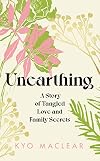
Secrets will always out in the same way that plants will always grow where you don't want them. For Maclear, the secret is devastating. The person she always thought as her father, was not her blood father and her mother was unwilling to tell her anything about it. In trying to untangle this mess of roots whilst her mother's memory is waning, Maclear finds brothers she never knew she had.
I remember metaphor is a way of making family of of seemingly unrelated things.
p363
Her Japanese mother's show more garden was as unlike a japanese garden as you can imagine. Wild, seemingly random and frequently changed, the garden was the same as the woman. No quiet, man-pleasing woman here. She gardened with an intensity that suggested there were other lives to be lived and had been lived in this woman and Maclear had to learn to read the signs around her and not to head directly for the question or point she wanted to make.
The writing is poetic and fragmentary although not as fragmentary as Ordinary Notes for example. It links to plants and gardens throughout, as emotions, metaphors and just plants. They are a reminder of the ways in which we are all connected whether we are linked by DNA or not. In gardens we all create plant communities that are different and so it is in families.
This would make an excellent book for a gardening book club. show less
I remember metaphor is a way of making family of of seemingly unrelated things.
p363
Her Japanese mother's show more garden was as unlike a japanese garden as you can imagine. Wild, seemingly random and frequently changed, the garden was the same as the woman. No quiet, man-pleasing woman here. She gardened with an intensity that suggested there were other lives to be lived and had been lived in this woman and Maclear had to learn to read the signs around her and not to head directly for the question or point she wanted to make.
The writing is poetic and fragmentary although not as fragmentary as Ordinary Notes for example. It links to plants and gardens throughout, as emotions, metaphors and just plants. They are a reminder of the ways in which we are all connected whether we are linked by DNA or not. In gardens we all create plant communities that are different and so it is in families.
This would make an excellent book for a gardening book club. show less
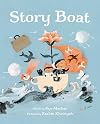
Here we are. So opens this evocative journey story of two young, brown-skinned children and their small black cat. With a changeable group of other travelers in coats and scarves, the three play, rest, and wander through ever-shifting landscapes—both real and imaginary—softly rendered in slate-blue, apricot, coral, white, grey, and porcelain colored pencils and paints. In Maclear’s poem, here is a flower, a lamp, a song, “a cup / old and fine, warm as a hug.” As the travelers show more finally meet with friends in a seaside town, the characters’ identities and homes are defined neither by the rows of identical, white tents midway through the book, nor by the quaint, warmly-lit buildings at the end. By the time the repeated phrase here we are closes the journey, here seems less important than we. A marvelous, nuanced work of beauty reminiscent of Wendy Meddour and Daniel Egnéus’ Lubna and Pebble, this story subtly invites a connection to recent migrant narratives, especially the travelers’ voyage in what appears to be a crowded and less than seaworthy vessel. The characters’ nationality, race, and ethnicity, as well as the geographic details of their route, remain ambiguous. Poetic, often figurative words join expressive pictures to shape a basic narrative that does not dwell on the migrants’ hardships: an adult weeps in one scene, but the focus stays on the two children’s day-to-day experiences and fertile imaginations, as cup, blanket, lamp, and flower become a home, a sail, a lighthouse, and a ladder. Between the wealth of detail in Kheiriyeh’s illustrations and the depth of Maclear’s text, engaged readers will make further discoveries over multiple perusals. show less
 This review was written for LibraryThing Early Reviewers.
Canadian author/illustrator team Kyo Maclear and Julie Morstad, whose previous collaborations include Julia, Child and Bloom: A Story of Fashion Designer Elsa Schiaparelli, turn to the story of Japanese-American artist and picture-book creator Gyo Fujikawa in this biographical story for young children. Born in 1903, Fujikawa was the daughter of first generation Japanese immigrants. She grew up and attended school in California, and in the 1920s she became one of the first Japanese-American show more women to go to college, where she studied art. Living on the east coast at the outset of World War II, she was spared internment, although her parents and brother were imprisoned along with the rest of the west coast (and Hawaiian) Japanese-Americans. After the war, she began working on children's books, and in 1963, after some resistance from publishers who thought books depicting a diverse range of children wouldn't sell well, her groundbreaking Babies was published...
I'm somewhat chagrined to admit that although well familiar with her name, I have never picked up any of Fujikawa's books, and this despite my interest in children's literature. That said, I have enjoyed other titles from both Maclear and Morstad, so when a friend recommended this one - thank you, Kathryn! - I immediately sought it out. It is a powerfully told and beautifully-illustrated book, offering a storytelling narrative that gives the broad strokes of the story, and an afterword that fills in more information. I was moved by Fujikawa's life story, and by her principled stand for diversity in children's books - she was definitely a groundbreaker - and after reading It Began with a Page: How Gyo Fujikawa Drew the Way I do intend to track down some of her work.
My only critique of the book, and it is something I have noticed with a number of other works devoted to pioneering figures, is the false claim on the front dust-jacket blurb that a picture-book featuring an international set of babies, babies of all races and backgrounds, had never been done before Fujikawa's Babies. As someone who greatly enjoyed the lovely Small Rain: Verses from the Bible, which was published in 1943, won a Caldecott Honor for illustrator Elizabeth Orton Jones, and likewise featured small children of all races, I know this claim to be untrue. In this respect I'm reminded of the similarly misguided Balderdash!: John Newbery and the Boisterous Birth of Children's Books, which made the erroneous claim that Anglophone children's literature began with the mid-18th-century publisher John Newbery. I don't really understand why authors and book promoters do this. Is it ignorance? A wish to impress with a claim of being "first?" Isn't is enough to state that the figure in question was highly influential, or that they were one of the first to do something? Do they have to be the first (or only one) to have done something, for it to have meaning? I certainly don't think so, and I don't think that the existence of Small Rain: Verses from the Bible takes away from Fujikawa's accomplishment, so it bothers me that unnecessary claims of singularity or being first are often made in this regard, and that the result is a flattened, simplified view of history.
Leaving that issue aside, I did greatly enjoy this one, and would recommend it to picture-book lovers of all ages, as well as to young would-be artists in need of a little inspiration. show less
I'm somewhat chagrined to admit that although well familiar with her name, I have never picked up any of Fujikawa's books, and this despite my interest in children's literature. That said, I have enjoyed other titles from both Maclear and Morstad, so when a friend recommended this one - thank you, Kathryn! - I immediately sought it out. It is a powerfully told and beautifully-illustrated book, offering a storytelling narrative that gives the broad strokes of the story, and an afterword that fills in more information. I was moved by Fujikawa's life story, and by her principled stand for diversity in children's books - she was definitely a groundbreaker - and after reading It Began with a Page: How Gyo Fujikawa Drew the Way I do intend to track down some of her work.
My only critique of the book, and it is something I have noticed with a number of other works devoted to pioneering figures, is the false claim on the front dust-jacket blurb that a picture-book featuring an international set of babies, babies of all races and backgrounds, had never been done before Fujikawa's Babies. As someone who greatly enjoyed the lovely Small Rain: Verses from the Bible, which was published in 1943, won a Caldecott Honor for illustrator Elizabeth Orton Jones, and likewise featured small children of all races, I know this claim to be untrue. In this respect I'm reminded of the similarly misguided Balderdash!: John Newbery and the Boisterous Birth of Children's Books, which made the erroneous claim that Anglophone children's literature began with the mid-18th-century publisher John Newbery. I don't really understand why authors and book promoters do this. Is it ignorance? A wish to impress with a claim of being "first?" Isn't is enough to state that the figure in question was highly influential, or that they were one of the first to do something? Do they have to be the first (or only one) to have done something, for it to have meaning? I certainly don't think so, and I don't think that the existence of Small Rain: Verses from the Bible takes away from Fujikawa's accomplishment, so it bothers me that unnecessary claims of singularity or being first are often made in this regard, and that the result is a flattened, simplified view of history.
Leaving that issue aside, I did greatly enjoy this one, and would recommend it to picture-book lovers of all ages, as well as to young would-be artists in need of a little inspiration. show less
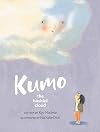
Kumo: The Bashful Cloud is a charming story about a cloud named Kumo who is called for "cloud duty" by herself on a day when the other clouds are unavailable, despite her wish to "float unseen." The illustrations were my favourite part of this book; they are soft around the edges in pastel shades and blue tones, most suitable for a picture book about a cloud. I lingered on my favourite pages for a few extra moments, just to admire the artwork. The story itself drifts along somewhat like a show more cloud in the sky on a lazy summer day. It is a quiet story, and not that eventful, but I quite liked the "small boy with his head in the clouds" who seems to be the only human who sees Kumo and who imagines the shapes of animals forming in the clouds. Kumo's realization that "sometimes dreaming helped" seems to be a quiet recognition of the power of the imagination, especially for those who are introverted or who feel small. I could see this being a good quiet bedtime read as it's a gentle story with calm artwork. show less
This review was written for LibraryThing Early Reviewers.Lists
Youth: DEI (1)
Awards


You May Also Like


Associated Authors
Statistics
- Works
- 32
- Also by
- 3
- Members
- 3,039
- Popularity
- #8,402
- Rating
- 4.0
- Reviews
- 315
- ISBNs
- 156
- Languages
- 8
- Favorited
- 1
