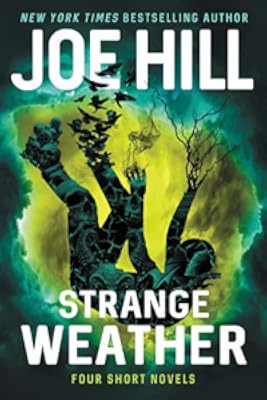
Strange Weather
by Joe Hill 
On This Page
Description
A collection of four chilling novels, ingeniously wrought gems of terror from the brilliantly imaginative, #1 New York Times bestselling author of The Fireman, Joe Hill."One of America's finest horror writers" (Time magazine), Joe Hill has been hailed among legendary talents such as Peter Straub, Neil Gaiman, and Jonathan Letham. In Strange Weather, this "compelling chronicler of human nature's continual war between good and evil," (Providence Journal-Bulletin) who "pushes genre conventions show more to new extremes" (New York Times Book Review) deftly expose the darkness that lies just beneath the surface of everyday life.
"Snapshot," performed by Wil Wheaton, is the disturbing story of a Silicon Valley adolescent who finds himself threatened by "The Phoenician," a tattooed thug who possesses a Polaroid Instant Camera that erases memories, snap by snap.
A young man takes to the skies to experience his first parachute jump. . . and winds up a castaway on an impossibly solid cloud, a Prospero's island of roiling vapor that seems animated by a mind of its own in "Aloft," performed by Dennis Boutsikaris.
On a seemingly ordinary day in Boulder, Colorado, the clouds open up in a downpour of nails—splinters of bright crystal that shred the skin of anyone not safely under cover. "Rain," performed by Kate Mulgrew, explores this escalating apocalyptic event, as the deluge of nails spreads out across the country and around the world.
In "Loaded," performed by Stephen Lang, a mall security guard in a coastal Florida town courageously stops a mass shooting and becomes a hero to the modern gun rights movement. But under the glare of the spotlights, his story begins to unravel, taking his sanity with it. When an out-of-control summer blaze approaches the town, he will reach for the gun again and embark on one last day of reckoning.
With an afterword from Joe Hill, read by the author.
Masterfully exploring classic literary themes through the prism of the supernatural, Strange Weather is a stellar collection from an artist who is "quite simply the best horror writer of our generation" (Michael Kortya).
. show less
Tags
Recommendations
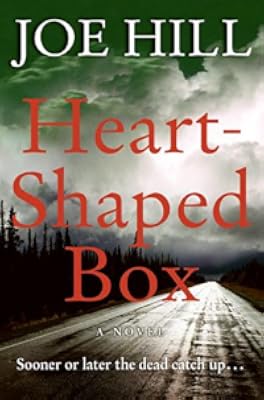

Member Recommendations
Member Reviews
It's easy to become a fan of Joe Hill. His novels and stories quickly pull you in with multi-dimensional characters and with simple premises that lead off into wonderful stories. Plus while you are reading the stories, you can see the ideas and fears that are at the heart of the story. Each of the short novels in this collection had me feeling different and intense emotions. Both "Snapshot" and "Loaded" are hard-hitting to the emotions. They should also be considered very bleak and dark. As Hill said in his Afterword, the short novel is often the right length for a horror story: long enough to build the characters into real people and short enough for the pedal to be on the floor the whole time without needing a breather. I eagerly look show more forward to reading NOS4A2, THE FIREMAN, and all future books by Hill.
"Snapshot" - This story hits on many fronts. Setting the story in 1988 meant that it could ride the 80s nostalgia wave that is currently hitting thanks to "Stranger Things", the movie remake of "It" and more. Personally it was early 80s instead of late when I was the same age as Michael Figlione, the protagonist, but still close enough to easily connect. My biggest connection point to the story though was the emotional aspect of getting older and forgetting. As I approached and hit 50 years old, it had been on my mind a lot. The story focuses on memory and forgetting, or rather having memories stolen. It's a simple idea and would fit perfectly as an episode of "The Twilight Zone" but Hill elevates it beyond that. Rather than ending it at a natural point, he lets the story continue to run. This infuses the story with more emotions and hits the reader harder instead of staying a more simple concept.
"Loaded" - This story starts as a bunch of mini-clips about guns. I wasn't sure exactly where it was going until I realized that the clips were connected, that they were background for the heart of the story. So once Hill got to the center of the story (a mass shooting in a local mall), the readers realizes that there was more to everything that happened previously. All the small pieces play into the big picture. Once the final act is hit and events elevated to the next level, the ending becomes that much more impactful. It was agony and heart-wrenching. The story is an emotional picture of the gun-control debate. Without picking a side, Hill was able to show how multi-faceted the topic really is.
"Aloft" - On a much lighter note, "e;Aloft" is about dreams. About living your life in the real-world and not up in the clouds. About making a decision on how you're going to live your life. Aubrey Griffen was going through life like many of us have: enjoying it and living it but with a secret fantasy that was really limiting his life. For Aubrey, it was a fantasy of getting that woman in his life who really isn't interested in him in that way. His hanging around and waiting for that to happen ends up with Aubrey jumping out of an airplane and landing on a cloud. The story is rich in symbolism and ripe to be analyzed in a creative writing class. Personally I hope that Aubrey shows up in some other Joe Hill story, just so we can see the decisions he made in his new life.
"Rain" - The collection closes with a story about the apocalypse. It's an extremely modern story about death raining down from above and how people deal with it. The lesbian protagonist is on a journey to do the right thing by telling her girlfriend's father about the death of his wife and daughter. Along the way she deals with crazy members from a cult, a MMA fighter who owes her a favor, and bigotry from "normal"neighbors, all while in the background the President tweets his threats to ISIS and others. Underneath the covers, the story is about loneliness, about finding your family, about making your family, or simply making others lonely too. But this time, the symbolism is much more subtle. It's something that nibbles on your subconscious instead of taking a big bite. show less
"Snapshot" - This story hits on many fronts. Setting the story in 1988 meant that it could ride the 80s nostalgia wave that is currently hitting thanks to "Stranger Things", the movie remake of "It" and more. Personally it was early 80s instead of late when I was the same age as Michael Figlione, the protagonist, but still close enough to easily connect. My biggest connection point to the story though was the emotional aspect of getting older and forgetting. As I approached and hit 50 years old, it had been on my mind a lot. The story focuses on memory and forgetting, or rather having memories stolen. It's a simple idea and would fit perfectly as an episode of "The Twilight Zone" but Hill elevates it beyond that. Rather than ending it at a natural point, he lets the story continue to run. This infuses the story with more emotions and hits the reader harder instead of staying a more simple concept.
"Loaded" - This story starts as a bunch of mini-clips about guns. I wasn't sure exactly where it was going until I realized that the clips were connected, that they were background for the heart of the story. So once Hill got to the center of the story (a mass shooting in a local mall), the readers realizes that there was more to everything that happened previously. All the small pieces play into the big picture. Once the final act is hit and events elevated to the next level, the ending becomes that much more impactful. It was agony and heart-wrenching. The story is an emotional picture of the gun-control debate. Without picking a side, Hill was able to show how multi-faceted the topic really is.
"Aloft" - On a much lighter note, "e;Aloft" is about dreams. About living your life in the real-world and not up in the clouds. About making a decision on how you're going to live your life. Aubrey Griffen was going through life like many of us have: enjoying it and living it but with a secret fantasy that was really limiting his life. For Aubrey, it was a fantasy of getting that woman in his life who really isn't interested in him in that way. His hanging around and waiting for that to happen ends up with Aubrey jumping out of an airplane and landing on a cloud. The story is rich in symbolism and ripe to be analyzed in a creative writing class. Personally I hope that Aubrey shows up in some other Joe Hill story, just so we can see the decisions he made in his new life.
"Rain" - The collection closes with a story about the apocalypse. It's an extremely modern story about death raining down from above and how people deal with it. The lesbian protagonist is on a journey to do the right thing by telling her girlfriend's father about the death of his wife and daughter. Along the way she deals with crazy members from a cult, a MMA fighter who owes her a favor, and bigotry from "normal"neighbors, all while in the background the President tweets his threats to ISIS and others. Underneath the covers, the story is about loneliness, about finding your family, about making your family, or simply making others lonely too. But this time, the symbolism is much more subtle. It's something that nibbles on your subconscious instead of taking a big bite. show less
 This review was written for LibraryThing Early Reviewers.
Each of the four stories in this collection are fantastic examples of Joe Hill's warped and wonderful writing. My favorite thematically was the first story, Snapshot. Dementia itself is a frightening topic, but a creep with a camera literally stealing memories adds an extra element. The third story, Aloft, may be the strangest of the quartet. Essentially a relatable yet unlikable protagonist works through some personal issues in a Jack-&-the-Beanstalk-meets-Doctor-Who scenario. The fourth story, Rain, was quite a personal look at the apocalypse, framed by prejudices and modern politics. But the one that will stick with me the most was the second story, Loaded. I hated that unsatisfying ending, and for that I love it even more. The show more symbolism of the impending fires, the interweaving of all the characters' stories, the ideas presented about both sides of the gun debate, everything about this story worked so well. It's one I'd love to see adapted as an episode of Black Mirror. show less
Generally, books don't make me uncomfortable. Scary movies can scare me, creepy TV shows can make me creepy, but generally books don't have that affect. However...
All four stories in Joe Hill's Strange Weather made me uncomfortable, each in their own specific, and different, ways. "Snapshot" creeped me out: a young boy is trying to find out why his elderly neighbor is losing her memories, only to discover that it is a tattooed man with a memory stealing camera to blame. The final confrontation, and what was discovered in the camera and its eventual use, will make you rethink today's technology. In "Loaded," a mall security cop stops a mass shooting, or does he? This one hits a little too close to home, given the current national crisis show more with gun violence. "Aloft" will make you look at clouds in a decidedly different light (are they watching back?). And finally "Rain," a terrorism story of a different kind, but one that again hit too close to home with too much death during a time period of my own personal loss over my mother and dogs.
These stories left me uncomfortable in a variety of ways, but they also made me think, and both are signs of excellent writing. Hill continues to prove that he is just as adept a writer as his father, and in some ways he may be a stronger writer. King's short stories often hit with scare factor in overdrive, and while Hill's stories also do, they continue to have a heart and soul that I don't always find in King's work. (Hill's "20th Century Ghost" remains one of my all time favorite short stories.) While Hill gave himself more room to work in by writing novellas instead of short stories, he still manages to pack a remarkable amount of feeling into these stories.
I honestly can't recommend this book more. show less
All four stories in Joe Hill's Strange Weather made me uncomfortable, each in their own specific, and different, ways. "Snapshot" creeped me out: a young boy is trying to find out why his elderly neighbor is losing her memories, only to discover that it is a tattooed man with a memory stealing camera to blame. The final confrontation, and what was discovered in the camera and its eventual use, will make you rethink today's technology. In "Loaded," a mall security cop stops a mass shooting, or does he? This one hits a little too close to home, given the current national crisis show more with gun violence. "Aloft" will make you look at clouds in a decidedly different light (are they watching back?). And finally "Rain," a terrorism story of a different kind, but one that again hit too close to home with too much death during a time period of my own personal loss over my mother and dogs.
These stories left me uncomfortable in a variety of ways, but they also made me think, and both are signs of excellent writing. Hill continues to prove that he is just as adept a writer as his father, and in some ways he may be a stronger writer. King's short stories often hit with scare factor in overdrive, and while Hill's stories also do, they continue to have a heart and soul that I don't always find in King's work. (Hill's "20th Century Ghost" remains one of my all time favorite short stories.) While Hill gave himself more room to work in by writing novellas instead of short stories, he still manages to pack a remarkable amount of feeling into these stories.
I honestly can't recommend this book more. show less
Comparisons of Joe Hill to his dad are inescapable. That said, I think Hill has carved out his own voice and legacy to distinguish himself. I feel like Strange Weather offers a good case study for how Hill compares to Stephen King and how he is completely different.
The collection begins with "Snapshot," a tale about a guy with a Polaroid-like camera that, instead of taking pictures of people, takes memories from them. While each of these stories features a component of terror, this one is the most traditionally horror of the collection. It's also the most Kingian. It mixes the King atmosphere with an identifiable voice, and the horror has a cool-factor to it. It's also about a kid in an era steeped in nostalgia (Hill's is the 80s show more whereas King's is the 50s). Still, "Snapshot" would seem like a typical horror story until it makes itself incredibly (frighteningly) relevant in a metafiction sort of way, especially if you're reading on an e-device. All told, I felt this one was a solid story but not great.
Hill then transitions to "Loaded," a story that reads less like a horror tale, but I think that's only because the horror of it is so grounded in reality. This is a realist piece of fiction, and we in the U.S. live with its horror every day. Despite some subtle suggestions that never manifest, there really is nothing supernatural going on here. It's a story about all of the reasons the U.S.'s fascination with guns is unhealthy and harmful. It's really about more than that, though. It's about how guns, on their own, are not necessarily bad, but once you mix them with all of the worst parts of American culture, we undeniably get tragedy. From the characters to the form to Hill nailing every turning point, I loved this. Trigger warning for those sensitive to the gun debate (pun 100% intended), but I do think, if you sat down and talked to Hill about this one, he would admit that, while many of the points in this story are all too common, much of it is exceedingly uncommon or entirely theoretical. What is fiction, though, if not the theory of humankind?
If that one is too grounded for you, "Aloft" puts your head in the clouds. It's a story about a self-affirmed coward who goes skydiving because he promised a dying friend he would. But like most good stories, it's not really just about that. Ostensibly, "Aloft" is about the male ego, its blindness and unwillingness to see objectively and its fragility when confronted with reality. In tandem, these themes construct a story about the courage of a man to understand how he has failed and to begin to make amends with himself and those he loves. "Aloft" is bizarre, but it's also fantastically creative and meaningful. I loved it.
We conclude with "Rain," a story about a storm that comes to town and brings nails instead of water. Okay, it's not literally nails. They're razor-sharp, crystalline shards. Admittedly, I'm still processing this one, but it's about a woman whose partner and mother were killed in this initial storm in Boulder, CO, and her quest to walk to Denver to inform her partner's father. Thematically, "Rain" is the most loaded of these stories in that it's broadly about American culture and prejudice as it persists in a time of crisis. In this collection, "Rain" might be Hill's most courageous attempt to describe homophobia, xenophobia, religious fanaticism, and probably more that I'm still unpacking. As much as I enjoyed reading this one, it does feel to me like the stitched seams of Frankenstein's monster are visible here, but honestly, I feel like that imperfection is part of what makes this one courageous. Hill wanted a story about all of these things, and he may have done it with a heavy hand, but he did it. It's alive.
If you've made it this far in my review, you're probably already at the understanding that Strange Weather is somewhat progressive in its sociopolitical stance. For those of you more conservatively minded readers, this collection may land a little in your zone of resistance, but I don't feel it's preachy. It may at times be heavy handed.
That said, this is not a collection about policy or legislation. There is nothing in here about the social foundation and importance of welfare for the lower classes, for example. This is very important: these stories are about morality, ethics, and principles. Hill is writing about issues of right and wrong. The fact that our political dialogue has co-opted these issues (and made them more visible) does not make them inherently political, and I really don't think Hill thinks of them in those terms. I think what Strange Weather represents is Hill's attempts to investigate these issues and present them in some new ways, and to that end, I think he largely succeeds.
I don't think Strange Weather is mandatory reading (if you've never read a piece of fiction by Joe Hill, go get Horns right now), but I do think it's solid and valuable and, for many, inspired and inspiring. For the Joe Hill fan, I think Strange Weather is something different from him, an evolution of sorts, and I think it's worthwhile. show less
The collection begins with "Snapshot," a tale about a guy with a Polaroid-like camera that, instead of taking pictures of people, takes memories from them. While each of these stories features a component of terror, this one is the most traditionally horror of the collection. It's also the most Kingian. It mixes the King atmosphere with an identifiable voice, and the horror has a cool-factor to it. It's also about a kid in an era steeped in nostalgia (Hill's is the 80s show more whereas King's is the 50s). Still, "Snapshot" would seem like a typical horror story until it makes itself incredibly (frighteningly) relevant in a metafiction sort of way, especially if you're reading on an e-device. All told, I felt this one was a solid story but not great.
Hill then transitions to "Loaded," a story that reads less like a horror tale, but I think that's only because the horror of it is so grounded in reality. This is a realist piece of fiction, and we in the U.S. live with its horror every day. Despite some subtle suggestions that never manifest, there really is nothing supernatural going on here. It's a story about all of the reasons the U.S.'s fascination with guns is unhealthy and harmful. It's really about more than that, though. It's about how guns, on their own, are not necessarily bad, but once you mix them with all of the worst parts of American culture, we undeniably get tragedy. From the characters to the form to Hill nailing every turning point, I loved this. Trigger warning for those sensitive to the gun debate (pun 100% intended), but I do think, if you sat down and talked to Hill about this one, he would admit that, while many of the points in this story are all too common, much of it is exceedingly uncommon or entirely theoretical. What is fiction, though, if not the theory of humankind?
If that one is too grounded for you, "Aloft" puts your head in the clouds. It's a story about a self-affirmed coward who goes skydiving because he promised a dying friend he would. But like most good stories, it's not really just about that. Ostensibly, "Aloft" is about the male ego, its blindness and unwillingness to see objectively and its fragility when confronted with reality. In tandem, these themes construct a story about the courage of a man to understand how he has failed and to begin to make amends with himself and those he loves. "Aloft" is bizarre, but it's also fantastically creative and meaningful. I loved it.
We conclude with "Rain," a story about a storm that comes to town and brings nails instead of water. Okay, it's not literally nails. They're razor-sharp, crystalline shards. Admittedly, I'm still processing this one, but it's about a woman whose partner and mother were killed in this initial storm in Boulder, CO, and her quest to walk to Denver to inform her partner's father. Thematically, "Rain" is the most loaded of these stories in that it's broadly about American culture and prejudice as it persists in a time of crisis. In this collection, "Rain" might be Hill's most courageous attempt to describe homophobia, xenophobia, religious fanaticism, and probably more that I'm still unpacking. As much as I enjoyed reading this one, it does feel to me like the stitched seams of Frankenstein's monster are visible here, but honestly, I feel like that imperfection is part of what makes this one courageous. Hill wanted a story about all of these things, and he may have done it with a heavy hand, but he did it. It's alive.
If you've made it this far in my review, you're probably already at the understanding that Strange Weather is somewhat progressive in its sociopolitical stance. For those of you more conservatively minded readers, this collection may land a little in your zone of resistance, but I don't feel it's preachy. It may at times be heavy handed.
That said, this is not a collection about policy or legislation. There is nothing in here about the social foundation and importance of welfare for the lower classes, for example. This is very important: these stories are about morality, ethics, and principles. Hill is writing about issues of right and wrong. The fact that our political dialogue has co-opted these issues (and made them more visible) does not make them inherently political, and I really don't think Hill thinks of them in those terms. I think what Strange Weather represents is Hill's attempts to investigate these issues and present them in some new ways, and to that end, I think he largely succeeds.
I don't think Strange Weather is mandatory reading (if you've never read a piece of fiction by Joe Hill, go get Horns right now), but I do think it's solid and valuable and, for many, inspired and inspiring. For the Joe Hill fan, I think Strange Weather is something different from him, an evolution of sorts, and I think it's worthwhile. show less
This was an interesting collection and, I would suggest, serves as a really good primer for the best and the worst of Joe Hill.
Overall, I'm a big fan of Hill, having really enjoyed 20th Century Ghosts, Heart-Shaped Box, Gunpowder (from a smaller boutique publisher), N0S4A2 and its follow-up, Wraith, and, of course, his brilliant Locke & Key series.
At the same time, I count Horns and The Fireman as big fat misses.
And when we come back around to Strange Weather, I found some great stories, and at least one big fat miss.
Starting with Snapshot, I enjoyed the story quite a bit. It's the most Stephen King-style story of the four, and I think Hill wears his admiration loud and proud on his sleeve here. It's a fun story, but it lingers just a show more bit too long, overstaying its welcome just a bit. Mostly a hit, though. Four stars.
Next comes the ferocious Loaded where, I feel, Hill is firing on all cylinders. This is a brutal, ugly story, and a very good one. Perfect from beginning to end. All the stars.
Third, we have Aloft which, at its heart, is the heartbreaking story of a man trying to get over an unrequited love. But love is where Hill seems to be on shaky ground. He handled it so well in N0S4A2, a so bloody poorly in Horns. When Hill gets goopy, he gets really goopy, and he slides into this strange, whimsical wilderness where everything is magical and coated in a sickly-sweet fairy dust. It's the treehouse in Horns and it's everything that happens on the cloud in this story. For me, I simply couldn't buy into any of it, found it all insufferably stupid, and I despised the story. Loved the central theme, hated the story. Total miss. No stars.
And then, we end it on Rain, the cousin to his novel The Fireman. Don't get me wrong, they are in no way connected, but they feel similar: disaster strikes, we take to the road, we look for salvation. That's an oversimplification, and it doesn't do the story justice. Overall, I liked this one (maybe a hair less than Snapshot), but it seemed like the bulk of the story was taken up by a big detour to the girlfriend's father's house and back again, only then to tackle the central mystery. Still, for all that, some interesting characters and situations along the way. 3.5 stars.
So really, I do see this as the perfect intro to Joe Hill if you haven't read him up to now. You get the father's Kingian influence. You get Hill at his uncompromising best. You get the whimsical shit. And you get a hint at some of what his novels tackle.
Not a bad collection. show less
Overall, I'm a big fan of Hill, having really enjoyed 20th Century Ghosts, Heart-Shaped Box, Gunpowder (from a smaller boutique publisher), N0S4A2 and its follow-up, Wraith, and, of course, his brilliant Locke & Key series.
At the same time, I count Horns and The Fireman as big fat misses.
And when we come back around to Strange Weather, I found some great stories, and at least one big fat miss.
Starting with Snapshot, I enjoyed the story quite a bit. It's the most Stephen King-style story of the four, and I think Hill wears his admiration loud and proud on his sleeve here. It's a fun story, but it lingers just a show more bit too long, overstaying its welcome just a bit. Mostly a hit, though. Four stars.
Next comes the ferocious Loaded where, I feel, Hill is firing on all cylinders. This is a brutal, ugly story, and a very good one. Perfect from beginning to end. All the stars.
Third, we have Aloft which, at its heart, is the heartbreaking story of a man trying to get over an unrequited love. But love is where Hill seems to be on shaky ground. He handled it so well in N0S4A2, a so bloody poorly in Horns. When Hill gets goopy, he gets really goopy, and he slides into this strange, whimsical wilderness where everything is magical and coated in a sickly-sweet fairy dust. It's the treehouse in Horns and it's everything that happens on the cloud in this story. For me, I simply couldn't buy into any of it, found it all insufferably stupid, and I despised the story. Loved the central theme, hated the story. Total miss. No stars.
And then, we end it on Rain, the cousin to his novel The Fireman. Don't get me wrong, they are in no way connected, but they feel similar: disaster strikes, we take to the road, we look for salvation. That's an oversimplification, and it doesn't do the story justice. Overall, I liked this one (maybe a hair less than Snapshot), but it seemed like the bulk of the story was taken up by a big detour to the girlfriend's father's house and back again, only then to tackle the central mystery. Still, for all that, some interesting characters and situations along the way. 3.5 stars.
So really, I do see this as the perfect intro to Joe Hill if you haven't read him up to now. You get the father's Kingian influence. You get Hill at his uncompromising best. You get the whimsical shit. And you get a hint at some of what his novels tackle.
Not a bad collection. show less
Snapshot is a "photos steal your soul" story, very well done, heartbreaking. Loaded is the story of a mass shooter - one of the most viscerally horrible things I've ever read, because it's so goddamn real. (Tremendous writing. Horrible to read.) "Aloft" is a story about a douchey Nice Guy who realizes he's been being a douchebag and decides to do better, after getting stranded on a UFO disguised as a cloud. It was a fine story and I'm glad stories like that exist, but I still don't particularly care to read about guys like that. "Rain" is a fairly pessimistic apocalyptic story about what happens when it starts to rain crystal shards instead of water; it was fine, but not terrific.
As a long-time (going back to the 60s) reader of horror fiction (and I use the term "horror" in the broadest sense, to include all things weird), I don't know why it's taken me so long to getting around to reading a Joe Hill book. Regardless of why, I have now completed my maiden voyage with Hill, and I look forward to joining him on more journeys into the macabre.
As Miss Sadie says (and Sadie reads them all, don't you know), not all stories need to be told with enough paper to destroy an ecosystem, and these 4 short novels -- only one of which breaks 100 pages -- are a testament to that fact. None of these feels rushed or incomplete. He provides all the characterization and plot development required to tell the stories, and no more. show more This is the trend, in the horror field, at least, I have noticed with publishers such as PS and Cemetery Dance, and I am grateful to them for that.
All four stories rate at least 4 stars, with me. If I had to pick a favorite, it would be "Aloft," as it gave off a strong Twilight Zone vibe (One Character In Search of an Exit), that's never a bad thing. Also, thehappy ever after ending was a satisfying change.
On a final note, kudos are due the author (or his editor) for his use of the word "stanch," instead of the universally mis-used "staunch," in stopping the flow of blood. I bet he also knows that "crescendo" is a journey, not a destination. show less
As Miss Sadie says (and Sadie reads them all, don't you know), not all stories need to be told with enough paper to destroy an ecosystem, and these 4 short novels -- only one of which breaks 100 pages -- are a testament to that fact. None of these feels rushed or incomplete. He provides all the characterization and plot development required to tell the stories, and no more. show more This is the trend, in the horror field, at least, I have noticed with publishers such as PS and Cemetery Dance, and I am grateful to them for that.
All four stories rate at least 4 stars, with me. If I had to pick a favorite, it would be "Aloft," as it gave off a strong Twilight Zone vibe (One Character In Search of an Exit), that's never a bad thing. Also, the
On a final note, kudos are due the author (or his editor) for his use of the word "stanch," instead of the universally mis-used "staunch," in stopping the flow of blood. I bet he also knows that "crescendo" is a journey, not a destination. show less
Members
- Recently Added By
Lists

Best Horror Books
281 works; 85 members

ScaredyKIT 2018
17 works; 1 member

Bram Stoker Award
238 works; 5 members

Books Read in 2017
4,249 works; 129 members

Kirkus Starred Fiction Reviews of Books Published in 2017
412 works; 7 members

To Read
617 works; 7 members

Short Story and Novella Collections
47 works; 6 members

Books Read in 2018
4,360 works; 110 members

2010s
241 works; 3 members

Photography in Fiction
16 works; 4 members
Author Information

Joe Hill is the shortened name for Joseph Hillstrom King. He was born in Maine in 1972 and is the son of Tabitha and Stephen King. He used this shortened form of his name in order to succeed as a writer on his own merits, not because of his famous father. In 2007 he publicly confirmed his identity. His first book, 20th Century Ghost, received the show more the Bram Stoker award for Best Fiction Collection, and his Best New Horror book won him a second Bram Stoker award, this time for Best Short Story. He is also a past recipient of the Ray Bradbury Fellowship. Joe Hill's other books include Heart-Shaped Box, Road Rage (collaboration), Thumbprint, Throttle (collaboration), Horns, and NOS4A2. Joe Hill's novel The Fireman made the New York Times Bestseller list in 2016. (Bowker Author Biography) show less
Joe Hill is a LibraryThing Author, an author who lists their personal library on LibraryThing.
Some Editions
Awards and Honors
Awards
Distinctions
Series
Belongs to Publisher Series
Karanlık Kitaplık (34)
Work Relationships
Contains
Common Knowledge
- Canonical title
- Strange Weather
- Original publication date
- 2017
- Dedication
- For Mr. Blue Sky:
Aidan Sawyer King. Love you, kid. - First words
- Shelly Beukes stood at the bottom of the driveway, squinting up at our pink-sandstone ranch as if she had never seen it before.
- Last words
- (Click to show. Warning: May contain spoilers.)God, let it be so.
- Canonical DDC/MDS
- 813.6
- Canonical LCC
- PS3608.I4342
Classifications
Statistics
- Members
- 1,606
- Popularity
- 14,167
- Reviews
- 69
- Rating
- (3.81)
- Languages
- 9 — English, French, German, Hungarian, Italian, Polish, Spanish, Turkish, Portuguese (Portugal)
- Media
- Paper, Audiobook, Ebook
- ISBNs
- 33
- ASINs
- 7
