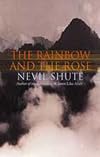
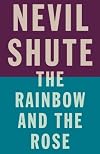
The Rainbow and the Rose
by Nevil Shute
On This Page
Description
When Johnny Pascoe attempts to rescue a sick girl from the Tasmanian outback his plane crashes leaving him dangerously injured. Ronnie Clarke, who was trained by Pascoe, endeavours to fly a doctor in to help but this proves more difficult than he imagined. As he waits overnight at Pascoe's house in order to try again the next day Clarke revisits the past of this unusual man - and reveals the shocking and tragic secrets that have influenced his life.Tags
Recommendations






Member Reviews
Odd. I mean, I'm not into aviation so much, or failed romances (especially those do to a misplaced sense of honor, or to patriarchal expectations), or adventure... but this novel is more than the sum of its parts and is surprisingly engaging. Not a fast read, but not difficult, either... again, just, hm. Definitely thought-provoking; would make a good book-club read.
I will prioritize my reread of On The Beach and will consider others by the author, too.
I will prioritize my reread of On The Beach and will consider others by the author, too.
I usually enjoy Nevile Shute’s stories but I have to admit that The Rainbow and The Rose, originally published in 1958, will not go down as a favorite. The book tells two stories and while I was quite interested in the one about the various attempts to rescue a severely injured pilot from a remote location, the second story, told through dream sequences, was a series of flashbacks through the pilots’ life.
Although an interesting concept, having one story frame another, I found the style of the flashback portions was very confusing, and it didn’t make a lot of sense that his past would be revealed in this manner. The survival story was more interesting but again there were a number of strange coincidences that the reader had to show more accept that were pretty far-fetched.
I will continue to read this author as The Rainbow and The Rose is the first of the many books of his that I have read that I didn’t really like. My enjoyment of A Town Called Alice, Pied Piper and On the Beach offset this one disappointment. show less
Although an interesting concept, having one story frame another, I found the style of the flashback portions was very confusing, and it didn’t make a lot of sense that his past would be revealed in this manner. The survival story was more interesting but again there were a number of strange coincidences that the reader had to show more accept that were pretty far-fetched.
I will continue to read this author as The Rainbow and The Rose is the first of the many books of his that I have read that I didn’t really like. My enjoyment of A Town Called Alice, Pied Piper and On the Beach offset this one disappointment. show less
A good, mature Nevil Shute, with a reasonable mix of emotional interest and aviation technicalities. The story takes us from France in the Great War to Tasmania in the fifties, via an interlude in 1920s England and an extended stopover in Fiji, and all the settings are handled with plenty of convincing detail.
If Round the bend should have been God and the art of aircraft maintenance, then the flippant title for this one would surely be Biggles and Lady Chatterley (even if the frame story has more resemblance to an episode of Flying doctors). At the centre of the story is a Doomed Love Affair between the Lady of the Manor, whose husband is in the loony bin, and the ex-First World War pilot who runs the local flying school. Sounds corny, show more but Shute just about manages to get away with it. What's a bit more difficult to live with is the very awkward narrative device he uses to present the story through two separate first-person narrators. This is a bit messy, and makes it look as though he changed his mind about how to present the story partway through. show less
If Round the bend should have been God and the art of aircraft maintenance, then the flippant title for this one would surely be Biggles and Lady Chatterley (even if the frame story has more resemblance to an episode of Flying doctors). At the centre of the story is a Doomed Love Affair between the Lady of the Manor, whose husband is in the loony bin, and the ex-First World War pilot who runs the local flying school. Sounds corny, show more but Shute just about manages to get away with it. What's a bit more difficult to live with is the very awkward narrative device he uses to present the story through two separate first-person narrators. This is a bit messy, and makes it look as though he changed his mind about how to present the story partway through. show less
Six-word review: Pilot's life passes before friend's eyes.
Extended review:
Oddly titled novel of aviation and doomed romance, with more than a touch of what we'd now call "magic realism," something I've seen in other Shute novels: one consciousness sliding into another to reveal a hidden narrative. Here it occurs through the medium of dreams and the effect of environmental proximity. The author achieves a nice balance between the plausible and the impossible.
Shute's fascination with the mechanical, and especially with aircraft and piloting, takes central focus as every event somehow wraps itself around that core. Even though I have no particular knowledge of this field, other than the lore that comes through culture and fiction, I could show more feel the way the subject gripped him and dominated his story. Some of his fervor was contagious enough to hold my attention even after it began to wear on me.
The story itself is one of personal drama, love and loss, and eventual reconciliation with life as it is. The predictable ending is nonetheless moving and in its own way satisfying.
I chose this novel because it is one of the few Shutes that are available at my library and just about the last one that I hadn't already read. I still fail to see the significance of the title, a line from a poem by Rupert Brooke, which by the marketing practices of today would signal an entirely different type of reading matter. If it weren't for the author's name, I would never have touched a book with a sentimental-sounding title like this.
I'm giving it only three stars because the technical content does overwhelm the story, but it's still a good Shute treatment of unknown private lives that run deep. show less
Extended review:
Oddly titled novel of aviation and doomed romance, with more than a touch of what we'd now call "magic realism," something I've seen in other Shute novels: one consciousness sliding into another to reveal a hidden narrative. Here it occurs through the medium of dreams and the effect of environmental proximity. The author achieves a nice balance between the plausible and the impossible.
Shute's fascination with the mechanical, and especially with aircraft and piloting, takes central focus as every event somehow wraps itself around that core. Even though I have no particular knowledge of this field, other than the lore that comes through culture and fiction, I could show more feel the way the subject gripped him and dominated his story. Some of his fervor was contagious enough to hold my attention even after it began to wear on me.
The story itself is one of personal drama, love and loss, and eventual reconciliation with life as it is. The predictable ending is nonetheless moving and in its own way satisfying.
I chose this novel because it is one of the few Shutes that are available at my library and just about the last one that I hadn't already read. I still fail to see the significance of the title, a line from a poem by Rupert Brooke, which by the marketing practices of today would signal an entirely different type of reading matter. If it weren't for the author's name, I would never have touched a book with a sentimental-sounding title like this.
I'm giving it only three stars because the technical content does overwhelm the story, but it's still a good Shute treatment of unknown private lives that run deep. show less
Good, in standard Shute style. Outback Australia, injured pilot, connections - the boy he taught to fly is a commercial pilot now and wants to go rescue him, but the weather isn't cooperating. Two very different doctors, two very different women with their own connection to the injured pilot - and some very strange dreams. It's not a happy ending, but it's not a sad one either - very rich. Worth reading, probably worth rereading in a few years.
When it comes to fiction, readers are willing to accept the most fantastic and supernatural, but this willingness has a lot to do with the genre. We can accept almost anything in Fantasy or Science-Fiction that we could not accept in psychological fiction. This is more or less the case with The rainbow and the rose.
Like many of Nevil Shute's novels The rainbow and the rose is set in the world of aviation. More than other novels, The rainbow and the rose describes a lot of bravoura and daring-do, even to the point where endangering others is discussed by characters in the novel. To see what people are willing to do for others, the true test of friendship and loyalty, are an important theme in the novel. Some of the norms and values in show more Shute's work are now quite distant to us, and start feeling quaint. Although The rainbow and the rose is one of Shute's final novels, first published in 1958, Shute's moral framework belongs firmy to the 1920s - 40s. Still, unlike much other fiction from that period, the novels of Nevil Shute are still very readable because they are so well-written.
What is a bit difficult about The rainbow and the rose is the jumping perspective. The narrator who for the most part is the main character sees the past through they eyes of another character. When this first happens, the circumstances seem very natural, as the narrator, Ron Clake, is deadly tired and stays the night in the home of the other character, John Pascoe. However, throughout the novel this happens a few more times, really stretching the reader's willingness to go along in this. Toward the end of the novel the narrator even has a moment that by the end of the novel is explained or supposed to have happened around the time Pascoe died. Still all in all this is a powerful and memorable novel. show less
Like many of Nevil Shute's novels The rainbow and the rose is set in the world of aviation. More than other novels, The rainbow and the rose describes a lot of bravoura and daring-do, even to the point where endangering others is discussed by characters in the novel. To see what people are willing to do for others, the true test of friendship and loyalty, are an important theme in the novel. Some of the norms and values in show more Shute's work are now quite distant to us, and start feeling quaint. Although The rainbow and the rose is one of Shute's final novels, first published in 1958, Shute's moral framework belongs firmy to the 1920s - 40s. Still, unlike much other fiction from that period, the novels of Nevil Shute are still very readable because they are so well-written.
What is a bit difficult about The rainbow and the rose is the jumping perspective. The narrator who for the most part is the main character sees the past through they eyes of another character. When this first happens, the circumstances seem very natural, as the narrator, Ron Clake, is deadly tired and stays the night in the home of the other character, John Pascoe. However, throughout the novel this happens a few more times, really stretching the reader's willingness to go along in this. Toward the end of the novel the narrator even has a moment that by the end of the novel is explained or supposed to have happened around the time Pascoe died. Still all in all this is a powerful and memorable novel. show less
I am a massive fan of Shute ever since reading 'On the Beach' a number of years ago. Since then I have worked my way through most of his catalogue and always enjoyed the softness of his works and captivating storylines. I suppose it had to happen one day, but this is the first of his books I really just couldn't get into.
The book follows Johnny Pascoe, a brilliant pilot who has has crashed his plane in an attempt to rescue a sick girl in a remote Australian location. He is seriously ill and although being looked after by the girls mother if a real doctor does not get to see him it is obvious he has little time left. An old pupil of Johnny's by the name of Ronnie Clark offers to fly a doctor to the site in the hope of providing show more treatment, but hampered by bad weather and a landing strip no better than a small clearing it is much harder than imagined. Whilst waiting for the doctor and in between attempts Ronnie stays at the Johnny's home where he is able to look at the ailing pilots belongings and build a picture in his mind of the life he has led. By way of a series of dreams Ronnie lives through some of the major events and lost loves of Johnny's youth and allows the reader to understand the events that have shaped the man.
Where I enjoyed the almost supernatural element shown on 'In the Wet' here I felt it really distracted me. The book seemingly drifted from Johnny's life to Ronnie's with no warning which made it really difficult at time to know who was speaking. I am sure this must have been quite an innovative way of writing at the time, but I just found it annoying. I suppose if I had to sum up the book I would say that as an introduction to Shute it may be worth starting elsewhere, as if this was my first novel by the author it would have also been my last, and I would have missed out on some brilliant stories. show less
The book follows Johnny Pascoe, a brilliant pilot who has has crashed his plane in an attempt to rescue a sick girl in a remote Australian location. He is seriously ill and although being looked after by the girls mother if a real doctor does not get to see him it is obvious he has little time left. An old pupil of Johnny's by the name of Ronnie Clark offers to fly a doctor to the site in the hope of providing show more treatment, but hampered by bad weather and a landing strip no better than a small clearing it is much harder than imagined. Whilst waiting for the doctor and in between attempts Ronnie stays at the Johnny's home where he is able to look at the ailing pilots belongings and build a picture in his mind of the life he has led. By way of a series of dreams Ronnie lives through some of the major events and lost loves of Johnny's youth and allows the reader to understand the events that have shaped the man.
Where I enjoyed the almost supernatural element shown on 'In the Wet' here I felt it really distracted me. The book seemingly drifted from Johnny's life to Ronnie's with no warning which made it really difficult at time to know who was speaking. I am sure this must have been quite an innovative way of writing at the time, but I just found it annoying. I suppose if I had to sum up the book I would say that as an introduction to Shute it may be worth starting elsewhere, as if this was my first novel by the author it would have also been my last, and I would have missed out on some brilliant stories. show less
Members
- Recently Added By
Lists

Favorite Childhood Books
1,651 works; 519 members

Books Read in 2021
5,361 works; 113 members
Author Information

56+ Works 20,317 Members
Nevil Shute Norway was born in Ealing, London, England, on January, 17 1899. At the age of 11, Norway played truant from his first preparatory school in Hammersmith. After he was discovered, he was sent to the Dragon School, Oxford, and from there to Shrewsbury. He was on holiday in Dublin at the time of the Easter rising of 1916 and acted as an show more ambulance driver, winning a commendation for gallant conduct. He then entered the Royal Military Academy, intending to be commissioned into the Royal Flying Corps, but a bad stammer led to his being failed at his final medical examination and returned to civil life. The last few months of the war were spent on home service as a private in the Suffolk Regiment. In 1919, Norway went to Balliol College, Oxford, where he took a third class honors course in engineering science in 1922. During the vacations he worked, unpaid, as an aeronautical engineer, for the Aircraft Manufacturing Company at Hendon, and then for Geoffrey de Havilland's own firm, which he joined as an employee upon finishing at Oxford. He learned to fly and gained experience as a test observer. During the evenings he diligently wrote novels and short stories unperturbed by rejection slips from publishers. In 1924 Norway took the post of Chief Calculator to the Airship Guarantee Company, to work on the construction of the R100. In 1929 he became Deputy Chief Engineer under Barnes Wallis, and in the following year he flew to and from Canada in the R100. After the end of the airship project, jobs were hard to come by due to the depression so Shute started an aircraft manufacturing company, Airspeed Limited. This company was ultimately successful and built a large number of aircraft during the war. Shute remained joint managing director until 1938. When the business became too routine, he decided to get out of the rut and live by writing. The de Havillands, the first aviation job Shute had ever had, wound up buying Airspeed Ltd. He had by then enjoyed some success as a novelist and had sold the film rights of Lonely Road and Ruined City. At the outbreak of war in 1939, Norway joined the Royal Naval Volunteer Reserve as a Sub-Lieutenant in the Miscellaneous Weapons Department. Rising to Lieutenant Commander, he found experimenting with secret weapons a job after his own heart. But he found that his growing celebrity as a writer caused him to be in the Normandy landings on 6th June 1944, for the Ministry of Information, and to be sent to Burma as a correspondent in 1945. He entered Rangoon with the 15th Corps from Arakan. Soon after demobilisation in 1945 he emigrated to Australia and made his home in Langwarrin, Victoria. His output of novels, which began with Marazan (1926) continued to the end. Shute was one of the leading aeronautical engineers in Britain during the 30's and a fellow of the Royal Aeronautical Society. When he began writing in the 20's, he feared that a reputation as a writer of fiction might harm his engineering career. For this reason he published under his two Christian names, Nevil Shute and engineered under his "real" name, Nevil S. Norway. Nevil Shute Norway died in Melbourne on January, 12 1960. (Bowker Author Biography) show less
Awards and Honors
Distinctions
Work Relationships
Common Knowledge
- Canonical title
- The Rainbow and the Rose
- Original publication date
- 1958
- People/Characters
- Johnny Pascoe; Ronnie Clarke
- Important places
- Tasmania, Australia; Fiji
- Epigraph
- When colour goes home into the eyes,
And lights that shine are shut again
With dancing girls and sweet birds' cries
Behind the gateways of the brain;
And that no-place which gave them birth, hall close
The rain... (show all)bow and the rose:-
Still may Time hold some golden space
Where I'll unpack that scented store
Of song and flower and sky and face,
And count, and touch, as a mother, who
Has watched her children all the rich day through,
Sits, quiet-handed, in the fading light,
When children sleep, ere night
RUPERT BROOKE - First words
- John Pascoe must have created something like a record for a pilot in civil aviation, because he went on flying a DC-6B across the Pacific from Sydney to Vancouver as a senior captain of AusCan Airways till he was sixty years ... (show all)old.
- Original language
- English
Classifications
- Genres
- General Fiction, Fiction and Literature, Historical Fiction, Romance
- DDC/MDS
- 823.912 — Literature & rhetoric English & Old English literatures English fiction 1900- 1901-1999 1901-1945
- LCC
- PZ3 .N83 .R — Language and Literature Fiction and juvenile belles lettres Fiction and juvenile belles lettres Fiction in English
- BISAC
Statistics
- Members
- 424
- Popularity
- 73,238
- Reviews
- 14
- Rating
- (3.70)
- Languages
- 7 — Danish, Dutch, English, Finnish, German, Norwegian (Bokmål), Swedish
- Media
- Paper, Audiobook, Ebook
- ISBNs
- 26
- ASINs
- 22