On This Page
Description
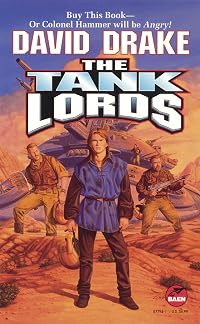
THE SAGA OF THE SLAMMERS BEGINS!COLONEL ALOIS HAMMER: He welded five thousand individual killers into a weapon more deadly than any other in the human universe. When a planetary government faces unfriendly natives, guerrilla insurgents, or ruthless terrorists, they do the only thing that might save them— they hire Hammer's Slammers, the toughest, meanest bunch of mercs who ever wrecked a world for pay. Known throughout the galaxy for their cold, ruthless ferocity, the men of Colonel show more Hammer's indomitable armored brigade routinely accept impossible missions. Again and again, they go up against overwhelming forces, or fight a two-front war against ferocious opposition, all without atomizing their civilian employers. Can they keep doing it Not if they abide by the rules of civilized warfare...but nobody ever said the Hammers were nice. Even when their chances are not good—those who oppose them have no chance at all!
Publisher's Note: THE TANK LORDS contains two full volume's worth of the Hammer's Slammer's saga, for the first time presented in chronological story sequence as determined by the author.
At the publisher's request, this title is sold without DRM (Digital Rights Management).
. show less
Tags
Recommendations
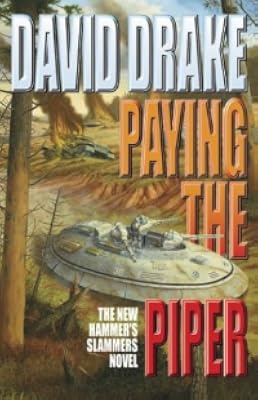
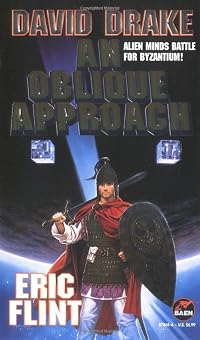


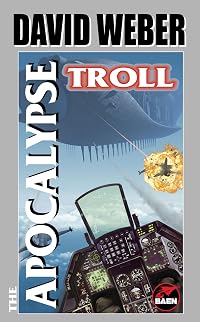
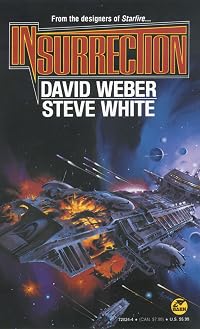

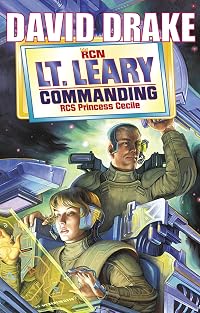
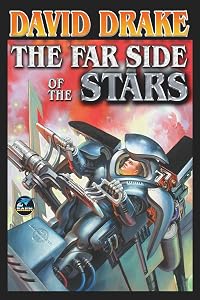
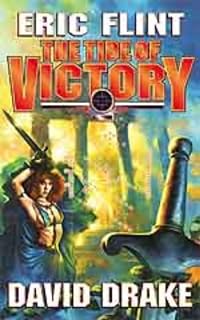
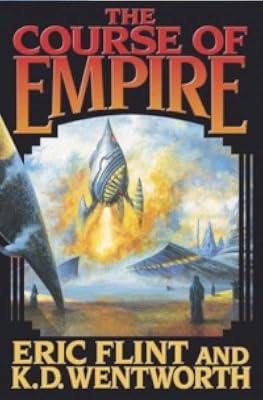
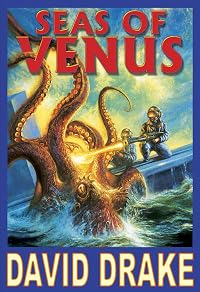
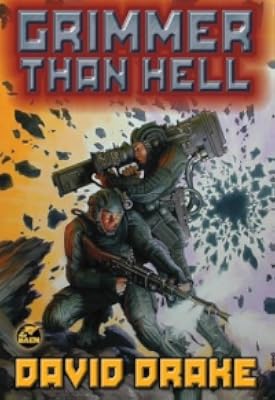
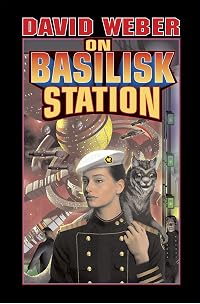


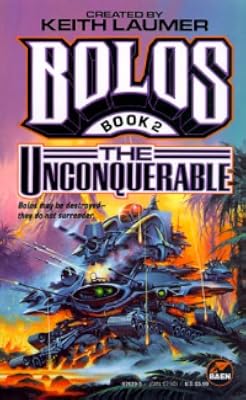

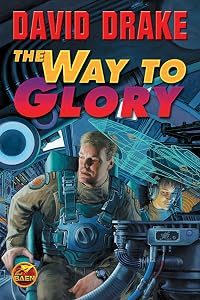
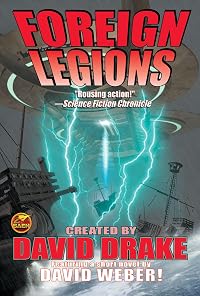
Member Recommendations
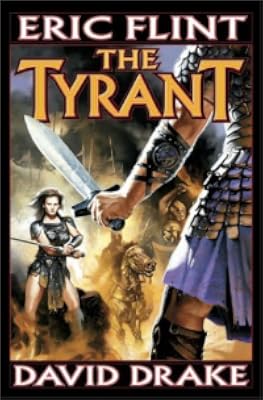
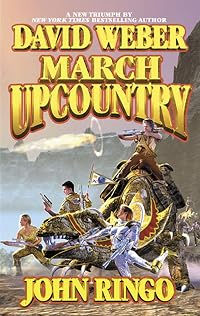
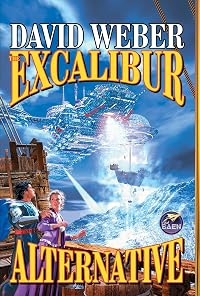
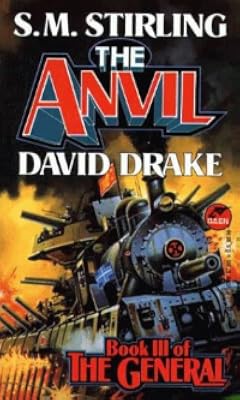
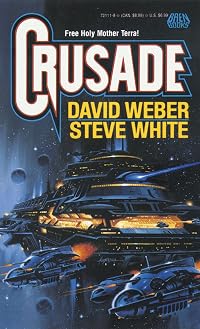
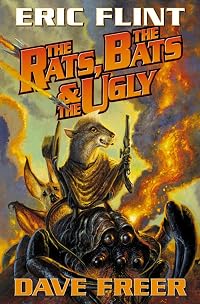
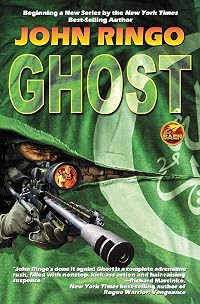
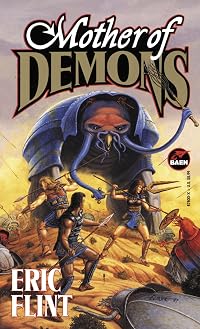
Dragget If your taste tends to like military scifi, these have a lot of similarities.
Member Reviews
The principal characters in David Drake’s The Tank Lords drive hovercraft-tanks that weigh 170 metric tons, travel nearly 100 kilometers per hour, and mount guns whose cyan-colored plasma bolts can vaporize a small building (or a lesser tank) with a single shot. That the people, not the tanks, are the most interesting part of the book is a testament to Drake’s skill as a writer of military fiction.
The people in question are members of “Hammer’s Slammers,” a mercenary regiment that – in a lightly sketched future where humans have spread among the stars – is hired by governments seeking a decisive advantage in their local armed conflicts. Virtually every story in the long-running series (this volume collects a novel, two show more novellas, and two short stories) takes place in a different war on a different world, but Drake leaves the political, strategic, and geographic details mostly to the reader’s imagination. The tactical details of individual battles are carefully described, and reflect both Drake’s own wartime experiences in Vietnam and his thorough working-out of how his imaginary technologies might affect the battlefield. In the end, though, the stories always focus squarely on the individual soldiers.
Rolling Hot, the longest and by far the best story in the book, is an apt example. It is, at first glance, a classic story of military heroics: The tale of a small, under-strength, ill-prepared unit of soldiers sent on a strategically vital mission because there is no one else available for the job. Chapter by chapter, however, it gradually resolves into a series of intertwined character studies, as Drake follows a handful of soldiers – the physically and emotionally exhausted captain in command; the overweight, long-serving maintenance sergeant; the local-army veteran turned skeptical war correspondent; and others – through the mission and explores how it changes them. Each of the principal characters is familiar (as a type) from other war stories, but Drake succeeds in bringing each to life as an individual, and leaving the reader deeply invested in their fate.
The final scene of Rolling Hot underscores the fact that it is not a story about a battle, or about war in general, but about people whose business is war. It – and the other stories in The Tank Lords -- are, under all their futuristic technology and gripping battle scenes, exceptionally thoughtful explorations of what it means to be a professional soldier. show less
The people in question are members of “Hammer’s Slammers,” a mercenary regiment that – in a lightly sketched future where humans have spread among the stars – is hired by governments seeking a decisive advantage in their local armed conflicts. Virtually every story in the long-running series (this volume collects a novel, two show more novellas, and two short stories) takes place in a different war on a different world, but Drake leaves the political, strategic, and geographic details mostly to the reader’s imagination. The tactical details of individual battles are carefully described, and reflect both Drake’s own wartime experiences in Vietnam and his thorough working-out of how his imaginary technologies might affect the battlefield. In the end, though, the stories always focus squarely on the individual soldiers.
Rolling Hot, the longest and by far the best story in the book, is an apt example. It is, at first glance, a classic story of military heroics: The tale of a small, under-strength, ill-prepared unit of soldiers sent on a strategically vital mission because there is no one else available for the job. Chapter by chapter, however, it gradually resolves into a series of intertwined character studies, as Drake follows a handful of soldiers – the physically and emotionally exhausted captain in command; the overweight, long-serving maintenance sergeant; the local-army veteran turned skeptical war correspondent; and others – through the mission and explores how it changes them. Each of the principal characters is familiar (as a type) from other war stories, but Drake succeeds in bringing each to life as an individual, and leaving the reader deeply invested in their fate.
The final scene of Rolling Hot underscores the fact that it is not a story about a battle, or about war in general, but about people whose business is war. It – and the other stories in The Tank Lords -- are, under all their futuristic technology and gripping battle scenes, exceptionally thoughtful explorations of what it means to be a professional soldier. show less
Fun action, doesn't sweep the consequences on civilians or the soldiers themselves under the rug though it remains fairly light in tone overall. It's a compilation of novellas & short stories, the one I loved best has a slave/servant from some backward neo-medieval s***-hole going all cloak & dagger and getting epic revenge on his 'employers' .
Disturbing: The only reason I don't give it 5 is because it is a reprint in a different format, with all stories previously published.
Spoiler alert for the main story.
That said, Rolling Hot, the prime story, is one you simply must read if you want to grasp the military mindset. It ranks up with Heinlein's Starship Troopers (the novel, not the stupid movie with the same title) and Haldeman's The Forever War.
Drake always manages to impart wisdom under the horrific gore. It's actually incredibly subtle in its own perverse way. Drake loads on the blood as a cautionary tale. He served with the 11th Armored Cavalry in Vietnam, and it still shows in his writing and occasionally in his talk. This isn't gore to titillate, this is gore to show more revolt, just in case you start to develop the theory that violence is a neat thing. It's harsh enough it will probably override years of stupid shootemup computer games in the current generation. Yes, it's THAT grisly.
But the characters are where the story is. Along with a decrepit, burned out, wrung out bunch of leftovers from previous engagements, a civilian reporter rides along. His goal was to investigate the "Waste" of money on the mercenaries that could be spent on additional indigenous forces. All he sees at the beginning is the rough, crude exterior of the unit.
On post during an attack, he winds up dragging along during a hell for leather chase across the continent, a desperate attempt to relieve the capital with the only troops available--the Slammers' sick list. It's that or be left as fodder, and the enemy doesn't care that he's a "noncombatant." Violating the non-interference concept reporters try to embrace, he mans a gun and offers his best military skill--shooting a grenade launcher as he learned as a reservist years past. "That's it, Turtle! you flush 'em, we'll shoot 'em!" one of his squad mates advises through a burst of fire. Even more than the Slammers, this is the last place he wants to be, and there's simply no choice.
At the end of a brutal, casualty-ridden drive across a hostile wasteland of enemy action, bad roads, "friendly" fire and inadequate supplies, he has the answer to his question. Why spend money on professionals? Because they're the only ones who can accomplish the impossible. As Montesquieu said, "A rational army WOULD run away."
That's when the story took a twist. Upon relieving the town, the mercs are shunned and ridiculed for their "disgusting and unprofessional" appearance by the alleged professionals of the local army and government. Our reporter reacts with righteous indignation and murderous rage that troops brave enough and dedicated enough to pull off the impossible are regarded as trash by pretty boys with no trigger time...
...and is stopped by one of the gunners, who tells him, "It don't mean nothin'."
I was appalled by the ending. I was outraged. It seemed to not be an ending in any fashion. It was six months later, during a discussion where I was trying uselessly to explain the concept of military duty to a civilian who simply CANNOT understand what it means. Some can, some can't. Those who can't never will. That's when I understood. "It don't mean nothin'."
Nineteen years of service. A few hours to read. Six months for it to make sense. And a story I will never forget.
And sadly, most civilians will never get it. That's not an insult, it's a cultural observation.
Bravo, Dave. show less
Spoiler alert for the main story.
That said, Rolling Hot, the prime story, is one you simply must read if you want to grasp the military mindset. It ranks up with Heinlein's Starship Troopers (the novel, not the stupid movie with the same title) and Haldeman's The Forever War.
Drake always manages to impart wisdom under the horrific gore. It's actually incredibly subtle in its own perverse way. Drake loads on the blood as a cautionary tale. He served with the 11th Armored Cavalry in Vietnam, and it still shows in his writing and occasionally in his talk. This isn't gore to titillate, this is gore to show more revolt, just in case you start to develop the theory that violence is a neat thing. It's harsh enough it will probably override years of stupid shootemup computer games in the current generation. Yes, it's THAT grisly.
But the characters are where the story is. Along with a decrepit, burned out, wrung out bunch of leftovers from previous engagements, a civilian reporter rides along. His goal was to investigate the "Waste" of money on the mercenaries that could be spent on additional indigenous forces. All he sees at the beginning is the rough, crude exterior of the unit.
On post during an attack, he winds up dragging along during a hell for leather chase across the continent, a desperate attempt to relieve the capital with the only troops available--the Slammers' sick list. It's that or be left as fodder, and the enemy doesn't care that he's a "noncombatant." Violating the non-interference concept reporters try to embrace, he mans a gun and offers his best military skill--shooting a grenade launcher as he learned as a reservist years past. "That's it, Turtle! you flush 'em, we'll shoot 'em!" one of his squad mates advises through a burst of fire. Even more than the Slammers, this is the last place he wants to be, and there's simply no choice.
At the end of a brutal, casualty-ridden drive across a hostile wasteland of enemy action, bad roads, "friendly" fire and inadequate supplies, he has the answer to his question. Why spend money on professionals? Because they're the only ones who can accomplish the impossible. As Montesquieu said, "A rational army WOULD run away."
That's when the story took a twist. Upon relieving the town, the mercs are shunned and ridiculed for their "disgusting and unprofessional" appearance by the alleged professionals of the local army and government. Our reporter reacts with righteous indignation and murderous rage that troops brave enough and dedicated enough to pull off the impossible are regarded as trash by pretty boys with no trigger time...
...and is stopped by one of the gunners, who tells him, "It don't mean nothin'."
I was appalled by the ending. I was outraged. It seemed to not be an ending in any fashion. It was six months later, during a discussion where I was trying uselessly to explain the concept of military duty to a civilian who simply CANNOT understand what it means. Some can, some can't. Those who can't never will. That's when I understood. "It don't mean nothin'."
Nineteen years of service. A few hours to read. Six months for it to make sense. And a story I will never forget.
And sadly, most civilians will never get it. That's not an insult, it's a cultural observation.
Bravo, Dave. show less
I have an odd complaint about this book. It had too much action. Yep, I said it. I'd heard about Hammer's Slammers for some time and wanted to pick a book in the series up and read it, so I chose this one, which is I think the first one. And it started rather excitingly. But as it turned out, it's all just shooting. Just page and page of shooting. And page after page of people being blown up. There's literally no plot. None. It's just non-stop violence for the sake of violence. So I gave up at page 98 and said enough. I'm done. No more. Now I doubt if I'll pick up another book by this author. I think he's extremely limited. Not recommended.
I know I've read some Drake. He's prolific enough he's inescapable. But I'm not sure that I've ever read more than a story or two from Hammer's Slammers. Released on the Baen "First One is Free" policy, The Tank Lords is three decent short stories and one mediocre novella.
The basic premise of the series is that the Slammers are interstellar mercenaries, an armored regiment formed around hover-tanks and hover-APCs, and paid by one side of planetary wars to stomp the other side. The best of these stories bring home the themes of the sublime absolute of firepower, the bonds between soldiers, and the incommensurable gap between soldiers and civilians.
But the stories are weaker on characterization, on showing that the civilians have any show more kind of point of view. And the novella, rather than using its length to do something interesting, is one long rolling firefight based on the Tet Offensive.
So first one is free, but I'm going to let someone else point out which books in the series are actually good before committing to any more. show less
The basic premise of the series is that the Slammers are interstellar mercenaries, an armored regiment formed around hover-tanks and hover-APCs, and paid by one side of planetary wars to stomp the other side. The best of these stories bring home the themes of the sublime absolute of firepower, the bonds between soldiers, and the incommensurable gap between soldiers and civilians.
But the stories are weaker on characterization, on showing that the civilians have any show more kind of point of view. And the novella, rather than using its length to do something interesting, is one long rolling firefight based on the Tet Offensive.
So first one is free, but I'm going to let someone else point out which books in the series are actually good before committing to any more. show less
I'm not a big fan of miltary sf - I prefer some plot in addition to relentless battle scenes where it is hard to keep track of where everybody is - but this was an enjoyable read. A diversion for a few days while LT was down.
A collision of short stories all featuring different personal and situations within the Tank Lords - Hammer's Slammers. A mercenary company in the 21st century of galactic troubles. Personal sacrifice backed up by the hardest weapons and a desire to use them meant they were always on the winning side - that is whoever paid them.
The appendix of background details is quite interesting and Drake has gone to some efforts to think about the consequences of today's miliatry situation and how technology could change that.
A collision of short stories all featuring different personal and situations within the Tank Lords - Hammer's Slammers. A mercenary company in the 21st century of galactic troubles. Personal sacrifice backed up by the hardest weapons and a desire to use them meant they were always on the winning side - that is whoever paid them.
The appendix of background details is quite interesting and Drake has gone to some efforts to think about the consequences of today's miliatry situation and how technology could change that.
One novella-length and several shorter stories featuring the mercenaries of Hammers Slammers and their tanks. Any glory here has the L shot out of it in short order. War is nasty, brutal, and often involves truncated bodies. Drake pulls no punches, but he certainly spins a readable tale.
Members
- Recently Added By
Lists

Baen Free Library
72 works; 2 members
Author Information

269+ Works 34,928 Members
David Drake was born on September 24, 1945, in Dubuque, Iowa. He attended University of Iowa, where he graduated with a degree in History (with honors) and Latin. He then attended Duke Law School. He was drafted out of law school, served in the army for two years and then returned to school. He worked as an Assistant Town Attorney of Chapel Hill show more and then part-time as a city bus driver before he became a full-time writer. Drake is considered a master of Science Fiction and Fantasy. The Hammer's Slammers, military science fiction, was his first published series. His other titles include Northworld series, The Dragon Lord, Starliner, Ranks of Bronze, and Redliners. In recognition of his work, he won a World Fantasy award in 1976. He currently resides in North Carolina. (Bowker Author Biography) show less
Series

Work Relationships
Contains
Common Knowledge
- Canonical title
- The Tank Lords
- Original publication date
- 1997-08-01
Classifications
Statistics
- Members
- 493
- Popularity
- 61,606
- Reviews
- 9
- Rating
- (3.43)
- Languages
- English
- Media
- Paper, Ebook
- ISBNs
- 4
- ASINs
- 5