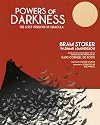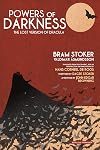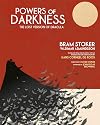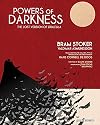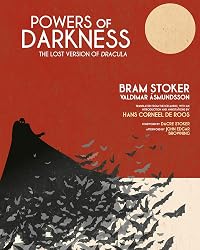
Powers of Darkness: The Lost Version of Dracula
by Bram Stoker (Original story)  , Vladimir Asmundsson
On This Page
Description
Powers of Darkness is an incredible literary discovery: In 1900, Icelandic publisher and writer Valdimar Asmundsson set out to translate Bram Stoker's world-famous 1897 novel Dracula. Called Makt Myrkranna (literally, 'Powers of Darkness'), this Icelandic edition included an original preface written by Stoker himself. Makt Myrkranna was published in Iceland in 1901 but remained undiscovered outside of the country until 1986, when Dracula scholarship was astonished by the discovery of show more Stoker's preface to the book. However, no one looked beyond the preface and deeper into Asmundsson's story.In 2014, literary researcher Hans de Roos dove into the full text of Makt Myrkranna, only to discover that Asmundsson hadn't merely translated Dracula but had penned an entirely new version of the story, with all new characters and a totally re-worked plot. The resulting narrative is one that is shorter, punchier, more erotic, and perhaps even more suspenseful than Stoker's Dracula. Incredibly, Makt Myrkranna has never been translated or even read outside of Iceland until now.Powers of Darkness presents the first ever translation into English of Stoker and Asmundsson's Makt Myrkranna. With marginal annotations by de Roos providing readers with fascinating historical, cultural, and literary context; a foreword by Dacre Stoker, Bram Stoker's great-grandnephew and bestselling author; and an afterword by Dracula scholar John Edgar Browning, Powers of Darkness will amaze and entertain legions of fans of Gothic literature, horror, and vampire fiction. show lessTags
Recommendations











Member Reviews
I will start with the first part that takes place in Dracula's castle. Comparing this to the better-known version, there is a lot more character development of Thomas (Jonathan) Harker and the Count. The section where Harker explores the castle is a welcome addition to the story. Two episodes, the dead girl in the woods and the vampiric ritual in the chapel give vivid insight into vampiric behaviour. This latter episode makes the section of the tour of the Picture Gallery even more relevant. In a comparison with the better-known version, in which I really enjoyed the scene with the three vampire women, I am torn because the addition of a developed character of the Count's cousin/wife was so well done. It helped flesh out Harker's show more character even more by bringing out an inner struggle that does not exist in the commonly known version. It, also, helps bring out the role of the crucifix more, and, thereby, puts western religious beliefs in closer position to these middle European beliefs.
The second section of the book, which deals with the time in England, was a disappointment after the well-developed first section. The plot of the second section was vague at best. In fact, the killing of the Count felt like a side note and lacked all drama. The main plot twist of this part, world domination and the end of democracy, to me, would not have been evident had it not been discussed in the preface. I was supremely disappointed in this section, more so because the first section was so well developed.
On the whole, I really enjoyed this version of a well-known story. I would love to see this first section, married to the better-known second section. show less
The second section of the book, which deals with the time in England, was a disappointment after the well-developed first section. The plot of the second section was vague at best. In fact, the killing of the Count felt like a side note and lacked all drama. The main plot twist of this part, world domination and the end of democracy, to me, would not have been evident had it not been discussed in the preface. I was supremely disappointed in this section, more so because the first section was so well developed.
On the whole, I really enjoyed this version of a well-known story. I would love to see this first section, married to the better-known second section. show less
What an interesting "alternate universe" look at the story of [b:Dracula|17245|Dracula|Bram Stoker|https://i.gr-assets.com/images/S/compressed.photo.goodreads.com/books/1387151694l/17245._SY75_.jpg|3165724].
First, the bad. I have complaints over two things:
1 - The seemingly neverending introductions. Yes, we definitely needed some context as to how this all came about, and knowing a bit about that would help. But literally, the first fifth of the book? Too much. Everyone wants to be the first to speak, but how about you let us get through the story, theninundate us with the facts?
2 - Everything after Thomas (don't call me Jonathan) Harker's final seen at the castle.
As we dive into the story with Harker arriving at Dracula's castle, and show more the shenanigans that ensue over the next couple of months, I found myself wholly sucked into the story, hanging on every new event, every new revelation. While it may have gone on overlong, it never felt like it to me.
I felt we got to truly know Dracula in these pages, and the story is much better for it. I truly, truly enjoyed this portion of the novel, and it's the reason for the 4 star rating.
However, as soon as we leave Harker, the entire story falls so bloody flat, I can only guess that either Asmundarson either lost steam, or just needed to get the damn thing translated as quickly as possible. Either way, it's an incredibly short, and incredibly unfulfilling summary of what made up the main body of the original English-version novel. No deep dive into the characters here, no fascinating conversations, no menace, no horror. No—pardon the pun—rising stakes.
I would love to see the translated Harker opening from this version from this married to the original Stoker text from the English-only version (with the necessary changes, of course) and I think you'd have an even better story.
In conclusion, make sure you read the original Stoker version first, before attempting this one. show less
First, the bad. I have complaints over two things:
1 - The seemingly neverending introductions. Yes, we definitely needed some context as to how this all came about, and knowing a bit about that would help. But literally, the first fifth of the book? Too much. Everyone wants to be the first to speak, but how about you let us get through the story, theninundate us with the facts?
2 - Everything after Thomas (don't call me Jonathan) Harker's final seen at the castle.
As we dive into the story with Harker arriving at Dracula's castle, and show more the shenanigans that ensue over the next couple of months, I found myself wholly sucked into the story, hanging on every new event, every new revelation. While it may have gone on overlong, it never felt like it to me.
I felt we got to truly know Dracula in these pages, and the story is much better for it. I truly, truly enjoyed this portion of the novel, and it's the reason for the 4 star rating.
However, as soon as we leave Harker, the entire story falls so bloody flat, I can only guess that either Asmundarson either lost steam, or just needed to get the damn thing translated as quickly as possible. Either way, it's an incredibly short, and incredibly unfulfilling summary of what made up the main body of the original English-version novel. No deep dive into the characters here, no fascinating conversations, no menace, no horror. No—pardon the pun—rising stakes.
I would love to see the translated Harker opening from this version from this married to the original Stoker text from the English-only version (with the necessary changes, of course) and I think you'd have an even better story.
In conclusion, make sure you read the original Stoker version first, before attempting this one. show less
The introduction giving the assumed backstory of this version got a bit long & unwieldy. I often don't enjoy reading the intros of books first because I find they often give too many spoilers of the story &/or don't make a lot of sense in what they are referring to because you (the reader) don't yet know the story & the framing around it. In this case, though, I felt it was important to read the intro so that I would have the proper background of the story going in (plus I already know the story of Dracula). I think the intro could have been shortened & parts perhaps put into an appendix instead. Minor quibbles, I know.
As for the story itself.... It's been a few years since I have read the original version of Dracula. This one is show more definitely different in quite a few ways & there are some intriguing changes. Here, the footnotes are excellent & very informative, just as fascinating as the story itself in many cases. This Icelandic version spends the bulk of the story focusing on Harker's stay/imprisonment at Dracula's castle; the second part of the story is almost a Cliff Notes version of the original -- an outline with a page or two for many of the major plot points that happen in England, but nothing more. So it's kind of a weird, off-kilter variation on the Dracula mythos.
In an interesting twist, I found an article that speculates that the Icelandic version is not so unique as it's possibly based off an earlier Swedish version of Dracula.
Definitely worth a read for Dracula fans, if just for the comparison/contrast of it all. Would also be of interest for those with an interest in the Icelandic language as some of the footnotes go into specific detail regarding grammar, alliteration, etc., along with comparisons to similar structure in other Nordic languages.
It was fun to add this one to my ever-growing list of Dracula-related books. show less
As for the story itself.... It's been a few years since I have read the original version of Dracula. This one is show more definitely different in quite a few ways & there are some intriguing changes. Here, the footnotes are excellent & very informative, just as fascinating as the story itself in many cases. This Icelandic version spends the bulk of the story focusing on Harker's stay/imprisonment at Dracula's castle; the second part of the story is almost a Cliff Notes version of the original -- an outline with a page or two for many of the major plot points that happen in England, but nothing more. So it's kind of a weird, off-kilter variation on the Dracula mythos.
In an interesting twist, I found an article that speculates that the Icelandic version is not so unique as it's possibly based off an earlier Swedish version of Dracula.
Definitely worth a read for Dracula fans, if just for the comparison/contrast of it all. Would also be of interest for those with an interest in the Icelandic language as some of the footnotes go into specific detail regarding grammar, alliteration, etc., along with comparisons to similar structure in other Nordic languages.
It was fun to add this one to my ever-growing list of Dracula-related books. show less
I've tried reading Dracula several times, but always get bogged down. I made it through this version and enjoyed it. It has a definite serialized feel to it, but it's easy enough to read; you just have to roll with it and assume you're not getting the full story. The footnotes do a good job of explaining passages and pointing out inconsistencies with the native text. I just happened to pick up over Halloween weekend, so it was the perfect book for the time.
Kind of a shame that the second part could barely be considered cliffnotes
Quo vadis Dracula 🧛♂️. The author introduces new writing material that has or has not originated with Bran Stoker himself. Very worthwhile reading.
Ratings
Members
- Recently Added By
Lists

Kate & Cheyanne's Horror Extravaganza
144 works; 6 members
Horror Then & Now
44 works; 4 members
Author Information

Bram Stoker was born in Dublin, Ireland on November 8, 1847. He was educated at Trinity College. He worked as a civil servant and a journalist before becoming the personal secretary of the famous actor Henry Irving. He wrote 15 works of fiction including Dracula, The Lady of the Shroud, and The Lair of the White Worm, which was made into film. He show more died on April 20, 1912. (Bowker Author Biography) show less
Bram Stoker has a Legacy Library. Legacy libraries are the personal libraries of famous readers, entered by LibraryThing members from the Legacy Libraries group.
1 Work 261 Members
Some Editions
Work Relationships
Is an adaptation of
Common Knowledge
- Canonical title*
- I poteri delle tenebre
- Original title
- Makt Myrkranna; Powers of Darkness: the lost version of Dracula, translated from the Icelandic, with an introduction and annotations
- Alternate titles*
- Makt Myrkranna
- Original publication date
- 1901
- People/Characters*
- Thomas Harker; Dracula; Wilma
- Important places*
- Bistrița, Bistrița-Năsăud, Romania; Transilvania, Romania; Londra, Inghilterra, Regno Unito; Whitby, North Yorkshire, England, UK
- Dedication*
- Dedicato a Petre Tutunea, Pienette Coetzee, Lounette Loubser, Amanda Larasari, Marsha Maramis, Sarah Mawala Syihabuddin, Susannah Schaff, Joyce Georgewill, Aïda El Hani, Andreea e Teo Vechiu, Shantal Jeewon Kim, Shiva Dehgha... (show all)npour, Dian Risna Saputri e Yofina Pradani, che si sono offerti di aiutarmi nell'ideazione del libro e con cui, negli ultimi tre anni, ho condiviso entusiasmo, dubbi e preoccupazioni relativi a questo progetto.
- First words*
- Finalmente sono giunto a destinazione dopo un rapido viaggio attraverso l'Europa con un treno espresso.
- Last words*
- (Click to show. Warning: May contain spoilers.)La dimora ancora oggi è deserta; tuttavia, non si può escludere la possibilità che i seguaci del Conte possano ancora nascondersi da qualche parte.
- Original language*
- Islandese
- Disambiguation notice
- Not the same as the Swedish version of Dracula by Bram Stoker and A-e, and translated back to English by either Rickard Berghorn or W Trimble. Do not combine.
*Some information comes from Common Knowledge in other languages. Click "Edit" for more information.
Classifications
- Genres
- Fiction and Literature, Horror, General Fiction
- DDC/MDS
- 839.6934 — Literature & rhetoric German & related literatures Other Germanic literatures Old Norse, Old Icelandic, Icelandic, Faroese literatures Modern West Scandinavian; Modern Icelandic Modern Icelandic fiction 1900-1999
- LCC
- PT7511 .V35 .S765 — Language and Literature German, Dutch and Scandinavian literatures Modern Icelandic literature Individual authors or works 19th-20th centuries
- BISAC
Statistics
- Members
- 261
- Popularity
- 123,721
- Reviews
- 6
- Rating
- (3.63)
- Languages
- English, Italian, Spanish
- Media
- Paper, Audiobook, Ebook
- ISBNs
- 15
- ASINs
- 4