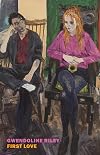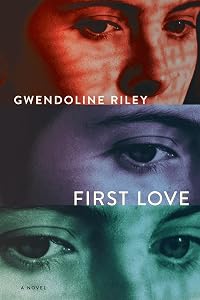
First Love
by Gwendoline Riley
On This Page
Description
"Catastrophically ill-suited for each other, and forever straddling a line between relative calm and explosive confrontation, Neve and her husband, Edwyn, live together in London. For the moment, they have reached a place of peace in their relationship, but past battles have left scars. As Neve recalls the decisions that brought her to Edwyn, she describes other loves and other debts- from her bullying father and her self-involved mother, to a musician she struggled to forget. Drawing us show more into the battleground of this marriage, Gwendoline Riley tells a transfixing story of mistakes and misalliances, of helplessness and hostility, in which both husband and wife have played a part. Could this possibly be, nonetheless, a story of love?"-- show lessTags
Recommendations












Member Reviews
Neve is a writer who lives with an older man named Edwyn. Their life together is not exactly loving—more of a co-existence of mutual tolerance. Neve is pragmatic. For much of her life she's been doing what she must in order to survive, and one of the things she must do is put up with Edwyn’s neurotic episodes. They do “cuddle,” and from time to time enjoy one another’s company. But as if a switch has been flicked, Edwyn turns on her with paranoid, often nonsensical accusations (for instance, he claims she is out to “annihilate” him), and shrill, belittling insults. His problem seems to be with women in general: he sits in front of the television and spews similarly irrational complaints at female screen characters. show more Neve’s voice as she tries to talk him down from his mounting rage is calm and measured, but also ineffective. Their life together consists of cheerful periods of intimacy followed by days of icy, combative silence, times during which Neve questions her own sanity for staying with him. The narrative also delves into Neve’s past, her family life with a bullying father and an emotionally disengaged mother. Gwendoline Riley deliberately holds her reader at a distance: the novel is tersely written in clipped prose that generates almost unbearable tension. We observe Neve going through her days, but we never get close to her, never get the opportunity to really understand what makes her tick. But the novel fascinates for precisely this reason. Though it’s her story and she’s narrating, Neve remains elusive: indistinct and unknowable. Reading the book is like following someone through zigzagging streets, someone who keeps to the shadows, who, just as we catch a glimpse of her, slips out of sight, and who remains—constantly, tantalizingly—out of reach.
In First Love, Gwendolin Riley’s brilliant, disturbing fifth novel, she presents a marriage as a minefield or toxic warzone, seething with hazard, a place where there are no winners, only losers. show less
In First Love, Gwendolin Riley’s brilliant, disturbing fifth novel, she presents a marriage as a minefield or toxic warzone, seething with hazard, a place where there are no winners, only losers. show less
Neve and Edwyn - what in heavens name are they doing together? Why are they married? What is the point of the torture they inflict on each other? As Neve looks back on her life in a desultory fashion it becomes both clear (and yet still mystifying) that deep forces of personal history are at work here. Or maybe she’s just in hell. I don’t know.
There is something relentless about Gwendoline Riley’s characters, their insistent cruelty, and baffling willingness to have cruelty inflicted upon themselves. I want to chalk this up to just a case of unhappy families. But this time I found it sort of pointless. There didn’t seem to be any growth in the characters. And moments when they were not harming each other were just as show more inexplicable to me as moments when they were. That said, Riley’s writing — the sentences themselves — are compelling. I was often surprised by turns of phrase, oblique observations, Neve’s sad mother. But increasingly I found myself wondering what I was getting out of the process.
Only very gently recommended, but confident that there are better things to come from Riley. show less
There is something relentless about Gwendoline Riley’s characters, their insistent cruelty, and baffling willingness to have cruelty inflicted upon themselves. I want to chalk this up to just a case of unhappy families. But this time I found it sort of pointless. There didn’t seem to be any growth in the characters. And moments when they were not harming each other were just as show more inexplicable to me as moments when they were. That said, Riley’s writing — the sentences themselves — are compelling. I was often surprised by turns of phrase, oblique observations, Neve’s sad mother. But increasingly I found myself wondering what I was getting out of the process.
Only very gently recommended, but confident that there are better things to come from Riley. show less
I enjoyed the book and disagree with most of the takes I'm seeing in the few reviews here. I don't think the book is about her relationship with the husband, per se, rather it's a look at the abusive relationships she has found herself in and a character study of her mother. The book asks a lot of questions and doesn't give many answers, besides the obvious ones. In this way, it is like life: there are no tidy or linear narratives, besides the ones we tell ourselves. I found the mother character particularly interesting, and I am not usually a fan of "mother characters". I usually don't like when authors put an ironic distance between the protagonist and other characters, but here I enjoyed it. Is she herself headed down the same path show more as the Mother? Is she attracted to self-harm and abusive relationships because of her Father? Yes and yes, but nothing is ever really that straight forward. My only critique is that I think it could have been longer. show less
This felt a bit misery porn-y to me. Two unpleasant people in an unpleasant relationship in which they are cruel to each other. I liked the writing quite a bit - it's very very understated - and the way the novel shifts back and forth in time. Also, cracking dialogue that really drives the action. But I found it so difficult to care about the characters. Luckily, it is short.
This was the third book in the FutureLearn/How to Read a Novel online course I'm taking and perhaps after I talk with some of my classmates and hear what my teacher has to say, I'll appreciate it a bit better.
This was the third book in the FutureLearn/How to Read a Novel online course I'm taking and perhaps after I talk with some of my classmates and hear what my teacher has to say, I'll appreciate it a bit better.
Neve is married to Edwyn and their relationship is one of verbal abuse, violence and mutual contempt. This seems to be all that Neve feels she can expect. During the course of the non-linear narrative, we learn more and more about Neve and her past, but we do not ever hear about her meeting Edwyn and what led them to choose to marry each other. Neve's father (whom she hated) dies at the beginning of the book and she has a difficult relationship with her mother. The sections describing Neve's dealings with her mother were a little lighter and were more enjoyable to me.
I would not willingly read this novel again. It was appalling and depressing and hopeless. I found it generally well-written, although the language could be opaque in show more places and the way the narrative shifted back and forth in time could be confusing. There was an awful lot of "baring of teeth" which jarred as I was not sure exactly what the author meant - a smile? a grimace? hatred? In one stretch of a few pages characters did this so often it became distracting. show less
I would not willingly read this novel again. It was appalling and depressing and hopeless. I found it generally well-written, although the language could be opaque in show more places and the way the narrative shifted back and forth in time could be confusing. There was an awful lot of "baring of teeth" which jarred as I was not sure exactly what the author meant - a smile? a grimace? hatred? In one stretch of a few pages characters did this so often it became distracting. show less
I DNF'd this brief book. I imagine it would have taken perhaps an hour to finish the final 40 pages, but I could not find the will.
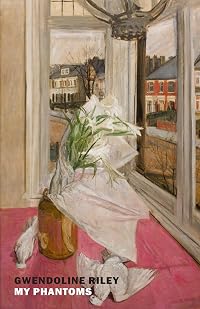
I loved Riley's My Phantoms, and this takes on many of the same themes, especially how abusive and narcissistic parents often drive us to find abusive and narcissistic partners and limit our ability to relate to others at anything but a surface level. I am also impressed by how Riley creates a sort of caged feel in relating the interactions between abusers and the abused. She is great at this. Also, Riley's prose is exceptional in both books. So it surprises me that from page one this never worked for me. I usually write reviews immediately after I finish a book. So many of my GR friends write lucid, show more considered, supported reviews, but mine are visceral rants most of the time. This book I read over a week ago, and I have been trying since to figure out why my response to this was so different from My Phantoms. I don't know that I have a real answer, but a few things stand out.
First, Neve's husband, Edwyn, didn't seem real. I know mean men, I know creepy men, but this guy? He read like a boogeyman. There was no nuance. He did dastardly and infantile, but nothing else. Even Norman Bates knew how to put on a nice guy mask when he needed to. It felt like he was drawn as a device to mirror Neve's mother and father, an anthropomorphized checklist of their worst traits. I don't care how damaged you are -- no one stays with someone who calls them "Smellypuss".
Second, as I mentioned above, Riley takes on a lot of the same themes as My Phantoms (some of the conversations with her mother seemed to be the same in both books), and she simply doesn't do it as well here. I think my response might have been different if I did not have My Phantoms to compare this to.
Third, I didn't love how Riley careened through time. I found the time shifts confusing. That may be reader error.
Fourth, Neve's choices didn't make sense to me because she has identified things she wants and behaviors that are sensible (we learn that through the dialogue) and never ever applies any of it to herself. If she attempted to apply the advice she gives her mother to her own life and failed, then maybe she would be more engaging. Instead, we have a person who spends her time wondering why people are so mean to her and then just sort of shrugging. I shrugged too.
Beautiful prose moved me to a 2.5-star. If the prose were any less lovely, it would have been a 2. show less
I loved Riley's My Phantoms, and this takes on many of the same themes, especially how abusive and narcissistic parents often drive us to find abusive and narcissistic partners and limit our ability to relate to others at anything but a surface level. I am also impressed by how Riley creates a sort of caged feel in relating the interactions between abusers and the abused. She is great at this. Also, Riley's prose is exceptional in both books. So it surprises me that from page one this never worked for me. I usually write reviews immediately after I finish a book. So many of my GR friends write lucid, show more considered, supported reviews, but mine are visceral rants most of the time. This book I read over a week ago, and I have been trying since to figure out why my response to this was so different from My Phantoms. I don't know that I have a real answer, but a few things stand out.
First, Neve's husband, Edwyn, didn't seem real. I know mean men, I know creepy men, but this guy? He read like a boogeyman. There was no nuance. He did dastardly and infantile, but nothing else. Even Norman Bates knew how to put on a nice guy mask when he needed to. It felt like he was drawn as a device to mirror Neve's mother and father, an anthropomorphized checklist of their worst traits. I don't care how damaged you are -- no one stays with someone who calls them "Smellypuss".
Second, as I mentioned above, Riley takes on a lot of the same themes as My Phantoms (some of the conversations with her mother seemed to be the same in both books), and she simply doesn't do it as well here. I think my response might have been different if I did not have My Phantoms to compare this to.
Third, I didn't love how Riley careened through time. I found the time shifts confusing. That may be reader error.
Fourth, Neve's choices didn't make sense to me because she has identified things she wants and behaviors that are sensible (we learn that through the dialogue) and never ever applies any of it to herself. If she attempted to apply the advice she gives her mother to her own life and failed, then maybe she would be more engaging. Instead, we have a person who spends her time wondering why people are so mean to her and then just sort of shrugging. I shrugged too.
Beautiful prose moved me to a 2.5-star. If the prose were any less lovely, it would have been a 2. show less
It is hard to rate as the writing is well done, but the overall subject of a verbally (mercifully it stops short of physical) abusive marriage is so unpleasant to read about that I can't really rise to a 3-star "Like" or 4-star "Really Like" rating. The husband seems to be suffering from bipolar disorder along with his physical complaints, but that diagnosis or any attempt at solution is never mentioned.
The quirky interludes with the wife seeing her mother (who had escaped a physically abusive father) make for some amount of relief but even those have an underlying thread of menace to them. The mother has this facial tic of "baring her teeth" several times which is always stated without any further specifics. You are left unsettled and show more constantly wondering whether it is a smile, a grimace and/or ferocity is meant. Maybe that was the author's intention. show less
The quirky interludes with the wife seeing her mother (who had escaped a physically abusive father) make for some amount of relief but even those have an underlying thread of menace to them. The mother has this facial tic of "baring her teeth" several times which is always stated without any further specifics. You are left unsettled and show more constantly wondering whether it is a smile, a grimace and/or ferocity is meant. Maybe that was the author's intention. show less
Members
- Recently Added By
Lists

Top Five Books of 2017
757 works; 231 members

Books Read in 2017
4,249 works; 129 members

2017 Baileys Women's Prize for Fiction
16 works; 7 members

Baileys Women's Prize for Fiction Winners and Shortlisted Books
61 works; 11 members
Author Information

8+ Works 832 Members
Awards and Honors
Awards
Series
Belongs to Publisher Series
Common Knowledge
- Canonical title
- First Love
- Original publication date
- 2017
- First words
- I used to look at houses like this one from the train: behind the ivy-covered embankment, their London brick, sash windows.
- Last words
- (Click to show. Warning: May contain spoilers.)Edwyn hunched his shoulders, braced, dodged, and soon enough he disappeared.
Classifications
Statistics
- Members
- 233
- Popularity
- 139,818
- Reviews
- 11
- Rating
- (3.36)
- Languages
- English, Italian, Swedish
- Media
- Paper, Audiobook, Ebook
- ISBNs
- 12
- ASINs
- 4