On This Page
Description
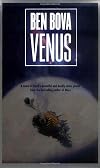
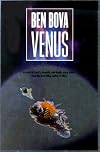
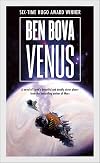
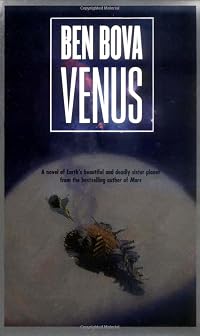
The surface of Venus is the most hellish place in the solar system, its ground hot enough to melt aluminum, its air pressure high enough to crush spacecraft landers like tin cans, its atmosphere a choking mix of poisonous gases. This is where the frail young Van Humphries must go-or die trying. Years before, Van's older brother perished in the first attempt to land a man on Venus. Van's father has always hated him for being the one to survive. Now, his father is offering a ten-billion-dollar show more prize to the first person who lands on Venus and returns his oldest son's remains. To everyone's surprise, Van takes up the offer. But what Van Humphries will find on Venus will change everything-our understanding of Venus, of global warming on Earth, and his knowledge of who he is. show lessTags
Recommendations














Member Reviews
One of the great things a science fiction book can do is give an imaginative but realistic experience of what it would be like to go to a place that has never been visited before, like the planet Venus. Bova goes to some lengths to make his story feel realistic, taking what we know of Venus -- its crushing, corrosive atmosphere and furnace-like heat -- and creating the mix of technology and courage needed to explore it.
There are a lot of elements to Bova's story, maybe too many -- a main character (Van Humphries) with a need to prove himself against a lifetime of abuse and belittling from his father and a need to honor the death of his brother, that same character's awkward attempts at romance with a shipmate with issues of her own, a show more driven and grim ship's captain with the combined personalities of Captains Nemo and Ahab, a green movement hoping to use the specter of conditions on Venus to provide a lesson for Earth's politicians, not to mention the challenge of exploring Venus itself. The green movement in particular gets little play in the face of the other, more dominant elements.
That said, it's still a very entertaining story. I would have enjoyed it just for the pure "hard science fiction" story of exploring Venus. The searing heat and corrosive atmosphere are themselves characters in the story -- antagonists to be overcome. Van Humphries' relationship with his father and his devotion to his lost brother provide additional framing motivation for the expedition. show less
There are a lot of elements to Bova's story, maybe too many -- a main character (Van Humphries) with a need to prove himself against a lifetime of abuse and belittling from his father and a need to honor the death of his brother, that same character's awkward attempts at romance with a shipmate with issues of her own, a show more driven and grim ship's captain with the combined personalities of Captains Nemo and Ahab, a green movement hoping to use the specter of conditions on Venus to provide a lesson for Earth's politicians, not to mention the challenge of exploring Venus itself. The green movement in particular gets little play in the face of the other, more dominant elements.
That said, it's still a very entertaining story. I would have enjoyed it just for the pure "hard science fiction" story of exploring Venus. The searing heat and corrosive atmosphere are themselves characters in the story -- antagonists to be overcome. Van Humphries' relationship with his father and his devotion to his lost brother provide additional framing motivation for the expedition. show less
18 books in and [b:Venus|768918|Venus (The Grand Tour, #18)|Ben Bova|https://i.gr-assets.com/images/S/compressed.photo.goodreads.com/books/1316129566l/768918._SY75_.jpg|1922277] is the only body this side of [b:Saturn|64703|Saturn (The Grand Tour, #13)|Ben Bova|https://i.gr-assets.com/images/S/compressed.photo.goodreads.com/books/1316130751l/64703._SY75_.jpg|2566821] that the Grand Tour hasn't explored, so it seems a perfectly fitting place to end (I'll get back to that). There's something of a continuation of the The Asteroid Wars, with Martin Humphries and his sons as the focus of the books. One (Alex, his clone ) attempted to be the first to reach the surface of Venus and died in the attempt. The other (Van, actually not his show more biological son at all, but rather the son of his longtime enemy from the Asteroid Wars: Lars Fuchs (I know, right?) ) decides to take on the task of recovering his remains--a pot sweetened by ten billion dollars of his father's money.
All that actually makes Venus somewhat interesting and unique among the Grand Tour novels. It's not really one of the corporate war books, such as the early Moonbase books or the Asteroid Wars, but it's also not a purely scientific exploration of Venus--although there's plenty of that. It's really more an an adventure novel with a sci-fi setting and backing in the hellscape that is Venus. That actually makes it a surprisingly solid book.
I'm glad that Martin Humphries wasn't in more of the book--I really can't stand him and I'm glad his plotline didn't really go much of anywhere in the foreground after the Asteroid Wars--and Van's whining feels real enough, even if he's rather whiny for an adventure protagonist. We get a good chunk more Lars Fuchs, who has fallen far--albeit for a good reason. Always good to see.
One thing that's always a star in Bova's books is the idea of finding life absolutely everywhere. He's fond of implying that whereever there's water, there will be life... And now even that doesn't seem to be a limiting factor. The life on Venus is pretty crazy, both in the clouds and on the surface and I wish we had a bit more time to explore that. But so it goes.
Overall, one of the better books of the Grand Tour. Which works out, since I think that I'm done with the Grand Tour for now. The remaining books leave the solar system and get even further away from the near future hard sci-fi of the rest of the Grand Tour. There were hints that we are not alone, particularly in [b:The Aftermath|768917|The Aftermath (The Grand Tour, #12; The Asteroid Wars, #4)|Ben Bova|https://i.gr-assets.com/images/S/compressed.photo.goodreads.com/books/1442426245l/768917._SY75_.jpg|754977] and to some extent the [b:Mars|267282|Mars (The Grand Tour, #4)|Ben Bova|https://i.gr-assets.com/images/S/compressed.photo.goodreads.com/books/1173282407l/267282._SY75_.jpg|1932635] trilogy, but nothing quite so blatent.
Not something I'm looking for just yet. Perhaps one day.
Six months and 18 books later, I think it's time to listen to something else. show less
All that actually makes Venus somewhat interesting and unique among the Grand Tour novels. It's not really one of the corporate war books, such as the early Moonbase books or the Asteroid Wars, but it's also not a purely scientific exploration of Venus--although there's plenty of that. It's really more an an adventure novel with a sci-fi setting and backing in the hellscape that is Venus. That actually makes it a surprisingly solid book.
I'm glad that Martin Humphries wasn't in more of the book--I really can't stand him and I'm glad his plotline didn't really go much of anywhere in the foreground after the Asteroid Wars--and Van's whining feels real enough, even if he's rather whiny for an adventure protagonist. We get a good chunk more Lars Fuchs, who has fallen far--albeit for a good reason. Always good to see.
One thing that's always a star in Bova's books is the idea of finding life absolutely everywhere. He's fond of implying that whereever there's water, there will be life... And now even that doesn't seem to be a limiting factor. The life on Venus is pretty crazy, both in the clouds and on the surface and I wish we had a bit more time to explore that. But so it goes.
Overall, one of the better books of the Grand Tour. Which works out, since I think that I'm done with the Grand Tour for now. The remaining books leave the solar system and get even further away from the near future hard sci-fi of the rest of the Grand Tour. There were hints that we are not alone, particularly in [b:The Aftermath|768917|The Aftermath (The Grand Tour, #12; The Asteroid Wars, #4)|Ben Bova|https://i.gr-assets.com/images/S/compressed.photo.goodreads.com/books/1442426245l/768917._SY75_.jpg|754977] and to some extent the [b:Mars|267282|Mars (The Grand Tour, #4)|Ben Bova|https://i.gr-assets.com/images/S/compressed.photo.goodreads.com/books/1173282407l/267282._SY75_.jpg|1932635] trilogy, but nothing quite so blatent.
Not something I'm looking for just yet. Perhaps one day.
Six months and 18 books later, I think it's time to listen to something else. show less
Not everyone's cup of tea...quite pulpy science fiction, but I've become a sucker for Bova's "Grand Tour" series, as I attempt to write a sermon-series on the planets and the mythology that surrounds their names.
One of the books in the “Grand Tour” series by Hugo award winner Ben Bova, Venus is a novel about space travel and exploring new worlds. It is also a classic “underdog” tale with a bit of the “coming-of-age” genre mixed in. The book itself is set sometime in the future where the moon has been colonized, rejuvenation treatments are common so no one really grows old anymore, and man has tried to explore other worlds in search of life and life-sustainable living environments.
Venus has a harsh climate – that much is known. The first attempt to actually explore the planet fails and results in the death of the explorer, Alex Humphries, the elder son of billionaire tycoon, Martin Humphries. Humphries, a cold, hard, domineering show more man has one son remaining - Van. Unlike the now dead Alex, Van is frail and resented by his father for surviving. Van also has a potentially fatal condition – pernicious anemia, in which the red cells in his blood are unable to replicate. To keep alive Van must inject himself at regular intervals with a life-giving enzyme. Not quite the able, confident son Martin wanted, Van is loathed and mocked by his unloving father as “Runt”.
I pulled in a deep breath, then stood as straight as I could manage. “And it’s lovely to see you too, Father.”
“Aren’t you enjoying my party?”
“You know better.”
“Then what’d you come for, Runt?”
“Your lawyer said that you’d cut off my stipend if I didn’t attend your party.”
“Your allowance,” he sneered.
“I earn that money.”
“By playing at being a scientist. Now your brother, there was a real scientist.”
Van lives a rich socialite’s life, dabbling in science, on the allowance his wealthy father scornfully gives him. The only two people who actually ever loved him, his mother and his elder brother Alex, are now dead, and Van is surrounded by fair-weather friends. When on his 100th birthday, Martin announces that he is cutting off Van’s allowance, Van finds himself almost penniless. When Martin also announces an award of ten billion dollars to any explorer who brings him back Alex’s remains from Venus, Van, tempted by the award money and the desire to explore the inhospitable planet in Alex’s name, decides to launch a mission to Venus.
“I’m going to take your prize money,” I said.
That popped his eyes open. “What ?”
“I’ll go to Venus, I’ll find Alex’s body.”
“You?” he laughed.
“He was my brother!” I said. “I loved him.”
“I had to twist your arm to get you to come up here to the Moon, and now you think you’re going to Venus?” He seemed enormously amused by the idea.
“You don’t think I can do it?”
“I know you can’t do it, Runt. You won’t even try, despite your brave talk.”
“I’ll show you!” I snapped. “I’ll take your damned prize money!”
Smirking, he answered, “Of course you will. And elephants can fly.”
Van, however noble his intentions, has stiff competition, because there is one other man angling for the award He is Lars Fuchs, Martin’s sworn enemy, a ruthless renegade out to wreak the worst kind of revenge on Martin and his family. . .
This is true-blue science fiction, but it is also a “human” story, with lots of drama, emotion and unexpected twists thrown in. Quite a satisfying combination. Told in first person, we see the story unfold from Van’s point of view. Bova fleshes out Van’s character nicely, and really Van is quite the underdog. He has fainting spells (when there is a delay in taking the enzyme), is incapable of exertion, is frightened of new adventures, and mostly takes the easy way out. When faced with true scientists who revel in investigation, he realizes that he has just “been playing” at it.
Van is regarded by others, as a wishy-washy character, incapable of accomplishing anything of value. With his impulsive decision to go to Venus, Van surprises others (and himself), but hellish Venus is going to test him as he has never been tested before. As the main protagonist, Van was a bit on the weak side, never quite able to energize me into rooting for him wholeheartedly. Since he is the narrator, we are privy to all his fears, which takes away from his character, because really, don’t most of us want our heroes to stand tall, feeling not even the smallest twinge of fear in the face of grievous danger ?
This is the first book by Bova that I have read, and even though a part of a series, stands alone quite well. Bova is good at description, develops arresting characters, and keeps the events in the book moving pretty quickly. This book was an excellent read, un-put-down-able after about a 100 pages. Each book in the Grand tour series is focused on a planet in our solar system. If they’re anything like “Venus” and I’ve heard they all are at least as good, if not better, they go straight on my to-read list. show less
Venus has a harsh climate – that much is known. The first attempt to actually explore the planet fails and results in the death of the explorer, Alex Humphries, the elder son of billionaire tycoon, Martin Humphries. Humphries, a cold, hard, domineering show more man has one son remaining - Van. Unlike the now dead Alex, Van is frail and resented by his father for surviving. Van also has a potentially fatal condition – pernicious anemia, in which the red cells in his blood are unable to replicate. To keep alive Van must inject himself at regular intervals with a life-giving enzyme. Not quite the able, confident son Martin wanted, Van is loathed and mocked by his unloving father as “Runt”.
I pulled in a deep breath, then stood as straight as I could manage. “And it’s lovely to see you too, Father.”
“Aren’t you enjoying my party?”
“You know better.”
“Then what’d you come for, Runt?”
“Your lawyer said that you’d cut off my stipend if I didn’t attend your party.”
“Your allowance,” he sneered.
“I earn that money.”
“By playing at being a scientist. Now your brother, there was a real scientist.”
Van lives a rich socialite’s life, dabbling in science, on the allowance his wealthy father scornfully gives him. The only two people who actually ever loved him, his mother and his elder brother Alex, are now dead, and Van is surrounded by fair-weather friends. When on his 100th birthday, Martin announces that he is cutting off Van’s allowance, Van finds himself almost penniless. When Martin also announces an award of ten billion dollars to any explorer who brings him back Alex’s remains from Venus, Van, tempted by the award money and the desire to explore the inhospitable planet in Alex’s name, decides to launch a mission to Venus.
“I’m going to take your prize money,” I said.
That popped his eyes open. “What ?”
“I’ll go to Venus, I’ll find Alex’s body.”
“You?” he laughed.
“He was my brother!” I said. “I loved him.”
“I had to twist your arm to get you to come up here to the Moon, and now you think you’re going to Venus?” He seemed enormously amused by the idea.
“You don’t think I can do it?”
“I know you can’t do it, Runt. You won’t even try, despite your brave talk.”
“I’ll show you!” I snapped. “I’ll take your damned prize money!”
Smirking, he answered, “Of course you will. And elephants can fly.”
Van, however noble his intentions, has stiff competition, because there is one other man angling for the award He is Lars Fuchs, Martin’s sworn enemy, a ruthless renegade out to wreak the worst kind of revenge on Martin and his family. . .
This is true-blue science fiction, but it is also a “human” story, with lots of drama, emotion and unexpected twists thrown in. Quite a satisfying combination. Told in first person, we see the story unfold from Van’s point of view. Bova fleshes out Van’s character nicely, and really Van is quite the underdog. He has fainting spells (when there is a delay in taking the enzyme), is incapable of exertion, is frightened of new adventures, and mostly takes the easy way out. When faced with true scientists who revel in investigation, he realizes that he has just “been playing” at it.
Van is regarded by others, as a wishy-washy character, incapable of accomplishing anything of value. With his impulsive decision to go to Venus, Van surprises others (and himself), but hellish Venus is going to test him as he has never been tested before. As the main protagonist, Van was a bit on the weak side, never quite able to energize me into rooting for him wholeheartedly. Since he is the narrator, we are privy to all his fears, which takes away from his character, because really, don’t most of us want our heroes to stand tall, feeling not even the smallest twinge of fear in the face of grievous danger ?
This is the first book by Bova that I have read, and even though a part of a series, stands alone quite well. Bova is good at description, develops arresting characters, and keeps the events in the book moving pretty quickly. This book was an excellent read, un-put-down-able after about a 100 pages. Each book in the Grand tour series is focused on a planet in our solar system. If they’re anything like “Venus” and I’ve heard they all are at least as good, if not better, they go straight on my to-read list. show less
I love the Golden Age stories, back when men were writing science-y adventure for boys. I can forgive the weak characters for the strong What Ifs, in those. But Bova is modern enough he could have done better characterizations. I almost dnf'd, but I suspected he was trying to go somewhere with them, and he was... the prot. did grow up and become a hero.... But everything emotional was contrived & implausible.
The adventure was certainly dramatic. The tech acceptable. The science interesting, and, I assume, as accurate as reasonable to what was known at the time. The What If barely adequate. And so, I'm not particularly glad I read it, except to say now I've read a Bova and now I know I won't need to again.
The adventure was certainly dramatic. The tech acceptable. The science interesting, and, I assume, as accurate as reasonable to what was known at the time. The What If barely adequate. And so, I'm not particularly glad I read it, except to say now I've read a Bova and now I know I won't need to again.
No New Morality make an appearance in this book, which makes a nice change. I am still quite unconvinced of Bova's treatment of women, but it seems in this instance the author intentionally makes the main character behave in a sexist manner, to be redeemed later on.
That aside, the science (the reason I'm still reading Bova), is entertaining, particularly biologically. The climate change storyline is very heavy handed. I suspect climate science progressed somewhat since the book was written, but unfortunately in the present realm of knowledge, wanting to use Venus to scare people into believing in climate change seems ridiculous.
That aside, the science (the reason I'm still reading Bova), is entertaining, particularly biologically. The climate change storyline is very heavy handed. I suspect climate science progressed somewhat since the book was written, but unfortunately in the present realm of knowledge, wanting to use Venus to scare people into believing in climate change seems ridiculous.
Bova, Ben. Venus. Tor, 2000. Grand Tour 18.
In Venus, Ben Bova brings back the Humphries family from the earlier books in his grand tour series. Lunar industrial magnate Martin Humphries offers a big prize to anyone who can retrieve the remains of his oldest son Alex who died in the first manned expedition to Venus. Lars Fuchs, an old business rival of Humphries, and Van Humphries, Alex’s younger brother, race each other into the atmosphere of Venus in balloon landers. Bova’s Venus is not the fanciful tropical jungle planet imagined by earlier writers like Robert Heinlein. It is the Venus described by millennial science—a planet with a carbon dioxide atmosphere laced with sulfuric acid and surface temperatures over 700 F. If there show more is life on Venus, you won’t want to meet it. This is one of the better novels in the series. 4 stars. show less
In Venus, Ben Bova brings back the Humphries family from the earlier books in his grand tour series. Lunar industrial magnate Martin Humphries offers a big prize to anyone who can retrieve the remains of his oldest son Alex who died in the first manned expedition to Venus. Lars Fuchs, an old business rival of Humphries, and Van Humphries, Alex’s younger brother, race each other into the atmosphere of Venus in balloon landers. Bova’s Venus is not the fanciful tropical jungle planet imagined by earlier writers like Robert Heinlein. It is the Venus described by millennial science—a planet with a carbon dioxide atmosphere laced with sulfuric acid and surface temperatures over 700 F. If there show more is life on Venus, you won’t want to meet it. This is one of the better novels in the series. 4 stars. show less
Members
- Recently Added By
Author Information

468+ Works 34,277 Members
Ben Bova, Ben Bova was born in Philadelphia, Pennsylvania. He began writing fiction in the late 1940's and continued to pursue his careers in journalism, aerospace, education and publishing. Bova received a bachelor's degree in journalism from Temple University, 1954, a master of arts degree in communications from the State University of New York, show more 1987, and a doctorate in education from California Coast University, 1996. Dr. Bova worked as a newspaper reporter for several years and then joined Project Vanguard, the first American satellite program, as a technical editor. He was manager of marketing for Avco Everett Research Laboratory and worked with scientists in the fields of high-power lasers, artificial hearts and advanced electrical power generators. Dr. Bova has taught science fiction at Harvard University and at the Hayden Planetarium in New York City, where he also directed film courses. He has written scripts for teaching films with the Physical Sciences Study Committee in association with Nobel Laureates from many universities. Dr. Bova has served on the advisory board of Post College and the Editorial Boards of the World Future Society. He is President Emeritus of the National Space Society and a Fellow of the British Interplanetary Society. He is also a charter member of the Planetary Society and a member of the American Association for the Advancement of Science, the Nature Conservancy, the New York Academy of Sciences and the National Space Club. He is a former President and a charter member of Science Fiction and Fantasy Writers of America. He was honored by Temple University as a Distinguished Alumnus in 1981 and in 1982 was made an Alumni Fellow. In 1994, his short story "Inspiration" was nominated for the Nebula Award. "The Beauty of Light" was voted one of the best science books of the year in 1988 by the American Librarians' Association and they hailed "Moonrise" as best science fiction novel in 1996. Other titles include "Moonwar," "Mars," and "Brothers," which all combine romance and adventure with the scientific aspect of exploring the future of technology and its effect on individuals and society. "Immortality" and "Assured Survival" deal with technology being used to solve economic, social and political problems. "Immortality" goes further in examining biomedical breakthroughs that could extend a person's life by hundreds of years while being able to always remain physically young. His works include The Aftermath, Mars Life, and Leviathans of Jupiter. Ben Bova was a prolific science fiction author. He wrote over a hundred books and short stories. He also was an editor who worked on some of science fiction's best-known publications. He died on November 29, 2020 at the age of 88. (Bowker Author Biography) show less
Some Editions
Series


Belongs to Publisher Series
Common Knowledge
- Canonical title
- Venus
- Original title
- Venus
- Original publication date
- 2000-02
- People/Characters
- Martin Humphries; Lars Fuchs; Van Humphries
- Important places
- Venus; Mallorca, Balearic Islands, Spain; The Moon
- Dedication
- To D.H.G., J.L., and B.B.B.
with thanks, appreciation, and love - First words
- I was late and I knew it.
- Last words
- (Click to show. Warning: May contain spoilers.)I wondered how it would feel to be his big brother.
- Publisher's editor
- Nielsen Hayden, Patrick
- Original language
- English
Classifications
Statistics
- Members
- 995
- Popularity
- 26,442
- Reviews
- 17
- Rating
- (3.37)
- Languages
- 5 — English, French, German, Portuguese, Russian
- Media
- Paper, Audiobook, Ebook
- ISBNs
- 25
- ASINs
- 9