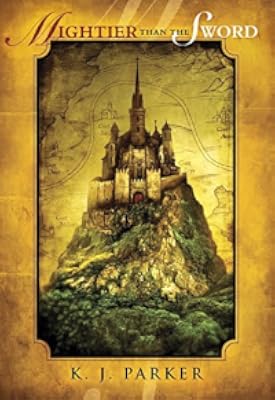
Mightier than the Sword
by K. J. Parker
On This Page
Description
"An Imperial legate is called in to see his aunt, who just happens to be the empress running the civilized world while her husband's in his sick bed. After some chastisement, she dispatches her nephew to take care of the dreaded Land and Sea Raiders, pirates who've been attacking the realm's monasteries. So begins a possibly dommed tour of banished relatives and pompous royals put in charge of monasteries like Cort Doce and Cort Malestan, to name a few. While attempting to discover the truth show more of what the pirates might be after, the legate visits great libraries and halls in each varied locale and conducts a romance of which he knows - but doesn't care - his aunt will not approve. With enough wit and derring-do (and luck), the narrator might just make it through his mission alive...or will he?" -- flap inside front cover. show lessTags
Recommendations


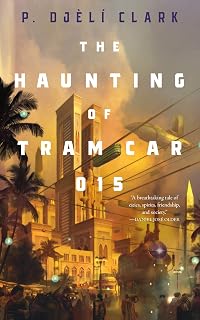
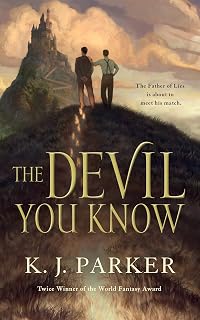
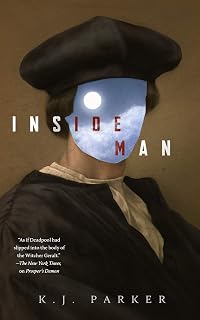
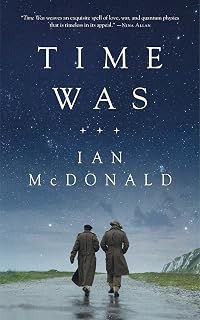






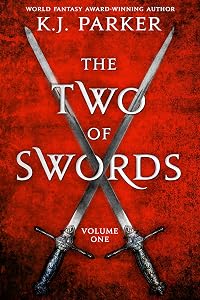

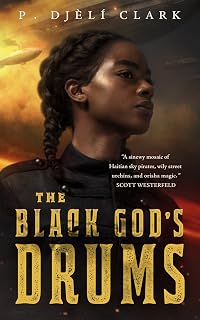
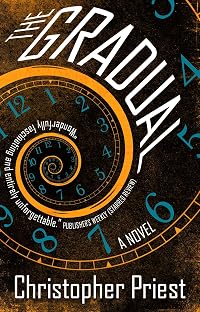
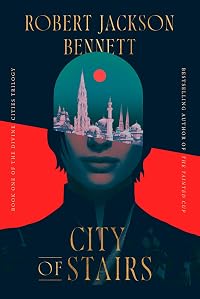
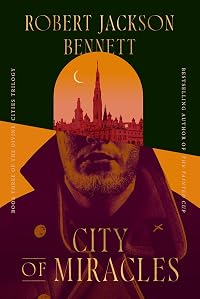
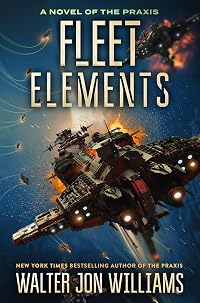

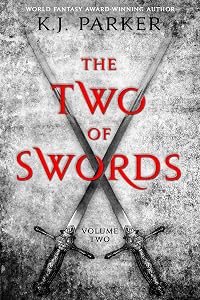

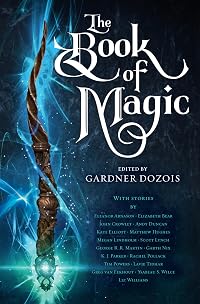

Member Recommendations
jason9292 Very similar style (unlike many of his other works). The primary difference is in the power of the principle (carpenter vs emperor)
Member Reviews
Reminds me a lot of My Beautiful Life by the same author. And The Folding Knife, and the Siege series. To an extent, a lot of his stories are variations on a theme — a flawed person's unlikely rise to a level of power he never expected and does not deserve, amidst a cutthroat, slightly Kafkaesque world of realpolitik — but maybe the point is that that's a pattern that occurs a lot in history, too. Anyway, there's nothing wrong with exploring a theme, especially when he does it well. All these books are gripping, funny, thoughtful, and delectable.
One flaw: this edition has a *lot* of typographical errors. If it were one or two, I wouldn't mention it, but there're a lot of them. If you're an easily distracted pedant, like me, this show more might needle you a bit. show less
One flaw: this edition has a *lot* of typographical errors. If it were one or two, I wouldn't mention it, but there're a lot of them. If you're an easily distracted pedant, like me, this show more might needle you a bit. show less
The perfect length for Parker — an utterly charming and witty protagonist, musings on the role of empire and education, libraries and books turned into high adventure. The first Parker I read and still the best I think.
This is the second book I've read by this author and really liked it. The idea of the main character having to do the one thing he doesn't want to but everyone else around him makes sure that he does is abused often. This author doesn't abuse that idea while managing to stay true to the premise of the title. By the time you realize what was really going on in the story its already done. So when you think of the title you see how it tied into the story. Very well done on his part.
I read this book via NetGalley. I thank them for this book. #NetGalley
I read this book via NetGalley. I thank them for this book. #NetGalley
Love the author's, or at least the narrator's, slightly snarkie sense of humor & ability to tell a rollicking good tale. And his love of books. Def. have to seek out Tom Holt's work. Thanks to Liberty Hardy of #BookRiot for the excellent recommendation.
It’s an interesting debate about SF being written by mainstream writers, and whether it is still SF. Most of the early examples are female writers who coupled SF and feminism. Atwood, LeGuin, Lessing, Octavia Butler (who also brought in race topics, of course). Whether you see them as SF or mainstream really depends which editions of their books you pick up. And it really doesn’t matter either way, they were (and are) just good. When it becomes embarrassing is when mainstream writers start playing with SF tropes but don’t have the skill to carry it off well. At the moment I’m reminded of that point in the eighties when mainstream white pop acts started rapping – embarrassing to say the least. You can tell when an artist has a show more real grasp on the tradition they are working in. You don’t expect classical musicians to be able to play rhythm and blues without at least listening to John Lee Hooker for a while, yet mainstream writers go stumbling into the depths of Hard SF territory without apparently reading any of what has come before. Fair enough if they can do it, but if Cormac McCarthy and Winterson are any guide it seems that they can’t. What’s “rebellious” about conforming to current expectations and ideology? Stereotypes and political correctness are two sides of the same coin, treating characters as statements or representatives and not as individuals.
Quite apart from believing there is space for pure entertainment, I also do not believe that interesting, challenging work usually comes about as a result of a writer sitting down and consciously thinking “OK, I’m going to tackle this important topic”. Writing is more often a process of exploration and discovery, with a lot of unconscious input. As a provision, I would also suggest that the expectation that writers must “treat characters as statements or representatives and not as individuals”, reliable narrators or not, is also a presumption and taste of our own particular time, place, and culture.
Why “must” this be so?
If you’re into SF-done-right, read the rest of this review on my blog. show less
Quite apart from believing there is space for pure entertainment, I also do not believe that interesting, challenging work usually comes about as a result of a writer sitting down and consciously thinking “OK, I’m going to tackle this important topic”. Writing is more often a process of exploration and discovery, with a lot of unconscious input. As a provision, I would also suggest that the expectation that writers must “treat characters as statements or representatives and not as individuals”, reliable narrators or not, is also a presumption and taste of our own particular time, place, and culture.
Why “must” this be so?
If you’re into SF-done-right, read the rest of this review on my blog. show less
As close to a perfect tale as I have found
After reading his last novellas, for me, “Mightier that the sword” is just another prove that K. J. Parker is the best novella writer currently publishing in the genre. Although this story is set in the same fantasy world as most of the rest of his short fiction, it can be enjoyed without having read any of his previous stories. In fact, it can be a perfect introduction to Parker’s work.
The Emperor’s nephew, the extremely likable protagonist and narrator, is sent out to find more about some mysterious pirates who appear out of nowhere and attack the Empire’s monasteries. We follow him from one monastery to the next, where he meets monks and abbesses while trying to solve what’s behind those attacks.
Witty, intelligent, funny, show more full of ironic remarks sometimes far deeper than what they may seem, this novella is a pleasure to read. Highly recommended. show less
The Emperor’s nephew, the extremely likable protagonist and narrator, is sent out to find more about some mysterious pirates who appear out of nowhere and attack the Empire’s monasteries. We follow him from one monastery to the next, where he meets monks and abbesses while trying to solve what’s behind those attacks.
Witty, intelligent, funny, show more full of ironic remarks sometimes far deeper than what they may seem, this novella is a pleasure to read. Highly recommended. show less
May 7, 2017Spanish
1
Members
- Recently Added By
Lists

2018 Hugo Eligible Novellas
33 works; 9 members
Author Information

166+ Works 26,336 Members
Some Editions
Work Relationships
Is contained in
Common Knowledge
- Original publication date
- 2017-06
- First words
- The usual metaphor is a lighthouse; the monastery as a guttering flame devotedly tended, its small pale gleam resolutely defining the way through the tumultuous storm of barbarism until the Sun rises again—in the East, it g... (show all)oes without saying.
- Last words
- (Click to show. Warning: May contain spoilers.)All I have done and can do is tend the guttering flame; and if that flame sets the house on fire and burns down the City and the whole world, I guess that’ll be my fault too.
Classifications
- Genres
- Fiction and Literature, Fantasy
- DDC/MDS
- 813.0876608 — Literature & rhetoric American literature in English American fiction in English By type Genre fiction Adventure fiction Speculative fiction Fantasy Collections
- LCC
- PR6116 .A745 .M54 — Language and Literature English English Literature 2001-
- BISAC
Statistics
- Members
- 80
- Popularity
- 398,309
- Reviews
- 7
- Rating
- (4.12)
- Languages
- English
- Media
- Paper, Ebook
- ISBNs
- 2
- ASINs
- 1