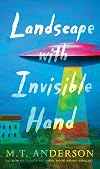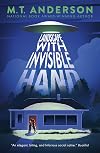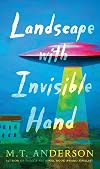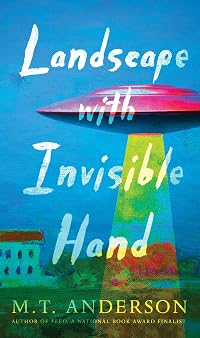
Landscape with Invisible Hand
by M. T. Anderson
On This Page
Description
National Book Award winner M. T. Anderson returns to future Earth in a sharply wrought satire of art and truth in the midst of colonization. When the vuvv first landed, it came as a surprise to aspiring artist Adam and the rest of planet Earth — but not necessarily an unwelcome one. Can it really be called an invasion when the vuvv generously offered free advanced technology and cures for every illness imaginable? As it turns out, yes. With his parents' jobs replaced by alien tech and no show more money for food, clean water, or the vuvv's miraculous medicine, Adam and his girlfriend, Chloe, have to get creative to survive. And since the vuvv crave anything they deem "classic" Earth culture (doo-wop music, still-life paintings of fruit, true love), recording 1950s-style dates for the vuvv to watch in a pay-per-minute format seems like a brilliant idea. But it's hard for Adam and Chloe to sell true love when they hate each other more with every passing episode. Soon enough, Adam must decide how far he's willing to go — and what he's willing to sacrifice — to give the vuvv what they want.. show less
Tags
Recommendations
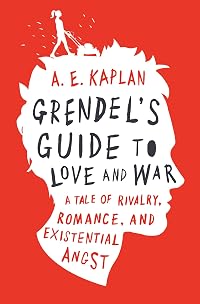
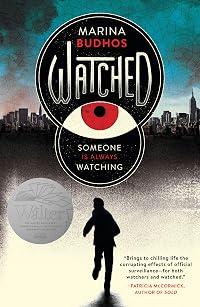
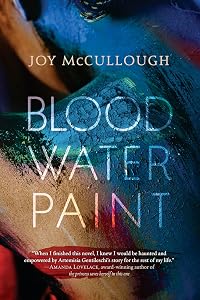
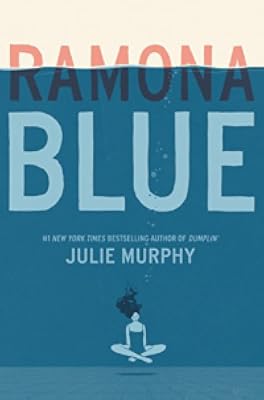
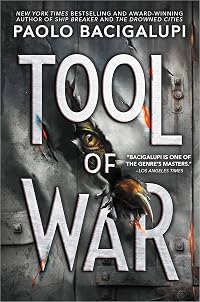
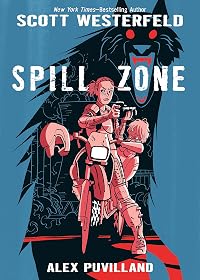
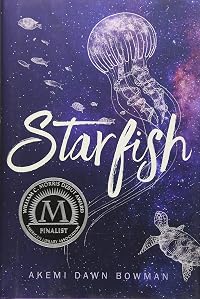
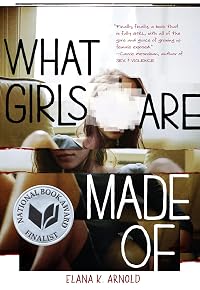



Member Recommendations

Member Reviews
M. T. Anderson is a master of many genres: satire, romance, historical fiction. Here he returns to science fiction, the genre of his most popular novel, Feed, with Landscape with Invisible Hand. The bookmark that came with my review copy of Landscape with Invisible Hand includes this quotation from Anderson himself linking the two: "If Feed was about constantly being sold to, Landscape with Invisible Hand is about how we now have to constantly have to sell ourselves." An alien race called the vuvv has come to Earth, bringing their advanced technology-- which has completely wrecked the human economy. The 1% get richer through their investment in vuvv technology and manufacturing, but many humans are quickly put out of work by automation, show more and then things spiral out of control-- as people can't afford things, other jobs progressively collapse, leaving the majority of humanity unemployed.
The main character is Adam, who as Anderson's quote indicates, himself becomes a commodity: he and his girlfriend Chloe (whose family rents from Adam's because they can't afford their own home) livestream their relationship to vuvv observers, who fund them in a sort of Patreon- or Kickstarter-esque way because they find human coupling really fascinating. The vuvv especially like 1950s culture because that's when they first came to Earth, so Adam and Chloe try to emulate the period in their relationship. Even though they make good money, this lack of authenticity soon begins to wear on their relationship, but the worse it gets the more they need it.
The other quote Landscape with Invisible Hand brought to mind was this passage from the first chapter of The War of the Worlds: "And before we judge of them [the Martians] too harshly we must remember what ruthless and utter destruction our own species has wrought, not only upon animals, such as the vanished bison and the dodo, but upon its inferior races. The Tasmanians, in spite of their human likeness, were entirely swept out of existence in a war of extermination waged by European immigrants, in the space of fifty years. Are we such apostles of mercy as to complain if the Martians warred in the same spirit?" In its way, Landscape with Invisible Hand is much more of a The War of the Worlds update for the twenty-first century than the Steven Spielberg film or Independence Day. Like Wells's novel, it mirrors what our civilization does to other ones with aliens coming to ours. The way the vuvv economic needs cause the human economy to collapse, and the vuvv "help" humanity by doing occasional medical missionary work, or claim to enjoy human art, but have an out-of-date, ossified, condescending way of perceiving it, mirror the way America can treat countries outside of "the First World." Just as the Martians were us all along, so are the vuvv.
It's not a fun read; it's probably one of Anderson's darkest (not that he's consistently lighthearted or something). Even the jokes are typically dark and depressing, such as the ongoing development of how Chloe's brother is reacting to the vuvv invasion. It's very potent though, and well put together in the way that every M. T. Anderson novel is. Probably it's biggest crime is that it's short, with just 149 pages that aren't exactly packed with text. This prevents the characters from achieving the kind of depth necessary to really fell their tragedy, like you do in Feed even though the characters in that book are almost universally awful. On the other hand, its length makes it a compelling, quick read-- I zipped through the whole thing in two evenings and felt satisfied. I suspect Landscape with Invisible Hand will be a minor work from a major talent. show less
The main character is Adam, who as Anderson's quote indicates, himself becomes a commodity: he and his girlfriend Chloe (whose family rents from Adam's because they can't afford their own home) livestream their relationship to vuvv observers, who fund them in a sort of Patreon- or Kickstarter-esque way because they find human coupling really fascinating. The vuvv especially like 1950s culture because that's when they first came to Earth, so Adam and Chloe try to emulate the period in their relationship. Even though they make good money, this lack of authenticity soon begins to wear on their relationship, but the worse it gets the more they need it.
The other quote Landscape with Invisible Hand brought to mind was this passage from the first chapter of The War of the Worlds: "And before we judge of them [the Martians] too harshly we must remember what ruthless and utter destruction our own species has wrought, not only upon animals, such as the vanished bison and the dodo, but upon its inferior races. The Tasmanians, in spite of their human likeness, were entirely swept out of existence in a war of extermination waged by European immigrants, in the space of fifty years. Are we such apostles of mercy as to complain if the Martians warred in the same spirit?" In its way, Landscape with Invisible Hand is much more of a The War of the Worlds update for the twenty-first century than the Steven Spielberg film or Independence Day. Like Wells's novel, it mirrors what our civilization does to other ones with aliens coming to ours. The way the vuvv economic needs cause the human economy to collapse, and the vuvv "help" humanity by doing occasional medical missionary work, or claim to enjoy human art, but have an out-of-date, ossified, condescending way of perceiving it, mirror the way America can treat countries outside of "the First World." Just as the Martians were us all along, so are the vuvv.
It's not a fun read; it's probably one of Anderson's darkest (not that he's consistently lighthearted or something). Even the jokes are typically dark and depressing, such as the ongoing development of how Chloe's brother is reacting to the vuvv invasion. It's very potent though, and well put together in the way that every M. T. Anderson novel is. Probably it's biggest crime is that it's short, with just 149 pages that aren't exactly packed with text. This prevents the characters from achieving the kind of depth necessary to really fell their tragedy, like you do in Feed even though the characters in that book are almost universally awful. On the other hand, its length makes it a compelling, quick read-- I zipped through the whole thing in two evenings and felt satisfied. I suspect Landscape with Invisible Hand will be a minor work from a major talent. show less
 This review was written for LibraryThing Early Reviewers.
When the aliens came, they brought with them plentiful technology to upgrade manufacturing, medicine, farming, and every aspect of human life. Their arrival brought about the end of work, which immediately heightened the divide between rich and poor. Now, a few lucky humans provide services or entertainment for the vuvv. Adam and his girlfriend Chloe hate each other, but they signed up to be on a channel for the aliens to view (vuvv are fascinated with human courtship rituals), and the money they bring in is keeping their families afloat. Adam, a visual artist, desperately wants to find another way to make money, but how far will he have to go?
Like most of Anderson’s work, this novella is both thought-provoking and depressing. I’m show more sure I’ll be pondering it for the next few days. show less
Like most of Anderson’s work, this novella is both thought-provoking and depressing. I’m show more sure I’ll be pondering it for the next few days. show less
Landscape with Invisible Hand reads more as a short allegory commenting on the current economic environment than as a novel. However, Anderson still manages to paint a vivid, depressing world where resistance truly is futile.
Adam lives on an earth ruled by the vuvv, alien overlords who came, solved the world's problems, and destroyed the economy, since most human jobs were made unnecessary. Adam's father disappeared, and he and his mother and sister try to figure out how to go on while his mother searches for work. Adam has a disease caused by drinking contaminated water and he copes with his painting and drawing as his condition slowly deteriorates.
I read this in one sitting. It's quick and urgent and you don't want to put it down, show more but it's also deeply depressing. I don't know if I would say I enjoyed it, but I was engrossed and interested. If you liked Anderson's Feed, you'll probably like this too. show less
Adam lives on an earth ruled by the vuvv, alien overlords who came, solved the world's problems, and destroyed the economy, since most human jobs were made unnecessary. Adam's father disappeared, and he and his mother and sister try to figure out how to go on while his mother searches for work. Adam has a disease caused by drinking contaminated water and he copes with his painting and drawing as his condition slowly deteriorates.
I read this in one sitting. It's quick and urgent and you don't want to put it down, show more but it's also deeply depressing. I don't know if I would say I enjoyed it, but I was engrossed and interested. If you liked Anderson's Feed, you'll probably like this too. show less
This review was written for LibraryThing Early Reviewers.Full disclosure: I know the author.
If Salvador Dali and H.G. Wells birthed a novella together, this is what I imagine it might look like. It is a model of crafting dystopia, wherein humankind seemingly has welcomed our vuvv overlords, and "creativity" becomes the currency of survival--at least for a time. Seemingly very few stones are left unturned as the book takes aim at the climate crisis, capitalistic inequity, voyeurism of social media...just to name a few.
While marketed as a book for young adults, I think anyone who enjoys satirical dystopian fiction would enjoy this. My only issue was that it seemed too short--I didn't get to invest deeply in any of the characters, but as they are stand-ins for you, me, and possibility, I guess show more that makes sense. show less
If Salvador Dali and H.G. Wells birthed a novella together, this is what I imagine it might look like. It is a model of crafting dystopia, wherein humankind seemingly has welcomed our vuvv overlords, and "creativity" becomes the currency of survival--at least for a time. Seemingly very few stones are left unturned as the book takes aim at the climate crisis, capitalistic inequity, voyeurism of social media...just to name a few.
While marketed as a book for young adults, I think anyone who enjoys satirical dystopian fiction would enjoy this. My only issue was that it seemed too short--I didn't get to invest deeply in any of the characters, but as they are stand-ins for you, me, and possibility, I guess show more that makes sense. show less
This spare, short novel is a good companion to the author's FEED, which I felt was one of the most disturbing books I've ever read. This is disturbing, too, while also having the kind of dark, bleak humor as the earlier book.
The landscape is the one Adam lives in and the one he paints, a suburban America that has become polluted and desperately poor while the rich live in floating villas high above. The invisible hand is Adam Smith's - only in this near future, the giant corporations that promise great technological advances provided they're given a free hand to make the most of the economy are from outer space.
The vuvv don't look like our imagined aliens, more like boxy coffee tables, but they have a flair for commerce, which show more unfortunately leads to economic inequality, environmental catastrophe, a loss of employment except for precarious gigs and self-marketing through social media, and epidemic hunger and desperation.
The vuvv have a particular yearning for American culture from the fifties and Adam and his girlfriend manage to support their families briefly by uploading falsified puppy love encounters. Being watched by aliens on a pay-per-view basis is not conducive to romance. Adam loses his girlfriend and before long he might also lose his chance to make the kind of art he makes - the landscapes that show what his world is really like, on the ground beneath the floating villas of the wealthy.
I read this story in one sitting. It's weirdly propulsive while also being laconic and often depressing. (Adam suffers from a humiliating disease caused by bad water that make him gurgle and fart and rush to the bathroom at awkward times - the anxieties of adolescence magnified.) The invisible hand is sometimes a little heavy, with the vuvv clearly representing the market fundamentalism that promises progress and delivers misery for most and enormous wealth for the undeserving rich. But there is still art, and even public libraries, and Anderson's own style, blunt as it is, can be lovely. For example, this passage near the end of the book:
"Ships arrive from other stars, tracing lines of credit and expense through the skies, constellations of commerce. We sit on the porch in the evening and listen to the insects chitter like the fever of our drained, exhausted Earth. Orbital stations glimmer in the last light.
"We thought there was a great distance between the future and us, and now here we are, falling through it."
So lovely, but also with a Message, and as is often the case in novels of ideas it sometimes pokes out a little too much. In a way I found this novel less upsetting than FEED (perhaps because Adam and his sister are such decent people in spite of the degraded world they live in) but it has the same power to provoke thought. It's a bleak view of the future without the usual rebel-forces-fight-back salve. Instead, it just makes you think about the not-really-human life forms (multinational corporations) that have been granted human rights without responsibilities and have incredible power that make decisions about our planet and our lives while insisting on displays of a 1950s fake vision of who we are and what matters.
I don't do stars because so much depends on what you want from a book as a reader, but I thought it was very good and well worth reading as an unromanticized dystopia where (some of) the kids are all right but nobody is going to win love or battles because that's too easy. As William Gibson said in a recent interview, dystopia is already here, but unevenly distributed. The hardships these characters face are the lived experience of many on this planet - just without the spaceships. show less
The landscape is the one Adam lives in and the one he paints, a suburban America that has become polluted and desperately poor while the rich live in floating villas high above. The invisible hand is Adam Smith's - only in this near future, the giant corporations that promise great technological advances provided they're given a free hand to make the most of the economy are from outer space.
The vuvv don't look like our imagined aliens, more like boxy coffee tables, but they have a flair for commerce, which show more unfortunately leads to economic inequality, environmental catastrophe, a loss of employment except for precarious gigs and self-marketing through social media, and epidemic hunger and desperation.
The vuvv have a particular yearning for American culture from the fifties and Adam and his girlfriend manage to support their families briefly by uploading falsified puppy love encounters. Being watched by aliens on a pay-per-view basis is not conducive to romance. Adam loses his girlfriend and before long he might also lose his chance to make the kind of art he makes - the landscapes that show what his world is really like, on the ground beneath the floating villas of the wealthy.
I read this story in one sitting. It's weirdly propulsive while also being laconic and often depressing. (Adam suffers from a humiliating disease caused by bad water that make him gurgle and fart and rush to the bathroom at awkward times - the anxieties of adolescence magnified.) The invisible hand is sometimes a little heavy, with the vuvv clearly representing the market fundamentalism that promises progress and delivers misery for most and enormous wealth for the undeserving rich. But there is still art, and even public libraries, and Anderson's own style, blunt as it is, can be lovely. For example, this passage near the end of the book:
"Ships arrive from other stars, tracing lines of credit and expense through the skies, constellations of commerce. We sit on the porch in the evening and listen to the insects chitter like the fever of our drained, exhausted Earth. Orbital stations glimmer in the last light.
"We thought there was a great distance between the future and us, and now here we are, falling through it."
So lovely, but also with a Message, and as is often the case in novels of ideas it sometimes pokes out a little too much. In a way I found this novel less upsetting than FEED (perhaps because Adam and his sister are such decent people in spite of the degraded world they live in) but it has the same power to provoke thought. It's a bleak view of the future without the usual rebel-forces-fight-back salve. Instead, it just makes you think about the not-really-human life forms (multinational corporations) that have been granted human rights without responsibilities and have incredible power that make decisions about our planet and our lives while insisting on displays of a 1950s fake vision of who we are and what matters.
I don't do stars because so much depends on what you want from a book as a reader, but I thought it was very good and well worth reading as an unromanticized dystopia where (some of) the kids are all right but nobody is going to win love or battles because that's too easy. As William Gibson said in a recent interview, dystopia is already here, but unevenly distributed. The hardships these characters face are the lived experience of many on this planet - just without the spaceships. show less
This review was written for LibraryThing Early Reviewers.This science fiction story takes a dark satirical look at a future in which an ostensibly benevolent alien race, the vuvv, has come to earth to colonize it, literally living up in the sky above the rest of the people. They arrived with promises of advanced technology and lives free of work. There are a small percentage of those on Earth who, investing in vuvv technology, manage to become rich, but most humans are now in a permanent state of poverty and despair; the human economy could not stand up against what was provided by the vuvv.
Plausibly a biting look at communism, or colonialism, or even capitalism (there is a lot of discussion of “the invisible hand” of the market determining worth and value), or at a world divided between show more the 1% of the vastly wealthy and the rest of us, there is much to contemplate in this book. The colonizers see only what they want to see, and ignore the suffering in their wake. They impose the culture they prefer (amusingly, that of the U.S. in the 1950’s) on the populace, and aren’t willing to accept anything else or to examine the effects of their colonization. The 1% of humans who benefitted think only of their own pleasure and superiority. The rest of the world becomes so desperate people will contemplate just about anything to rise above the sinkhole of their lives.
We learn about all of this through the main character, Adam, a high school student who is an aspiring artist. Each chapter is headed by the title of a painting he is doing to portray the action he describes.
Adam is quite sick from a gastrointestinal disease resulting from untreated tap water; as part of the vuvv’s austerity measures, municipal water is no longer purified. Possibly this is a metaphor for the way everyones lives have turned to shit. Adam, in spite of growing increasingly septic, summons the strength to enter a vuvv-sponsored art contest in a last-ditch attempt to make money for his family.
The outcome of the contest suggests to Adam the real way to survive in vuvv society, taking yet another jab at our current social, political, and cultural milieu.
Evaluation: Generally I love the work of this author and I appreciate the points he was trying to make. But ultimately this story fell flat for me. While it raises a lot of interesting issues, the overtly allegorical quality of the story kept it too “unreal” and prevented me from engaging much with the characters. show less
Plausibly a biting look at communism, or colonialism, or even capitalism (there is a lot of discussion of “the invisible hand” of the market determining worth and value), or at a world divided between show more the 1% of the vastly wealthy and the rest of us, there is much to contemplate in this book. The colonizers see only what they want to see, and ignore the suffering in their wake. They impose the culture they prefer (amusingly, that of the U.S. in the 1950’s) on the populace, and aren’t willing to accept anything else or to examine the effects of their colonization. The 1% of humans who benefitted think only of their own pleasure and superiority. The rest of the world becomes so desperate people will contemplate just about anything to rise above the sinkhole of their lives.
We learn about all of this through the main character, Adam, a high school student who is an aspiring artist. Each chapter is headed by the title of a painting he is doing to portray the action he describes.
Adam is quite sick from a gastrointestinal disease resulting from untreated tap water; as part of the vuvv’s austerity measures, municipal water is no longer purified. Possibly this is a metaphor for the way everyones lives have turned to shit. Adam, in spite of growing increasingly septic, summons the strength to enter a vuvv-sponsored art contest in a last-ditch attempt to make money for his family.
The outcome of the contest suggests to Adam the real way to survive in vuvv society, taking yet another jab at our current social, political, and cultural milieu.
Evaluation: Generally I love the work of this author and I appreciate the points he was trying to make. But ultimately this story fell flat for me. While it raises a lot of interesting issues, the overtly allegorical quality of the story kept it too “unreal” and prevented me from engaging much with the characters. show less
Landscape With Invisible Hand by M.T. Anderson has a lot of classic YA themes going for it: a dystopian future, teenage troubles, and an artistic main character to name a few. Then it has some features that are way out there including non-humanoid alien invaders that have taken over the world. Adam and his family are just trying to survive in this world that has been completely changed almost overnight to one with very few jobs or opportunities. Told in a series of vignettes titled and reflective of Adam’s artwork, Landscape is an allegory about our society and where we may be heading.
I enjoyed parts of this book, but found some things so strange and out of place they were hard to take. Hardly any background or context is given at show more the beginning, leaving the reader to figure out what is actually going on. By the time I had my head around everything the book was half over and even more random things were happening. This book is very short, and I feel if the author had spent a bit more time fleshing out the invasion and subsequent conflicts, I may have bought into it more. I still think Landscape has a lot of interesting aspects worth exploring as a satire piece about society, love, and art.
(As an extra bonus, Anderson, a New England native, weaves in some local shout outs including one to our very own ISL.) PK show less
I enjoyed parts of this book, but found some things so strange and out of place they were hard to take. Hardly any background or context is given at show more the beginning, leaving the reader to figure out what is actually going on. By the time I had my head around everything the book was half over and even more random things were happening. This book is very short, and I feel if the author had spent a bit more time fleshing out the invasion and subsequent conflicts, I may have bought into it more. I still think Landscape has a lot of interesting aspects worth exploring as a satire piece about society, love, and art.
(As an extra bonus, Anderson, a New England native, weaves in some local shout outs including one to our very own ISL.) PK show less
Members
- Recently Added By
Lists

Kirkus Starred Fiction Reviews of Books Published in 2017
412 works; 7 members

Books Read in 2018
4,360 works; 110 members
Author Information

40+ Works 17,026 Members
Awards and Honors
Awards
Distinctions
Notable Lists
Common Knowledge
- Canonical title
- Landscape with Invisible Hand
- Original publication date
- 2017-09-12
- Related movies
- Landscape with Invisible Hand (2023 | IMDb)
- First words
- Under the stars, a small town prepares for night.
- Last words
- (Click to show. Warning: May contain spoilers.)We are tiny figures, pointing at wonders, provided for scale, no lives of our own, surveying the landscape that has engulfed us all.
Classifications
- Genres
- Teen, Fiction and Literature, Science Fiction, Young Adult
- DDC/MDS
- 813.6 — Literature & rhetoric American literature in English American fiction in English 2000-
- LCC
- PZ7 .A54395 .L — Language and Literature Fiction and juvenile belles lettres Fiction and juvenile belles lettres Juvenile belles lettres
- BISAC
Statistics
- Members
- 336
- Popularity
- 94,861
- Reviews
- 37
- Rating
- (3.61)
- Languages
- English, Spanish
- Media
- Paper, Audiobook, Ebook
- ISBNs
- 19
- ASINs
- 2