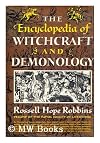
The Encyclopedia of Witchcraft and Demonology
by Rossell Hope Robbins
On This Page
Description
With research sourced by the world's greatest libraries, Robbins has compiled a rational, balanced history of 300 years of horror concentrated primarily in Western Europe. Spanning from the 15th century through the 18th century, the witch-hunt frenzy marks a period of suppressed rational thought; never before have so many been so wrong. To better understand this phenomenon, Robbins examines how the meaning of "witch" has evolved and exposes the true nature of witchcraft--a topic widely show more discussed in popular culture, though remarkably misunderstood.First published in 1959, Robbins' encyclopedia remains the most authoritative and comprehensive body of information about witchcraft and demonology ever compiled in a single volume. Lavishly acclaimed in academic and popular reviews, this full-scale compendium of fact, history, and legend covers about every phase of this fascinating subject from its origins in the medieval times to its last eruptions in the 18th century. Accompanying the text are 250 illustrations from rare books, contemporary prints, and old manuscripts, many of which have been published here for the first time.Rossell Hope Robbins (1912-1990), an acknowledged authority on witchcraft, was one of the half-dozen Americans ever elected Fellow of the Royal Society of Literature. He authored over a dozen books and nearly 200 articles, including the definitive introduction to the catalogue of the Witchcraft Collection at Cornell University Library in 1979. He was a Commonwealth Fellow, Canada Council Professor, and he received grants from the Modern Language Association of America and from the American Council of Learned Societies. He also served as Chairman of the Middle English Division of the MLA, President of the Medieval Club of New York, research associate at Harvard and Columbia Universities. Robbins has lectured extensively on medieval topics and witchcraft at universities throughout the world. show lessTags
Recommendations



















Member Recommendations

Sylak Both wheatley's and Hans Holzer's books are so alike in style and format that they could be considered part one and two of an unofficial set.
Member Reviews
The Encyclopedia of Witchcraft and Demonology is about the infamous witch hunts and witch trials from 1450 to 1750. There are over 100 names of persons accused of being witches, authors about witches or witch hunting, those who presided over witch trials, and those who wrote against witch trials. We also get to learn about famous witch trials besides Salem, although Salem has its own entry. We follow the delusion from what would become the United Kingdom through Scandinavia. It was interesting to learn that until the 13th century, the Catholic Church believed that the acts of witches weren't real. Pity it ever changed. I was also surprised to learn that the witchcraft of the hunts and trials was considered a Christian heresy. Those we show more normally think of as witches are using sorcery. From the entry on trials, it appears that we have the Inquisition to thank for the belief in the witchcraft heresy (a belief opposed by the Franciscans).
The weak of stomach might wish to skip the entry on torture as well as those entries for various instruments of torture. One thing made very clear is that torture did get victims to admit to being witches as well as accuse others of being witches. It's also made clear that forcing the accused to accuse others was to keep the witch hunts and trials going.
Until I read this book, I had no idea what a profitable business witch trials were for those who engaged in them. Check the entry on 'Costs of Witch Trials'. The condemned witch or his/her family had to pay all of the costs of the trial if the poor soul lived in France, what would become Germany, or Scotland. Think of it: one paid for one's own guards, torture, execution, and the after-execution banquet. Anything left of one's estate went to the clergymen, judges, doctors, and the persons involved, including those who cut the wood for the burning. One of the pages is the Archbishop of Cologne's price list for the various types of torture and other expenses involved, including salves for the victim or getting those bones broken during torture set. DO NOT READ that list if you have a weak stomach.
There are also entries on various types of witches and what they were supposed to be able to do, such as storm raising. Werewolves, demons, vampires, and poltergeists have their entries. Probably my favorite nugget of information is in the entry on demonology, more specifically, the Third Hierarchy of Hell. Did you know there was a demon named Olivier whose heavenly opponent was Lawrence?
This book is amply illustrated with reproductions of engravings, woodcuts, portraits, the occasional bas relief, title pages of books, handwritten documents, and at least one map.
I highly recommend this book to any adult with an interest in the witch hunts and witch trials, as well as the curious beliefs about witches from the Bad Old Days. show less
The weak of stomach might wish to skip the entry on torture as well as those entries for various instruments of torture. One thing made very clear is that torture did get victims to admit to being witches as well as accuse others of being witches. It's also made clear that forcing the accused to accuse others was to keep the witch hunts and trials going.
Until I read this book, I had no idea what a profitable business witch trials were for those who engaged in them. Check the entry on 'Costs of Witch Trials'. The condemned witch or his/her family had to pay all of the costs of the trial if the poor soul lived in France, what would become Germany, or Scotland. Think of it: one paid for one's own guards, torture, execution, and the after-execution banquet. Anything left of one's estate went to the clergymen, judges, doctors, and the persons involved, including those who cut the wood for the burning. One of the pages is the Archbishop of Cologne's price list for the various types of torture and other expenses involved, including salves for the victim or getting those bones broken during torture set. DO NOT READ that list if you have a weak stomach.
There are also entries on various types of witches and what they were supposed to be able to do, such as storm raising. Werewolves, demons, vampires, and poltergeists have their entries. Probably my favorite nugget of information is in the entry on demonology, more specifically, the Third Hierarchy of Hell. Did you know there was a demon named Olivier whose heavenly opponent was Lawrence?
This book is amply illustrated with reproductions of engravings, woodcuts, portraits, the occasional bas relief, title pages of books, handwritten documents, and at least one map.
I highly recommend this book to any adult with an interest in the witch hunts and witch trials, as well as the curious beliefs about witches from the Bad Old Days. show less
I love reference books, and this is the holy grail. It has a great bibliography of many a burned books throughout history, illustrations of engravings and paintings related to the subject, and a plethora of other entries. Any horror writer, occultist, or book collector would cherish this definitive work. It is not a book of spells, a book of shadows, or a grimoire. It is and encyclopedia of all things creepy fact and fiction.
(c) 1959, Crown Publishers, Inc., New York, N.Y. Old version in excellent condition. Information prior to the Wiccan reconstructionist viewpoint. Great as a reference resource volume.
Mine's the 2nd edition, September 1960.
black, no cover
Ratings
Members
- Recently Added By
Lists

Mythical Monsters of the World
199 works; 79 members
Author Information

12+ Works 660 Members
Some Editions
Common Knowledge
- Canonical title
- The Encyclopedia of Witchcraft and Demonology
- Original publication date
- 1959
- People/Characters
- Thomas Ady; Alexander VI, Pope (Rodrigo de Borja or Borgia, 1431-1503); Elisabeth Allier; Amber Witch (Maria Schweidler); Thomas Aquinas; Margaret Barclay (show all 131); Bargarran Imposter (Christine Shaw); Mary Bateman; Richard Baxter; Balthasar Bekker; Bilson Boy (William Perry); Peter Binsfeld; Chatrina Blankcenstein; Jean Bodin; Henri Boguet; Laurent Bordelon; Le Sieur Bouvet; Richard Bovet; Franz Buirmann; George Burroughs; Burton Boy/ the Boy of Burton (Thomas Darling); Catherine Cadière; Benedict Carpzoz; Samuel de Cassini; Pedro Sanchez Cirvelo; Eleanor Cobham, Duchess of Gloucester; Giles Cory; Nathaniel Crouch; John Darrell; John Dee; Martin Antoine Del Rio; Dr. Lamb's Darling (Mrs. Anne Bodenham); Drummer of Tedworth; Endor Witch / Witch of Endor; Epworth Poltergeist; Edward Fairfax; Jeanne Fery; John Fian; Sir Robert Filmer; Dietrich Flade; Margaret Flower; Philippa Flower; Françoise Fontaine; Garnier, Giles; Geiler von Kaisersberg, Johann; Gifford, George; Glanville, Joseph; Glenluce Devil; Godelmann, Johann Georg; Goodwin, John; Gordel, Dominic (priest); Gowdie, Isobel; Grenier, Jean; Grierson, Isobel; Guazzo, Francesco-Maria; Gunter, Anne; Gwinner, Else; Haizmann, Christoph; Hale, Sir Matthew; Harsnett, Samuel; Hogarth, William; Holt, Sir John; Hopkins, Matthew; Francis Hutchinson; Innocent VIII, Pope (1432-1492); Nicholas Jacquier; James VI and I, King of Scots and King of England; Joan of Arc; John XXII, Pope ( -1334); Siri Jørgensdatter; Johannes Junius; Johann Klein; Alice Kyteler; Pierre de Lancre; Louise Lateau; Leicester Boy (John Smith); Rebecca Lemp; Leo X, Pope; Hermann Löher; Cornelius Loos; Thomas Looten; Lycanthrope of Angers (Jacques Roulet); Cotton Mather; Increase Mather; Johann Matthäus Meyfart; Ulrich Molitor; Henry More; Mouse-Maker (Althe Ablers); Newbury Witch; Florence Newton; Johannes Nider; Ole Nypen; Lisbet Nypen; Ruth Osborne; William Perkins; Giafrancesco Pico della Mirandola; Giafrancesco Ponzinibio; Johannes Henricus Pott; Ann Putnam; Gilles de Rais or Gilles de Laval, Marechal de Retz; Nicholas Remy; Sister Maria Renata; Margaret Rule; Alonzo Salazar de Frias; Salmon Falls poltergeist; Johann Schüler; Heinrich von Schultheis; Anna Maria Schwägel; Maria Schweidler; Reginald Scot; Grace Sherwood; Mercy Short; Ludovico Maria Sinistrari; Friedrich von Spee; Bartolommeo Spina; Michael Stapirius; Stone-Throwing Devil; Peter Stubb; Ulrich Tengler; Christian Thomasius; La Voisin; Girolamo Visconti; John Wagstaffe; Witch of Wapping (Joan Peterson); Witches of Warboys (Mother Samuels, etc.); John Webster; Thomas Weir (Major); Jane Wenham; Werewolves of Poligny; Werewolves of St.-Claude; Johan Weyer
- Important places
- Aberdeen, Scotland, UK; Aix-en-Provence, Bouches-du-Rhône, Provence-Alpes-Côte d'Azur, France; Arras, Hauts-de-France, France; Austria; Auxonne, France; Bamberg, Bavaria, Germany (show all 45); Basque Country, Spain; Bavaria, Germany; Bury St. Edmunds, Suffolk, England, UK; Channel Islands, UK; Chelmsford, Essex, England, UK; Cideville, Normandy, France; Coggeshall, Essex, England, UK; Cologne, North Rhine-Westphalia, Germany; Eichstätt, Bavaria, Germany; England, UK; Faversham, Kent, England; Finland; France; Germany; Huntingdon, Cambridgeshire, England, UK; Ipswich, Suffolk, England, UK; Ireland; Lancashire, England; Lille, France; Loudon, France; Louviers, Normandy, France; Luxeuil, France; Magee Island, Ireland; Mora, Sweden; New York Colony; North Berwick, Scotland; Norway; Paris, France; Perth, Scotland; Pittenweem, Fife, Scotland; St. Osyth, Essex, England, U.K.; Salem, Massachusetts colony; Salmon Falls, Berwick, Maine; Scotland; Spain; Sweden; Treves (Triers | Triers); Wapping, London, England, UK; Würzburg, Bavaria, Germany
- Important events
- witch hunts (1450-1750); Spanish Inquisition (1450-1750); Malleus Maleficarum published (1486); Salem witch trials (1692); Jane Wenham Trial, the last witch trial in England (1712)
- Dedication
- for
H. A. M. R. - First words
- Although widely discussed, witchcraft is, in fact, an almost unknown subject.
- Last words
- (Click to show. Warning: May contain spoilers.)Young, Alice: See Connecticut Witches.
- Disambiguation notice
- Please don't combine this 1959 work by Rossell Hope Robbins with the 1974 work of the same name with an introduction by Hans Holzer. They're very different. The Holzer is compiled of articles from the partwork Man, Myth and M... (show all)agic.
Classifications
Statistics
- Members
- 585
- Popularity
- 50,007
- Reviews
- 5
- Rating
- (3.65)
- Languages
- English, Spanish
- Media
- Paper
- ISBNs
- 7
- ASINs
- 17