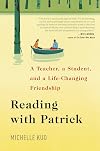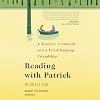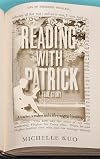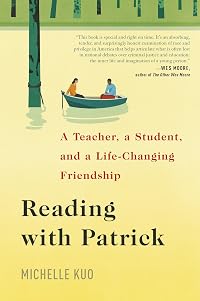
Reading with Patrick: A Teacher, a Student, and a Life-Changing Friendship
by Michelle Kuo
On This Page
Description
Michelle Kuo arrived in the rural town of Helena, Arkansas, as a Teach for America volunteer in 2004, bursting with optimism and drive. But she soon encountered the jarring realities of life in one of the poorest counties in America. In this unforgettable memoir, Michelle shares the story of her complicated but rewarding mentorship of one student, Patrick Browning, and his remarkable literary and political awakening. Fifteen and in the eighth grade, Patrick begins to thrive under Michelle's show more exacting attention. However, after two years of teaching, Michelle leaves Arkansas to attend law school. When, on graduating, she learns that Patrick has been jailed for murder, Michelle returns to Helena and resumes Patrick's education as he sits in jail awaiting trial. For the next seven months they pore over classic novels, poems, and history, and Patrick is galvanized by the works of Frederick Douglass, James Baldwin, Marilynne Robinson, W. S. Merwin, and many others. Reading with Patrick is an inspirational story of friendship, a coming-of-age story for both a young teacher and student, a resonant meditation on race and justice, and a love letter to literature and its power to bind us together. show lessTags
Recommendations












Member Reviews
This was a better ER book than I skeptically first expected (I thought I'd requested a different book about teaching). This is Michelle Kuo's memoir about teaching difficult black students (ones kicked out of the other schools) in small Helena, Arkansas, and particularly her personal tutoring of Patrick Browning.
In Patrick she sees a bright, talented student who gets lost and regresses unless she stays on him - when he stops coming to school, she goes to his home and cajoles him to come back. In protecting his mentally slow sister from an aggressive drunk, he stabs him and the man ends up dying. Kuo goes into prison to tutor Patrick, and there some remarkable progress is made. She gives him books to read and homework, and he takes to show more books like Frederick Douglas's Narrative of his life, and Marilynne Robinson's Gilead, with thoughtful reactions. But he particularly loves poetry, and begins to learn meter and rhyme and imitate what he's reading, often with surprisingly moving results. An early one: I am red like the sun as it rises/I hear a dog barking as I try to fall asleep/I pretend I don't feel anything/I wonder if I am going to live to be eighteen. He progresses from misspelling everything and knowing few vocabulary words, to increasing and surprising sophistication, until his last poem in the book had me wondering whether Kuo had helped him write it. She was so forthright along the way that she had credibility in presenting this last one.
The book made me think of Flowers for Algernon, particularly with his regressions when she's not pushing him. Along the way, she develops some hard-won and useful ideas about teaching. She's interesting in her own right, a Harvard grad and then a Harvard Law School grad who for a while represents the needy. Her bio discloses that she currently teaches at the American University in Paris and just won a Distinguished Teaching award.
I'm not really sure of the book's overall message, but it was an interesting read. Patrick's acquired love of reading, which he passes onto his daughter, certainly will appeal to bibliophiles. When asked by a NY Times interviewer what she would say to persuade people to read Reading with Patrick, Kuo answered:
"It’s an intimate story about the failure of the education and criminal justice systems and the legacy of slavery; about how literature is for everyone, how books connect people, and the hope that with enough openness and generosity we can do the hard work of knowing each other and ourselves." show less
In Patrick she sees a bright, talented student who gets lost and regresses unless she stays on him - when he stops coming to school, she goes to his home and cajoles him to come back. In protecting his mentally slow sister from an aggressive drunk, he stabs him and the man ends up dying. Kuo goes into prison to tutor Patrick, and there some remarkable progress is made. She gives him books to read and homework, and he takes to show more books like Frederick Douglas's Narrative of his life, and Marilynne Robinson's Gilead, with thoughtful reactions. But he particularly loves poetry, and begins to learn meter and rhyme and imitate what he's reading, often with surprisingly moving results. An early one: I am red like the sun as it rises/I hear a dog barking as I try to fall asleep/I pretend I don't feel anything/I wonder if I am going to live to be eighteen. He progresses from misspelling everything and knowing few vocabulary words, to increasing and surprising sophistication, until his last poem in the book had me wondering whether Kuo had helped him write it. She was so forthright along the way that she had credibility in presenting this last one.
The book made me think of Flowers for Algernon, particularly with his regressions when she's not pushing him. Along the way, she develops some hard-won and useful ideas about teaching. She's interesting in her own right, a Harvard grad and then a Harvard Law School grad who for a while represents the needy. Her bio discloses that she currently teaches at the American University in Paris and just won a Distinguished Teaching award.
I'm not really sure of the book's overall message, but it was an interesting read. Patrick's acquired love of reading, which he passes onto his daughter, certainly will appeal to bibliophiles. When asked by a NY Times interviewer what she would say to persuade people to read Reading with Patrick, Kuo answered:
"It’s an intimate story about the failure of the education and criminal justice systems and the legacy of slavery; about how literature is for everyone, how books connect people, and the hope that with enough openness and generosity we can do the hard work of knowing each other and ourselves." show less
 This review was written for LibraryThing Early Reviewers.
“As I pulled open the door to the courtroom, I notice with surprise, that every word on the sign was spelled correctly.” Reading with Patrick by Michelle Kuo p. 210
Even after leaving her students to attend Harvard Law School, as it would turn out at a time when Patrick, the focus of her time in “the Delta” needed her most; and even after discovering she has been used as “weed” mule by Patrick and his father, Ms. Kuo still has enough self-righteousness to look down upon those around her. Ms. Kuo is clueless to how similar she is to the residents of Helena who mock her with “Chinese” sounds. Prejudice is not defined by the color of one’s skin, or even status and power attained in one’s community. Prejudice is born when show more one’s heart is closed towards others, and it makes no difference who the others are. show less
Even after leaving her students to attend Harvard Law School, as it would turn out at a time when Patrick, the focus of her time in “the Delta” needed her most; and even after discovering she has been used as “weed” mule by Patrick and his father, Ms. Kuo still has enough self-righteousness to look down upon those around her. Ms. Kuo is clueless to how similar she is to the residents of Helena who mock her with “Chinese” sounds. Prejudice is not defined by the color of one’s skin, or even status and power attained in one’s community. Prejudice is born when show more one’s heart is closed towards others, and it makes no difference who the others are. show less
This review was written for LibraryThing Early Reviewers.This page-turner about race, class, educational opportunity and the legacies of American slavery and Jim Crow still playing out in our public schools is exciting as a personal story and engaging as a study of American public education.
Michelle Kuo's memoir, James Baldwin's Notes of a Native Son, and Eula Biss's essay on teaching in a Harlem public school (including on the morning of September 11, 2001) in her collection Notes from No Man's Land all talk about the pivotal role a teacher is expected to have, did have, and/or could have had in their students' lives. Michelle Kuo's nuanced writing about her student's awakening--which he reaches because she patiently even doggedly provided him the mentoring and the voices he needed to read, show more well beyond the time of her employment in Teach For America--evokes a spectrum of responses in me: anger, admiration, grief, recognition and shame. It's a plus that she is a writer honest and skilled enough to delineate her own misgivings and bouts of egotism. She doesn't display her young student's trauma for the sake of spectacle. show less
This review was written for LibraryThing Early Reviewers.I entered the drawing for this book because I thought my friend would like it; I didn't expect to like it. However, as I began skimming for the purposes of review, I quickly became engrossed by Kuo's clear, expressive writing and insightful empathy (on why Christianity has taken hold in the small Arkansas town where she teaches for two years, she says, "You want to believe that your town's decay is not a mirror of your own prospects, that its dirtiness cannot dirty your inner life, that its emptiness does not contradict your own ambitions - that in fact you were born linked to beauty, to the joyous power of resurrection").
I LOVED this book. I was afraid, reading the description, that it would contribute to the cliché of the well-to-do show more and well-meaning outsider "saving" someone from a different race and a lower class (think Dangerous Minds). But Kuo is aware of that stereotype, and avoids putting her book in this category through rigorously honest self-reflection and a willingness to share times of failure, misunderstanding, and just plain awkwardness - she's not the hero of this story, and neither, really, is her student Patrick Browning. He's messy and human just like everyone else. There's no hero because the story is really about society's failure to take care of its citizens, about missed opportunities, and about literature's ability to make our human frailty bearable.
Yes, Kuo is aware of the cliché, but she writes that during times of self-laceration for thinking she could be important in Patrick's life and maybe even alter its outcome, she nevertheless asks herself, "But then what is a human for? A person must matter to another, it must mean something for two people to have passed time together, to have put work into each other and into becoming more fully themselves. So even if I am wrong, if my dreaming is wrong, the alternative, to not dream at all, seems wrong too." show less
I LOVED this book. I was afraid, reading the description, that it would contribute to the cliché of the well-to-do show more and well-meaning outsider "saving" someone from a different race and a lower class (think Dangerous Minds). But Kuo is aware of that stereotype, and avoids putting her book in this category through rigorously honest self-reflection and a willingness to share times of failure, misunderstanding, and just plain awkwardness - she's not the hero of this story, and neither, really, is her student Patrick Browning. He's messy and human just like everyone else. There's no hero because the story is really about society's failure to take care of its citizens, about missed opportunities, and about literature's ability to make our human frailty bearable.
Yes, Kuo is aware of the cliché, but she writes that during times of self-laceration for thinking she could be important in Patrick's life and maybe even alter its outcome, she nevertheless asks herself, "But then what is a human for? A person must matter to another, it must mean something for two people to have passed time together, to have put work into each other and into becoming more fully themselves. So even if I am wrong, if my dreaming is wrong, the alternative, to not dream at all, seems wrong too." show less
This review was written for LibraryThing Early Reviewers.This is a lovely memoir about a mutually transforming friendship between a teacher and a pupil, but also an indictment of the state of education, the justice system, the health system, and the social support system in the largely forgotten impoverished areas of the black South.
Michelle Kuo, a volunteer for Teach for America at age 22 in 2004, was assigned to Helena, Arkansas, a poor, mostly black city in the Mississippi Delta. Her original goal was to teach American history through black literature. She had the romantic notion, as she herself characterized it, that she could change the lives of her students through books. She was sent to a school named Stars, where the local administration placed the so-called bad kids: “These were show more the truants and the druggies, the troublemakers and the fighters who had been expelled from the mainstream schools.”
Moreover, this area of the Delta was:
" . . . a place that you cannot leave, where you can’t travel or work if you can’t afford a car, where land is endless space that’s been denied you, where people burn down their houses because the insurance money is worth more than the sale price, where the yards of shuttered homes are dumping grounds for pedestrian litter, where water is possibly polluted by a fertilizer company that skipped town….”
This is definitely part of forgotten America. This subset of the American population bears an unequal burden of hardships. Helena specifically is the seat of one of the poorest counties in the country. During the time Kuo was there, there were few jobs and many of the residents had no skills in any event. In the schools, the feeling of having given up, shared by both by students and administrators, resulted in a lack of education or interest in learning.
In addition, Helena not only ranked last in the state in public health, but its teenage birthrate was higher than that of ninety-four developing countries. Many residents had disabilities or emotional or mental disorders. And if someone got in trouble, the police were the last people they would call: as Patrick put it:
“Naw, naw, ain’t no one call the police. The police here ain’t no police.. They out smoking weed and dealing drugs. How they gonna come to your house?”
Kuo astutely observes that while a lot of attention is given to blacks who left the South in the “Great Migration,” not so much is devoted to those who stayed, often not having had the means to leave. They had no money, or no connections up north. Or they could not read or write. Or they were afraid of reprisals against family who did not leave. And naturally there was a fear of places unknown and unfamiliar; how would they support themselves? What if they couldn’t? The ones who stayed, Kuo points out, were likely among the most destitute, the ones most accustomed to defeat.
Kuo found she had to modify her grandiose dreams. The students she encountered in her eighth grade class had limited vocabularies and a circumscribed grasp of history. She reports that “they hadn’t known, for instance, when slavery ended or recognized the vocabulary word emancipation..” They were only vaguely aware of the legacy of violence against blacks, and only knew that Martin Luther King, Jr. was dead, not so much who he was or why he was important. In any event, she found, they didn’t want to think about all those painful things; they wanted school to be a refuge.
Kuo began to bond with Patrick Browning, who was 15 when she first met him. He seemed kind and mild-mannered, and when he stopped attending school, she went to his house to talk to him. She promised him to work hard for him, if he would work hard too.
Thus began a relationship that lasted not only until Kuo left for law school, but afterwards. She visited him intermittently, but then a couple of years after she had stopped teaching in Helena, she found out Patrick was in jail for murder. She felt bad for him:
“Now you see Patrick in jail, Patrick alone, Patrick not expecting anything of you or anybody - Patrick blaming himself, Patrick not knowing what he was charged for, Patrick not even knowing how many times he stabbed a person, just knowing he took away a life.”
Kuo decided the only way she could live with herself was to return to Helena and help Patrick. She also contacted a public defender on his behalf - there were only two in Helena, and both had to do other work on the side because of low pay. Not only were their salaries inadequate, but they had to buy many supplies out of their own pockets. They also had zero funds for investigating cases, and over a hundred clients each.
Kuo bemoans the state of criminal justice in the South, excoriating the long sentences for drug-related crimes, lack of legal aid, and resulting mass incarceration. She contends that measures targeting the black poor were part of a massive backlash against the Civil Rights Movement. She cites historian Elizabeth Hinton who pointed out that as overt racism became less palatable, “crime” became the politically acceptable way for politicians to make statements about race. Money was allocated to combat crime, but not to improve the education, employment opportunities, or housing, the lack of which helped contribute to that crime rate.
Back in Helena, Kuo visited Patrick almost every day in jail, bringing him books that they reviewed and discussed together. They read everything from Derek Walcott to Richard Wright to Emily Dickinson. Kuo was heartened that Patrick noticed things and made connections, and that his own writing improved so much. He was especially moved by James Baldwin’s A Letter to My Nephew, saying to her, “It’s real.”
After seven months, Kuo had to leave to take a job to which she had previously committed. She noted how far Patrick had come: ". . . it frightens me that so little was required for him to develop intellectually - a quiet room, a pile of books and some adult guidance. And yet these things were rarely supplied." But she thought it was time for her to go. Did she change his life, she wondered? Could she? She mused:
“I met Patrick when he was fifteen. He’d watched dope deals at age five, accidentally set himself on fire at eleven, and seen a lot that I can’t know. It may seem crazy to believe that I, or any educator, could have decisively reversed his fate. In the complex portrait of a person’s life, it’s possible that a teacher is just a speck.”
And yet, it’s clear she did change him, perhaps in ways which she isn’t aware of herself. I know in my own life, I was deeply influenced by a teacher. Yes, the teacher couldn’t change the basic trajectory of my life that came from other factors, but my internal world - my capacity to see and hear and appreciate, was radically altered thereafter.
Evaluation: This excellent book is so thought-provoking; it would make a great choice for book clubs. It sheds a great deal of light on “forgotten America”; follows a woman’s journey to realize her own identity; and interrogates the efficacy of trying to make a difference in someone’s life through the beauty and power of words, and the career path of teaching. show less
Michelle Kuo, a volunteer for Teach for America at age 22 in 2004, was assigned to Helena, Arkansas, a poor, mostly black city in the Mississippi Delta. Her original goal was to teach American history through black literature. She had the romantic notion, as she herself characterized it, that she could change the lives of her students through books. She was sent to a school named Stars, where the local administration placed the so-called bad kids: “These were show more the truants and the druggies, the troublemakers and the fighters who had been expelled from the mainstream schools.”
Moreover, this area of the Delta was:
" . . . a place that you cannot leave, where you can’t travel or work if you can’t afford a car, where land is endless space that’s been denied you, where people burn down their houses because the insurance money is worth more than the sale price, where the yards of shuttered homes are dumping grounds for pedestrian litter, where water is possibly polluted by a fertilizer company that skipped town….”
This is definitely part of forgotten America. This subset of the American population bears an unequal burden of hardships. Helena specifically is the seat of one of the poorest counties in the country. During the time Kuo was there, there were few jobs and many of the residents had no skills in any event. In the schools, the feeling of having given up, shared by both by students and administrators, resulted in a lack of education or interest in learning.
In addition, Helena not only ranked last in the state in public health, but its teenage birthrate was higher than that of ninety-four developing countries. Many residents had disabilities or emotional or mental disorders. And if someone got in trouble, the police were the last people they would call: as Patrick put it:
“Naw, naw, ain’t no one call the police. The police here ain’t no police.. They out smoking weed and dealing drugs. How they gonna come to your house?”
Kuo astutely observes that while a lot of attention is given to blacks who left the South in the “Great Migration,” not so much is devoted to those who stayed, often not having had the means to leave. They had no money, or no connections up north. Or they could not read or write. Or they were afraid of reprisals against family who did not leave. And naturally there was a fear of places unknown and unfamiliar; how would they support themselves? What if they couldn’t? The ones who stayed, Kuo points out, were likely among the most destitute, the ones most accustomed to defeat.
Kuo found she had to modify her grandiose dreams. The students she encountered in her eighth grade class had limited vocabularies and a circumscribed grasp of history. She reports that “they hadn’t known, for instance, when slavery ended or recognized the vocabulary word emancipation..” They were only vaguely aware of the legacy of violence against blacks, and only knew that Martin Luther King, Jr. was dead, not so much who he was or why he was important. In any event, she found, they didn’t want to think about all those painful things; they wanted school to be a refuge.
Kuo began to bond with Patrick Browning, who was 15 when she first met him. He seemed kind and mild-mannered, and when he stopped attending school, she went to his house to talk to him. She promised him to work hard for him, if he would work hard too.
Thus began a relationship that lasted not only until Kuo left for law school, but afterwards. She visited him intermittently, but then a couple of years after she had stopped teaching in Helena, she found out Patrick was in jail for murder. She felt bad for him:
“Now you see Patrick in jail, Patrick alone, Patrick not expecting anything of you or anybody - Patrick blaming himself, Patrick not knowing what he was charged for, Patrick not even knowing how many times he stabbed a person, just knowing he took away a life.”
Kuo decided the only way she could live with herself was to return to Helena and help Patrick. She also contacted a public defender on his behalf - there were only two in Helena, and both had to do other work on the side because of low pay. Not only were their salaries inadequate, but they had to buy many supplies out of their own pockets. They also had zero funds for investigating cases, and over a hundred clients each.
Kuo bemoans the state of criminal justice in the South, excoriating the long sentences for drug-related crimes, lack of legal aid, and resulting mass incarceration. She contends that measures targeting the black poor were part of a massive backlash against the Civil Rights Movement. She cites historian Elizabeth Hinton who pointed out that as overt racism became less palatable, “crime” became the politically acceptable way for politicians to make statements about race. Money was allocated to combat crime, but not to improve the education, employment opportunities, or housing, the lack of which helped contribute to that crime rate.
Back in Helena, Kuo visited Patrick almost every day in jail, bringing him books that they reviewed and discussed together. They read everything from Derek Walcott to Richard Wright to Emily Dickinson. Kuo was heartened that Patrick noticed things and made connections, and that his own writing improved so much. He was especially moved by James Baldwin’s A Letter to My Nephew, saying to her, “It’s real.”
After seven months, Kuo had to leave to take a job to which she had previously committed. She noted how far Patrick had come: ". . . it frightens me that so little was required for him to develop intellectually - a quiet room, a pile of books and some adult guidance. And yet these things were rarely supplied." But she thought it was time for her to go. Did she change his life, she wondered? Could she? She mused:
“I met Patrick when he was fifteen. He’d watched dope deals at age five, accidentally set himself on fire at eleven, and seen a lot that I can’t know. It may seem crazy to believe that I, or any educator, could have decisively reversed his fate. In the complex portrait of a person’s life, it’s possible that a teacher is just a speck.”
And yet, it’s clear she did change him, perhaps in ways which she isn’t aware of herself. I know in my own life, I was deeply influenced by a teacher. Yes, the teacher couldn’t change the basic trajectory of my life that came from other factors, but my internal world - my capacity to see and hear and appreciate, was radically altered thereafter.
Evaluation: This excellent book is so thought-provoking; it would make a great choice for book clubs. It sheds a great deal of light on “forgotten America”; follows a woman’s journey to realize her own identity; and interrogates the efficacy of trying to make a difference in someone’s life through the beauty and power of words, and the career path of teaching. show less
This review was written for LibraryThing Early Reviewers.Michelle Kuo's immigrant parents sent her to Harvard to become a doctor, but she felt driven to fight for social justice. She compromised on law school, but first she spent two years teaching high-school English to poor students in the Arkansas Delta. After law school, she returned to the Delta for almost a year to read with Patrick, a former student had dropped out of school and was in jail awaiting trial for an accidental murder. Kuo can't explain, to herself or to the reader, why she felt compelled to commit so much time to salvage one student's life, but her commitment to keeping Patrick's mind and spirit alive in the face of terrible circumstances pay off for him in small but essential ways: in not returning to prison, in being show more hired for small but honest jobs, in retaining a love of poetry and staying in touch with his teacher, in being a loving and expressive father to his daughter. "This was what reading could do: It could make you, however fleetingly, unpredictable. You were not someone about whom another person could say, You are this kind of person, but rather a person for whom nothing is predetermined." show less
This review was written for LibraryThing Early Reviewers.I admit I was leary about this book: well-educated Northern suburban woman goes to the rural South to teach for 2 years. I can't help but wonder: is that enough time for her to feel good about herself, but to accomplish nothing with her students? Does the school just cycle through 2-year contracts?
Kuo addresses this herself--especially her decision to leave. She agonizes over it, both before and after (and not all of those 2-year teachers do leave--but most do). But she does return, again and again, and then to work, when her best/favorite student is jailed for murder.
Even more shocking than the schools (other than KIPP, which comes in after she leaves, and she briefly teaches at--everyone, even the white kids, want to go there) is the show more "justice" system. With a quarterly judge in town for less than a week, people (read: mostly young black men) languish in the county jail for months or years before they actually get a trial date. Public DAs come and go, and have no budget for research, detectives, nothing. It's all about the plea bargain. It is truly horrifying--and Kuo is also horrified by how everyone thinks this is the norm and goes with it.
What she really learns is this: "He had come so far, but what struck me then and for many years afterward was how little I had done for him. I don't mean this in the way of false modesty. I mean that it frightens me that so little was required for him to develop intellectually--a quiet room, a pile of books, and some adult guidance. And yet these things were rarely supplied." And this is exactly it. Whether rural or urban, this is exactly it. Poor schools do not "fail" because the kids are stupid or the parents and teachers don't care. They "fail" because teachers have too many students, students get passed on even if they are not ready (where I am, LAUSD recently made Ds passing grades in high school, to artificially boost graduation rates and make the district look like it's improving), there may be zero guidance counselors or certainly not enough, school libraries are closed as a "budget" measure. Etc etc etc. The system above--those in charge of funding and staffing--fail the schools, the students, the teachers who stick it out. It is infuriating, but I will spare everyone (or anyone who might be reading this) my lecture on LAUSD and charter schools, and how they give the poor choices. The rich have always had choices (aka private schools). show less
Kuo addresses this herself--especially her decision to leave. She agonizes over it, both before and after (and not all of those 2-year teachers do leave--but most do). But she does return, again and again, and then to work, when her best/favorite student is jailed for murder.
Even more shocking than the schools (other than KIPP, which comes in after she leaves, and she briefly teaches at--everyone, even the white kids, want to go there) is the show more "justice" system. With a quarterly judge in town for less than a week, people (read: mostly young black men) languish in the county jail for months or years before they actually get a trial date. Public DAs come and go, and have no budget for research, detectives, nothing. It's all about the plea bargain. It is truly horrifying--and Kuo is also horrified by how everyone thinks this is the norm and goes with it.
What she really learns is this: "He had come so far, but what struck me then and for many years afterward was how little I had done for him. I don't mean this in the way of false modesty. I mean that it frightens me that so little was required for him to develop intellectually--a quiet room, a pile of books, and some adult guidance. And yet these things were rarely supplied." And this is exactly it. Whether rural or urban, this is exactly it. Poor schools do not "fail" because the kids are stupid or the parents and teachers don't care. They "fail" because teachers have too many students, students get passed on even if they are not ready (where I am, LAUSD recently made Ds passing grades in high school, to artificially boost graduation rates and make the district look like it's improving), there may be zero guidance counselors or certainly not enough, school libraries are closed as a "budget" measure. Etc etc etc. The system above--those in charge of funding and staffing--fail the schools, the students, the teachers who stick it out. It is infuriating, but I will spare everyone (or anyone who might be reading this) my lecture on LAUSD and charter schools, and how they give the poor choices. The rich have always had choices (aka private schools). show less
This review was written for LibraryThing Early Reviewers.Members
- Recently Added By
Lists

Favorite Memoirs
64 works; 13 members

Top Five Books of 2018
802 works; 265 members

Books Read in 2018
4,360 works; 110 members

History: Asia
103 works; 1 member
Author Information

1 Work 352 Members
Some Editions
Awards and Honors
Common Knowledge
- Canonical title
- Reading with Patrick: A Teacher, a Student, and a Life-Changing Friendship
- Alternate titles
- Reading with Patrick
- Original publication date
- 2017-07-11
- People/Characters
- Michelle Kuo; Patrick Browning
- Important places
- Helena, Arkansas, USA; Arkansas, USA
- Blurbers
- Moore, Wes; Messud, Claire; Moyers, Bill; Holt, Elliott; Fray, Darcy; Boyle, Gregory
- Original language
- English
Classifications
- Genres
- Nonfiction, Biography & Memoir
- DDC/MDS
- 371.826 — Society, government, & culture Education Schools and their activities; special education Culture Studies Fagging and hazing; Bullying; German student duels
- LCC
- HV8833 .K86 — Social sciences Social pathology. Social and public welfare. Criminology Social pathology. Social and public welfare. Criminal justice administration Penology. Prisons. Corrections
- BISAC
Statistics
- Members
- 352
- Popularity
- 89,660
- Reviews
- 51
- Rating
- (3.97)
- Languages
- English, Korean
- Media
- Paper, Audiobook, Ebook
- ISBNs
- 14
- ASINs
- 3