
Jonathan Miles (1) (1971–)
Author of Dear American Airlines
For other authors named Jonathan Miles, see the disambiguation page.
About the Author
Image credit: EPL Off the Shelf
Works by Jonathan Miles
Tagged
Common Knowledge
- Birthdate
- 1971-01-28
- Gender
- male
- Nationality
- USA
- Birthplace
- Cleveland, Ohio, USA
- Places of residence
- Oxford, Mississippi, USA
- Associated Place (for map)
- USA
Members
Reviews
Anatomy of a miracle : the true* story of a paralyzed veteran, a Mississippi convenience store, a Vatican investigation, and the spectacular perils of grace : *a novel by Jonathan Miles
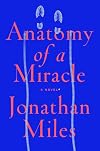
In the parking lot of a neighborhood convenience store Cameron Harris, a young veteran paralyzed in Afghanistan, suddenly arises from his wheelchair — truly a miracle. Both Cameron and his sister and caretaker Tanya are instant celebrities, and the unassuming convenience store quickly becomes a site of pilgrimage. Religious authorities, the media, medical researchers, and the entertainment business are all vying for Cameron's story, and the lives of everyone involved are upended.
This was show more both an entertaining and depressing read. Seeing how quickly one can be taken advantage of and how one's life can suddenly be wildly out of one's own control was pretty disturbing — reckless choices on the part of the media and uninformed decisions on the part of Cameron and Tanya. Having said that, this story was a masterful in its purpose as a novel masquerading as a true story. It's narrative nonfiction at its finest (even the acknowledgements refer to people who are not real), except that it isn't, but it will have you questioning whether it just might be. show less
This was show more both an entertaining and depressing read. Seeing how quickly one can be taken advantage of and how one's life can suddenly be wildly out of one's own control was pretty disturbing — reckless choices on the part of the media and uninformed decisions on the part of Cameron and Tanya. Having said that, this story was a masterful in its purpose as a novel masquerading as a true story. It's narrative nonfiction at its finest (even the acknowledgements refer to people who are not real), except that it isn't, but it will have you questioning whether it just might be. show less
In college, I had a professor who would tell his ecology students on their first day of class that the best thing people could do for the environment was to die young before having children. It was the 90s; professors could say that kind of thing.
I thought of this prof while reading this short but intense book exploring grief, environmental degradation, and personal responsibility.
I thought of this prof while reading this short but intense book exploring grief, environmental degradation, and personal responsibility.
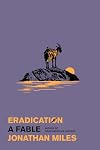
Book Page: Former teacher Adi is stranded on Santa Flora, an island with no other people and increasingly ravaged plant life. Instead, Santa Flora is home to a booming population of feral goats, which Adi has been assigned the sole purpose of destroying—with the goal of saving the environment, that is. Adi was offered the job by a foundation trying to restore natural equilibrium on Santa Flora. He was hooked by the opportunity for eco-heroism but overstated his inclination toward violence show more and familiarity with firearms in order to land the gig; he is, in fact, about as hesitant a goat-murderer as one could ever encounter. Rather than methodically rid the island of the interloping animals, Adi spends his days walking past goat after goat, stuck in his thoughts. After a startling and threatening discovery, he must decide on a course of action with only himself to rely on.
The fourth novel from the author of Anatomy of a Miracle, Eradication: A Fable is another clever, innovative tale. Jonathan Miles contrasts lush descriptions of the island setting with snippets of bleakly casual dialogue, channeling both realism and absurdity. As the story progresses and Adi gets familiar with the landscape, the reader learns more and more about him, and his current predicament becomes entwined with the events of his life pre-island.
Though containing all this development, Eradication is brief at less than 200 pages, and can be savored in just one or two sittings. The book is an eerie experience, with its dark premise, isolated setting and more than a little gore. It is also deeply allegorical; a fable is, after all, meant to convey a moral. Miles addresses climate change, other man-made environmental disasters and the real nature of peace and violence. What does it mean to be human? What do we share with, or owe, our fellow animals? And, ultimately, what choices are and aren’t we willing to live with?
Kirkus starred review: Aman heads to a remote island to save the environment—or so he’s told.
Miles’ fourth novel, billed as a fable, is a slim but potent study of humanity in extremis. Its hero, Adi, is rudderless: His young son has recently died, prompting the end of his marriage, and he has a lackluster job teaching fourth-grade science. Seeking change and adventure, he connects with a peculiar foundation that recruits him to help revive the native species on a flyspeck tropical island called Santa Flora. Doing that requires the simple but gruesome task of killing the island’s invasive species, hordes of goats that have grazed the terrain barren. Early on, it’s clear that he’s not quite up to the task: He’s never used firearms, let alone the high-powered rifle he’s equipped with. (He wounds himself firing his first shot, the scope striking his head when the weapon recoils.) Disposing of goat corpses proves a messy, complicated business. And he has some intimidating company in the form of fishermen treading the waters to poach sharks for their fins. Miles’ observational skills are on fine display—the offbeat premise is fully convincing, thanks to precise details about the island’s flora and fauna, Adi’s equipment, and (in time) the full story of his family’s collapse. But the “fable” element of the story remains appealingly open-ended—the novel can be read as an allegory about contempt for immigrants, our propensity for violence, our relationship to the environment (and the harm we bring upon it), our need for connection, and more. However one reads it, Adi becomes a potent symbol of life in a fearful, desperate moment: “This, right here, was surely where he belonged: alone in the earth’s dungeon, clapped in irons for all his failures.”
A stark, propulsive, and timely man-versus-nature tale. show less
The fourth novel from the author of Anatomy of a Miracle, Eradication: A Fable is another clever, innovative tale. Jonathan Miles contrasts lush descriptions of the island setting with snippets of bleakly casual dialogue, channeling both realism and absurdity. As the story progresses and Adi gets familiar with the landscape, the reader learns more and more about him, and his current predicament becomes entwined with the events of his life pre-island.
Though containing all this development, Eradication is brief at less than 200 pages, and can be savored in just one or two sittings. The book is an eerie experience, with its dark premise, isolated setting and more than a little gore. It is also deeply allegorical; a fable is, after all, meant to convey a moral. Miles addresses climate change, other man-made environmental disasters and the real nature of peace and violence. What does it mean to be human? What do we share with, or owe, our fellow animals? And, ultimately, what choices are and aren’t we willing to live with?
Kirkus starred review: Aman heads to a remote island to save the environment—or so he’s told.
Miles’ fourth novel, billed as a fable, is a slim but potent study of humanity in extremis. Its hero, Adi, is rudderless: His young son has recently died, prompting the end of his marriage, and he has a lackluster job teaching fourth-grade science. Seeking change and adventure, he connects with a peculiar foundation that recruits him to help revive the native species on a flyspeck tropical island called Santa Flora. Doing that requires the simple but gruesome task of killing the island’s invasive species, hordes of goats that have grazed the terrain barren. Early on, it’s clear that he’s not quite up to the task: He’s never used firearms, let alone the high-powered rifle he’s equipped with. (He wounds himself firing his first shot, the scope striking his head when the weapon recoils.) Disposing of goat corpses proves a messy, complicated business. And he has some intimidating company in the form of fishermen treading the waters to poach sharks for their fins. Miles’ observational skills are on fine display—the offbeat premise is fully convincing, thanks to precise details about the island’s flora and fauna, Adi’s equipment, and (in time) the full story of his family’s collapse. But the “fable” element of the story remains appealingly open-ended—the novel can be read as an allegory about contempt for immigrants, our propensity for violence, our relationship to the environment (and the harm we bring upon it), our need for connection, and more. However one reads it, Adi becomes a potent symbol of life in a fearful, desperate moment: “This, right here, was surely where he belonged: alone in the earth’s dungeon, clapped in irons for all his failures.”
A stark, propulsive, and timely man-versus-nature tale. show less
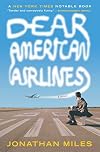
The writing was terrific. Forget the premise of someone writing a complaint letter to American Airlines while stranded in the airport. That is just a device for the author to tell Bennie's story. Even the story is not important. What is important is the humor, creativity, and levels of thought that occur with this novel. Although 180 pages, it really was longer because it was almost entirely a narrative. I was so impressed my Jonathan Miles' ability to constantly come up with funny show more insightful observations. Unlike other reviewers, I really did not dwell on his life(alcoholic poet translator) and the use of the letter to the airline device. Those that dwelled on that in a negative way missed the importance of his creative writing. He had so many interesting rifts and streams of consciousness. His one about observing a young woman's breast springing out of her basketball jersey blouse with a nipple like a pink tic-tac was a classic. To me this book represented everything I like about good modern fiction. Can't wait to read his newest novel. I think this is my first 5 star this year. show less
Lists
Awards


You May Also Like


Statistics
- Works
- 5
- Members
- 1,207
- Popularity
- #21,276
- Rating
- 3.4
- Reviews
- 63
- ISBNs
- 75
- Languages
- 5
