
David Gilbert (1)
Author of & Sons
For other authors named David Gilbert, see the disambiguation page.
Works by David Gilbert
Associated Works
Tagged
Common Knowledge
- Other names
- GILBERT, David
- Gender
- male
- Nationality
- USA
- Places of residence
- New York, New York, USA
- Associated Place (for map)
- New York, USA
Members
Discussions
Recent American novel, two word title, first word "But" in Name that Book (August 2015)
Reviews
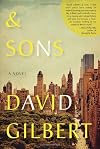
We meet reclusive author, A.N. Dyer, when he waiting to give the elegy at the funeral of his "oldest and dearest" friend Charles Topping. Topping's son has often wished he were Dyer's son and has been a hanger-on to the (dysfunctional) Dyer family which consists of the author and his three sons. Flashbacks to the relationship between A.N. and Charles are provided by letters from their youth which are included in difficult to read handwriting. We follow the two families back and forth in time show more for 434 very boring pages. The biggest problem with the book is that none of the characters are interesting or likable so I simply couldn't get interested in what happened or was going to happen to them. I finished it only out of sheer stubbornness. show less
I really enjoyed & Sons by David Gilbert. It’s the kind of book that feels grounded and real, especially in how it looks at family relationships and personal goals. The writing is clear and approachable, and the characters feel like people you might actually know, complete with flaws and complicated motivations. What stood out to me most was how the story shows the ripple effects of decisions made years earlier, both professionally and personally. It’s engaging without being heavy, and show more it stays with you after you finish in a quiet, thoughtful way. show less
 This review was written for LibraryThing Early Reviewers.
After the first several pages of & Sons, it becomes abundantly clear that David Gilbert intended to settle for nothing less than reaching for the stars. By the end of this ambitious novel, the reader is left with the impression that the author very nearly succeeded in achieving that lofty goal. Packed with more themes, story lines, and literary devices than one might find in three different books, Gilbert has crafted a work that can be seen in many ways: a touching and heartbreaking story of show more a father’s inability to connect with his sons, a “book about books” look at the debilitating effect that the creative process can have on personal relationships, a tale of brothers coming to grips with their lives—and each other—as they try to step out of the long shadow cast by someone else’s fame, and a love-hate paean to New York City that only someone who was raised there would dare to write.
Having finished it a few days ago, I am struck by the wide range of thoughts and emotions that the novel still evokes. Indeed, it is at once one of the most impressive and more frustrating books I have read in a long time. Above all else, I found Gilbert’s prose to be nothing short of sublime, alternating between passages that were brilliantly insightful, extremely moving, and very funny. He also has a great ear for producing the sort of realistic dialogue that seemed like the kind of things that people would actually say to one another given the circumstances. What is truly remarkable to me is how much I enjoyed the overall experience of reading a book in which I found virtually none of the main characters to be particularly likeable.
However, the story also felt as if it had been stretched a little too thin in places. The entire novel-within-a-novel device became somewhat tedious and distracting at times; in fact, it was also a little brazen of the author to “reproduce” so much of A. N. Dyer’s fictional Ampersand within the pages of his novel, given that the former was portrayed as having a cult following that rivaled J. D. Salinger’s The Catcher in the Rye. Further, there were parts of the narrative—the over-the-top film produced by the Dyer’s youngest son involving the death of a former girlfriend as well as the book’s final dramatic events come to mind—that seemed forced and strained the reader’s credulity.
So, is & Sons a compelling and entertaining near-masterpiece or an unfortunate near-miss sunk by its own overly grand ambitions? While I suspect that a convincing case can be made on either side of that question, I think the first might be the right one. Gilbert has produced a smart and thoughtful work with an emotional core that is likely to remain with me long after most of the shortcomings in the plot have faded away. show less
Having finished it a few days ago, I am struck by the wide range of thoughts and emotions that the novel still evokes. Indeed, it is at once one of the most impressive and more frustrating books I have read in a long time. Above all else, I found Gilbert’s prose to be nothing short of sublime, alternating between passages that were brilliantly insightful, extremely moving, and very funny. He also has a great ear for producing the sort of realistic dialogue that seemed like the kind of things that people would actually say to one another given the circumstances. What is truly remarkable to me is how much I enjoyed the overall experience of reading a book in which I found virtually none of the main characters to be particularly likeable.
However, the story also felt as if it had been stretched a little too thin in places. The entire novel-within-a-novel device became somewhat tedious and distracting at times; in fact, it was also a little brazen of the author to “reproduce” so much of A. N. Dyer’s fictional Ampersand within the pages of his novel, given that the former was portrayed as having a cult following that rivaled J. D. Salinger’s The Catcher in the Rye. Further, there were parts of the narrative—the over-the-top film produced by the Dyer’s youngest son involving the death of a former girlfriend as well as the book’s final dramatic events come to mind—that seemed forced and strained the reader’s credulity.
So, is & Sons a compelling and entertaining near-masterpiece or an unfortunate near-miss sunk by its own overly grand ambitions? While I suspect that a convincing case can be made on either side of that question, I think the first might be the right one. Gilbert has produced a smart and thoughtful work with an emotional core that is likely to remain with me long after most of the shortcomings in the plot have faded away. show less
This review was written for LibraryThing Early Reviewers.From the description, this seemed to be a book that I was sure to love -- it featured elements to which I always gravitate: a NYC setting, a "peek" into the publishing and literary world, and an exploration of family dynamics and relationships. Unfortunately, this was a book that I liked better in the abstract than the execution.
Sentences that go on for nearly an entire page, and other sections that I had to read several times before I "got it" left me feeling annoyed and tired. At the same show more time, there were passages that I thought were just exquisite -- I thought that the last letter Charlie writes to Andrew was moving beyond words. And there are numerous instances in which the author perfectly captured feelings and thoughts in a succinct and accessible way. On some level, though that only made it all the more frustrating, as I wished that the rest of the book could have been like that. I wanted to be able to fall into this book and its characters, and I never could just relax into it, because of the writing style.
The characters are well defined; I could see each clearly in my mind. I found the narrator to be wholly unlikeable -- a whiny, child-man. My favorite was young Andrew (Andy).
I struggled with how to rate this book numerically, because my experience with it was so uneven -- the number reflects not an "okay" book -- but rather the average for a book in parts "outstanding" and "ugh, I need to plow through because I need to post a review." show less
Sentences that go on for nearly an entire page, and other sections that I had to read several times before I "got it" left me feeling annoyed and tired. At the same show more time, there were passages that I thought were just exquisite -- I thought that the last letter Charlie writes to Andrew was moving beyond words. And there are numerous instances in which the author perfectly captured feelings and thoughts in a succinct and accessible way. On some level, though that only made it all the more frustrating, as I wished that the rest of the book could have been like that. I wanted to be able to fall into this book and its characters, and I never could just relax into it, because of the writing style.
The characters are well defined; I could see each clearly in my mind. I found the narrator to be wholly unlikeable -- a whiny, child-man. My favorite was young Andrew (Andy).
I struggled with how to rate this book numerically, because my experience with it was so uneven -- the number reflects not an "okay" book -- but rather the average for a book in parts "outstanding" and "ugh, I need to plow through because I need to post a review." show less
This review was written for LibraryThing Early Reviewers.Lists
Awards


You May Also Like


Associated Authors
Statistics
- Works
- 8
- Also by
- 1
- Members
- 849
- Popularity
- #30,130
- Rating
- 3.5
- Reviews
- 61
- ISBNs
- 117
- Languages
- 5
- Favorited
- 2
